How to Protect Young Trees from Cedar Rapids’ Harsh Winter

Will your young tree survive winter in Cedar Rapids? Learn 4 essential steps to prevent winter burn, frost cracks, and salt damage before the cold sets in.
If you planted a tree in 2025, you’re probably wondering how it’ll handle its first Cedar Rapids winter. Between harsh winds, temperature swings that crack bark, and road salt on major streets, young trees face serious threats without proper winter tree protection in Cedar Rapids. This matters especially for homeowners still recovering from the devastating derecho because after losing mature trees in 2020, the last thing you want is newly planted trees failing their first winter.
Key Takeaways
- Complete winter protection requires four elements: trunk wrapping, anti-desiccant sprays, salt barriers, and wildlife guards.
- Winter burn kills most young trees in Cedar Rapids by drying them out faster than frozen roots can replace moisture – proper protection prevents this.
- Install trunk wrap and anti-desiccant by late November and remove by mid-April to avoid bark damage.
- Young trees need 15-20 gallons of water every 7-10 days through November before the ground freezes.
- Road salt from major Cedar Rapids streets damages both foliage and root water absorption.
What Threatens Young Trees During Cedar Rapids Winters?
Young trees face four interconnected winter threats, with trees aged 1-3 years most vulnerable due to thin bark and shallow roots. These threats include:
- Winter Burn (Desiccation): Moisture loss from wind and sun exposure.
- Sunscald and Frost Cracks: Temperature swings that damage bark.
- Road Salt Damage: Spray and soil contamination that can harm trees.
- Wildlife Damage: Deer and rabbits that feed on bark and buds.
Each winter threat impacts your newly planted trees differently and requires specific protection strategies.
Why Does Winter Burn Kill Young Trees?
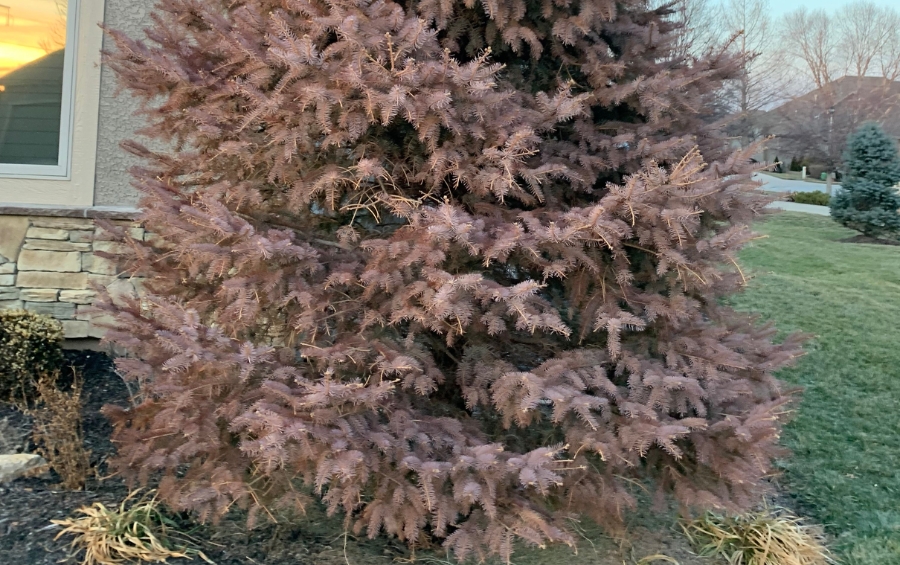
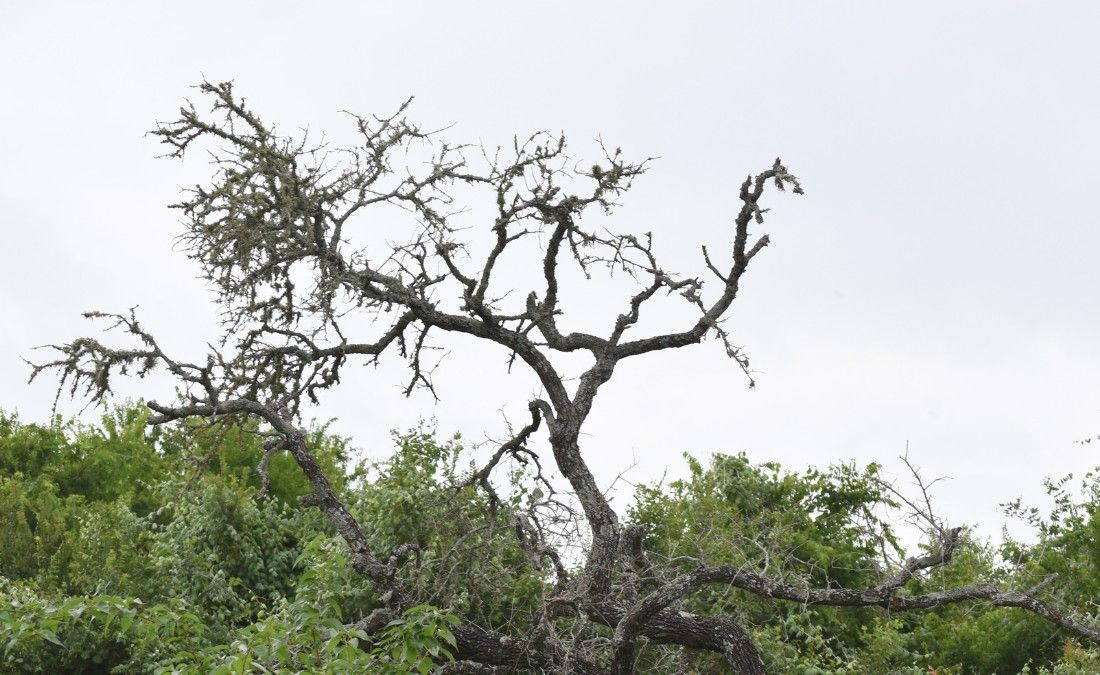
Winter burn, officially known as desiccation, kills young trees because their roots can’t supply enough water when the ground is frozen. As cold winds and the bright winter sun draw moisture from leaves and needles, the tree continues to lose water it can’t replace. The resulting dehydration damages tissues, causing browning, dieback, and in severe cases, death.
The Northeast Quadrant, including communities like Moundview, faces severe conditions where the derecho left properties wind-exposed. And without mature tree windbreaks, young trees face full Iowa winter weather.
How Do Temperature Swings Damage Tree Bark?
Iowa’s dramatic temperature swings create frost cracks in young tree bark. When the bright winter sun warms southwest-facing trunks during the day, the bark expands and becomes pliable. As temperatures drop sharply after sunset, the warmed tissue cools too quickly and contracts, causing vertical cracks to form.
Thin-barked trees most susceptible to frost cracks include:
- Maples (Acer spp.)
- Lindens (Tilia spp.)
- Honeylocust (Gleditsia triacanthos)
- Crabapples (Malus spp.)
Once a frost crack forms, it often reopens every winter, creating permanent weak spots that invite insects and diseases.
How Road Salt Damages Trees
In residential areas like the Czech Village and 16th Avenue SW, heavy road salt use causes more than brown leaves – it disrupts soil chemistry. Salt draws moisture away from roots, mimicking drought stress even when soil is wet, and burns foliage on contact. Over time, sodium buildup can permanently stunt young trees or kill sensitive species such as maples and lindens.
How Local Wildlife Harm Young Trees During Winter
When winter food becomes scarce, deer and rabbits turn to bark and buds for nutrition. Their chewing strips protective bark layers and exposes living tissue. A single night of feeding can girdle a trunk, cutting off water and nutrient flow and killing the tree by spring. Protective barriers and repellents are essential for newly planted or small-caliper trees.
How Do You Protect Newly Planted Trees from Iowa Winter Damage?
Effective winter tree protection in Cedar Rapids means addressing all four risks together, not individually. Comprehensive winter tree protection means using customized solutions based on your specific tree species, location, and exposure level.
Add Organic Mulch to Protect Roots and Retain Moisture
Young trees need consistent deep watering – about 15–20 gallons every 7–10 days through November –until the ground freezes. Even after watering stops, trees continue losing moisture through bark and foliage while frozen roots can’t replace it. Applying organic mulch afterward locks in that remaining moisture and buffers the soil against sudden temperature swings.
How to mulch young trees correctly:
- Apply 2–4 inches of organic mulch in a wide donut shape, not a volcano mound.
- Keep mulch 3–6 inches away from the trunk to prevent rot and pests.
- Ensure mulch extends to the tree’s drip line for full root-zone insulation.
- Refresh mulch annually to maintain protection and soil health.
Install Trunk Wrapping to Prevent Sunscald and Frost Cracks
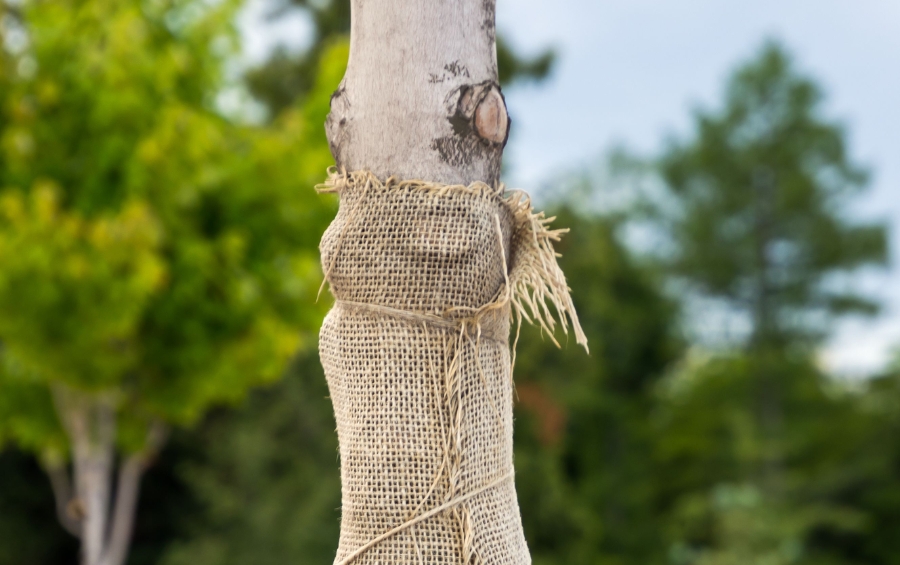
Trunk wrapping prevents sunscald and frost cracks on vulnerable young trees. Use light-colored burlap, crepe paper, or white tree guards wrapped from base to first branches. The light color reflects winter sun rather than absorbing it, preventing damaging temperature fluctuations.
Install trunk wrap in late November before the first hard freeze. Remove it by mid-April after the last frost, as leaving wrap on too long traps moisture against bark and can girdle the tree as it grows.
Apply Anti-Desiccant Spray to Reduce Moisture Loss
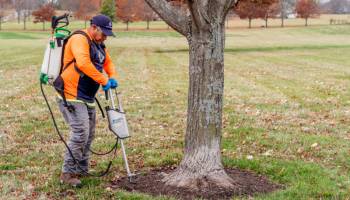
Anti-desiccant sprays form a protective film that slows water loss from any foliage during winter. Professional application requires commercial backpack sprayers to reach all foliage.
Critical timing requirements for anti-desiccant:
- Apply when temperatures are 40-50°F
- Trees must be fully dormant
- Typically early December in Cedar Rapids
Trees that benefit most from anti-desiccant:
- All evergreens (pines, spruces, arborvitae)
- Thin-barked deciduous trees
- Trees in exposed, windy locations
Protect Young Trees from Road Salt Damage
If your tree sits within 50 feet of heavily salted streets, install burlap barriers on the street-facing side to intercept salt spray. In spring, flush soil with about 6 inches of water to leach accumulated salt deeper where it won’t affect shallow roots.
Prevent Wildlife Damage During Winter
To protect young trees from deer browsing, antler rubbing, and bark chewing that strip away protective layers, install barriers before winter sets in. Here’s what we recommend:
- Guards must stand at least 3 feet tall for deer browsing
- Hardware cloth or plastic guards protect against rabbits
- Install in late fall before snow provides access to higher branches
When Should You Winterize Trees?
Late November is critical for trunk wrapping and wildlife guards before first hard freeze. Anti-desiccant has a narrower window in early December at 40-50°F when trees are dormant.
What Happens If You Miss the Winterization Window?
Late November is the ideal time to complete winterization tasks. The soil is cool but not yet frozen, making it perfect for applying mulch and giving trees a final deep watering. It’s also the time to install trunk wrap before rapid temperature changes can damage the bark.
Anti-desiccant timing is trickier. Apply too early when trees are processing moisture, and you trap water that freezes inside cells. Apply too late after hard freezes, and spray doesn’t adhere properly. Professional arborists monitor conditions and act quickly when the right window opens – often just 5-7 days into December.
What Are the Most Common DIY Winterization Mistakes?
Many homeowners attempt winter protection but miss critical details that reduce effectiveness.
Common DIY winterization mistakes include:
- Using dark-colored burlap that absorbs heat instead of reflecting it
- Wrapping too tightly, damaging bark or restricting growth
- Leaving protection on too long, creating moisture problems and girdling
- Applying anti-desiccant at wrong temperatures
- Missing foliage sections during spray application
Equipment matters too. Reaching all foliage on a 12-foot tree requires commercial backpack sprayers most homeowners don’t own. Ground-level hand-pump sprayers leave the top third – the most vulnerable part – unprotected.
Frequently Asked Questions About Winter Tree Protection in Cedar Rapids
Should I winterize trees planted earlier in the year?
Absolutely. Newly planted trees need protection through at least their first few winters, no matter when they went into the ground. Trees spend their first one to three years developing root systems rather than strength above ground, leaving them highly vulnerable to freezing temperatures, wind, and soil heaving.
Even trees planted in spring or summer benefit from mulching, trunk wrapping, and deep watering before the ground freezes. And if your tree was planted this fall, winterization is essential since its roots haven’t yet spread into the surrounding soil. Proper care now gives young trees the best chance to survive and thrive come spring.
When is it too late to winterize trees in Iowa?
Once ground freezes solid and temperatures stay below 40°F, you’ve missed the optimal window. Trunk wrap can still be installed before spring, but anti-desiccant becomes ineffective below 40°F and deep watering becomes impossible in frozen soil. If you’re reading this late in the season, schedule early for next fall – ideally by mid-October.
Will burlap alone protect my trees from winter damage?
Burlap helps but isn’t enough by itself. It’s effective for intercepting salt spray and blocking wind, but doesn’t prevent sunscald, frost cracks, or winter burn. Complete protection requires combining multiple strategies:
- Trunk wrap for temperature protection
- Anti-desiccant for moisture retention
- Burlap for salt/wind barriers
- Proper watering through late fall.
Schedule Winter Tree Protection in Cedar Rapids with Arbor Masters
The trees you planted in 2024 and 2025 represent significant investments in your property and Cedar Rapids’ canopy recovery. And without proper winter tree protection strategies, desiccation, sunscald, salt damage, and wildlife browsing all threaten these young trees.
Arbor Masters has protected Cedar Rapids trees for over 60 years, and our ISA Certified Arborists determine which protection measures your trees need and when to apply them. We’re TCIA Accredited and partner with ReLeaf Cedar Rapids in community canopy recovery efforts.
Schedule your free winter protection assessment today by calling 319-359-6135 or requesting an estimate online.
Want More Like This?
Get the latest local news, tree care tips, special offers, and company updates directly to your inbox! It's easy to subscribe and there's no spam - we promise.
"*" indicates required fields