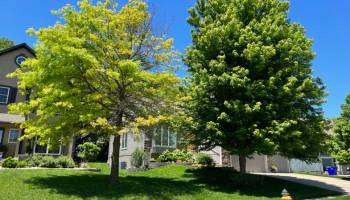
Why High-Value Trees Need Year-Round Plant Health Care in Johnson County
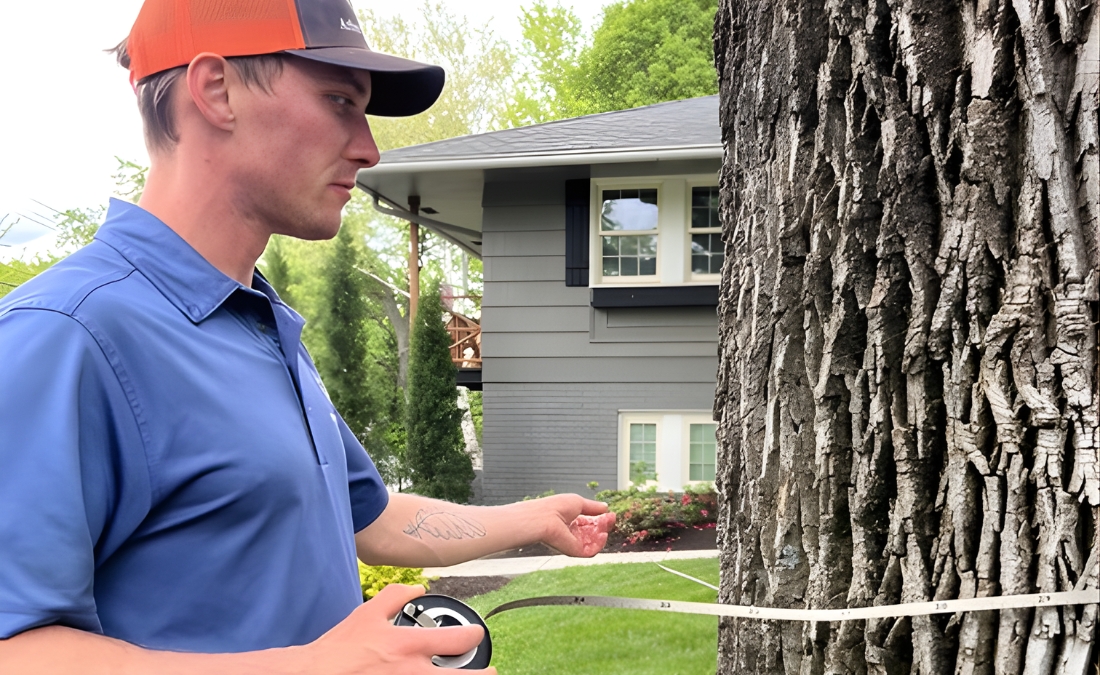
New year, new tree care plan? PHC preserves high-value trees by preventing decline and expensive removal. See what proactive, year-round care includes.
New Year’s resolutions usually focus on personal health — hitting the gym, eating better, finally scheduling that checkup. But if you’re a Johnson County homeowner with mature oaks, maples, or ash trees shading your property, there’s another kind of health that deserves your attention. Trees can look stable while pests, drought stress, or nutrient deficiencies chip away at their defenses. And by the time symptoms show up, the fix is often expensive.
Plant health care (PHC) addresses that gap between early decline and visible symptoms. With routine monitoring and preventative treatments, arborists can stabilize stressed trees before pests, drought, or storms take them out.
Key Takeaways
- Plant health care combines regular monitoring, soil care, pest and disease management, and preventive treatments to keep trees healthy year-round.
- Johnson County’s transitional climate and threats, like emerald ash borer (EAB) and hypoxylon canker, make proactive monitoring essential for oaks, maples, and ash.
- A typical PHC program includes three to six scheduled arborist visits per year, with timing based on local pest cycles and seasonal stress points.
- Preventive tree care typically costs a fraction of emergency removal—Overland Park’s mass ash removals show the cost of waiting too long.
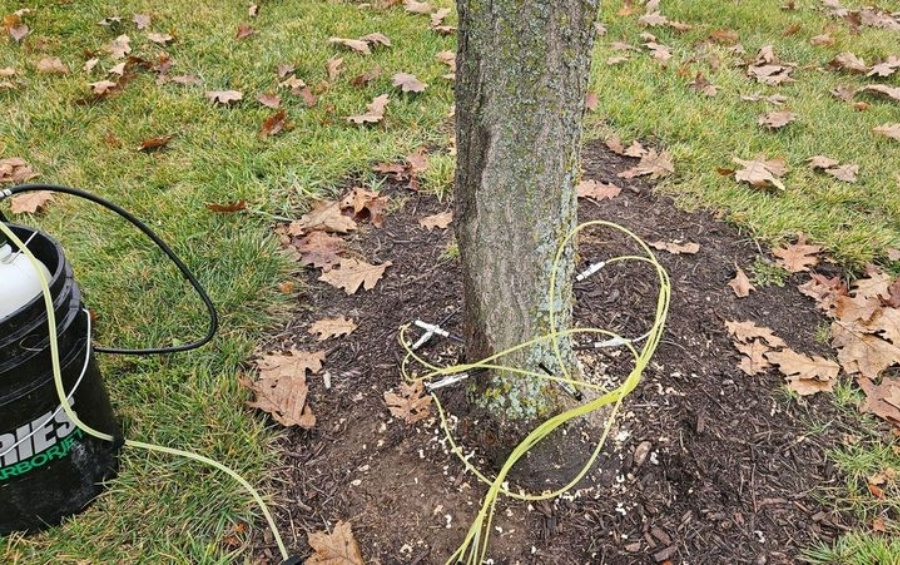
Trunk injections deliver treatments directly into the tree’s vascular system, minimizing environmental exposure while targeting specific pests like emerald ash borer.
What Is Year-Round Plant Health Care for Trees?
Year-round plant health care is a proactive, holistic approach to keeping trees healthy — think of it as an annual wellness plan for your landscape. Rather than waiting for visible problems and then scrambling for solutions, PHC addresses tree health continuously through scheduled inspections and targeted treatments.
This approach contrasts sharply with reactive tree care, where homeowners only call an arborist after noticing dead branches, sparse foliage, or pest damage. By then, treatment options are often limited and expensive.
A comprehensive PHC program typically includes:
- Regular inspections by Certified Arborists
- Soil analysis and targeted fertilization
- Pest and disease monitoring with timely treatments
- Water management guidance during drought periods
- Mulching recommendations to protect root zones
- Root crown inspections to catch buried trunk issues
Each component works together to keep trees resilient against the stresses they face in Johnson County’s demanding climate.
How Does Regular Tree Monitoring Prevent Costly Disease Problems?
Regular monitoring catches problems early — when intervention is still effective and affordable. Many tree diseases show subtle warning signs months or even years before visible decline, and trained arborists know what to look for.
Early Detection Catches Problems When They’re Treatable
Diseases like hypoxylon canker and bacterial leaf scorch often start with minor symptoms that homeowners miss entirely.
Slight changes in leaf color, premature leaf drop in one section of the canopy, or unusual bark patterns can signal serious problems developing beneath the surface. By the time obvious damage appears, such as major branch dieback, extensive canopy thinning, or fungal growth on the trunk, treatment options shrink dramatically, and removal becomes the only option.
Monitoring Identifies Stress Before Disease Takes Hold
Many serious tree diseases only attack trees that are already weakened by stress. Hypoxylon canker, for example, targets oaks suffering from drought stress, compacted soil, or root damage. Regular monitoring catches these stress factors before they open the door to opportunistic diseases. Addressing drought stress with supplemental watering or relieving soil compaction with aeration treats root causes rather than just symptoms.
When Should Tree Health Monitoring Visits Happen Throughout the Year?
Most PHC programs include 3-6 visits annually, with specific timing customized after an arborist evaluates your property. The goal is to align treatments and inspections with local pest life cycles, weather patterns, and seasonal stress points. Your arborist will adjust this schedule based on the specific trees on your property and any known issues.
| Season | Timing | Focus Areas |
|---|---|---|
| Winter | December-February | Dormant structural assessment; identify storm damage; plan spring treatments |
| Early Spring | March-April | Pre-emergent pest monitoring; soil treatments; EAB trunk injections begin |
| Late Spring/Summer | May-August | Active pest and disease monitoring; drought stress watch; symptoms emerge |
| Fall | September-November | Root zone fertilization; final EAB treatment window; winter stress preparation |
Winter monitoring matters more than many homeowners realize. That’s because dormancy provides clear views of branch structure without foliage obscuring the canopy. Arborists can spot cracks, weak unions, and storm damage that would be invisible during the growing season. Winter visits also allow planning for spring treatments before pest activity begins.
What Does a Year-Round Tree Health Contract Include?
PHC programs vary based on property size and tree inventory, but most include scheduled inspections, soil analysis, pest and disease treatments, and ongoing care recommendations. The real value, though, lies in what that consistent attention delivers over time.
The Long-Term Benefits of Proactive Tree Care
Trees protected by ongoing PHC programs live longer, recover faster from stress events, and require fewer emergency interventions. For neighborhoods like Mission Hills and Prairie Village — where mature tree canopy defines neighborhood character — preserving established trees maintains both property values and community identity.
Healthy trees also provide tangible benefits, including:
- Better storm resilience from strong branch structure
- Energy savings from effective shade
- Increased property value from a well-maintained landscape
- Reduced emergency service costs over time
Annual PHC investment typically amounts to a small fraction of what emergency removal costs for a single large tree. Overland Park’s ongoing ash removal program illustrates this reality clearly — the city has removed more than 8,000 ash trees since emerald ash borer arrived, completing its large-scale removal program in 2025. Reactive removal after EAB devastation costs far more than proactive treatment would have.

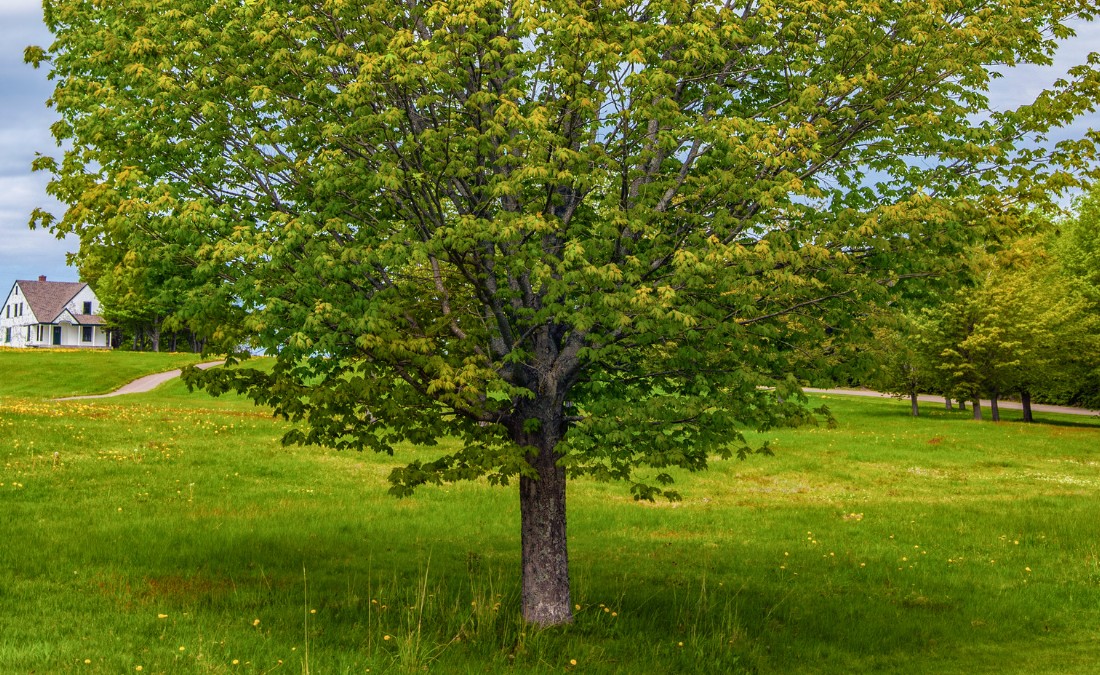
Oaks and maples are the backbone of Johnson County’s tree canopy —protecting them requires year-round attention to species-specific threats.
Why Do Oaks and Maples Need Preventive Care in Kansas City’s Climate?
Oaks and maples are the backbone of Johnson County’s residential tree canopy — and with ash trees largely gone, they’re even more critical to property values and neighborhood character.
Because Kansas sits in a transitional climate zone, these trees face constant stress that weakens their natural defenses against pests and disease. Hot summers push into the 100s, winters drop below zero, and precipitation swings between drought and flooding — sometimes in the same season. These extremes stress trees in ways that compromise their natural defenses.
Johnson County’s Transitional Climate Creates Extra Stress
Urban heat islands in Overland Park and Leawood compound climate stress, raising temperatures several degrees above surrounding areas. Trees in parking lot islands, narrow planting strips, and south-facing exposures face the harshest conditions.
Local Threats Targeting Johnson County Oaks
Oaks face serious pressure from multiple directions:
- Hypoxylon Canker: A disease that attacks trees weakened by drought — and once visible symptoms appear on the trunk, the tree typically cannot be saved.
- Oak Wilt: A fungal disease spreading through root grafts and beetle activity, capable of killing infected red oaks within weeks.
- Bacterial Leaf Scorch: An infection that causes progressive decline over several years as bacteria block water-conducting tissues.
All three require regular monitoring to have the best chances of early detection.
Local Threats Targeting Johnson County Maples
Maples now make up roughly one-third of Overland Park’s street trees — a concentration that concerns city foresters enough that they’ve stopped planting more on city property. The lesson from emerald ash borer applies here: overplanting any single species creates vulnerability when the next pest arrives.
In the meantime, maples face their own challenges:
- Anthracnose: This fungal disease thrives during Johnson County’s cool, wet springs, causing leaf spots and early defoliation that weakens trees over time.
- Iron Chlorosis: A condition caused by a lack of iron that results in yellowing leaves with green veins and commonly affects soft maples growing in the area’s alkaline soils.
- Tar Spot: While mostly cosmetic, this disease can defoliate trees repeatedly and invite secondary problems.
How to Protect High-Value Heritage Trees in Leawood and Shawnee
Certain trees — heritage oaks, mature maples, and landmark trees — justify customized care plans that go beyond standard PHC programs. These trees represent decades of growth and significant property value, making their protection worth extra investment.
Heritage tree care typically includes:
- More frequent inspections than standard programs
- Species-specific treatments based on age and known vulnerabilities
- Structural support assessments for heavy limbs on older trees
- Cabling and bracing systems to extend the safe life of trees with structural weaknesses
- Proactive protection during construction or landscape changes that could damage root zones
Affluent Johnson County neighborhoods, like Mission Hills and Leawood, demonstrate what decades of professional tree care can achieve — towering canopies that define neighborhood character and support premium property values.
Homeowners in these areas understand that mature, legacy tree care isn’t an expense; it’s protection for an asset that took generations to grow and can’t be quickly replaced.
How Do Biological Controls Differ from Chemical Treatments?
Biological controls use natural organisms and cultural practices to suppress pests, while chemical treatments target specific threats with synthetic compounds. Modern plant health care combines both through Integrated Pest Management (IPM), prioritizing prevention over broad-spectrum pesticides. The philosophy puts tree health first, with chemical intervention reserved for situations where it’s genuinely necessary. Here’s how the two approaches compare:
Here’s the HTML for this treatment approaches table:
html
| Approach | Methods | Best For |
|---|---|---|
| Biological | Beneficial insects, compost tea, beneficial soil organisms | Ongoing prevention, environmentally sensitive areas |
| Chemical | Trunk injection, soil drench, targeted sprays | Active infestations, specific high-risk threats like EAB |
Trunk injections represent the most targeted chemical approach, delivering treatment directly into the tree’s vascular system while minimizing environmental exposure. This precision matters in residential landscapes where children, pets, and beneficial insects share the space.
The goal of IPM-based PHC is to keep trees healthy enough that chemical intervention becomes the exception rather than the rule. Healthy trees with strong natural defenses resist most pest and disease pressure on their own.
When to Call a Professional Arborist
Certain warning signs warrant professional evaluation, even if your trees aren’t currently enrolled in a PHC program:
- Unexplained leaf drop or a canopy that’s noticeably thinner or discolored
- Bark damage, peeling, or fungal growth on the trunk
- Visible pest activity or bore holes in bark
- Leaning or structural concerns that have developed recently
- Water sprouts (clusters of thin vertical shoots) or sudden branch dieback
- Trees over 15 to 20 feet tall or near structures and power lines that need significant work
Frequently Asked Questions About Year-Round Plant Health Care in Johnson County
How much does plant health care cost for residential properties?
PHC programs are customized based on property size, tree count, and specific needs identified during an initial arborist assessment. Because every property is different, pricing requires an on-site evaluation. However, annual PHC costs are typically a small fraction of what you’d spend on emergency removal for a single large tree.
What is the difference between IPM and PHC?
IPM (Integrated Pest Management) is a treatment philosophy that prioritizes prevention and targeted interventions over broad chemical applications. PHC (Plant Health Care) is a comprehensive program that uses IPM principles alongside monitoring, soil care, and ongoing tree health management. Think of IPM as the approach; PHC is the full service.
Can I do plant health care myself, or do I need a professional?
Homeowners can handle basics like proper watering, mulching, and watching for obvious warning signs. However, professional PHC adds diagnostic expertise, commercial-grade treatments, and trained eyes that catch problems you’d miss. For high-value trees or properties with multiple mature specimens, professional monitoring pays for itself.
Is plant health care worth it for just one or two trees?
Absolutely. A single mature oak or maple represents a significant investment in your property’s value and character. Protecting it with annual PHC monitoring costs far less than removal if it declines — and healthy trees provide decades of additional shade, energy savings, and curb appeal.
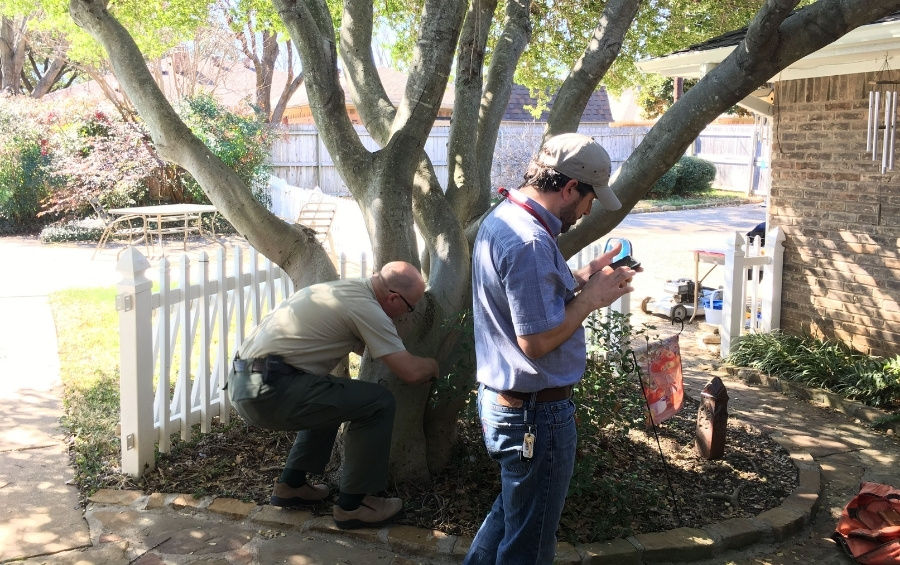
Root crown inspections catch buried trunk issues and early signs of decay that homeowners often miss.
Start Your Year-Round Protection Plan by Scheduling a Tree Health Assessment Today
Plant health care isn’t just treatment — it’s a year-round partnership to protect your trees before problems become emergencies. For Johnson County homeowners in Overland Park, Leawood, and Shawnee, preventive care delivers lasting value: healthier trees, lower long-term costs, and preserved neighborhood character.
Arbor Masters’ ISA Certified Arborists can evaluate your property and recommend a customized PHC program tailored to your trees’ specific needs. Call 913-441-8888 or request a free assessment to start the new year with healthier trees.
Want More Like This?
Get the latest local news, tree care tips, special offers, and company updates directly to your inbox! It's easy to subscribe and there's no spam - we promise.
"*" indicates required fields