Why Lee’s Summit Lakefront Estates Need a Spring Tree Health Assessment
After record snowfall, a tree health assessment in Lee's Summit can reveal hidden damage before spring growth masks the evidence. Here's when to call a pro.
Recent winter storms brought unusually heavy snow and dangerous cold to the Kansas City area, creating conditions that can cause lasting tree damage. In lakefront environments, trees often experience additional stress that isn’t immediately obvious once temperatures return to normal.
If you’re wondering whether your trees made it through unscathed — or whether that crack in the trunk was there before — you’re asking the right questions at the right time. Late winter is the narrow window when damage is visible, trees are still dormant, and you can act before spring growth masks the evidence. For lakefront estates, where mature trees represent significant investments in both property value and landscape character, this window matters even more.
Key Takeaways
- Late winter (February) is your best window for tree health assessment because damage is visible and trees are still dormant.
- Lake-adjacent trees face hidden stress from high water tables, soil compaction, and freeze-thaw cycles that inland properties don’t experience.
- Many winter damage symptoms won’t appear for months or years — by then, treatment options are limited and costs to preserve the tree are higher.
- A professional assessment catches internal decay, root damage, and structural defects that aren’t always immediately visible.
- Warning signs, like hanging branches, new lean, trunk cracks, or canopy thinning, warrant immediate evaluation by an ISA Certified Arborist.
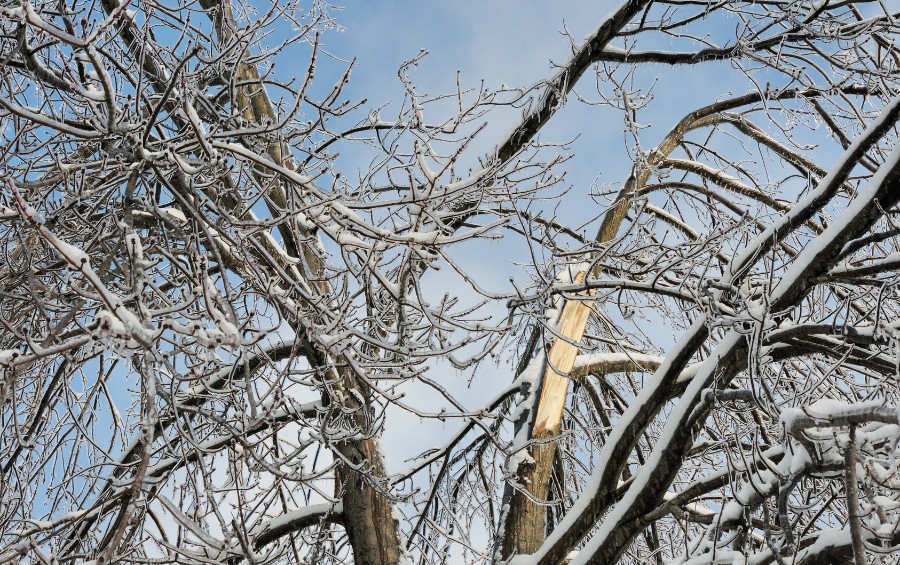
Fresh breaks with exposed wood—like this storm-damaged limb—are obvious signs of trouble. But much of winter’s damage stays hidden inside the trunk or underground.
Can You Assess Winter Tree Damage Yourself?
You can spot some problems on your own, and a walkthrough of your property after a major storm is always worthwhile. But there’s a limit to what’s visible from the ground, and winter damage is often internal.
Obvious Signs of Winter Tree Damage
A DIY inspection can catch obvious warning signs, including:
- Hanging or Broken Branches: Especially those over structures, driveways, or walkways.
- Trunk Cracks: Vertical splits, particularly on the south or southwest side.
- Leaning: New or increased lean compared to fixed reference points like fences.
- Canopy Gaps: Missing branches or uneven density.
If you notice any of these, you’ve already answered the question: yes, you need a professional assessment.
The Winter Tree Damage You Can’t See
Some of the most serious winter tree damage isn’t immediately visible and often goes unnoticed until a tree fails or declines later in the season, including:
- Internal Decay: Trunk can look solid while hollowed out inside.
- Root Damage: Freeze-thaw cycles tear and displace roots underground, with no surface symptoms for months or years.
- Compromised Branch Unions: Cracks at attachment points that will fail under the next storm’s weight.
- Cambium Death: Freeze damage to the living tissue beneath bark that won’t show until the tree fails to leaf out.
This is where professional assessment changes the equation. An ISA Certified Arborist doesn’t just look at your trees; they use diagnostic tools that reveal what’s happening inside.
Why Do Lakefront Estate Trees Need Professional Assessment More Than Inland Trees?
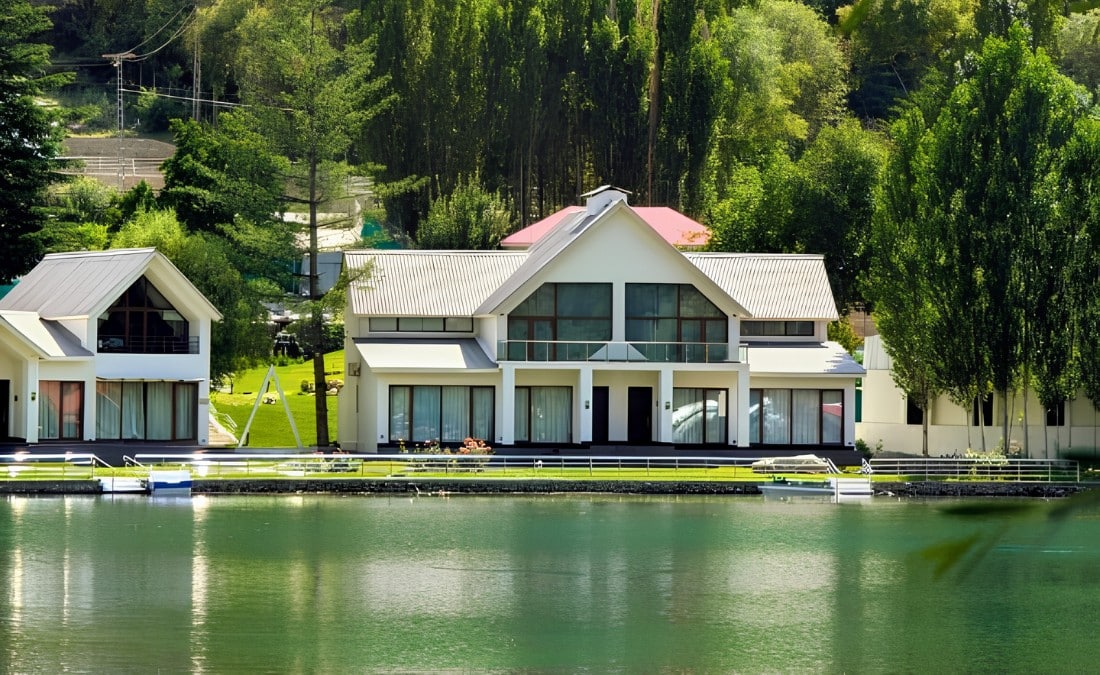
If your estate borders Lake Lotawana, Lake Tapawingo, or Lake Winnebago, your trees face compounded stress that makes professional evaluation especially important.
The Hidden Vulnerability of Waterfront Estate Trees
High water tables force tree roots to grow in shallow surface layers — the same zone where freeze-thaw cycles do the most damage. And while inland trees develop deep anchor roots below the frost line, your lakefront trees have nowhere to hide.
Add to that the soil compaction from dock access, boat trailers, and shoreline activity common on waterfront estates, and you have trees that are:
- More susceptible to frost heaving
- Less able to absorb water and nutrients
- Working harder just to survive — with fewer reserves to repair winter damage
DID YOU KNOW? Compaction alone can kill trees even when no other visible damage has occurred; it’s an invisible threat that tree care specialists monitor closely Lee’s Summit’s premier lakefront communities.
Why Winter Damage Often Shows Up Later
A heritage oak or mature specimen tree may look perfectly fine in late winter, but appearances can be deceiving. Many trees push out spring growth using stored energy reserves, temporarily masking underlying damage.
By midsummer – when heat stress peaks, water demands increase, and a compromised root system can’t keep up – that same tree may suddenly decline. What looks like “summer stress” is often winter damage that’s been building for months.
A late-winter assessment catches these issues early, while intervention is still possible.
PRO TIP: Take photos of your trees from the same angles each February. Year-over-year comparisons often reveal gradual changes — slight lean, crown thinning, bark damage — that are impossible to notice in real time, but help you make informed decisions about your tree care.
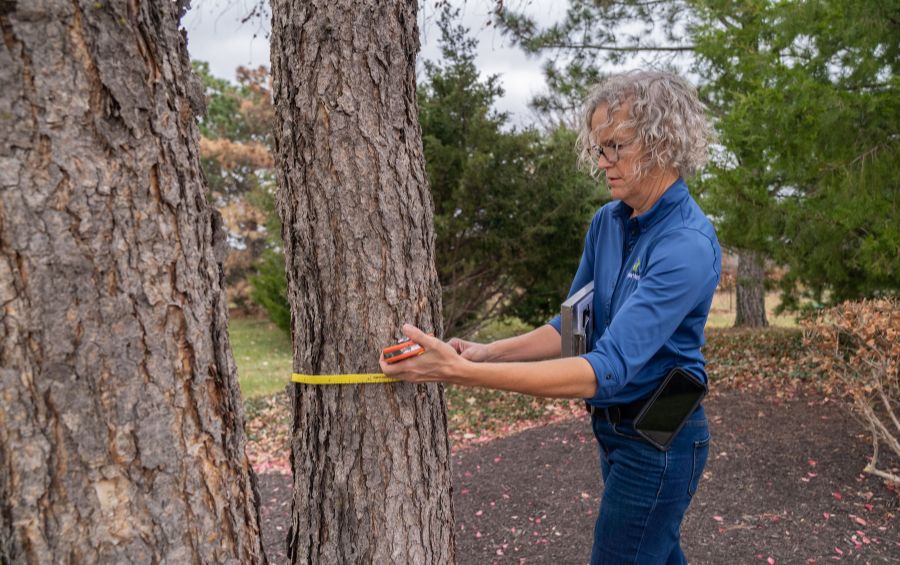
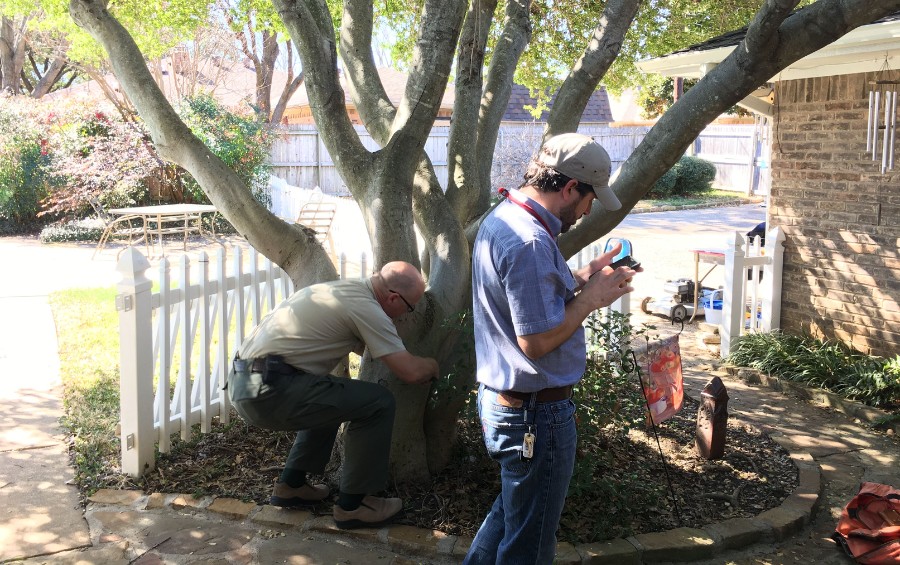
A professional tree health assessment goes beyond what you can see from the ground—examining the trunk, branch structure, and root flare for signs of hidden damage.
What Does a Professional Tree Health Assessment Include?
A professional tree health assessment goes beyond what you can observe from the ground; and for estate properties with mature landscape investments, it’s the only way to get a complete picture. Here’s what to expect:
Visual Inspection (Roots to Crown)
An ISA Certified Arborist examines the entire tree systematically: including the root flare, trunk, branch structure, and canopy, looking for indicators that suggest deeper problems. But the visual inspection is just the starting point. Specialized diagnostic tools reveal damage invisible to the naked eye:
- Resistographs measure wood density to detect internal decay and cavities
- Sonic tomography maps the trunk’s internal structure
- Root collar excavation exposes the critical junction where trunk meets roots (often buried and damaged on established estate properties)
Risk Evaluation and Recommendations
At the end, you’ll receive a clear assessment of each tree’s condition, the level of risk it presents, and your options — whether that’s monitoring, treatment, pruning, or removal. This documentation also supports insurance claims if damage occurs later.
What Tree Health Warning Signs Mean You Should Call Now?
Some situations shouldn’t wait for your next scheduled maintenance. Contact an arborist promptly if you notice:
- Large dead branches hanging over structures, vehicles, or gathering areas
- New or increasing lean toward your home, dock, or outbuildings
- Visible decay, cavities, or fungal growth on the trunk
- More than 25% canopy decline or dieback
- Storm damage with torn branches or split wood
- Any tree that “doesn’t look right” near high-use areas
Once a tree loses 50% or more of its crown, recovery becomes unlikely even with intervention, making early detection critical.
What Happens If You Wait Until Summer to Address Winter Tree Damage?
Delaying a tree health assessment leads to higher treatment costs, fewer intervention options, and increased risk of failure — problems that compound as damaged trees enter the high-stress summer season already weakened:
- Treatment Costs Increase: A crack caught early may need monitoring. The same crack 6 months later — now with decay spreading inside — may require structural support or removal.
- Options Disappear: Some interventions are only possible while trees are dormant. Once spring growth begins, you’ve lost that window until next year.
- Risk Compounds: Damaged trees enter summer already weakened. Summer storms test compromised branches. Heat stress overwhelms root systems that can’t deliver enough water. What could have been routine pruning becomes an emergency removal — plus repairs to whatever it lands on.
- Heritage Trees Are Irreplaceable: A 60-year-old oak isn’t something you can replant. These trees took decades to reach the size and character that define your property’s landscape. Losing one to preventable damage affects your estate’s value, curb appeal, and the mature canopy that attracted you to lakefront living in the first place.
Frequently Asked Questions About Tree Health Assessments
How do ISA Certified Arborists assess winter storm damage differently than a DIY inspection?
While you can spot obvious problems like hanging branches or bark cracks, professionals detect hidden structural failures that won’t show symptoms for years. They also evaluate risk in context — a crack that’s cosmetic on one tree may be catastrophic on another depending on size, species, location, and what’s underneath it.
Does homeowners insurance cover tree damage from winter storms?
Most policies cover removal if a tree falls on an insured structure, like your home, garage, or fence, but coverage for the tree itself or preventive removal varies widely. Document any storm damage with photos and contact your insurer before removal. A professional assessment report can support your claim.
Should I remove snow and ice from tree branches or let it melt naturally?
Letting snow melt naturally is safer for most trees — attempting removal can cause more damage than the weight itself. However, if branches are visibly cracking or bending severely toward structures, gently brush snow upward (not down) with a broom. Never attempt to remove ice; wait for it to thaw.
How often should lakefront trees be professionally assessed?
Annual assessments are recommended for lakefront estates in Lee’s Summit due to the compounded stress of water-related conditions. Properties with mature heritage trees or trees near structures may benefit from assessments twice yearly: late winter and after severe storm seasons.
Schedule Your Spring Tree Health Assessment with Arbor Masters Today
The snow will melt. The damage won’t.
What you can’t see now will cost more to fix in 6 months — if it can be fixed at all. With 60+ years of local expertise and credentials (TCIA Accredited, ISA Certified Arborists, TRAQ qualified) that place us in the top 1% of tree care companies nationwide, Arbor Masters has the tools and training to find hidden damage before it becomes an emergency.
Call 816-524-3131 or request a consultation online to schedule a spring assessment while there’s still time to act.
Want More Like This?
Get the latest local news, tree care tips, special offers, and company updates directly to your inbox! It's easy to subscribe and there's no spam - we promise.
"*" indicates required fields