
Oak Wilt in Dallas: How to Spot It, Prevent It, and Save Your Trees
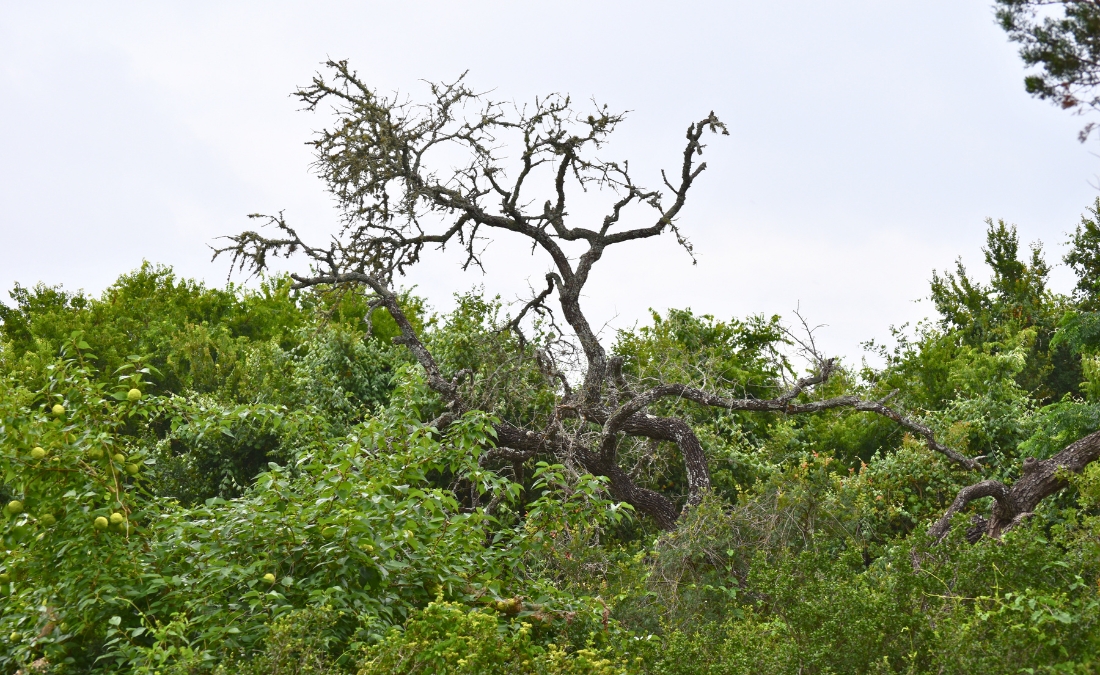
Oak wilt is still spreading across Dallas. Learn how to recognize early signs, prevent infection, and take the right steps to protect your oaks.
Oak wilt was first identified in Texas in 1961 and now, more than 60 years later, it remains one of the most destructive tree diseases in Dallas. The mature live oaks that line streets in Preston Hollow, Lakewood, Highland Park, and University Park are among the most valuable features on any property. But oak wilt is a silent killer. By the time you notice something wrong, the disease has already been working for weeks or months underground, spreading from tree to tree.
Unfortunately, there’s no cure for oak wilt once a tree is infected, but there’s a lot you can do before that point if you know what you’re dealing with.
Key Takeaways
- Oak wilt is caused by a fungus that shuts down a tree’s water-conducting system, and there is no cure once a tree is infected.
- The disease spreads two ways: sap beetles carrying spores to fresh wounds, and underground root-to-root contact between neighboring trees.
- Red oaks can die in as few as 2-4 weeks and live oaks typically decline over 3-6 months.
- Avoid pruning oaks from February through September, and paint any oak wound immediately, year-round.
- Preventive fungicide treatment can protect healthy trees near a confirmed infection, but it must be applied before symptoms appear.
What Is Oak Wilt?
Oak wilt is a lethal fungal disease caused by Bretziella fagacearum, a pathogen that invades the xylem, where the network of vessels a tree uses to move water from its roots to its canopy. As the fungus grows, it clogs the vessels directly.
The tree’s own defense response makes things worse, as it produces blockages called tyloses to try to wall off the infection. However, those blockages also cut off water flow. Between the fungus and the tree’s reaction to it, the water supply shuts down, and the tree essentially dies of thirst.
How Oak Wilt Spreads
Oak wilt spreads in two main ways: above ground and below ground.
Above ground, insects carry it from tree to tree. Small sap beetles are drawn to infected red oaks, where the fungus produces spore mats under the bark. As the beetles move to fresh wounds on nearby trees, they carry those spores with them.
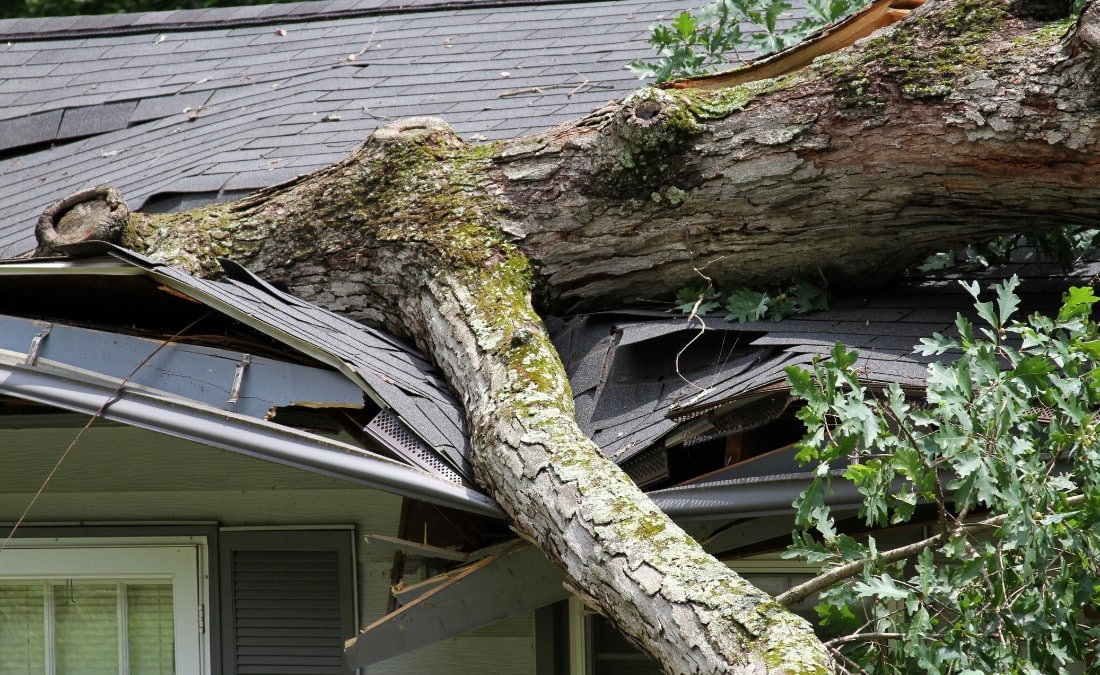
Any wound can be an entry point — pruning cuts, storm damage, or even a bump from a mower or string trimmer. Beetle activity is highest from late winter through early summer, which is why timing your pruning matters.
Below ground, the disease spreads through connected root systems. Live oaks often form root grafts with neighboring trees, linking them underground. Once one tree is infected, the fungus can move through that network without any insect involvement. These underground infection centers can expand up to 75 feet per year.
In dense neighborhoods, this root-to-root spread is often the most damaging — and the most surprising. It means a neighbor’s infected tree can directly affect yours.
Which Oak Trees Are Most at Risk for Oak Wilt?
Not all oaks respond to oak wilt the same way. Knowing what an infection looks like can help you catch signs early.
- Red oaks (Shumard oak, Texas red oak, water oak) are the most susceptible and die the fastest, often within weeks. They are also the only group that develops the fungal mats that fuel beetle spread, which makes a dead or dying red oak a threat to every oak nearby.
- Live oaks (Quercus fusiformis) have intermediate susceptibility but are the most commonly affected species in urban Dallas because of their dense, interconnected root systems across neighboring properties. Root grafts allow the fungus to travel tree to tree underground without any beetle involvement.
- White oaks (post oak, bur oak) are the least susceptible. They experience slower, less dramatic decline with individual branch dieback rather than rapid whole-tree death. They are not immune, but they are a lower immediate concern.
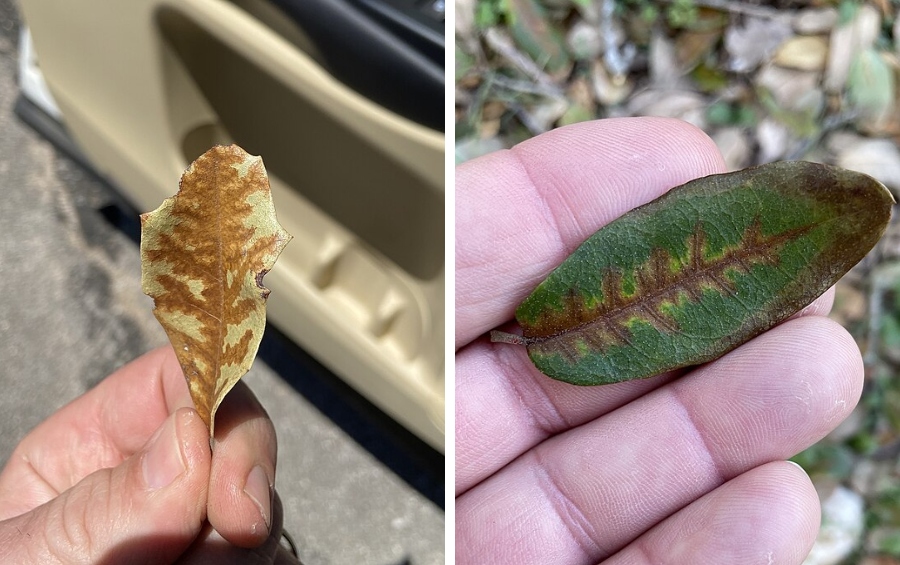
Veinal necrosis on live oak leaves is the most recognizable sign of oak wilt, with veins turning brown while tissue between them stays green.
What Are the Signs of Oak Wilt?
The most common signs of oak wilt are veinal necrosis (a yellowing or browning of leaf veins) on live oaks and rapid top-down wilting on red oaks. Symptoms differ by species, so knowing what to look for on your specific trees can mean the difference between catching the disease early and finding out too late.
Live Oak Symptoms
- Veinal necrosis is the most distinctive sign. Leaf veins turn yellow or brown while the tissue between them stays green, creating a pattern often described as “bronzing.” This vein discoloration is the key difference between oak wilt and normal spring leaf drop.
- Rapid leaf drop often follows. Brown-veined dead leaves collecting under the tree, especially outside the normal spring leaf exchange, are a strong red flag.
- Most infected live oaks defoliate and die within 3-6 months of first symptoms.
Red Oak Symptoms
- Wilt progresses from the top of the canopy downward, with leaves turning brown or red. Red oaks can die in as few as 2-4 weeks after symptoms appear.
- Fungal mats may form under the bark, signaled by narrow cracks and a faint sweet or fruity smell. These mats attract the sap beetles that spread spores to other trees, making quick detection vital.
PRO TIP: White oaks (post oak, bur oak) can get oak wilt, but they decline more slowly, often showing branch-by-branch dieback rather than rapid whole-tree death.
Is There a Cure for Oak Wilt?
No, there is no cure for oak wilt. Once a tree is infected with oak wilt, it cannot be saved. There is no treatment that will eliminate the fungus from a symptomatic tree.
When you get confirmation of oak wilt in a nearby tree, the priority changes from helping the sick tree to protecting other oaks on your property. For red oaks, this includes prompt removal, as a dead or dying red oak can develop the fungal mats that fuel beetle spread. Remove, chip, bury, or burn infected wood to reduce the risk of spreading oak wilt.
How Can I Prevent Oak Wilt?
The most effective ways to prevent oak wilt are avoiding oak pruning from February through July, painting any oak wound immediately year-round, and having healthy trees near a known infection treated with preventive fungicide. The beetle-spread pathway in particular is largely preventable with consistent habits.
Prune Oaks at the Right Time
We recommend avoiding pruning oak trees from February 1 to the end of September. In the Dallas area, beetle activity can remain elevated in North Texas’s warmer climate well into midsummer, and the more conservative approach is the safer one. That puts the safe window for professional oak pruning in October through January.
The exception is safety hazards. A broken branch hanging over a roof or walkway that is putting you in danger shouldn’t wait until October. But any cut made during the high-risk months must be painted immediately.
Paint Any Oak Wound Immediately
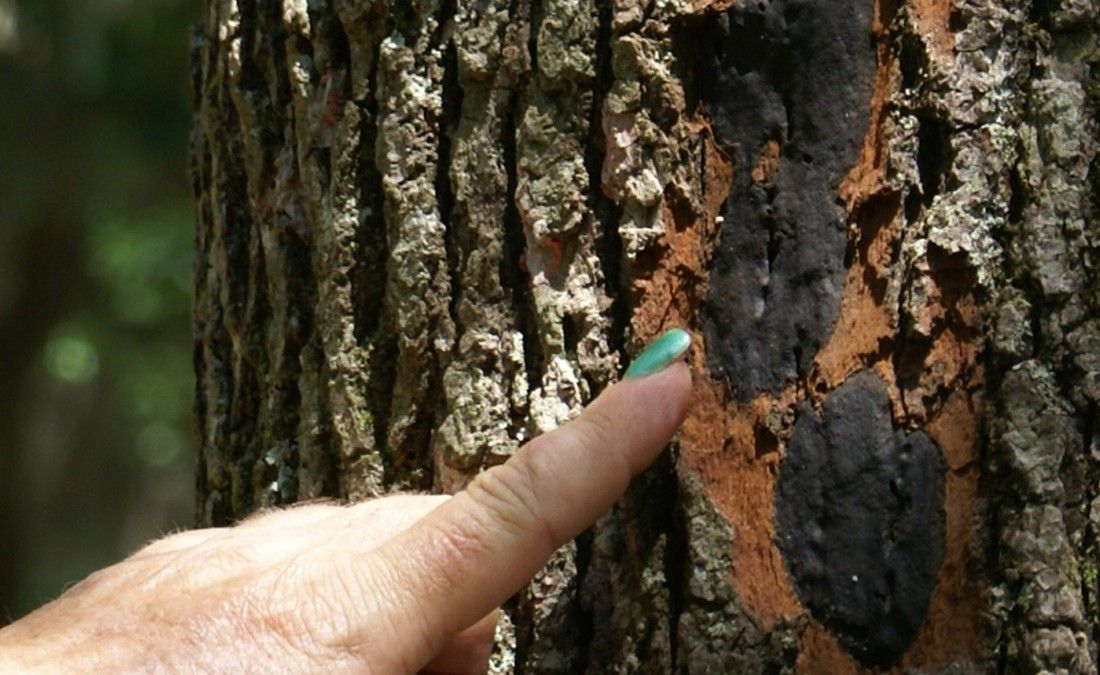
Any wound on an oak, whether a pruning cut, storm damage, construction nick, or even contact from a string trimmer, should be painted as soon as it happens, year-round. Regular latex paint or an asphalt-based wound dressing works fine. The goal isn’t to seal the wound permanently; it’s to mask the fresh-wound scent that attracts nitidulid beetles.
This is one of the simplest and most effective things a homeowner can do, but it only addresses the beetle-spread pathway. It does not prevent root-graft transmission between neighboring trees.
WARNING: Arborists generally don’t recommend painting pruning cuts. Research has shown that wound paint doesn’t help trees heal faster and can actually slow the natural sealing process. However, oak wilt is the only exception. The paint isn’t for the tree’s benefit — it’s to keep beetles away from the fresh wound before they can introduce the fungus.
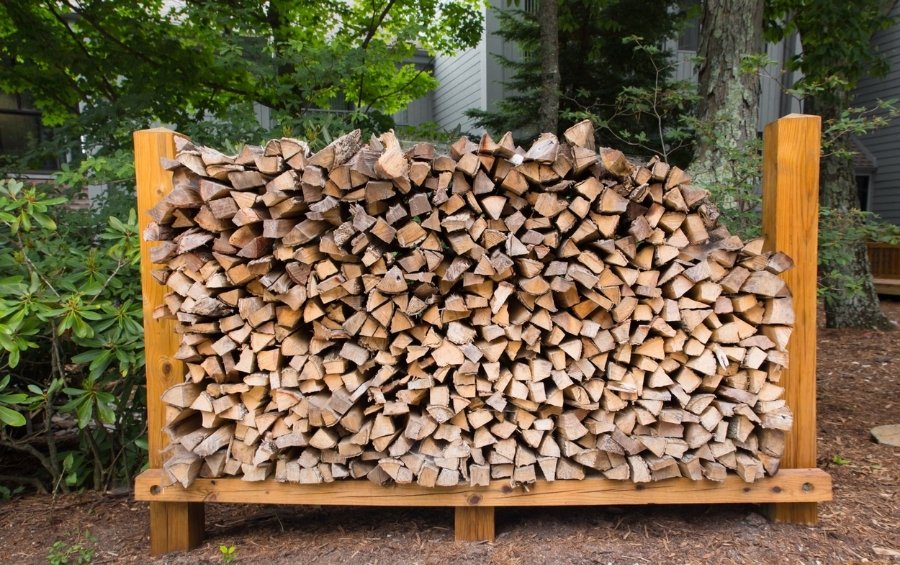
Stacking infected oak firewood in the yard or sharing it with neighbors can spread oak wilt to healthy trees nearby.
Don’t Move Infected Firewood
If a red oak on your property is removed because of oak wilt, don’t keep the wood or give it to neighbors. The firewood can still harbor the fungal mats and spread oak wilt to healthy trees nearby. Infected wood should be chipped, burned, or buried promptly, instead of stacked in the yard or moved to another property.
Sever Root Grafts Near Infected Trees
If a tree near yours has been confirmed with oak wilt, underground root connections may already link your oaks to the infection. Trenching to a depth of four to five feet between infected and healthy trees can sever those grafts and stop the fungus from spreading below ground.
This step is also critical before removing an infected tree, as cutting down a diseased oak without severing root grafts first can pull the fungus into neighboring root systems. A qualified arborist can determine where to place the trench and whether your trees are at risk.
Consider Preventive Fungicide Treatment
For healthy trees near a confirmed infection, preventive propiconazole injection is the most effective protective step available. The treatment must be applied before the tree shows symptoms and before it has lost more than 30% of its crown. Once visible decline sets in, the window has likely closed.
Propiconazole is injected directly into the root flares and requires calibrated dosing. Texas law requires it to be applied by a Texas Department of Agriculture Licensed Applicator, and a Texas Oak Wilt Qualified arborist can evaluate whether your trees are good candidates. Always work with a qualified company for professional disease treatment to give your trees the best chance to survive.
Frequently Asked Questions About Oak Wilt in Dallas
Can an oak tree survive oak wilt?
In rare cases, a tree may survive a mild infection, particularly white oaks, which are less susceptible and can sometimes compartmentalize the disease in individual branches. Red oaks and live oaks almost never recover once symptomatic. If your tree is already showing signs of oak wilt, the more important question is whether the healthy oaks nearby can still be protected.
What’s the difference between oak wilt and drought stress?
Both cause browning leaves and rapid decline, which makes them easy to confuse. Oak wilt typically produces the distinctive veinal necrosis pattern on live oaks, with veins discoloring while the tissue between stays green, and causes defoliation even when the tree has had adequate water. Drought stress tends to produce more uniform browning starting at leaf margins. When in doubt, have an arborist evaluate the tree.
Should I remove a tree with oak wilt?
Yes, but root grafts to neighboring trees should be severed first. Removing an infected oak before breaking those connections can pull the fungus into neighboring root systems and make things worse. Once the root grafts are cut, the infected tree should be removed and the wood chipped, burned, or buried promptly. A qualified arborist can handle the sequencing correctly.
How do I know if my oak has been exposed through root grafts?
You often can’t tell until symptoms appear, which is part of what makes oak wilt so difficult to manage. If a neighboring tree has been confirmed with oak wilt, assume that any live oaks within 75 to 100 feet may share root connections. Have a Texas Oak Wilt Qualified Arborist inspect your trees and provide recommendations on any potential treatments.
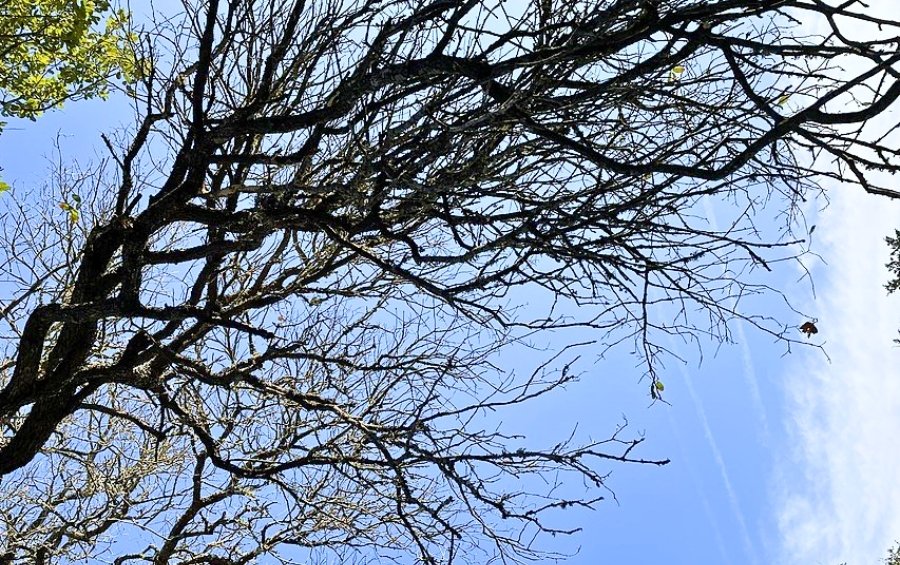
An oak stripped of nearly all its leaves by oak wilt, with only a few clinging to otherwise bare branches. Photo by: lanechaffin, CC0, via Wikimedia Commons
Get Ahead of Oak Wilt with a Professional Assessment from TreeTech
Oak wilt spreads in different ways, moves faster than most people expect, and has no cure. But it is largely preventable when homeowners know what to watch for and take a few consistent steps: don’t prune oaks during the growing season, paint any wound immediately, and don’t wait for symptoms before getting an evaluation.
If you’re worried about your oaks and something doesn’t look right, TreeTech, an Arbor Masters Company, can help. Our arborists, Scott Dahlberg and Jonathan Sayen, carry the Texas Oak Wilt Qualified credential and have extensive experience to evaluate risk, recommend preventive treatment, and help you protect the trees that make your property what it is. Call us today at 214-620-0475 or request a quote online.

Want More Like This?
Get the latest local news, tree care tips, special offers, and company updates directly to your inbox! It's easy to subscribe and there's no spam - we promise.
"*" indicates required fields
