
10 Most Common Trees in North Texas and What to Watch For
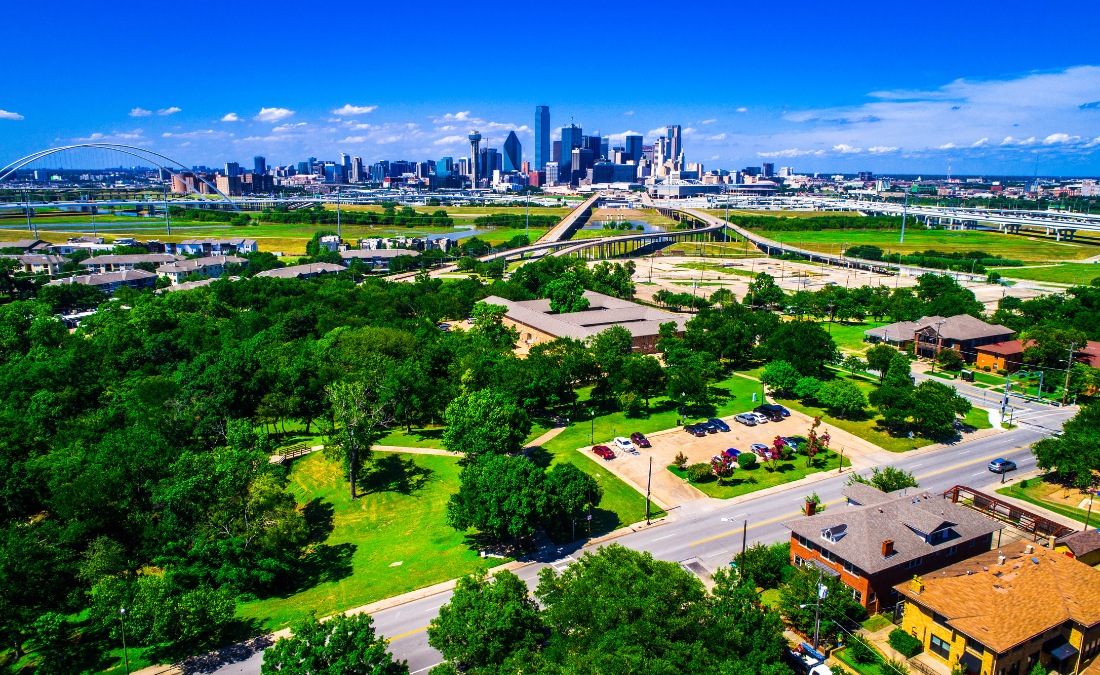
Different trees need different care, and getting it wrong can cost you. Learn to identify the 10 most common trees in North Texas and what to watch for.
Pruning a cedar elm in March is perfectly fine. Pruning the oak next to it in March can invite oak wilt, a disease that spreads through connected root systems and can kill every oak on the street. Same yard, same month, completely different consequences, and the only difference is knowing which tree is which.
Most common trees in North Texas are tough enough to handle our alkaline clay soil and brutal summers, but each one faces different problems and needs different care. Here are the 10 species you’re most likely to find in a Dallas or Fort Worth, what to look for, and what each one needs from you.
Key Takeaways
- Live oaks, Shumard red oaks, and bur oaks are the dominant shade trees across Dallas neighborhoods, but all three face oak wilt risk and should never be pruned during the growing season.
- Cedar elm and hackberry are among the toughest urban trees in our area, thriving in alkaline clay soil, drought, and compacted conditions where other species struggle.
- Crape myrtle is the most widely planted ornamental tree in Dallas but is frequently damaged by improper pruning and threatened by crape myrtle bark scale.
- Knowing what species are in your yard is the starting point for proper care, since each tree has different pruning timing, water needs, pest vulnerabilities, and soil requirements.
- Trees in North Texas face threats from alkaline clay soil, extreme summer heat, drought cycles, and local pests and diseases, so none of the most common species are truly maintenance-free.
What Are the Most Common Trees in North Texas?
Ten species make up the majority of what’s growing in Dallas-area yards and along neighborhood streets. Each one faces different problems in our alkaline clay soil and summer heat, and the care that helps one species can genuinely harm another.
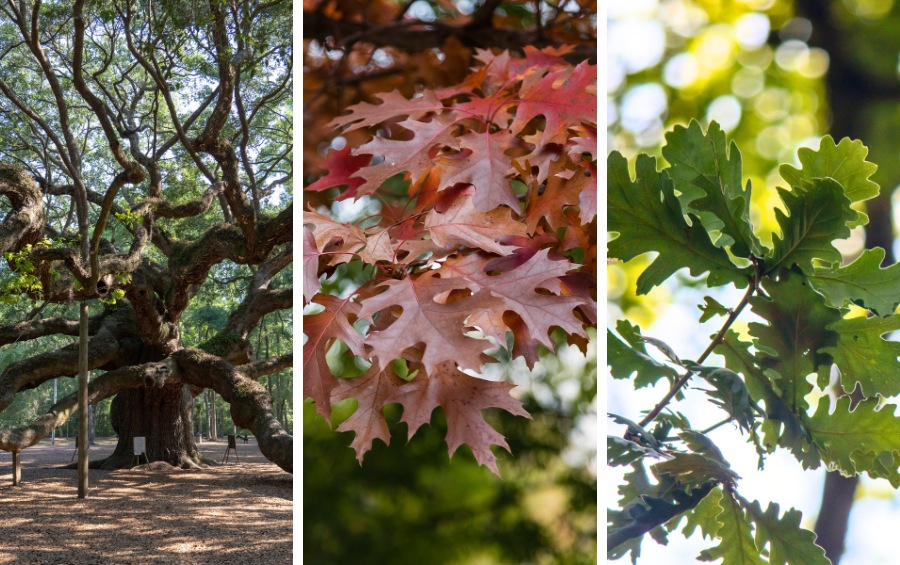
Left to right: A mature live oak with its characteristic spreading canopy, the deeply lobed fall foliage of a Shumard red oak, and the rounded leaf shape of a bur oak.
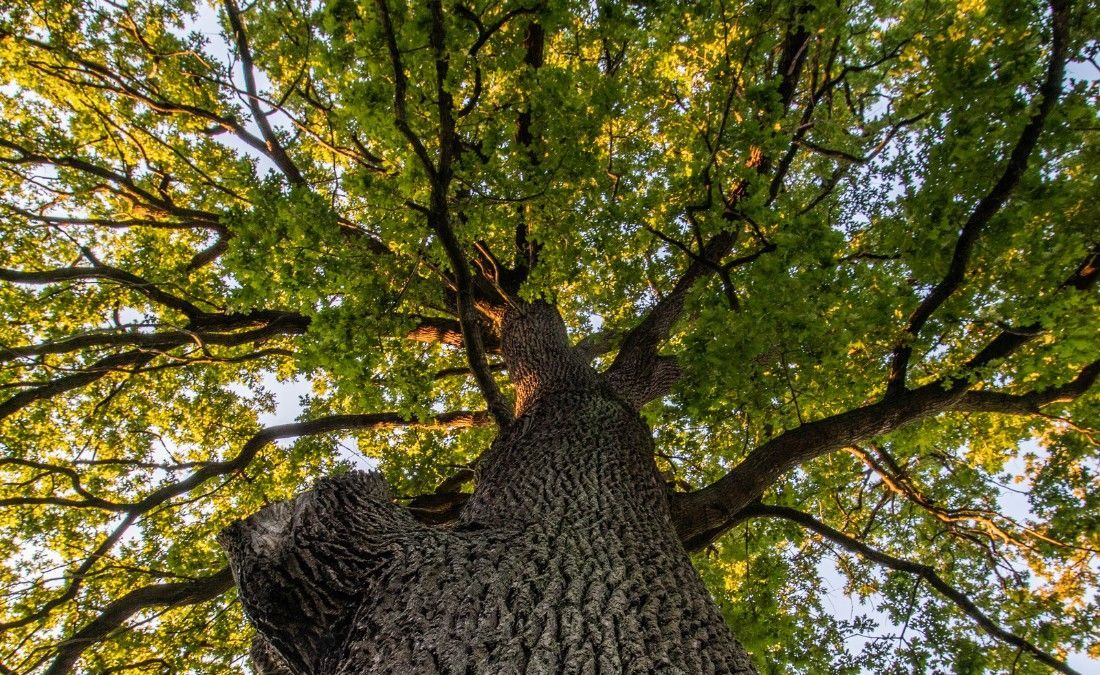
1. Live Oak (Quercus virginiana)
Live oak is the signature shade tree of North Texas. You’ll see them throughout neighborhoods like Highland Park, University Park, and Preston Hollow, where a single tree can shade an entire yard for generations.
Key Things to Know
- Size & Shape: 50–80 feet tall with a broad, sprawling canopy that can spread just as wide
- Seasonality: Semi-evergreen; drops old leaves in spring as new growth emerges
- Why Homeowners Choose It: Dense shade, long lifespan, iconic look
- Where It Thrives: Established neighborhoods with room to spread
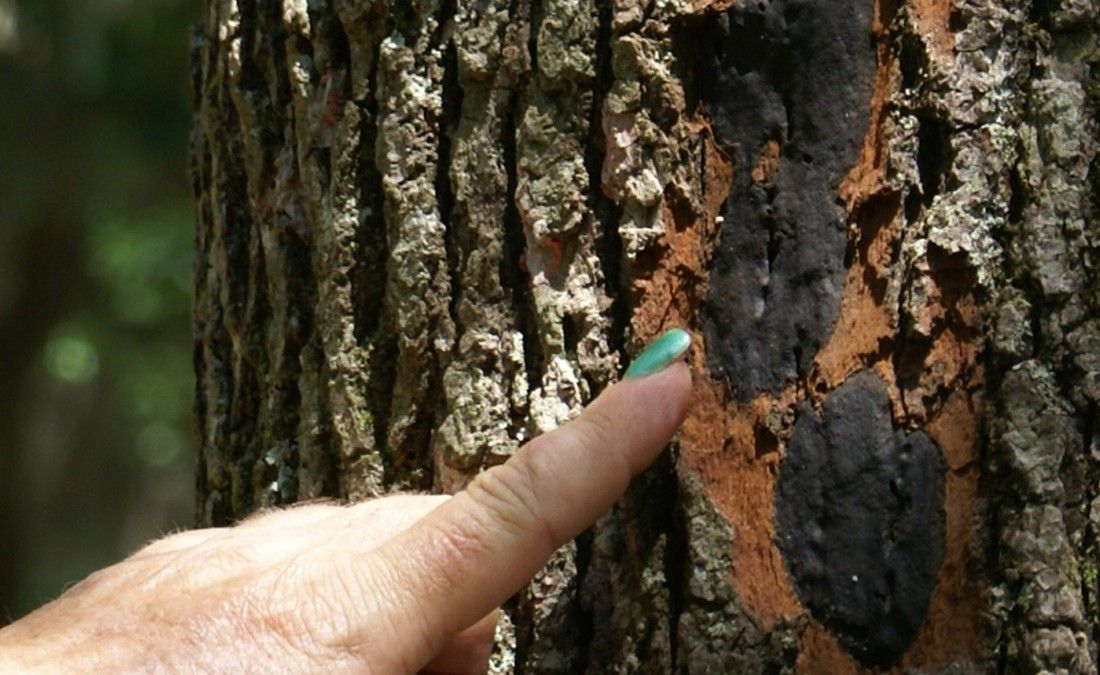
- Biggest Risk: Oak wilt, a fast-spreading fungal disease
- Important Tip: Avoid pruning during the growing season when beetles that spread oak wilt are most active
2. Shumard Red Oak (Quercus shumardii)
Shumard red oak is one of the best-adapted red oaks for North Texas, handling alkaline clay soil better than most. It’s a popular choice for yards and streets thanks to its upright shape and reliable fall color.
Key Things to Know
- Size & Shape: 60–80 feet tall with a more upright, rounded canopy than live oak
- Why Homeowners Choose It: Faster growth, strong shade, consistent fall color
- Where It Fits Best: Streetscapes and front yards where width is limited
- Biggest Risk: Oak wilt (progresses quickly—can kill in weeks)
- Other Concern: Occasional iron chlorosis on highly alkaline soils
- Important Tip: Avoid pruning during growing season to reduce oak wilt risk
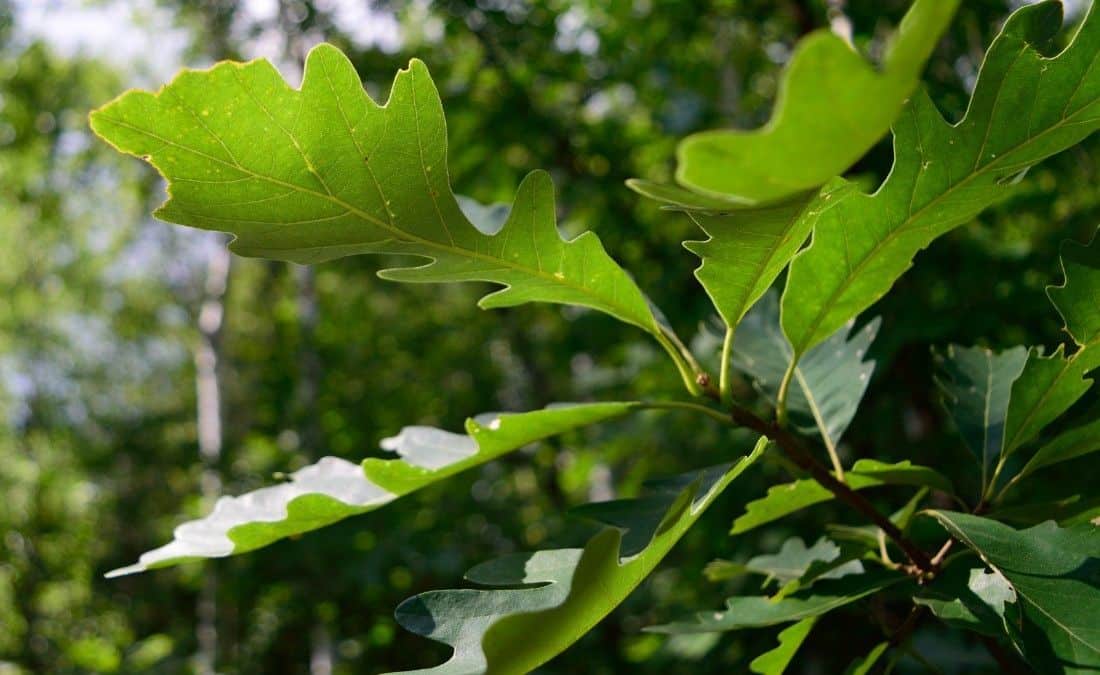
3. Bur Oak (Quercus macrocarpa)
Bur oak is a native, long-lived tree known for its massive acorns and rugged appearance. It’s built for longevity and performs well when given enough space to grow.
Key Things to Know
- Size & Shape: 50–80 feet tall and wide with a broad canopy
- Why Homeowners Choose It: Extremely long lifespan and strong drought tolerance
- Best Placement: Large lots, parks, or open landscapes
- Unique Trait: Produces very large acorns with fringed caps
- Biggest Risk: Oak wilt (more resistant than red oaks, but still vulnerable)
- Important Tip: Plant with plenty of space — this tree will outgrow tight areas
4. Cedar Elm (Ulmus crassifolia)
Cedar elm is one of the most reliable urban trees in North Texas. It’s native, drought-tolerant, and handles compacted soil and heat better than most species.
Key Things to Know
- Size & Shape: 50–60 feet tall with a rounded canopy
- Why Homeowners Choose It: Tough, adaptable, and low maintenance
- Where It Thrives: Streets, parks, and compacted urban soils
- Unique Trait: Blooms in late summer/fall instead of spring
- Biggest Risk: Mistletoe infestations weakening the canopy
- Other Concerns: Occasional insect activity (elm leaf beetles, aphids)
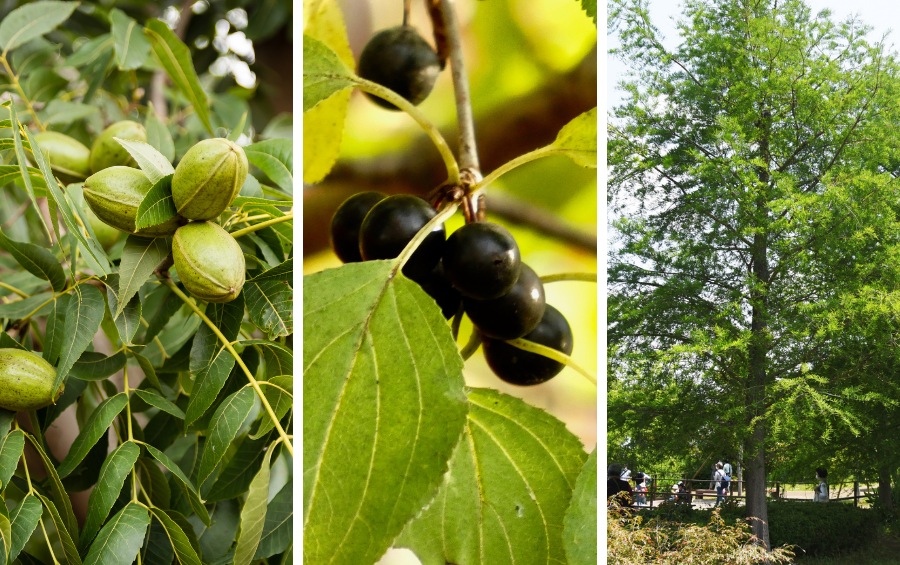
Left to right: Pecans developing on the branch in summer, the small dark drupes of a hackberry tree, and a mature bald cypress with its distinctive pyramidal form.
5. Pecan (Carya illinoinensis)
Pecan is the Texas state tree and one of the largest trees you’ll find on a residential lot in DFW. It offers wildlife value and nut production but requires more care than most species.
Key Things to Know
- Size & Shape: 60–80 feet tall and wide with an open, airy canopy
- Why Homeowners Choose It: Nut production, wildlife attraction, large shade canopy
- Where It Thrives: Older neighborhoods with space and established soil
- Biggest Challenge: High water and nutrient demands
- Common Issue: Zinc deficiency (rosette) in alkaline soil
- Important Tip: Regular soil health management helps prevent nutrient issues
6. Hackberry (Celtis occidentalis)
Hackberry is one of the toughest native trees in North Texas; it handles poor soil, drought, compaction, and outright neglect better than almost anything else in our area. They’re also one of the more forgiving trees to have near pavement, as the root system is less aggressive than pecans or oaks, and they tolerate the reflected heat and compacted soil that comes with driveways and sidewalks.
Key Things to Know
- Size & Shape: 40–60 feet tall with a rounded canopy
- Why Homeowners Choose It: Fast growth and high durability
- Where It Thrives: Older neighborhoods and tough urban sites
- Unique Trait: Distinctive warty, corky bark
- Biggest Weakness: Brittle wood prone to storm damage
- Important Tip: Regular pruning helps reduce risk of branch failure
7. Bald Cypress (Taxodium distichum)
Bald cypress is the odd tree out on our list, as it is a deciduous conifer that drops its feathery needles every fall, turning orange-brown before they go. It adds visual variety and performs best in areas with consistent moisture.
Key Things to Know
- Size & Shape: 60–75 feet tall with a narrow, pyramidal form
- Why Homeowners Choose It: Unique texture and strong seasonal interest
- Where It Thrives: Near water, drainage areas, or irrigated landscapes
- Seasonality: Drops needles in fall (normal, not a problem)
- Biggest Challenge: Drought stress in dry, compacted soils
- Important Tip: Supplemental watering during summer helps maintain health
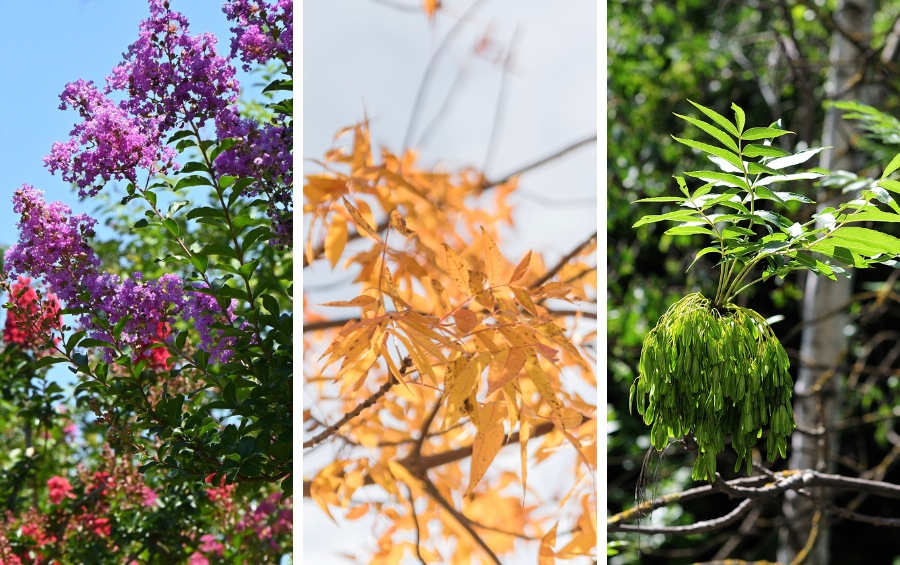
Left to right: Crape myrtle in full summer bloom, the striking fall color of a Chinese pistache, and the distinctive winged seed clusters of a Texas ash.
8. Crape Myrtle (Lagerstroemia spp.)
Crape myrtle is the most widely planted ornamental tree in Dallas, valued for its summer blooms and attractive bark. It’s versatile, but often improperly pruned.
Key Things to Know:
- Size & Shape: Small ornamental tree with smooth, peeling bark
- Why Homeowners Choose It: Long bloom season and heat tolerance
- Where It Thrives: Full sun in residential and commercial landscapes
- Biggest Issue: Crape myrtle bark scale (waxy buildup + sooty mold)
- Common Mistake: Over-pruning (“crape murder”) weakens the tree
- Important Tip: Proper pruning maintains structure and reduces stress
9. Chinese Pistache (Pistacia chinensis)
Chinese pistache is a highly adaptable, medium-sized shade tree known for its vibrant fall color and low maintenance needs.
Key Things to Know
- Size & Shape: 25–40 feet tall with a rounded canopy
- Why Homeowners Choose It: Excellent fall color and drought tolerance
- Where It Fits Best: Smaller yards needing moderate shade
- Biggest Concern: Occasional verticillium wilt
- Maintenance Needs: Minimal once established
- Important Tip: Choose male trees to avoid invasive spread from berries
WARNING: Chinese pistache is listed as an invasive species in Texas. Female trees produce berries that birds spread into wild areas, where they can outcompete native plants. Choosing a male tree avoids the issue entirely.
10. Texas Ash (Fraxinus texensis)
Texas ash is a smaller shade tree valued for its fall color and adaptability, but it currently faces a serious threat from an invasive pest.
Key Things to Know
- Size & Shape: 30–45 feet tall with an open, rounded canopy
- Why Homeowners Choose It: Early fall color and smaller size
- Where It Thrives: Limestone-based soils and naturalized areas
- Biggest Threat: Emerald ash borer (often fatal once symptoms appear)
- Important Tip: Early detection and treatment are critical for survival
Frequently Asked Questions About Common North Texas Trees
What trees should you avoid planting in North Texas?
A few species are common in local nurseries but tend to cause problems long-term:
- Bradford pear has weak branch structure that splits apart in storms and is considered invasive.
- River birch needs acidic soil and almost always develops iron chlorosis in Dallas’s alkaline clay.
- Silver maple grows fast but has brittle wood, aggressive surface roots, and breaks apart in storms.
- Arizona ash is short-lived and increasingly vulnerable to emerald ash borer.
- Most palms aren’t cold-hardy enough to survive North Texas freeze events.
If you already have one of these and it’s struggling, a Certified Arborist can help you weigh treatment versus removal.
What is the fastest-growing shade tree for North Texas?
Chinese pistache and Shumard red oak are among the faster growers that also hold up well long-term. Many other fast-growing trees, such as silver maples, have brittle wood that leads to them breaking during storms.
Do I need a permit to remove a tree in Dallas?
In most cases, yes, you will need a permit. Dallas has tree preservation ordinances that require a permit before removing trees above a certain size. The specific rules depend on trunk diameter, species, and your neighborhood. An arborist familiar with local regulations can walk you through the process and handle the paperwork.
How often should I have my trees inspected?
A tree inspection is ideal every few years for an established tree. Annual inspections are a good idea for high-value oaks (given the oak wilt risk), any ash trees (given the EAB threat), and mature trees near structures. A Certified Arborist can catch problems early, before they turn into emergencies.
Know Your Trees, Protect Your Property with Help from TreeTech
North Texas yards are built around a handful of tough, well-adapted species. But “tough” doesn’t mean “maintenance-free.” Every tree on this list faces at least one problem shaped by the tree stress caused by our alkaline clay soil, summer heat, or the pests and diseases active in the Dallas and Fort Worth area, and what each one needs from you is different.
When you aren’t sure what tree you have or how to care for it, the team at TreeTech, an Arbor Masters company, is ready to help. Our arborists can identify the tree species, determine any problems, and perform treatments to get your trees back in prime health. Call us today at 214-620-0475 or request a quote online.
Want More Like This?
Get the latest local news, tree care tips, special offers, and company updates directly to your inbox! It's easy to subscribe and there's no spam - we promise.
"*" indicates required fields
