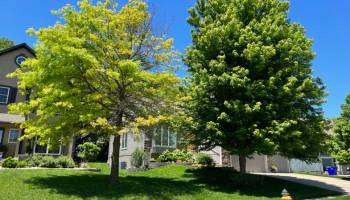
How Buried Root Flares Impact the Health of Northland’s Oaks
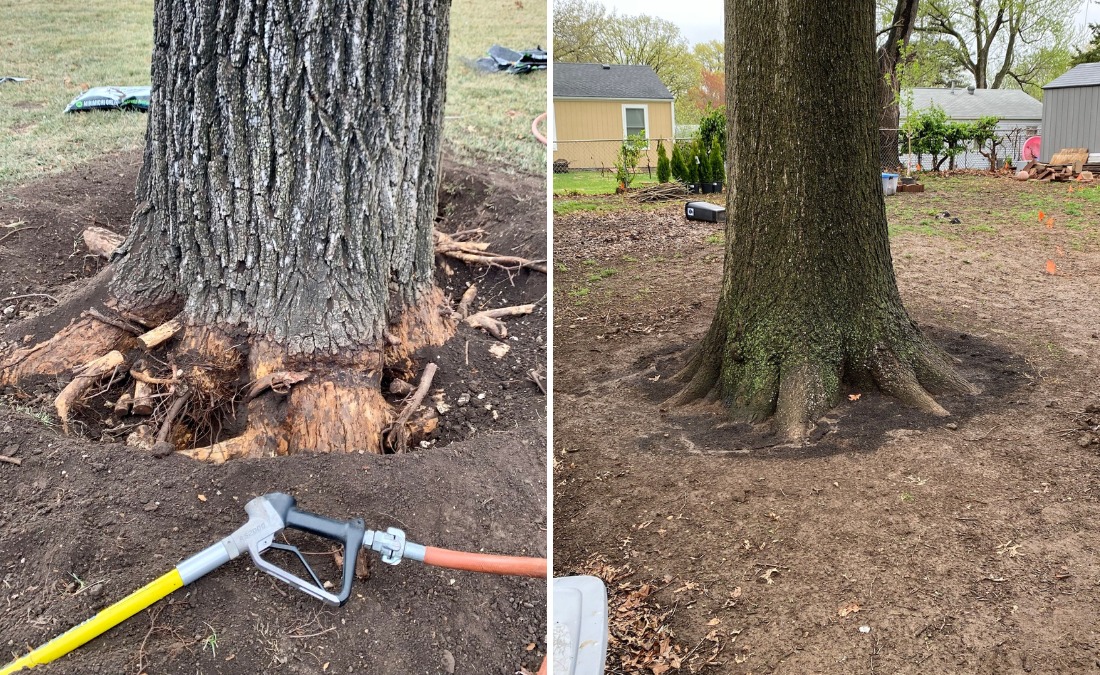
Your oak might not be dying of old age — a buried root flare could be the real problem. Know the warning signs and find out what a Certified Arborist can do.
Many of the Northland’s mature oaks were planted decades ago — and some of them were planted too deep, leaving what’s known as a buried root flare. It doesn’t always look like a problem at first. In fact, most people don’t notice anything is wrong for years. But over time, something starts to change.
If your oak hasn’t looked quite right and you can’t put your finger on why, the answer might be hiding at the base of the tree.
Key Takeaways
- A buried root flare slowly suffocates your oak by cutting off oxygen and nutrient exchange at the trunk base.
- Many oaks in 1980s-era Northland neighborhoods, like Clay Woods, Wilshire Estates, and Hallbrook, have root flares buried by original construction grading or decades of mulch buildup.
- The quickest self-check is the “telephone pole test” — if your trunk goes straight into the ground with no visible widening, the root flare is likely buried.
- An ISA Certified Arborist can perform root collar excavation to expose and assess the root system without damaging the tree.
- Trees with buried root flares respond well to treatment if caught early enough; waiting until the canopy is severely thinned reduces recovery chances.
What Is a Root Flare?
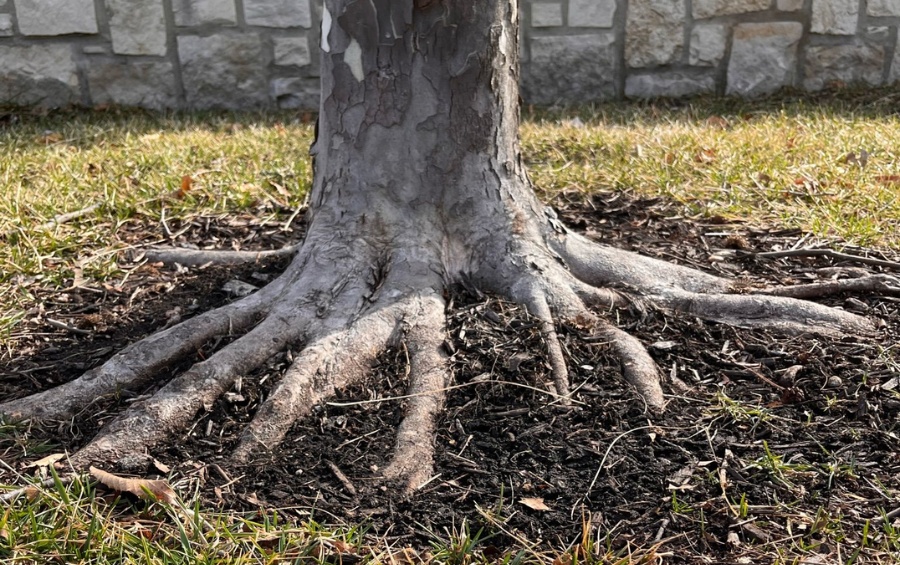
The root flare is the zone where a tree’s trunk widens and transitions into the major structural roots. It’s not just cosmetic; this area contains lenticels, small pores in the bark that help regulate gas exchange and keep the underlying tissue healthy. Every healthy tree has a visible flare at the soil line, and when that flare gets buried, the tree essentially loses its ability to breathe at ground level.
Oaks are especially at risk because they often look healthy long after internal decline has started. Northern red oaks in particular can appear fine from the canopy down for years — which means by the time you notice a problem, the tree may have been struggling for a decade or more.
How Buried Soil and Mulch Damage the Root Flare
When soil or mulch covers the root flare, it keeps bark tissue constantly moist, blocking the lenticels and cutting off oxygen exchange. Without oxygen, the phloem — the layer beneath the bark that transports food from leaves to roots — begins to break down, slowly suffocating the tree from the ground up.
But suffocation is only half the problem. That buried bark also triggers adventitious roots — roots that sprout in abnormal locations and wrap around the trunk instead of growing outward. Over time, these roots tighten like a belt around the trunk, compressing the very tissues the tree depends on to move water and nutrients. Arborists call them girdling roots, and once they take hold, the damage compounds:
- Water and nutrient flow to the canopy decreases year after year
- The canopy thins and branches die back from the tips
- The tree becomes increasingly vulnerable to storms and disease
Fortunately, this cycle can be interrupted. Catching root flare issues early — before girdling roots have a chance to fully compress the trunk — gives an arborist the best chance of saving the tree through professional tree preservation.
Why Are So Many Northland Oaks Affected?
Most of the damage traces back to two things: how these neighborhoods were built and how the trees have been maintained since. Construction buried root flares overnight, while decades of mulching did the same thing gradually.
Construction Grading Buried Root Flares from Day One
During the 1980s, construction crews routinely added fill soil around existing native oaks to level terrain for foundations and driveways as new residential neighborhoods went in across the Northland. Even a few inches of heavy clay fill can damage sensitive species, and oaks are among the most vulnerable to construction-related root injury. Nursery trees planted during that era were also commonly set too deep, burying the root flare from the start.
This played out across Northland neighborhoods, like Clay Woods, Wilshire Estates, and Bent Oaks in Liberty, along with Hallbrook and Woodland Reserve in Parkville. Those trees are now 35 to 45 years old, exactly the age when buried root flare damage becomes visible in the canopy.
Volcano Mulching and Clay Soil Make It Worse
Volcano mulching — piling mulch against the trunk in a mound shape — is one of the most common ways root flares get buried after construction. It rarely starts on purpose; most homeowners simply add a fresh ring of mulch each spring without pulling back the old layer first, and over the years that ring creeps higher and higher against the trunk, slowly burying the root flare. Missouri’s heavy clay soils make it worse by holding moisture against the bark longer than sandy or loamy soils would, keeping that buried tissue constantly wet.
That’s why trees in these older Northland neighborhoods often need professional evaluation — even if they’ve never lost a branch.
How Do You Know If Your Oak Has a Buried Root Flare?
A quick visual check at the base of your trunk can reveal whether the root flare is buried — no tools or digging required. Stand at the base of your oak and look where the trunk meets the ground. A healthy tree shows a visible widening — a gradual taper where the trunk flares out before dividing into roots. If the trunk goes straight into the ground like a telephone pole with no visible flare, it’s almost certainly buried too deep.
PRO TIP: Walk your property during the dormant season and check the base of every mature tree. If any trunk enters the ground without a visible flare, mark it for a professional evaluation this spring.
Oak Decline Symptoms That Point to a Buried Root Flare
A buried root flare often produces a combination of the following symptoms:
- Smaller-than-normal or yellowing leaves
- Browning at the edges of leaves during summer (leaf scorch)
- Branch dieback starting at the tips of the upper canopy
- A thinning canopy compared to similar oaks nearby
- Early fall color and premature leaf drop
Any single symptom could have other causes. But several together — especially on a tree that fails the telephone pole test — point strongly toward a buried root flare. Many of these symptoms overlap with broader oak decline patterns, which makes professional diagnosis especially important.
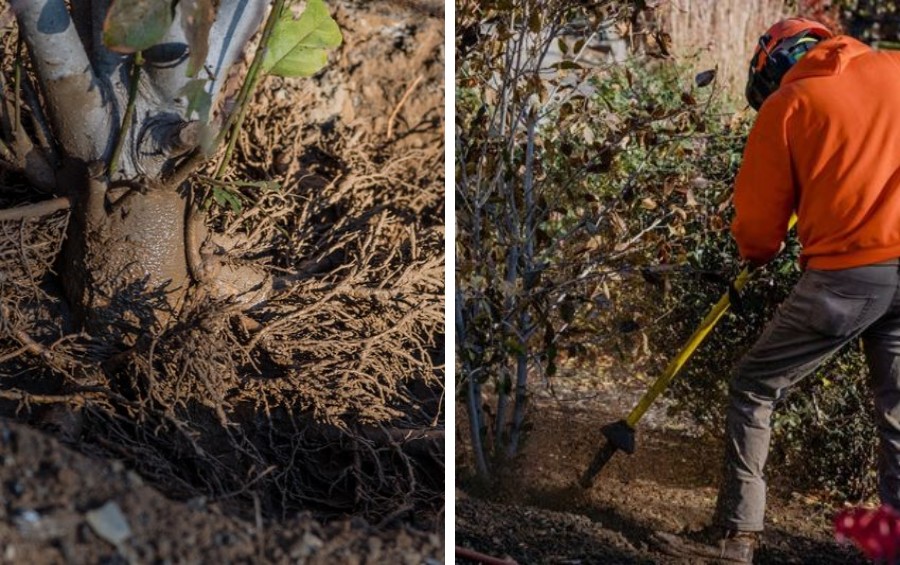
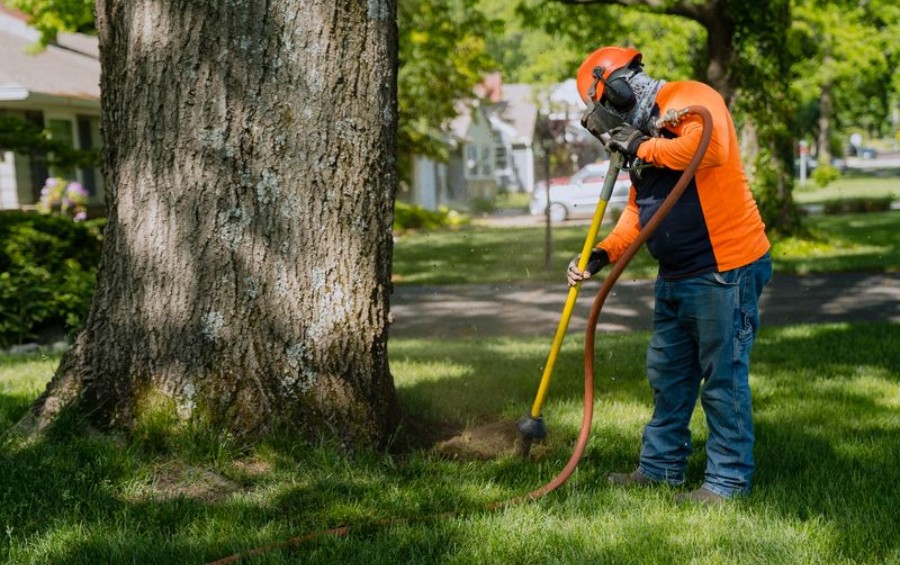
An air spade uses compressed air to remove soil without damaging roots — the safest way to expose a buried root flare on a mature oak.
Can a Buried Root Flare Be Fixed?
Yes, a buried root flare can be fixed — if it’s caught early enough. Trees with reasonable canopy density respond well to root collar excavation, where an arborist uses compressed air tools to remove soil from around the trunk without damaging roots. Treatment often stabilizes decline and extends the tree’s life by decades.
The key word is “early” — trees with extensive girdling root compression or major trunk decay may not fully recover, and the longer a tree stays stressed, the more vulnerable it becomes to opportunistic infections like oak wilt and bacterial leaf scorch. Excavation paired with ongoing nutrient support gives the tree its best chance — but in advanced cases, removal may be safer than leaving a weakened tree standing.
DID YOU KNOW? Treating a buried root flare costs a fraction of what you’d spend removing a dead oak and replacing it. The earlier you act, the less it costs and the better the outcome.
Frequently Asked Questions About Buried Root Flares
Does a buried root flare affect trees other than oaks?
Yes — maples, elms, pines, and poplars are also prone to buried root flare problems and girdling roots. Oaks tend to take the hardest hit because they can look healthy on the outside while deteriorating internally, which often means the problem isn’t caught until treatment options are limited.
How long does it take for a tree to show improvement after root flare excavation?
Most trees begin showing improved canopy density and leaf size within one to two growing seasons after treatment. Full recovery depends on the extent of girdling root damage and ongoing care like proper watering and fertilization.
Can a tree with girdling roots still be saved?
It depends on how far the girdling roots have progressed. If they’ve only partially compressed the trunk, an arborist can often remove or sever them during root collar excavation and give the tree a strong chance at recovery. If the roots have fully encircled the trunk and cut off most of the water and nutrient flow, the damage may be too extensive to reverse.
Is my tree more likely to fall during a storm if the root flare is buried?
Yes. A buried root flare weakens the tree’s structural anchor point — the zone where the trunk transfers force into the root system. As girdling roots compress the trunk and the root system deteriorates, the tree becomes significantly more vulnerable to wind throw during storms, even storms that don’t damage healthy trees nearby.
Will my homeowner’s insurance cover root flare excavation?
Homeowner’s insurance typically does not cover tree health care or maintenance services like root collar excavation. However, if a tree with an untreated buried root flare fails and damages your home, the cost of emergency removal and structural repair far exceeds the cost of preventive treatment.
Root collar excavation reveals what’s been hidden underground for decades — tangled roots, compacted clay, and bark that was never meant to stay buried.
Schedule a Root Flare Assessment Before Your Oak’s Next Growing Season
If the base of your oak goes straight into the ground with no visible flare, that’s not just how the tree grew. It’s usually a buried root flare — and it’s been affecting the tree for a long time. This isn’t something that corrects itself. But when it’s caught early enough, it’s often something that can be addressed.
Arbor Masters’ ISA Certified Arborists have the training, tools, and local experience to evaluate your oaks and recommend the right course of action. Call us at 913-441-8888 or request a quote online for a root flare assessment in Kansas City’s Northland.
Want More Like This?
Get the latest local news, tree care tips, special offers, and company updates directly to your inbox! It's easy to subscribe and there's no spam - we promise.
"*" indicates required fields