
How to Protect Your Evergreens from Winter Burn with Anti-Desiccants

Winter damage starts long before you see it. Anti-desiccants help protect evergreens and shrubs from the moisture loss that turns them brown in spring.
You’ve poured time and money into the evergreens that shape your landscape, including those boxwoods flanking the entry, the arborvitae giving you privacy on the patio, and the white pines that make your backyard feel established. So, finding them brown and distorted in spring is more than disappointing – it feels like watching an investment unravel overnight.
But the truth is, that damage didn’t just happen, it started during winter, long before you ever saw the symptoms. And once it shows up, there’s no reversing it. The real path to healthy evergreens is preventing moisture loss before winter hits, which is exactly where professional protection and anti-desiccant treatments come in.
Key Takeaways
- Winter burn occurs when frozen ground prevents evergreens from replacing moisture lost through their needles, causing irreversible browning damage.
- Anti-desiccant treatment reduces moisture loss by 15-20% and must be applied in late fall or early winter, before severe weather arrives.
- Boxwood, arborvitae, yew, and white pine are among the most vulnerable species in Kansas, Missouri, and Iowa landscapes.
- Professional application ensures proper timing, complete coverage, and product selection based on your specific trees and regional climate conditions.
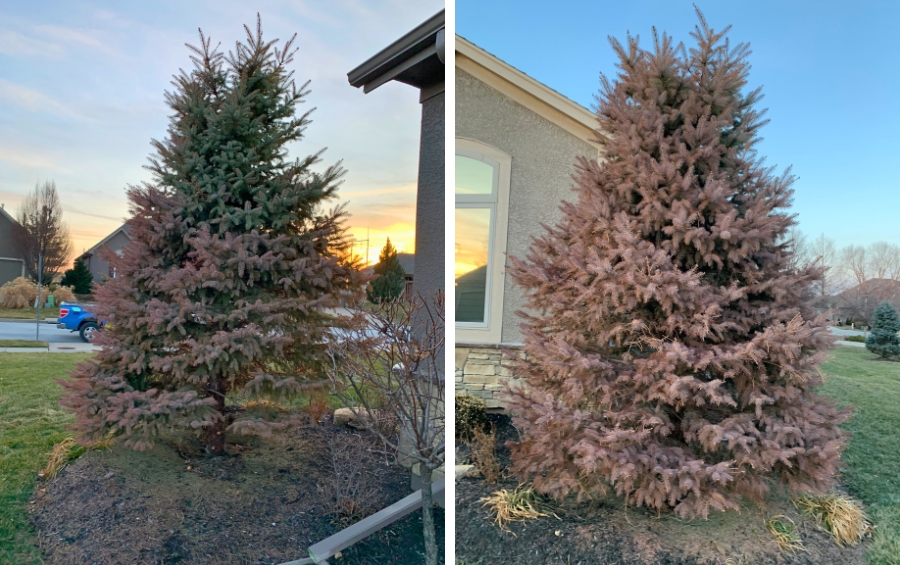
Left: early-stage winter burn with green still visible at the crown. Right: what happens without treatment. Once damage reaches this point, replacement is often the only option.
Why Do Evergreens Turn Brown in Winter?
Evergreens turn brown in winter because frozen ground prevents roots from replacing moisture lost through their needles, causing dehydration damage called winter burn. Two factors determine how severe this damage becomes: how quickly moisture escapes and how early you recognize the warning signs.
What Causes Winter Burn on Evergreens?
Unlike deciduous trees that drop their leaves and go fully dormant, evergreens keep their foliage year-round, which means they continue losing moisture through transpiration even in the dead of winter. In above-freezing conditions, roots absorb water from the soil to replace what’s lost. But when the ground is frozen solid, that water supply gets cut off entirely.
It’s a bit like trying to drink through a straw that’s frozen shut; your evergreen is still losing moisture through its needles, but it can’t access any water to replace it. The result is dehydration – and the damage is irreversible.
What Does Winter Burn Look Like on Trees and Shrubs?
Signs of winter burn damage include:
- Browning that starts at needle tips and progresses inward toward the branch
- Leaf edge burn on broadleaf evergreens like boxwood and holly
- Damage concentrated on the sunny or windward side of the plant
- Foliage that appears scorched, dried out, or crispy to the touch
Unfortunately, symptoms don’t appear until late winter or early spring – after prevention is no longer possible; that’s why it’s important to use the proper prevention strategies and protect vulnerable trees.
Important Note: Some evergreens (like arborvitae and certain boxwoods) naturally turn bronze, purple, or reddish-brown in winter – this is normal and reverses in spring. Winter burn damage does not. If foliage stays brown after other plants green up, you’re looking at winter burn.
Which Evergreens Are Most Vulnerable to Winter Burn?
The most vulnerable evergreens fall into two categories: broadleaf varieties with large leaf surfaces that lose moisture quickly, and thin-needled conifers that lack natural waxy protection.
Which Broadleaf Evergreens Need Winter Protection?
Because of their large, flat leaves that have a larger surface area for moisture to escape, these trees require adequate winter protection:
- Boxwood
- Holly varieties
- Rhododendron
- Azalea
- Southern magnolia
Beyond species, certain situations increase winter burn risk, including:
- Young or recently planted trees with limited root systems
- Solitary trees planted far from structures or windbreaks
- Trees along roadsides or driveways exposed to de-icing salt spray
- Evergreens in open, unprotected areas with full sun and wind exposure
Which Conifers Benefit Most from Anti-Desiccant Treatment?
Thin-needled conifers lose moisture quickly through their abundant foliage, especially when planted in exposed locations. The conifers that would benefit most from anti-desiccant treatments are:
- Arborvitae
- White pine
- Yew
- Dwarf Alberta spruce
- Juniper
Did You Know?: Juniper is the only evergreen native to the Kansas City area, which is why other landscape evergreens (arborvitae, pine, spruce) often struggle in our climate.
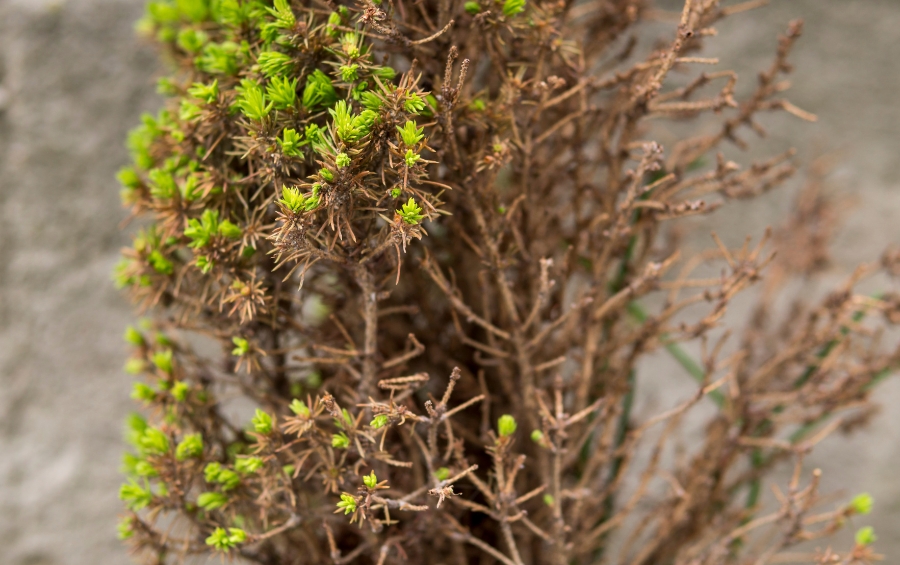
Some evergreens push new growth after winter burn, but dead branches won’t recover. Years of regrowth may be needed to restore the plant’s shape – if it survives at all.
How Do you Protect Evergreens from Winter Burn?
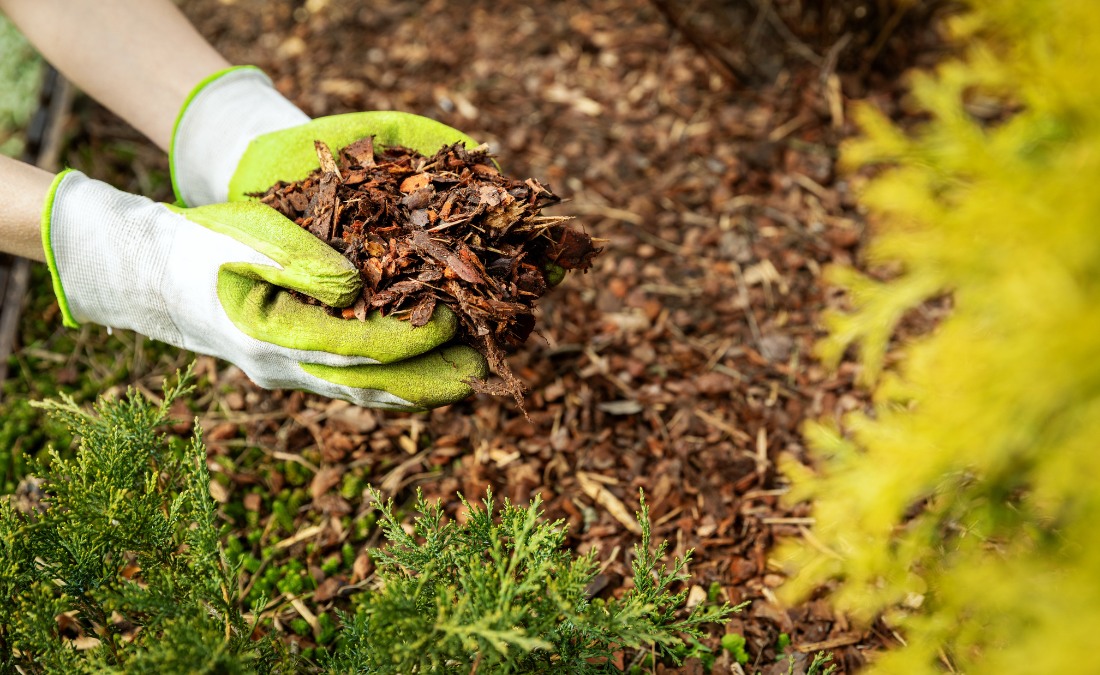
The most effective prevention strategies include deep watering in fall before the ground freezes, mulching around the root zone to retain soil moisture, and applying anti-desiccant spray to vulnerable foliage.
Of these, anti-desiccant treatment provides the most direct protection; it reduces moisture loss by 15-20% by creating a thin barrier on needles and leaves.
What Is Anti-Desiccant Spray?
Anti-desiccant products create a thin, waxy coating over foliage that slows moisture loss without interfering with normal plant functions.
How the protective barrier works:
- Reduces water escaping through needle and leaf surfaces
- Shields plants from drying winter winds
- Protects against road salt spray that compounds desiccation stress
- Breaks down gradually over 2-3 months (reapplication often needed)
Should You Apply Anti-Desiccant to All Evergreens?
No, not all evergreens need treatment. Blue spruce (Picea pungens) and other waxy blue conifers have a natural coating that provides built-in protection. Applying anti-desiccant can interfere with this defense, causing more harm than good.
When Should You Apply Anti-Desiccant Treatments?
The optimal application window is late November through December, after plants are fully dormant but before severe cold arrives. Apply when temperatures are between 40-50°F on a dry day with no rain forecast for 24 hours.
Application requirements:
- Plants must be fully dormant (monitor actual conditions, not just calendar dates)
- Dry weather with no rain forecast for at least 24 hours
- Single application provides 2-3 months of protection; follow-up in January/February recommended
Why Does Professional Anti-Desiccant Application Work Better Than DIY?
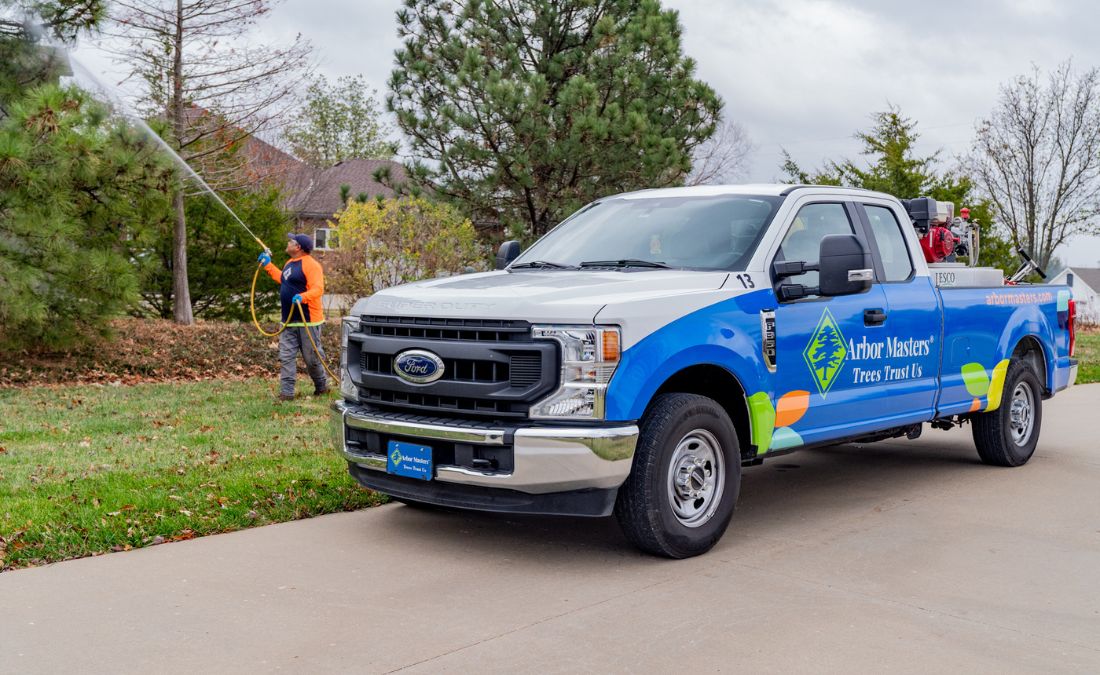
Proper treatment requires precise timing, complete coverage, and product expertise that most homeowners can’t replicate with garden-center equipment. Professional-grade sprayers reach all foliage surfaces – tops, undersides, and interior branches – while arborists monitor actual weather and plant dormancy rather than relying on calendar dates alone.
What Arbor Masters provides:
- Free assessment to identify which evergreens need treatment vs. those with natural protection
- Bee-safe, reduced-risk anti-desiccant products with formulations matched to plant type
- Complete coverage using commercial equipment
- Follow-up scheduling for reapplication
- Service across Kansas City metro, Wichita, and Iowa markets
Combining anti-desiccant treatment with our winter fertilization program gives your trees comprehensive above- and below-ground protection. We apply fertilizer using 6″ probes that reach below turf grass roots, delivering biochar for moisture retention, beneficial microbes for soil health, and a potassium-rich NPK ratio for root development.
Frequently Asked Questions About Anti-Desiccants
How long does anti-desiccant protection last?
A single application typically provides 2-3 months of protection, though rain, snow, and warm spells gradually break down the coating. For complete winter coverage, most evergreens benefit from an early winter application followed by a second treatment 1-2 months later.
Can winter burn kill an evergreen tree?
Severe winter burn rarely kills established evergreens outright, but it can cause significant dieback that permanently disfigures the plant. Repeated years of damage weaken trees and increase susceptibility to pests and disease. Young or recently planted evergreens face higher risk.
Will my winter-burned evergreens recover in spring?
Brown foliage from winter burn does not turn green again; those needles or leaves are dead. New growth may fill in gaps over time, but severely damaged plants can take years to recover their shape, if they recover at all. Prevention is far more effective than hoping for recovery.
How much does professional anti-desiccant treatment cost?
Cost varies based on the number and size of plants requiring treatment. For most residential properties, professional application is comparable to other seasonal plant health care treatments. Contact Arbor Masters for a free assessment and quote specific to your landscape.
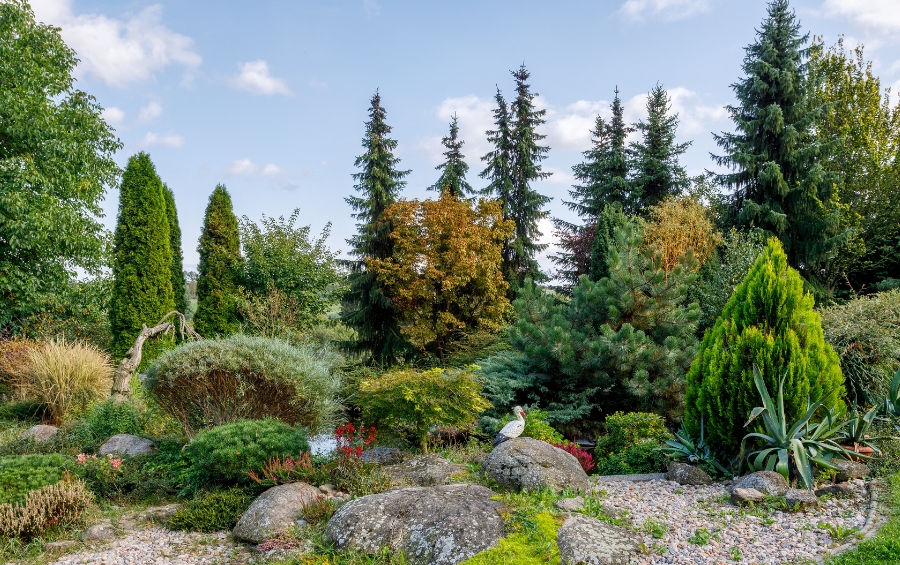
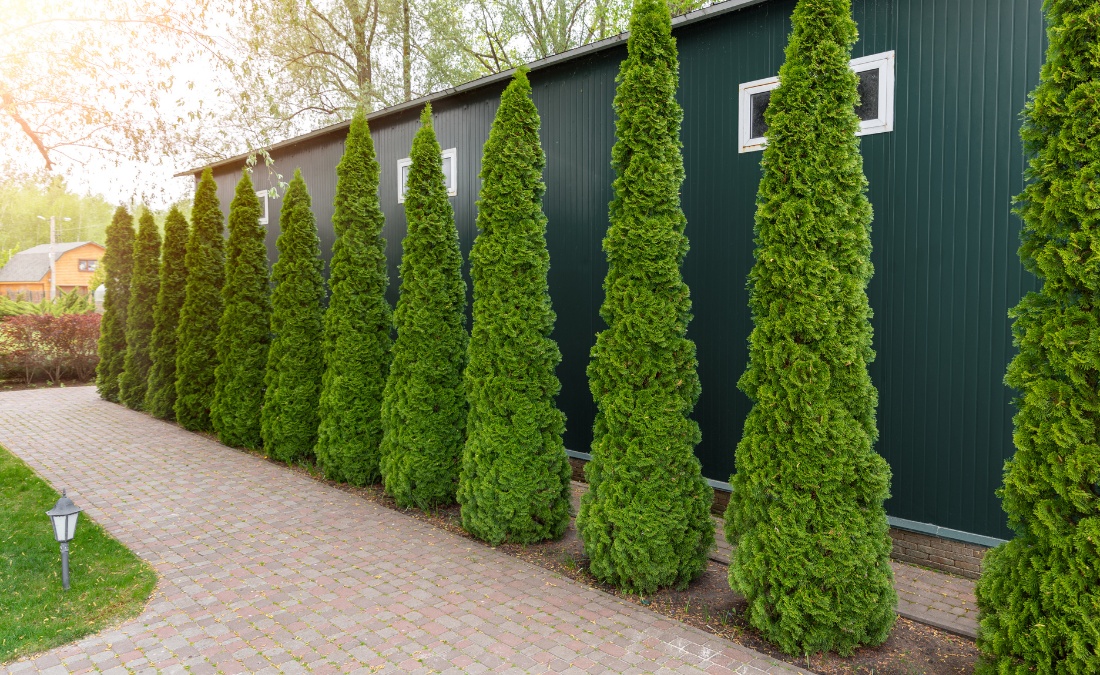
A thriving evergreen landscape like this represents years of investment – winter tree protection keeps it that way.
Protect Your Evergreens Before Winter Damage Sets In
The window for winter tree protection is closing fast and winter burn damage is irreversible. Don’t wait until spring to discover what could have been prevented this month.
Appointments for winter protection fill up fast when the cold settles in; call 816-524-3131 or get in touch online to schedule your free assessment with a Certified Arborist from Arbor Masters and set up your evergreens for a successful growing season next spring.
Learn More With These Related Articles
Want More Like This?
Get the latest local news, tree care tips, special offers, and company updates directly to your inbox! It's easy to subscribe and there's no spam - we promise.
"*" indicates required fields
