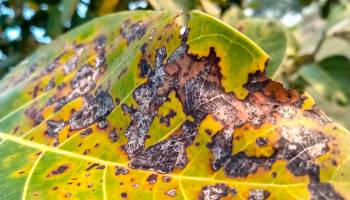
How Cabling and Bracing Can Save Your OKC Trees from Severe Oklahoma Weather
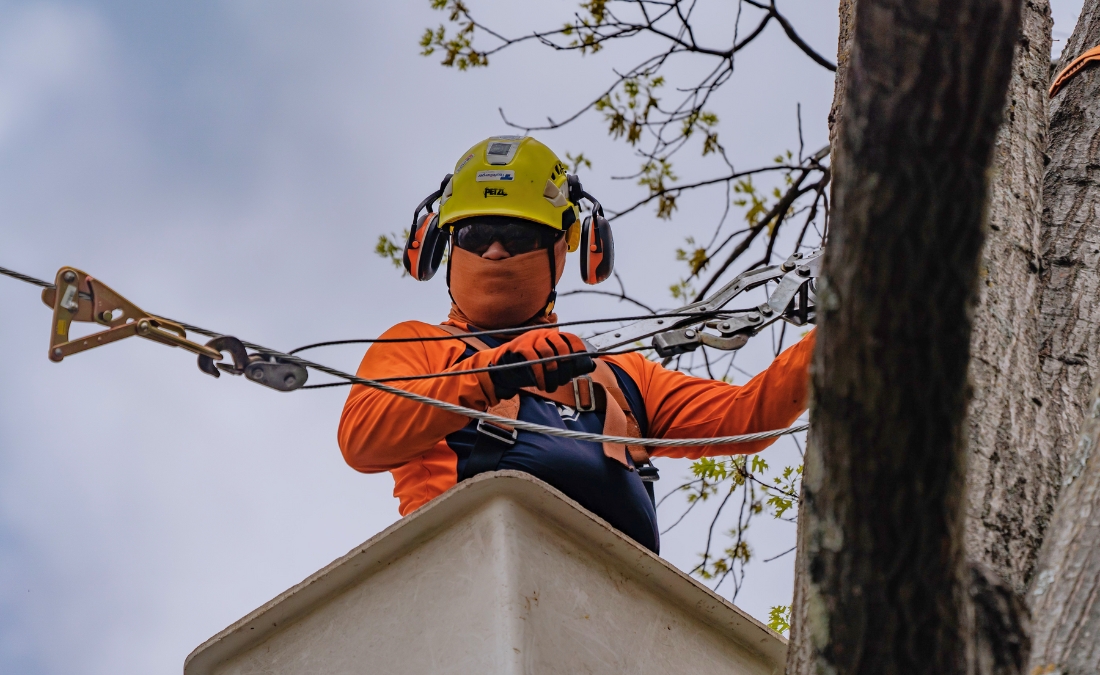
One Oklahoma storm can destroy decades of growth. Protect your OKC trees from winter ice and spring tornado damage with expert cabling and bracing this season.
Winter in Oklahoma City can transform beautiful trees into potential hazards overnight. As temperatures drop and we move toward the season of ice storms, homeowners with mature trees face tough decisions about protecting their valuable landscape investments. Many don’t realize that professional cabling and bracing systems offer effective solutions for preserving trees through both winter ice accumulation and the tornado season that follows.
Key Takeaways
- November-December is the perfect time to install cabling and bracing before winter ice damage occurs and well ahead of spring tornado season.
- Professional support systems typically cost much less than removing and replacing mature trees damaged by storms.
- Different tree species and structures common in OKC neighborhoods require specific support approaches for maximum effectiveness.
- Professional installation by ISA Certified Arborists ensures proper technique and materials that can significantly extend a tree’s life.
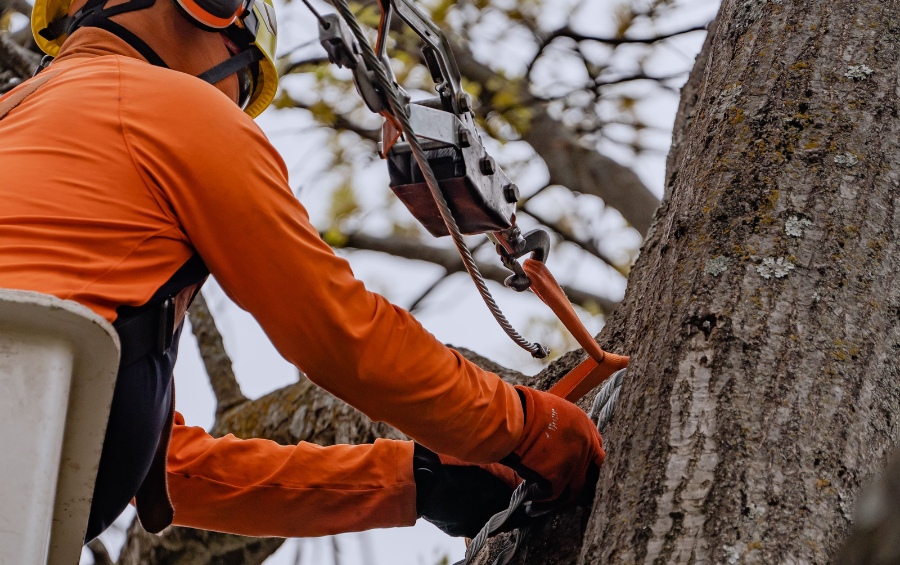
Professional installation requires specialized equipment and training to properly secure cabling systems that can withstand Oklahoma’s extreme weather conditions.
What Are Tree Support Systems?
Tree support systems reinforce structural integrity in trees with potential weaknesses. Cabling uses steel cables high in the canopy to limit branch movement during high winds or under ice loads, while bracing employs threaded rods to provide rigid reinforcement for weak branch unions or to repair trunk splits.
These systems are particularly valuable for trees with:
- V-shaped branch unions
- Co-dominant stems
- Long horizontal branches
According to the International Society of Arboriculture, proper structural support can significantly extend the life of trees with structural defects.
“What many Oklahoma homeowners don’t realize is that once you lose a 60-year-old oak to storm damage, you’ve lost a lifetime of growth and property value that simply can’t be replaced. Proper structural support systems can preserve these trees through our most extreme weather events for a fraction of the replacement cost.” – Tim Henson, Certified Arborist at Arbor Masters
How Cabling and Bracing Protects Against OKC’s Extreme Weather
Oklahoma City residents know it better than anyone – our community faces severe weather year-round, from devastating tornadoes in the summer to ice storms in the winter.
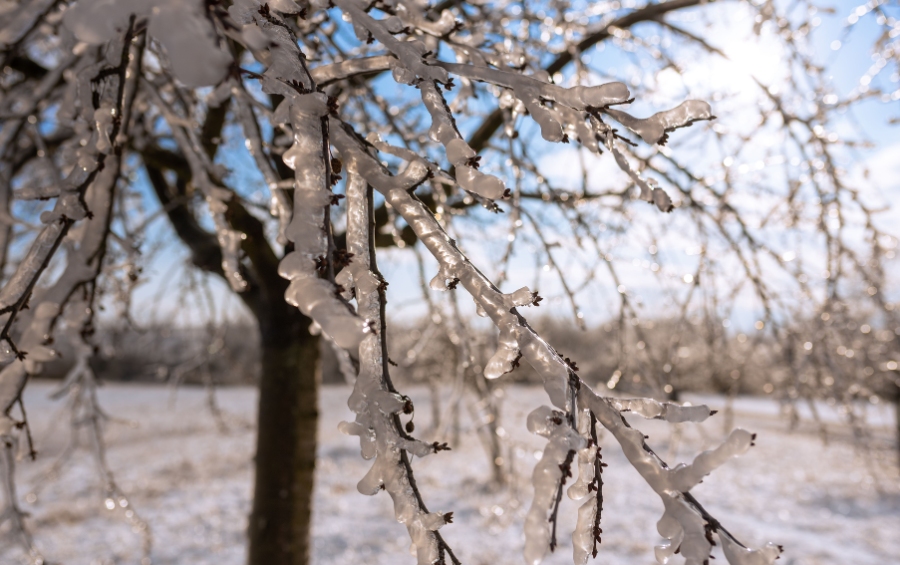
Ice accumulation dramatically increases branch weight, creating stresses that can cause breakage in trees without proper structural support.
Winter Ice Storm Protection
Oklahoma City’s winter ice storms create substantial weight on tree canopies. Unlike snow, ice forms a solid coating that continues to build, dramatically increasing the weight on branches and transforming normal limbs into potential hazards.
According to a report in The Oklahoman, recent ice storms have broken cold weather records across the state, creating unprecedented stress on trees and infrastructure.
Some tree species that are particularly vulnerable to ice damage include:
- Pecan and silver maple trees with their wide-spreading branches
- Bradford pears with their notoriously weak branch attachments
- American elms with their broad canopies
To ensure ongoing protection, annual inspections of your cabling and bracing systems are essential, as weather events can create new stress points or cause subtle changes in the tree’s structure over time.
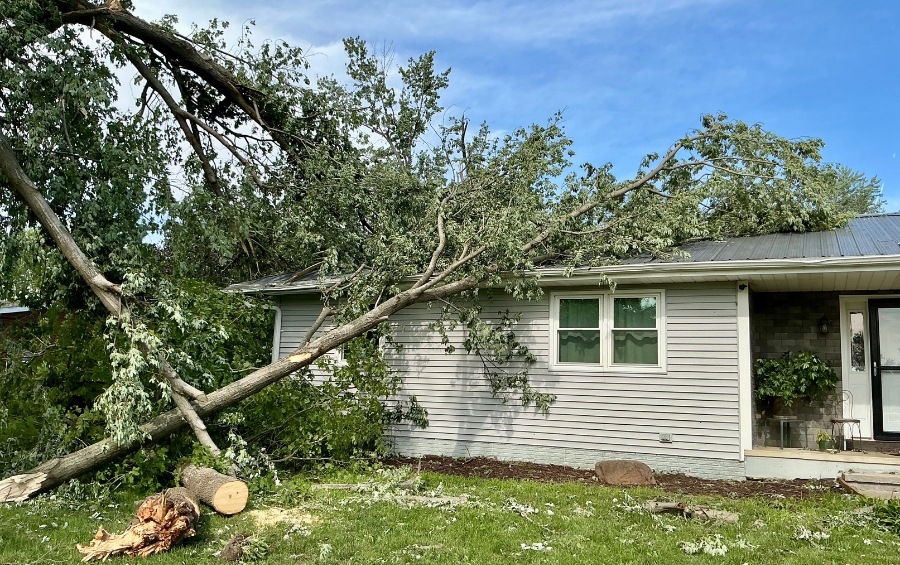
Without proper structural support, trees can fail during severe weather events, causing significant property damage and requiring complete removal.
Spring Tornado Season Preparation
Installing support systems during winter dormancy gives trees time to adjust before facing spring’s high winds. The dormant period also allows arborists to clearly see structural weaknesses without foliage obscuring branch attachments.
While cabling and bracing cannot prevent damage from direct tornado strikes, they significantly improve tree resilience during high straight-line winds that affect much larger areas.
Tornadoes and their associated winds create different forces than ice, including:
- Lateral forces that push trees sideways
- Torsional forces that twist branches
- Uplift forces that pull upward on canopies
- Sudden pressure changes that can stress trees from within
Recent tornado warnings across central Oklahoma have reminded residents that severe weather can strike with little notice, as reported by KOCO News.
Which Trees Would Benefit Most from Support Systems?
Different tree structures common in OKC neighborhoods show varying levels of improvement from structural support, such as those with:
- V-Shaped Unions: Trees with narrow branch attachments forming V-shapes rather than stronger U-shapes
- Co-Dominant Stems: Multiple main trunks of similar size competing for dominance
- Long Horizontal Branches: Extended limbs that create significant leverage when loaded with ice or stressed by wind
- Previous Damage: Trees that have already experienced storm damage but remain viable with proper support
Can Cabling and Bracing Help Storm-Damaged Trees Recover?
Support systems aren’t only preventative – they can also play a critical role in saving storm-damaged trees that would otherwise require removal. These techniques include:
- Repair bracing to stabilize split or cracked trunks.
- Restoration cabling to secure damaged but still viable branches.
- Supplemental supports to relieve stress on weakened limbs during recovery.
With Oklahoma’s potential for severe weather extending into fall, year-round tree protection becomes even more important.
PRO TIP: For trees that cannot be saved through cabling and bracing, we offer specialized crane-assisted removal services that minimize impact on surrounding landscape and structures.
Frequently Asked Questions About Tree Cabling and Bracing
How long do cabling and bracing systems last in Oklahoma’s climate?
Professional-grade cabling systems generally last several years in Oklahoma’s climate, while bracing systems typically have a longer lifespan. Systems should be professionally inspected annually, especially following severe weather events. Your ISA Certified Arborist will recommend replacement schedules based on tree growth and system type.
Can any tree be saved with cabling and bracing?
While these systems significantly improve tree survival rates, not all trees are candidates for support. Trees with extensive decay, severe lean, or compromised root systems may not be salvageable. A professional assessment by an ISA Certified Arborist can determine if your tree is a good candidate for structural support.
What’s the difference between DIY and professional installation?
While hardware stores sell basic cable kits, professional installation offers several critical advantages:
- Proper placement based on tree biomechanics
- Industry-standard materials and techniques
- Strategic design for specific tree species and structure
- Installation at appropriate heights (often 2/3 of the way up the canopy)
- Warranty protection and professional insurance
When selecting a company for tree work, be sure to ask important questions about their qualifications to ensure you’re hiring experienced professionals.
How does the cost of cabling or bracing compare to removal in Oklahoma City?
Professional cabling and bracing is typically more cost-effective than removing and replacing a mature tree. The cost varies based on tree size, condition, and the complexity of the required system, but is generally a fraction of what you would spend to remove a large tree and install a comparable replacement. The value of preserving mature trees – both aesthetically and environmentally – often makes structural support the preferred option.
Protect Your Trees Before Winter Weather Arrives with Support Systems from Arbor Masters
Now is the perfect time to prepare your trees for both winter ice and spring tornado season. Arbor Masters’ ISA Certified Arborists can evaluate your trees and recommend appropriate support systems based on species, structure, and location.
As a TCIA Accredited company, we follow industry best practices for all installations, ensuring maximum effectiveness and tree health. Our cabling and bracing systems are designed to protect your valuable trees while preserving their natural beauty.
For a free assessment of your trees’ structural support needs, contact Arbor Masters today at 405-495-8746 or request an estimate online.
Learn More With These Related Articles

Want More Like This?
Get the latest local news, tree care tips, special offers, and company updates directly to your inbox! It's easy to subscribe and there's no spam - we promise.
"*" indicates required fields