When to Treat Ash Trees for Emerald Ash Borer in Cedar Rapids
Emerald ash borer treatment in Cedar Rapids could save your ash tree — or you could lose it in 2-4 years. Learn your options and when to act before it's too late.
Emerald ash borer doesn’t kill ash trees suddenly – it kills them quietly. For two to three years, larvae feed beneath the bark while the tree looks mostly fine from the outside. By the time homeowners notice thinning canopies, splitting bark, or D-shaped exit holes, the damage is usually well advanced and options are limited.
For Cedar Rapids homeowners with ash trees, this is the hard reality: emerald ash borer is established throughout Iowa, and untreated ash trees do not recover. Treatment can protect a healthy tree or extend the life of one showing early symptoms – but it can’t reverse damage that’s already done. The difference between saving an ash and losing it almost always comes down to whether action was taken before visible decline began.
Key Takeaways
- The optimal treatment window in Iowa is mid-April through mid-May, when ash trees are actively growing, though trunk injections can extend through August.
- Schedule your treatment consultation in late winter (February-March) to secure a spot before spring calendars fill up.
- Professional trunk injections are the most effective treatment method, offering up to 90% effectiveness with protection lasting two years.
- If your ash tree has lost more than 50% of its canopy, treatment likely won’t save it – removal may be the better (or only) option.
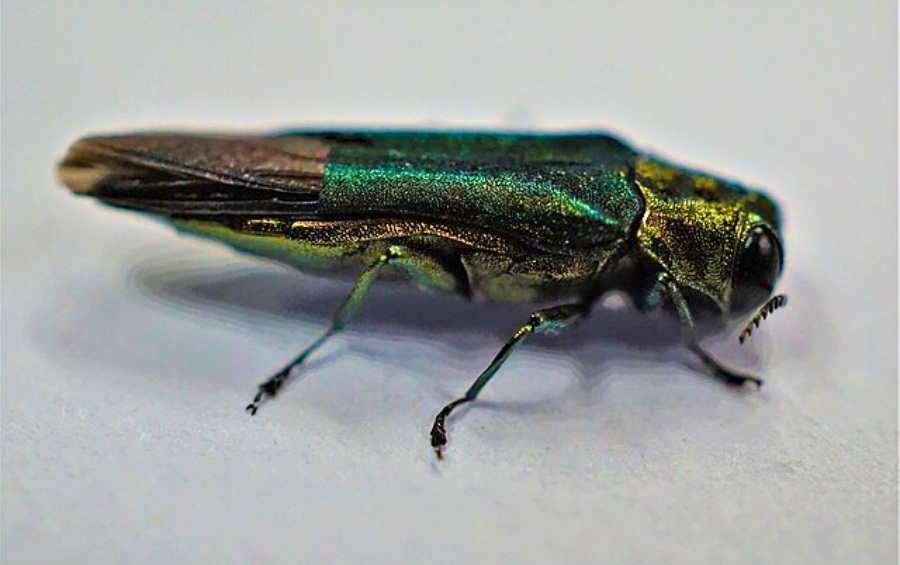
Adult emerald ash borers are only about half an inch long, but their larvae can kill a mature ash tree in just a few years; photo courtesy of NPS/Kelly Stoll.
What Is Emerald Ash Borer?
Emerald ash borer (EAB) is an invasive boring beetle native to Asia that has killed tens of millions of ash trees since it was first detected in this country near Detroit in 2002. The pest has since spread to 37 states.
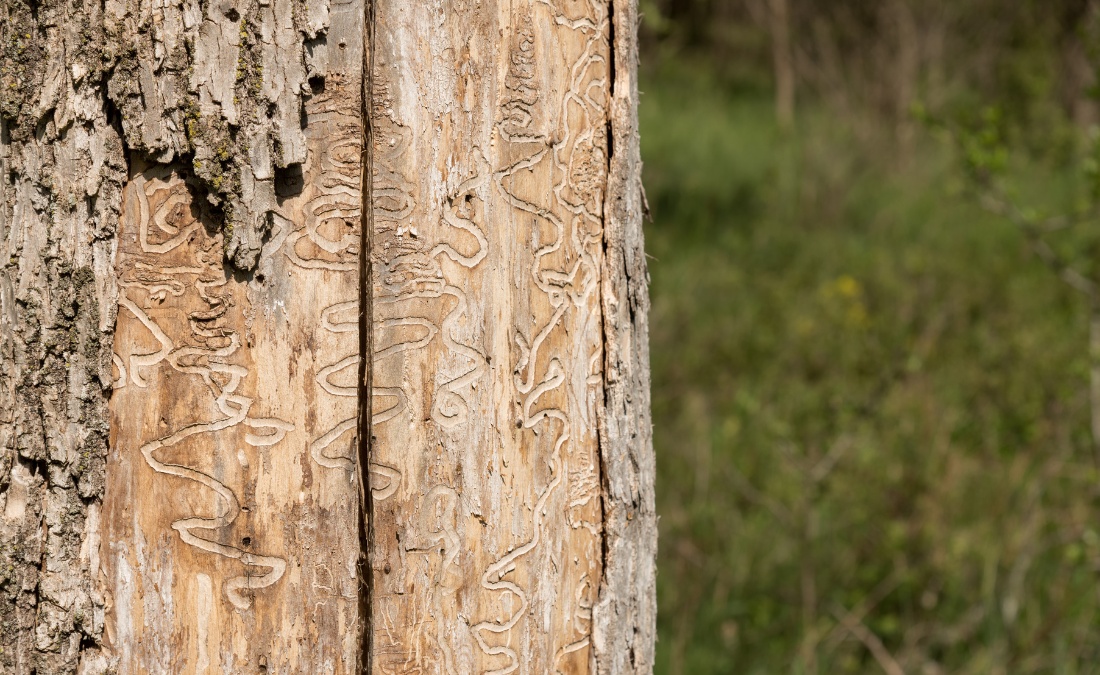
EAB is particularly destructive because it attacks trees from the inside out. Adult beetles lay eggs in bark crevices, and when the larvae hatch, they bore into the tree and feed on the inner wood – the tissue responsible for transporting water and nutrients. As the larvae tunnel through this critical layer, they create distinctive S-shaped galleries that effectively strangle the tree from within.
Why Cedar Rapids Ash Trees Are at Risk
As of October 2024, EAB has been confirmed in all 99 Iowa counties. With infestations now established and widespread across our community, it’s no longer a question of whether EAB will reach your yard; it’s a question of when. No ash tree in Cedar Rapids is safe without treatment.
For homeowners who lost valuable trees in the derecho, losing another mature tree to EAB would be especially painful. These surviving ash trees represent irreplaceable canopy that took decades to develop.
How Do You Know If Your Ash Tree Is Infested?
EAB symptoms typically start high in the canopy, making early signs difficult to spot from the ground. By the time most homeowners notice obvious problems, the tree may have been infested for a few years.
Early Warning Signs of EAB Infestation
Watch for these symptoms in the upper portion of your tree:
- Crown dieback starting in the upper third of the tree
- Wilted or discolored leaves
- Leaves that drop prematurely in late summer
- Epicormic sprouting (leafy shoots along the trunk or main branches)
Advanced EAB Infestation Signs
As the infestation progresses, more obvious damage becomes visible:
- Vertical bark splits on the trunk
- Woodpecker damage (“blonding” that strips bark and exposes lighter wood)
- D-shaped exit holes about 1/8 inch wide
- S-shaped galleries visible under peeling bark
A professional assessment catches early signs that most homeowners miss – which is why regular inspections are so valuable for ash trees you want to protect.
EXPERT INSIGHT: “We’re seeing ash trees across Linn County that looked fine last year now showing serious decline. If you’ve been putting off an assessment, now is the time to act.” – Paula Sheese, Arbor Advisor and ISA Certified Arborist at Arbor Masters Cedar Rapids.
When Is the Best Time to Treat Ash Trees for EAB in Iowa?
Mid-April to mid-May is the optimal EAB treatment window for ash trees in Iowa. During this period, trees are actively growing and can efficiently absorb and distribute insecticides through their vascular system.
Why Treatment Timing Matters
Treating too early or too late reduces effectiveness. Trees still emerging from winter dormancy can’t efficiently absorb treatments, and by late summer, the insecticide may not circulate fully before the tree shuts down for fall. Waiting until trees are fully leafed out ensures the insecticide reaches all parts of the tree – including the upper canopy, where EAB damage typically begins.
What Are the Treatment Options for Emerald Ash Borer?
There are three main approaches to EAB treatment: trunk injections, soil treatments, and trunk sprays. Each delivers insecticide to the tree differently – and they vary significantly in effectiveness, application timing, and environmental impact:
- Trunk Injections: Applied directly into the tree’s vascular system through small holes drilled at the base.
- Soil Treatments (Drenches or Granules): Applied to the ground around the tree, where roots absorb the insecticide.
- Trunk Sprays: Applied as a coating to the lower bark and are absorbed through the outer tissue; only effective for smaller trees.
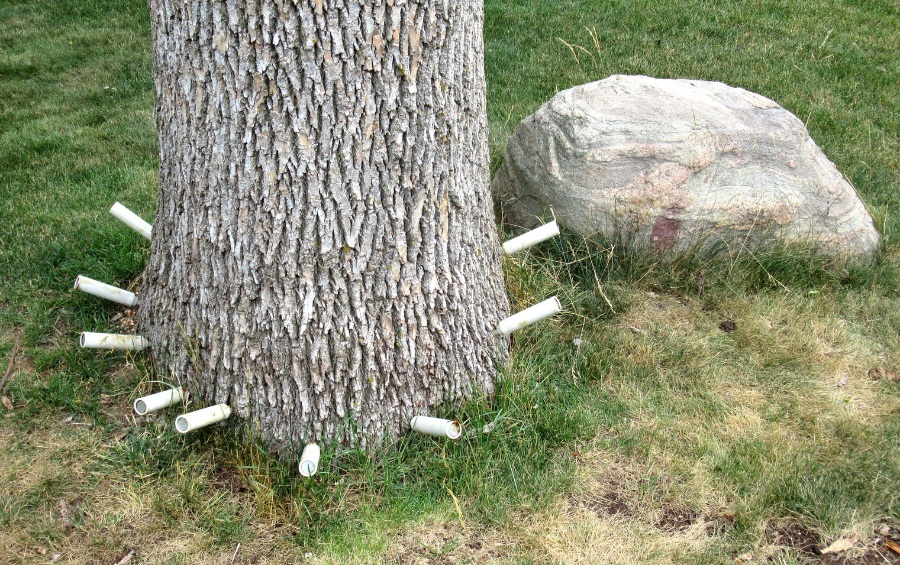
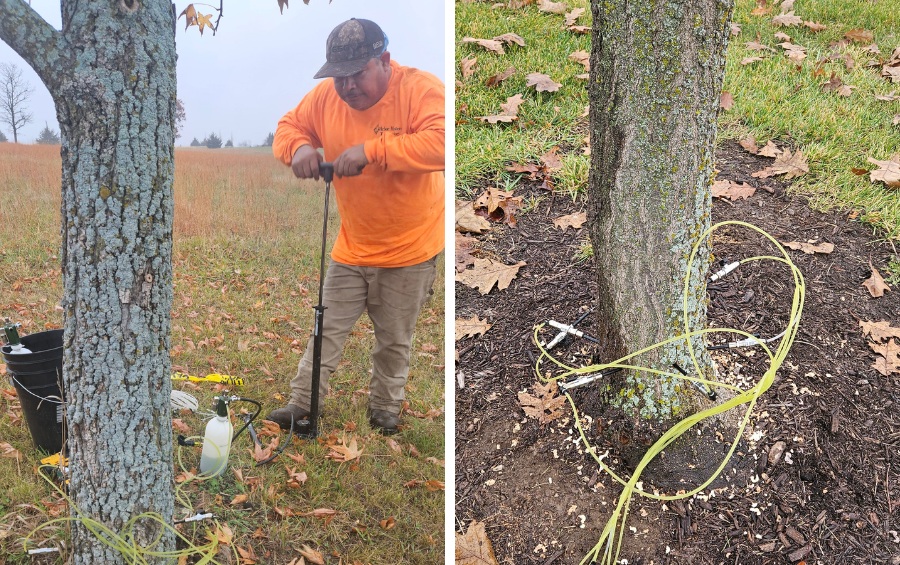
Trunk injection ports deliver insecticide directly into the tree’s vascular system, providing up to two years of protection against emerald ash borer.
Why Professional Trunk Injections Outperform Other Methods
Professional trunk injections are the gold standard for EAB treatment for several reasons:
- Effectiveness: Trunk injections can provide up to 90% control when applied correctly. Soil treatments are less reliable, especially on larger trees, where the insecticide must travel farther from roots to canopy.
- Timing Flexibility: Trunk injections can be applied from spring through late August, though the mid-April to mid-May window is still ideal. Soil treatments are limited to that narrow spring window only.
- Environmental Safety: Trunk injections keep the insecticide contained inside the tree with no runoff or drift. Soil treatments raise concerns about leaching into groundwater and harming pollinators, which is why they’re not recommended for homeowners to use.
What Can Treatment Actually Do for Your Ash Tree?
The goal of Emerald ash borer treatment is protection, not restoration. Healthy tissue can be saved, but what’s already damaged won’t come back. Once larvae destroy the vascular tissue beneath the bark, that tissue doesn’t regenerate. Understanding where your tree stands helps you set realistic expectations and make a smarter decision.
If Your Ash Tree Shows No Visible Symptoms
Preventive treatment is your best option. When applied before EAB gains a foothold, professional trunk injections can protect a healthy ash tree for years. This is the ideal scenario because you’re preserving a tree at full strength rather than fighting to save one that’s already compromised. Homeowners who act early spend less over time and keep their mature canopy intact.
If Your Ash Tree Is Showing Early Signs of EAB
Treatment may still make sense, but the goal shifts from prevention to life extension. If canopy loss is under 30%, trunk injections can slow the decline and buy you several more years with your tree. This gives you time to plan, budget for eventual removal, or simply enjoy the shade a while longer. Just know that treatment won’t restore branches you’ve already lost.
If Decline Is Advanced
When canopy loss exceeds 50%, significant deadwood is present, or the tree’s structure is visibly compromised, removal is often the safer and more practical choice. At this stage, treatment may only delay inevitable failure – and dead ash trees become brittle and hazardous quickly. An arborist can help you assess whether your tree has crossed this threshold.
Why Schedule EAB Treatment in Late Winter?
Scheduling in late winter (February-March) secures your spot before spring demand overwhelms local tree care companies. Spring is the busiest season because crews are handling storm damage from winter weather and a surge of treatment requests from homeowners who suddenly notice their trees don’t look right.
Booking early also gives you time for a professional assessment during dormancy, so you’ll know whether treatment makes sense before the rush hits.
Frequently Asked Questions About Emerald Ash Borer Treatment in Cedar Rapids
How do I know if I have an ash tree?
Look for opposite branching (branches grow directly across from each other, not staggered) and compound leaves with 5 to 11 leaflets. Mature ash trees also have bark with a distinctive diamond-shaped ridge pattern. If you’re unsure, an arborist can confirm during an assessment.
How much does EAB treatment cost?
Treatment costs vary based on tree size, since dosing is calculated by trunk diameter and larger trees require more product. An arborist can provide an accurate quote after evaluating your specific tree.
How soon will I see results after treatment?
The insecticide takes two to four weeks to move throughout the tree. You won’t see dramatic changes right away – the goal is to stop further damage, not reverse existing decline. Trees with minor canopy loss often stabilize or improve over the following growing season.
Does the City of Cedar Rapids treat ash trees on private property?
No. The City’s EAB management program focuses on publicly-owned trees along streets and in parks. Homeowners are responsible for treatment or removal of ash trees on private property.
How long does it take EAB to kill an ash tree?
Untreated ash trees typically die within 2-4 years after the initial EAB infestation. The exact timeline depends on the tree’s overall health and how heavily the local EAB population has established in your area.
What happens if I don’t treat my ash tree?
Without treatment, EAB will eventually kill your ash tree. Dead ash trees lose moisture rapidly, become extremely brittle, and those branches can snap without warning, making them hazardous for anyone nearby and dangerous for crews to remove. Waiting until a tree dies often means a more complex and costly removal.
Protect Your Cedar Rapids Ash Trees Before It’s Too Late
Your ash tree isn’t going to wait for you to decide. EAB is already here, and every season without treatment is another season of silent damage beneath the bark. The good news? You still have time to act – but that window is shorter than you think.
Arbor Masters has served Cedar Rapids since 1960, and our ISA Certified Arborists have the training and experience to assess your ash trees and recommend the right course of action.
Contact us at 319-359-6135 or online to schedule a free consultation before spring arrives.
Learn More With These Related Articles

Want More Like This?
Get the latest local news, tree care tips, special offers, and company updates directly to your inbox! It's easy to subscribe and there's no spam - we promise.
"*" indicates required fields