Are Overhanging Trees Putting Your Insurance Coverage at Risk?
Learn how overhanging or neglected trees can cause insurance issues, higher premiums, or nonrenewals & what Kansas City homeowners can do to stay protected.
Opening your mailbox to find an insurance letter marked “URGENT” creates an instant knot in your stomach, especially when it mentions “tree hazards” as grounds for policy cancellation. This scenario is becoming increasingly common for homeowners in Kansas City’s mature neighborhoods like Clay Woods, Briarcliff West, and the Dougherty Historic District.
But here’s what most homeowners don’t realize: proper tree care can solve these problems and protect your insurance coverage. Understanding what insurers look for and how professional tree services address their concerns puts you back in control.
Key Takeaways
- Insurance companies target overhanging branches and dead wood as “unacceptable risks,” but proper pruning eliminates these concerns.
- Professional tree risk assessments identify hazards before they lead to policy cancellation and provide documentation insurers require.
- Regular tree maintenance prevents most insurance-related tree problems and costs far less than dealing with coverage cancellation.
- Certified Arborists provide the documentation insurance companies need to restore coverage after cancellation notices.
- Proactive tree care addresses the root causes of insurance concerns in Kansas City’s climate and prevents future policy problems.
Proper documentation from certified arborists helps resolve insurance concerns and can restore coverage after tree-related cancellation notices.
Why Are Insurance Companies Canceling Policies Over Trees?
Insurance companies aren’t targeting your trees out of malice. Instead, they’re responding to the real danger trees pose to your property when they’re weak or too close to structures. When adjusters evaluate your property, they look for specific risk factors that claims data has identified as problematic.
Overhanging Branches and Dead Wood That Trigger Insurance Red Flags
Common tree hazards that trigger insurance concerns include:
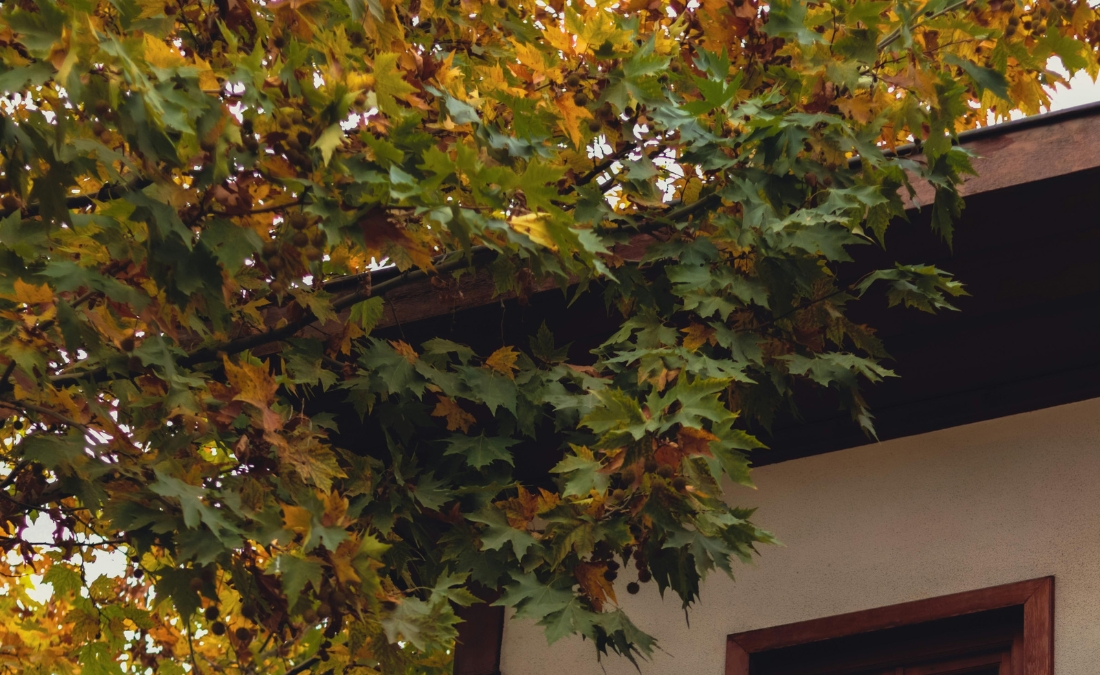
- Overhanging branches within 10-15 feet of structures, particularly above roof lines
- Dead or diseased limbs visible from ground level
- Large trees with structural defects like cracks, cavities, or leaning trunks near buildings
- Multiple trees creating overlapping “hazard zones” around your home
How Past Tree Claims Influence Current Insurance Decisions
It’s not just the trees in your yard that insurers look at – it’s the property’s entire claim history. Tree-related claims follow a property for seven years through CLUE (Comprehensive Loss Underwriting Exchange) reports, which carriers review before approving or renewing policies.
That means even if you’ve never filed a claim, previous owners’ storm or tree-damage claims can make your property appear higher risk. Homes with repeated tree-related losses, especially roof damage, fallen limbs, or structural impact, are more likely to face premium increases or nonrenewal notices.
Professional documentation showing regular pruning and hazard mitigation can help offset this risk by demonstrating to insurers that the property is being proactively maintained.
The Missouri Department of Insurance notes that homeowners policies often limit coverage for tree removal – typically only when a fallen tree damages an insured structure – making prevention even more important. Understanding what your policy covers (and what it doesn’t) can help you avoid surprise costs and protect your coverage.
PRO TIP: Communities like North Kansas City have implemented proactive tree canopy management programs that actually reduce insurance risks by maintaining healthy urban forests through proper planning and maintenance.
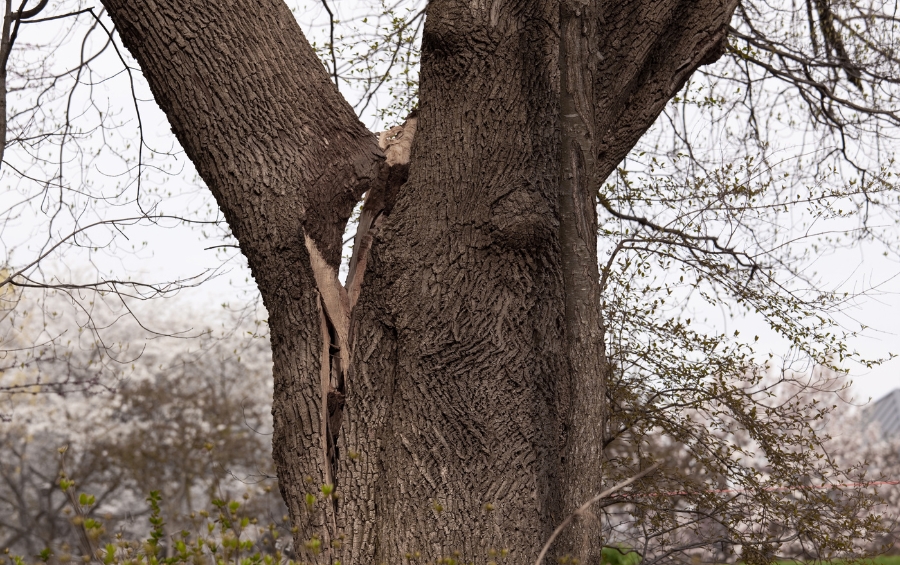
Structural cracks like this one trigger insurance concerns and require immediate professional assessment to prevent policy cancellation.
How Do You Identify Tree Hazards That Threaten Insurance Coverage?
Understanding what makes trees risky helps you address issues before they reach insurance company radar. While some warning signs are visible to homeowners, comprehensive risk assessment requires professional expertise.
These warning signs indicate trees that may pose insurance risks:
- Dead branches over walkways, driveways, or structures
- Cracks or splits in the main trunk or major limbs
- Leaning trees with exposed roots or soil mounding
- Fungal growth, like mushrooms or conks, on the trunk
- Branches touching or overhanging roof lines
- Weak branch attachments with included bark
How Certified Arborists Detect Hidden Problems
Certified Arborists assess structural integrity using specialized equipment, like resistograph testing and sonic tomography, to detect internal decay. They examine root zones for girdling roots, soil compaction, and adequate anchoring while evaluating disease and pest issues that compromise safety.
Storm resistance calculations factor in:
- Species characteristics
- Tree age
- Local wind patterns
- Soil conditions
How Proper Pruning Helps You Meet Insurance Requirements
Proper pruning addresses most insurance concerns while improving tree health and longevity.
“A lot of people just look at pruning as something to do to make their trees look better. But it has a lot of health benefits for your trees when you do it. And one of them is reducing the risk of failure when we get hit with a major winter or summer storm.” – Jonathan Walker, Arbor Advisor at Arbor Masters
Ten-Foot Clearances and Dead Wood Removal
Most insurance concerns can be resolved by following some basic clearance guidelines. Keeping at least 10 feet between tree branches and your roof line creates a safety buffer that satisfies most insurers, though larger mature trees may need even more space depending on their size and growth patterns.
Dead wood removal should be your top priority since these branches create the highest risk during storms and are specifically flagged in insurance assessments. You’ll also want to address any branches hanging over driveways and walkways where falling limbs could injure someone or damage vehicles.
Structural Pruning
Mature canopies in areas like Wilshire Estates require expert structural pruning that balances tree health with safety concerns while preserving neighborhood character.
These mature trees may also be near utility lines, such as in communities like Riverside. This requires a tree pruning company to work together with utility companies to safely prune the trees.
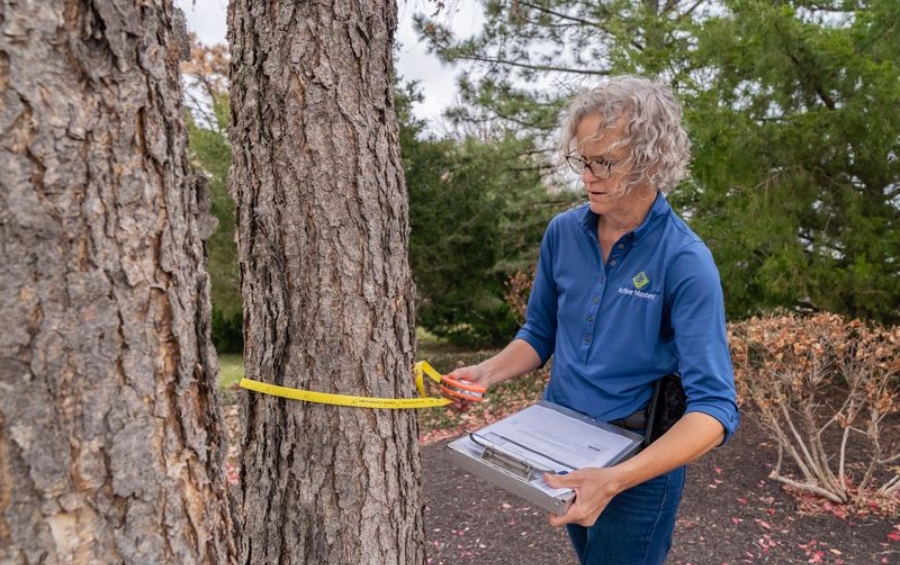
Professional tree assessments provide insurance-compliant documentation that adjusters and underwriters recognize when evaluating property risks.
Why Professional Pruning and Documentation Matter for Insurance Coverage
Insurance companies want to see that your trees are being cared for by trained professionals – not only because it’s safer, but because correct pruning reduces future claims. Large trees often require specialized equipment and technical pruning techniques that most homeowners don’t have, and improper cuts (like topping or flush cuts) can actually create hazards insurance companies flag as higher risk.
Licensed professionals understand species-specific needs, structural pruning standards, and safe clearance practices. Their work also includes full documentation – photos, notes, and service records – that insurers recognize and trust during policy reviews. This kind of proof shows you’re proactively managing risk, which can help prevent premium increases or nonrenewal notices.
Professional pruning services also handle debris removal and site cleanup, reducing pest issues and ensuring nothing on the property adds to your risk profile.
Frequently Asked Questions About Overhanging Trees
Can my homeowners’ insurance be cancelled for overhanging trees?
Yes, insurance companies can cancel policies due to tree hazards like overhanging branches, dead limbs, or structurally compromised trees near buildings. Professional tree care and documentation typically resolve these concerns and can restore coverage.
What tree maintenance prevents insurance problems?
Regular pruning to remove dead wood and maintain clearances, professional risk assessments, proper documentation of tree care, and prompt attention to storm damage typically satisfy insurance requirements and prevent policy problems.
Which trees cause the most insurance concerns in Kansas City?
Large oak trees, diseased elms, storm-damaged ash trees, and fast-growing maples with weak wood commonly trigger insurance concerns due to their size and failure potential near structures in established Kansas City neighborhoods.
When should I call a professional arborist for insurance tree issues?
Contact a Certified Arborist immediately upon receiving insurance notices, after major storms, when you notice sudden tree changes, or annually for preventive assessments of large trees near your home to avoid insurance complications.
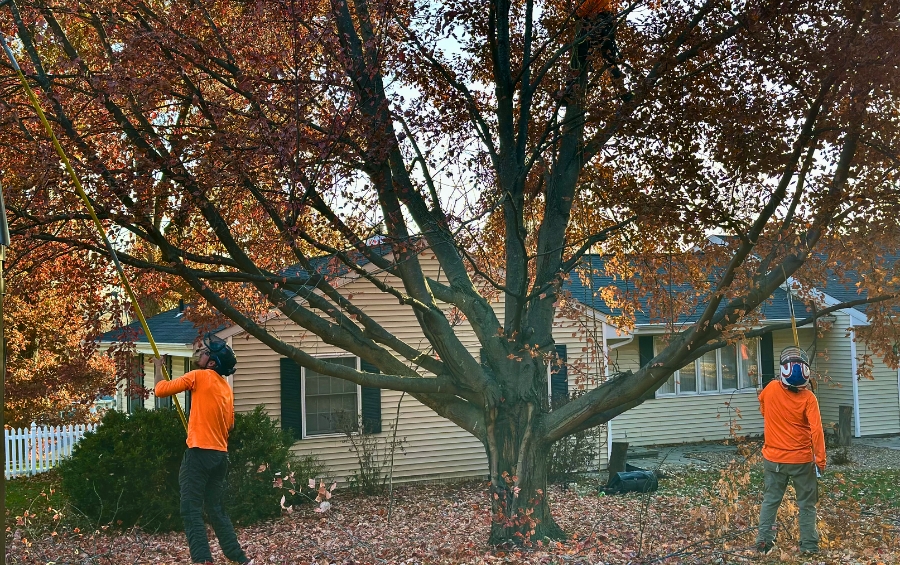
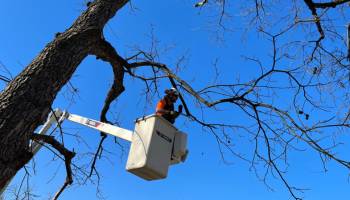
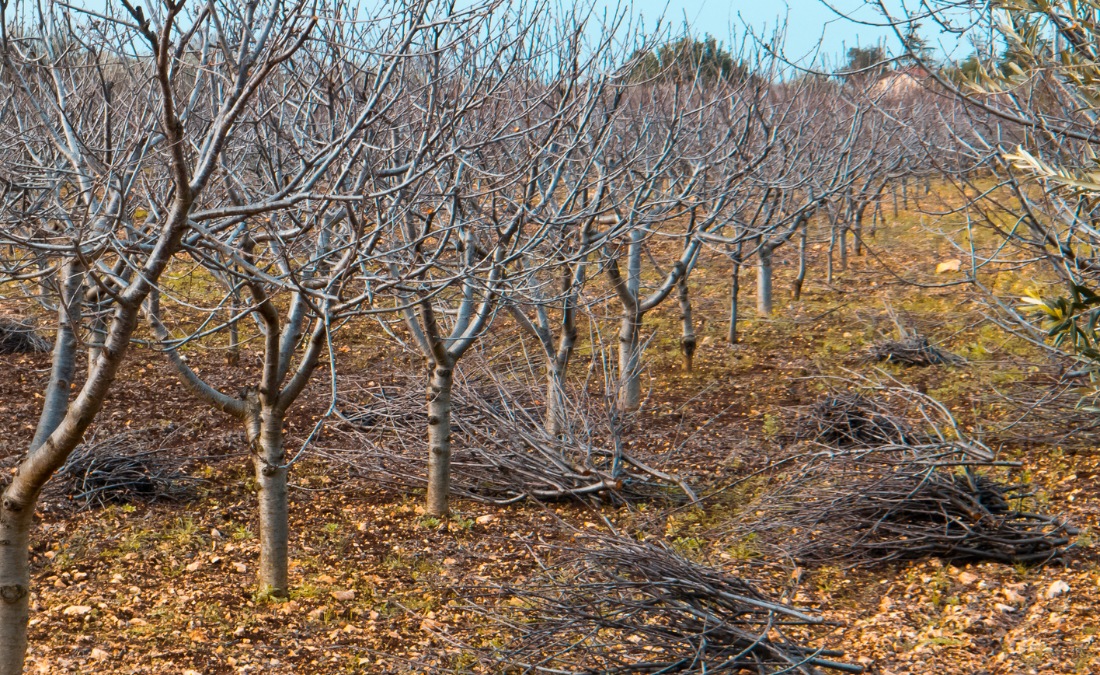
Professional tree pruning maintains proper clearances from structures and eliminates dead wood that insurance companies consider high-risk.
Protect Your Kansas City Property with Professional Tree Care from Arbor Masters
Proper tree care is the most effective solution to insurance tree concerns in Kansas City’s established neighborhoods. Professional arborists provide both the specialized services and industry-standard documentation that insurance companies require to restore confidence in your property.
The Arbor Masters team has the experience and knowledge to prune trees to keep you in compliance with your insurance policy. We’ll recommend ways to keep your tree’s branches away from structures long-term, or remove a tree that is too close or dangerous. Call us today at 816-781-8914 or request a quote online for help with your trees.

Get the latest local news, tree care tips, special offers, and company updates directly to your inbox! It's easy to subscribe and there's no spam - we promise.
"*" indicates required fields