How to Protect Mature Trees This Winter in Cedar Rapids – Without Wasting Time or Money
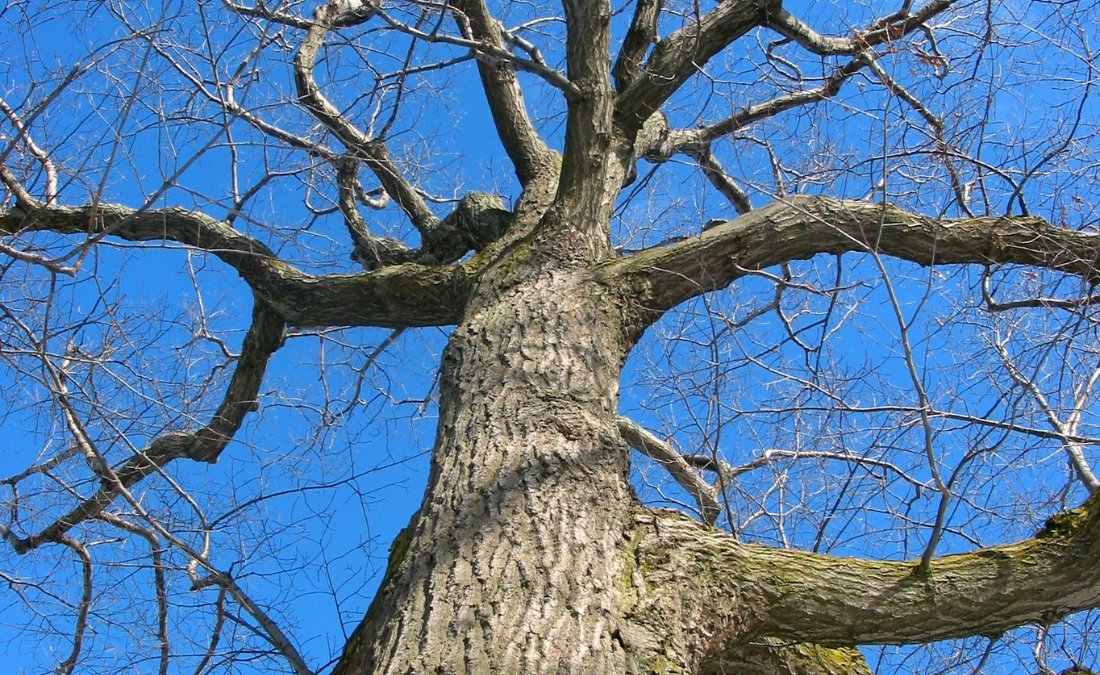
One ice storm can destroy what took 50 years to grow. Protect your mature trees this winter in Cedar Rapids by spotting hidden damage before it’s too late.
Your old oak or maple has seen a lot over the years – heat waves, windstorms, surprise April snow. It’s survived them all. But the older it gets, the more you start to wonder how it will handle another Iowa winter.
Protecting mature trees in Cedar Rapids isn’t the same as protecting young ones. These giants add real value to your property – and keeping them safe starts with spotting hidden weaknesses calling a Certified Arborist before winter storms test your trees’ limits.
Key Takeaways
- Before winter hits, mature trees should be assessed for structural issues that could fail under ice and wind.
- Ice can increase branch weight by 30 times or more, making weak branch unions particularly dangerous.
- Professional cabling and bracing systems can extend a mature tree’s life by decades while also reducing storm failure risk.
- Winter (December-March) is the ideal time for structural pruning, though oaks must be pruned before March to prevent oak wilt.
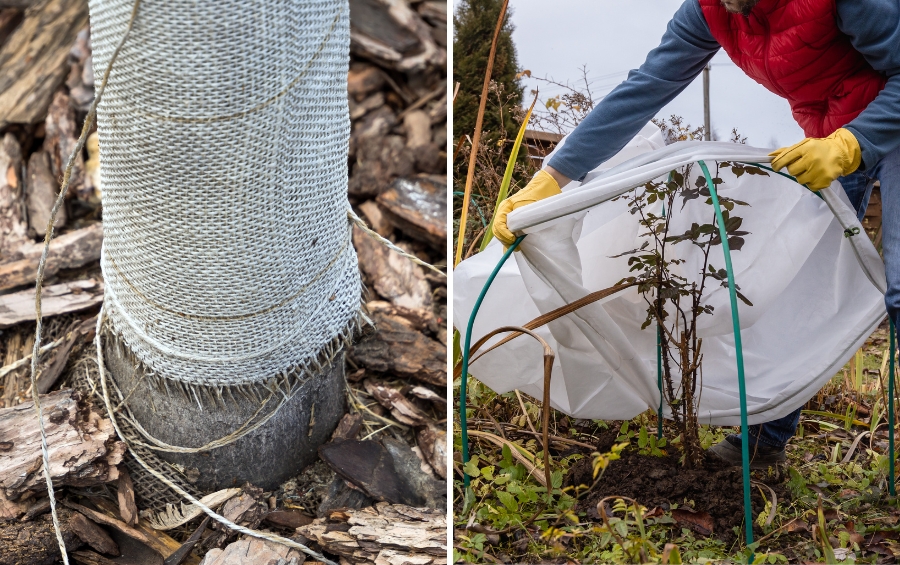
Trunk wrapping and frost covers protect young trees and shrubs – but mature trees need a completely different approach that includes structural assessment, cabling, and bracing to survive Iowa winters.
Why Mature Trees Need Different Winter Protection Than Young Trees
Mature trees need structural assessment and support systems – as opposed to trunk wrapping – because their winter vulnerabilities are architectural, not bark-deep. While young tree winter protection focuses on root and bark vulnerability, mature trees require structural integrity protection to help support and sustain the weight-bearing capacity of a complex crown that’s been developing for decades.
Here’s what makes them vulnerable:
- Branch Architecture: After 20-50 years of growth, your tree has multiple heavy limbs extending outward with intricate branching patterns and possibly weak points that developed long ago.
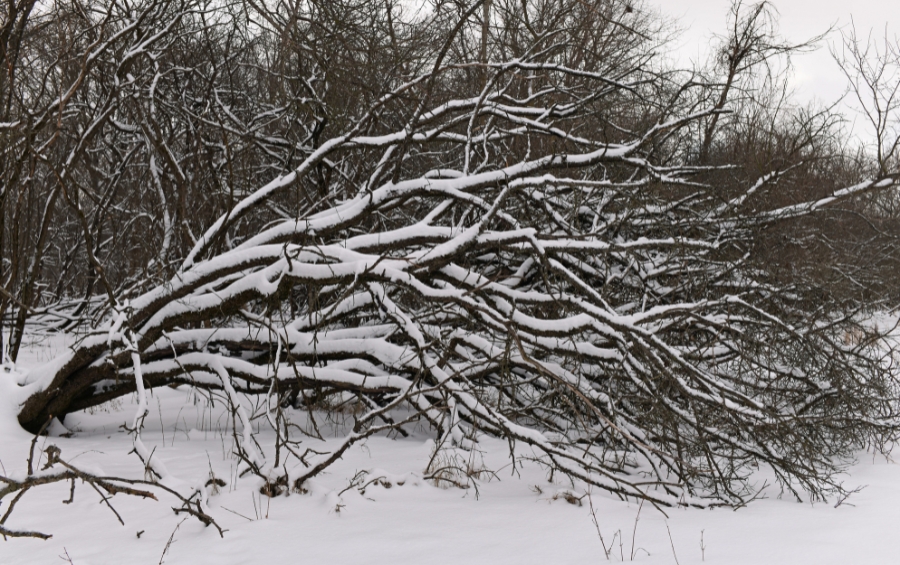
- Ice Loading Impact: According to the Iowa DNR, ice can increase branch weight by 30 times or more – turning a 100-pound limb into a 3,000-pound structural liability.
- Hidden Damage: Trees that survived past storms may have sustained hairline cracks, weakened branch unions, or compromised root systems that a winter ice storm could exploit.
What looks like a healthy tree from the ground might be one bad storm away from catastrophic failure, which is why structural assessments are so important for those mature trees.
How to Assess Your Mature Trees for Winter Vulnerabilities
A ground-level inspection can reveal many structural red flags before winter arrives. While professional assessment provides the most complete picture, you can still identify many warning signs yourself, including:
- V-Shaped Branch Unions (included bark): Where two branches meet at a tight angle rather than a U-shape, bark often gets trapped between them. This creates a weak connection point that’s especially prone to failure under ice loading. V-shaped unions are common in silver maples and oaks.
- Cracks in Trunk or Major Limbs: These can be hairline thin and hard to spot, especially high in the canopy. However, even small cracks indicate stress points that could split under winter storm loads.
- Co-Dominant Stems: Multiple trunks growing from the same point divide the tree’s structural resources and create potential failure points. Two equally-sized trunks competing for dominance are particularly risky.
- Previous Limb Failure or Evidence of Past Breaks: Old wound sites may have healed over but left internal decay. If your tree has lost branches in previous storms, it’s worth professional evaluation.
- Excessive Leaning or Soil Heaving at the Base: Changes in lean angle or disturbed soil around the root flare can indicate root system compromise.
- Heavy, Overextended Branches: Limbs that sway excessively in moderate wind are carrying more weight than they can safely support.
If you notice any of these signs of dangerous trees, don’t climb or probe extensively; that requires professional equipment and training.
Cedar Rapids Neighborhoods with Higher Risk Trees
Certain Cedar Rapids neighborhoods have concentrations of mature trees that deserve extra attention:
- Wellington Heights and Southeast Quadrant: Century-old trees often grow in tight lot spacing, where one failure can damage multiple properties.
- 2nd and 3rd Avenue Historic District: Streetcar-era street trees, many with canopies growing into power lines.
- Czech Village and New Bohemia: Riverside wind exposure combined with trees that have survived both flood and storm stress over the decades.
- Northeast Quadrant (Moundview, Noelridge, Kenwood): Large mature oaks and maples on close property lines that could fail under intense snow and ice loading.
Of course, any Cedar Rapids neighborhood with established trees faces winter storm risk. These areas simply have higher concentrations of large, valuable specimens and as such, require professional expertise and equipment.
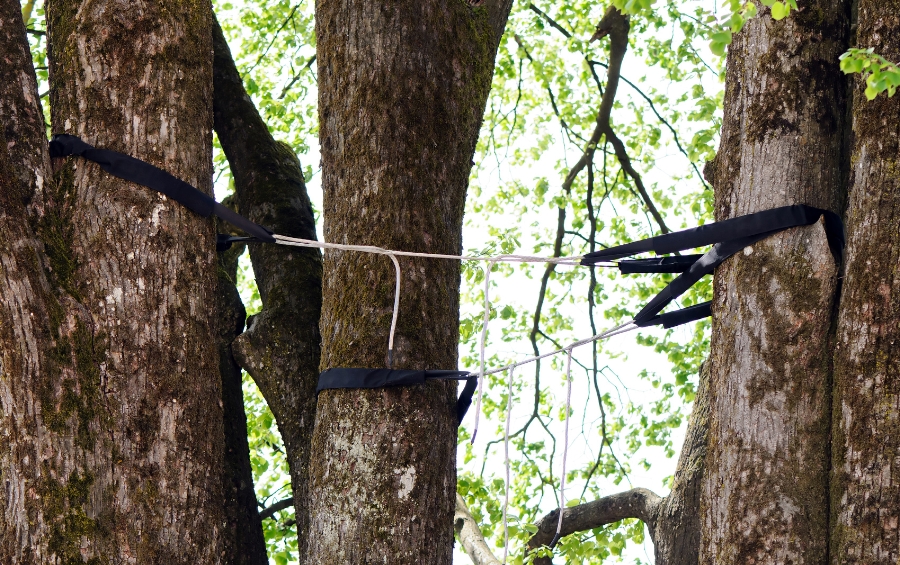
A professionally installed cabling system connects co-dominant stems, redistributing weight during ice and wind events to prevent structural failure.
3 Ways to Protect Mature Trees from Winter Storm Damage
As trees get older, winter storms hit a little differently. A gust that barely moves a young maple can shake an aging oak in all the wrong ways. Protecting mature trees is about using the right professional services at the right time. Structural pruning, cabling, bracing, and winter assessments all work together to keep older trees stable when ice and wind roll through Cedar Rapids.
Cabling That Supports the Canopy During Ice and Snow
Cabling uses flexible steel or high-strength synthetic lines installed in the upper canopy to connect major limbs. When ice or snow loads a single branch, the system shares that weight across stable limbs instead of letting one stressed section take the full hit.
Because the hardware sits high in the crown, it’s almost invisible from the ground. And when installed according to ANSI A300 standards, modern cabling allows natural movement while preventing the kind of excessive sway that leads to failure. It reduces stress on weak unions without interfering with healthy growth.
Bracing That Reinforces Weak Unions from the Inside Out
While cabling addresses movement and load distribution, bracing tackles internal structural weakness. Bracing uses rigid steel rods installed through weak branch unions, physically preventing them from splitting apart. This is particularly important for co-dominant stems and those V-shaped crotches that are prone to failure.
Bracing and cabling often work together as a comprehensive support system. The cables manage movement and distribute load, while the bracing reinforces the specific weak points where failure typically originates. This combination can transform a tree that’s one storm away from disaster into one that safely weathers decades of Iowa winters.
It’s worth emphasizing: tree cabling and bracing services are not DIY projects. Improper installation can actually accelerate failure, and working in the crown of a large tree requires specialized equipment and training.
Structural Pruning That Reduces Winter Failures
Structural pruning helps mature trees stand up to winter by reducing excess weight and removing limbs that are most likely to fail under ice or wind. By correcting these weak points early, pruning lowers the overall stress on the tree and improves its ability to handle heavy storms.
And winter is the ideal time to do this. Pruning during dormancy causes minimal stress and gives wounds time to compartmentalize before spring. But even with ideal timing, ISA standards limit removal at 10-25% of the canopy per visit – anything more invites decay rather than preventing it.
CRITICAL OAK TIP: Oaks must be pruned only during the dormant season (December through February) to prevent oak wilt transmission. Because the beetles that spread this deadly fungal disease are active from April – July, any pruning during that time puts your tree in danger of infestation.
When to Call a Certified Arborist for Winter Protection
There are several situations that warrant the attention of a Certified Arborist. Ground-level inspection is valuable, but it has limits. Certified Arborists are trained to identify problems that homeowners miss, particularly issues high in the canopy or hidden beneath bark.
Consider scheduling a professional assessment if:
- Your mature tree hasn’t been professionally evaluated in several years
- Large limbs overhang your home, driveway, or areas where family and guests gather
- You’ve noticed any warning signs, including cracks, V-shaped unions, lean changes, or excessive sway
- The tree has lost limbs in previous storms
- You want to preserve a mature tree for the long term
An ISA Certified Arborist understands load dynamics, species-specific vulnerabilities, and how to identify hidden damage that may be invisible from the outside. They can determine whether your tree is a good candidate for support systems, needs strategic pruning, or has compromised to the point where removal is the safest option.
For assessment, installation, and overall maintenance, trust professionals who focus on tree preservation services rather than just removal.
PRO TIP: If support system hardware is (or was recently) installed, it requires ongoing attention. Plan for a ground-level visual inspection annually and a comprehensive climbing inspection every 3-5 years. Trees continue growing after installation, which can affect cable tension and hardware effectiveness over time.
Frequently Asked Questions About Mature Tree Protection During Winter
Which tree species in Cedar Rapids are most vulnerable to winter storm damage?
Silver maples, pin oaks, and river birches are particularly susceptible due to their tendency to develop co-dominant stems and weak branch unions. Bradford pears and willows also have brittle wood that breaks easily under ice loading. If you have any of these species on your property, a structural assessment before winter is especially important.
Can mature trees recover from ice storm damage?
Many can, depending on the severity. Trees that lose less than 25% of their crown typically recover well with proper follow-up care. However, major limb loss or trunk damage may require professional intervention to prevent secondary infections and structural decline. Never try to shake or beat ice off branches; let it melt naturally to avoid causing additional breaks.
Is it too late to protect my trees if winter has already started?
Not necessarily. While fall is ideal for assessment and structural work, Certified Arborists can install cabling and bracing systems during winter when conditions allow. Structural pruning is actually best performed mid-winter (January-March) when trees are fully dormant – just remember that oaks must be pruned before March to prevent oak wilt.
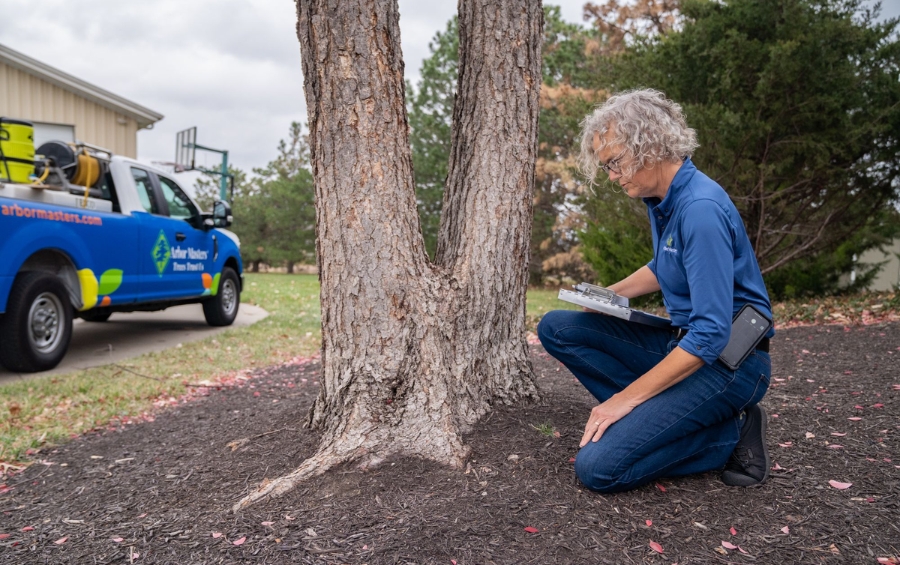
An Arbor Masters Certified Arborist evaluates co-dominant stems during a structural assessment – the first step in protecting mature trees before winter.
Let Arbor Masters Help Protect Your Irreplaceable Mature Trees from a Cedar Rapids Winter
Your mature trees need more than just wrapping and mulching; they require structural assessment and support. With Cedar Rapids’ remaining post-derecho canopy more valuable than ever, protecting these established trees makes sense both emotionally and financially. A healthy mature tree that took decades to grow can’t be replaced with a trip to the nursery.
With winter approaching, now is the time to evaluate your trees’ structural health. Professional assessment identifies hidden vulnerabilities, and modern support systems can extend a valuable tree’s life by decades. Schedule a consultation with Arbor Masters’ Certified Arborists online or call 319-359-6135 to evaluate your mature trees before Iowa’s winter storms arrive.


Want More Like This?
Get the latest local news, tree care tips, special offers, and company updates directly to your inbox! It's easy to subscribe and there's no spam - we promise.
"*" indicates required fields