How to Mulch Trees the Right Way This Spring in Lee’s Summit
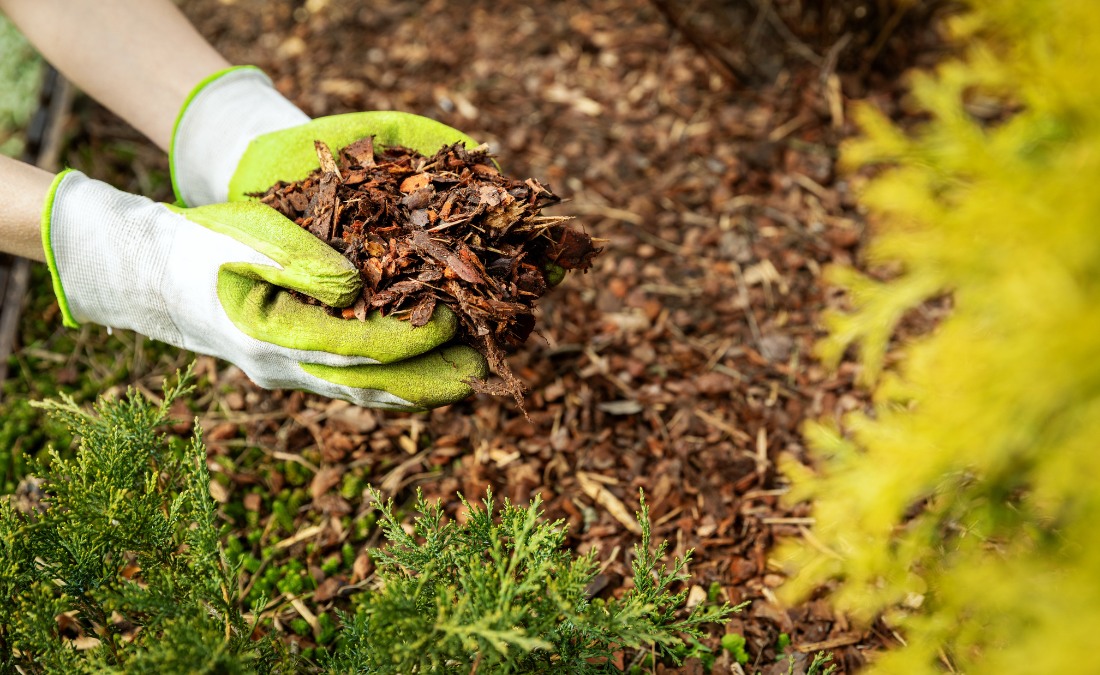
Spring tree mulching in Eastern Jackson County takes more than dumping mulch. Learn the right depth, placement, and materials to support healthy trees.
The mature oaks and heritage maples that define Eastern Jackson County’s most desirable properties didn’t get that way by accident. They’ve had decades to develop root systems, canopy structure, and the kind of presence that adds real value to a home. But every spring, those trees face a challenge that’s largely invisible above ground: Eastern Jackson County’s heavy clay soils.
Proper spring mulching is one of the most effective ways to protect that investment — but on clay soils, the standard advice doesn’t apply. The depth, timing, and materials that work elsewhere can actually cause problems here. Get it right, though, and you’ll see healthier roots, better drainage, and stronger trees year after year.
Key Takeaways
- Clay soils in Eastern Jackson County need thinner mulch (2–3 inches) than the standard 2–4 inch recommendation because of poor drainage.
- Spring mulching should happen after the last hard freeze (typically mid-March in the KC Metro) once the ground has thawed and drained.
- Volcano mulching is especially damaging on clay soils — always create a “donut” shape with mulch pulled several inches from the trunk.
- Composted wood chips and shredded hardwood bark are the best mulch choices for improving clay soil structure over time.
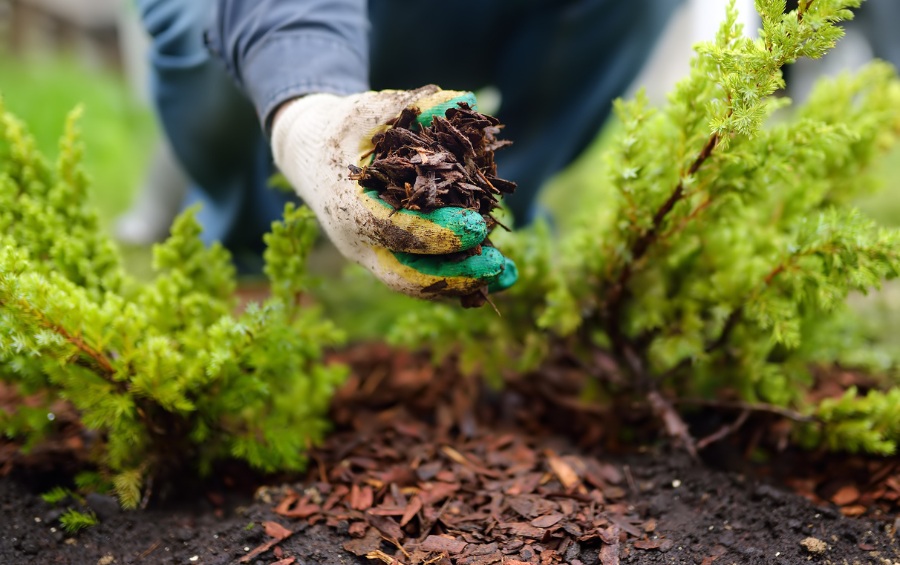
Shredded hardwood bark is one of the best organic mulch choices for Eastern Jackson County’s heavy clay soils — its fibrous texture retains moisture while still allowing air to reach tree roots.
When Is the Best Time to Mulch Trees in Lee’s Summit and Blue Springs?
The best spring mulching window in the KC Metro opens after the last hard freeze — typically mid-March — but on clay soils, that’s only half the equation. The ground also needs time to dry out. The Kansas City area sits in USDA Hardiness Zones 6a and 6b, meaning freeze-thaw cycles saturate clay soils throughout winter.
After the severe storms that regularly hit the KC metro each spring, that saturated clay can compact further, forming a hard surface crust that blocks the water, air, and nutrients your trees depend on. Spreading mulch over waterlogged or compacted clay traps that excess moisture against the root zone and can make those conditions worse.
Whether your landscape crew handles mulching or you’re evaluating work that’s already been done, the soil itself will tell you if the timing is right. Soil that crumbles when compressed is ready. Soil that holds together in a dense, sticky mass still has too much moisture — and mulching at that stage does more harm than good. The goal is to get mulch down after the clay has drained but before summer heat bakes the surface into a hard crust that sheds water instead of absorbing it.
DID YOU KNOW?: Properly timed spring mulch also suppresses weeds before they establish, reducing competition for water and nutrients in the root zone throughout summer — one application that protects your trees and keeps your landscape looking its best.
Why Mulching Matters More in Clay Soil Landscapes
Clay soil gets a bad reputation, but it has one major advantage: it holds nutrients and moisture well thanks to its high cation exchange capacity. The soil beneath your trees is naturally fertile; it just needs help with structure and drainage. That’s where the right mulching approach earns its keep. Spring mulching on clay delivers several benefits:
- Loosens compacted clay as organic matter breaks down over time
- Improves drainage by adding structure to dense soil
- Locks in moisture from snowmelt and spring rains before summer heat accelerates evaporation
- Encourages beneficial microbial activity in the root zone
Improving soil structure doesn’t happen overnight, but it compounds year after year. Pairing proper mulching with professional deep root fertilization accelerates the process — especially for high-value trees.
PRO TIP: The ISA recommends 2–4 inches of mulch for most soils, but poorly drained soils need less. Research from the International Society of Arboriculture shows 3 inches is the sweet spot for balancing soil oxygen, temperature, and moisture.
What Is the Most Common Mulching Mistake Homeowners Make?
The single most damaging mulching mistake (in any soil type) is piling mulch against the trunk in a cone shape — called “volcano mulching,” where the root flare is buried under inches of material. This usually happens because landscapers and homeowners assume that if some mulch is good, more must be better, and piling it high looks neat and intentional. In reality, it’s slowly suffocating the tree.
Since clay already has poor drainage and limited oxygen, mounding mulch against the trunk compounds both problems by:
- Promoting root rot and bark decay from constant moisture against the trunk
- Creating habitat for rodents that chew bark under the mulch
- Triggering anaerobic conditions that produce toxic compounds harmful to roots
- Blocking water and air from reaching the root zone where it’s needed most
Volcano mulching doesn’t kill trees immediately. It causes slow decline over years as trees weaken and become vulnerable to pests, diseases, and storm damage that get blamed instead of the mulch. It’s the single most common tree care mistake our arborists see on estimates throughout Lee’s Summit, Blue Springs, and Independence — and most homeowners don’t realize it’s been causing damage for years.
DID YOU KNOW? Volcano mulching is so damaging that the State of Missouri launched a dedicated campaign to stop it after years of documented tree health decline across the state.
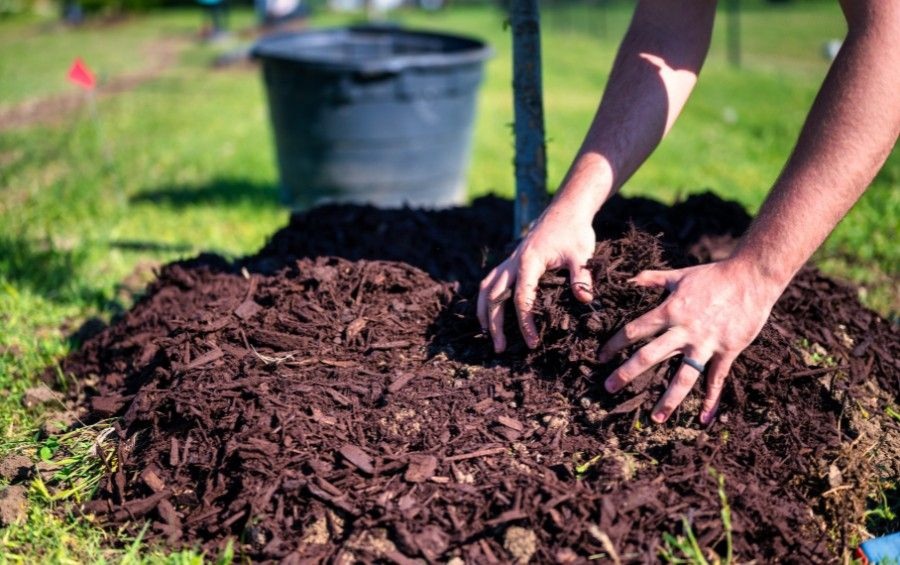
This is an example of what volcano mulching looks like — mulch piled directly against the trunk, burying the root flare. On Eastern Jackson County’s clay soils, this traps moisture and accelerates root decay.
How to Fix a Mulch Volcano
The fix depends on how long the volcano has been there:
- Recent Volcano Mulching (1–2 Seasons): Pull mulch back several inches from the trunk, redistribute the excess to widen the ring, and reshape into a flat “donut.” This is a straightforward correction that takes no longer than 10 minutes per tree.
- Long-Standing Volcano Mulching (Multiple Years): Girdling roots and bark decay may already be present beneath the surface. This requires professional root collar excavation with an air spade — specialized equipment that removes compacted material without damaging the tree. It falls under the broader category of tree preservation and should only be done by a Certified Arborist.
Other Mulching Mistakes That Hit Clay Soils Hard
Volcano mulching gets the most attention, but two other common mistakes cause real damage on clay:
- Applying a Uniform 4-Inch Layer: Even without a volcano shape, a flat layer that exceeds the clay-safe depth creates the same oxygen and drainage problems — it just looks correct while doing it. This is especially common when new mulch gets added on top of last year’s layer without checking what’s already there.
- Using Decorative Stone, Lava Rock, or Rubber Mulch: These materials are popular on high-end properties because they look clean and don’t need replacing. But on clay soils, they’re counterproductive. Inorganic mulches trap heat against the root zone, contribute nothing to soil structure, and don’t break down into the organic matter that clay desperately needs to improve drainage over time. For trees that you’re investing in long-term, organic mulch is the only option that actually improves the soil beneath it.
How Far From the Tree Trunk Should Mulch Be Placed?
Mulch should start several inches from the trunk — the root flare must always stay visible. From there, extend the ring as wide as practical. When it comes to mulch ring diameter, wider is always better.
Proper placement comes down to four guidelines:
- Keep a mulch-free zone of several inches around the trunk
- Start with a minimum 3-foot radius from the trunk; extending to the drip line is even better
- Taper the depth so it’s less than 1 inch near the trunk and increases to full depth farther out
- If mulch is already in place from last season, rake it to break up matted layers before adding new material — and only add enough to bring the total back to the recommended depth
Which Organic Mulch Materials Work Best for Clay Soil Improvement?
Composted wood chips and shredded hardwood bark are the two best mulch choices for improving clay soil. Both decompose over time, adding the organic matter that clay needs to loosen its structure and drain more effectively. Here’s how they compare, along with a third option for smaller ornamental trees:
- Composted Wood Chips: Widely considered the best material for mulching around trees, composted wood chips are less likely to compact than other organic options, and they create a diverse environment for beneficial soil microbes — which is why most professional arborists recommend them for high-value trees.
- Shredded Hardwood Bark: A fibrous material that offers excellent water retention while still allowing adequate air circulation, shredded bark must be replenished annually because it breaks down faster.
- Composted Leaves: Composted leaves break down quickly and deliver immediate nutrition to the soil. They’re a good complement for smaller ornamental trees, though they’ll need replenishing more often than wood chips or bark.
Frequently Asked Questions About Spring Tree Mulching in Eastern Jackson County
Can too much mulch actually kill a tree?
Mulch itself rarely kills a tree outright, but improper application causes slow, cumulative damage. Excessive depth starves roots of oxygen, and mulch piled against trunks promotes bark decay and girdling roots. On clay soils, these problems are amplified because drainage is already limited.
Should you remove old mulch before applying new layers in spring?
Not necessarily. Check the existing depth first. If adequate mulch is already in place, rake it to break up matted layers rather than adding more. Only add new material if the total depth has fallen below 2 inches. On clay soils, never let total depth exceed 3 inches.
Is it safe to use mulch from a tree that was just removed?
Fresh arborist wood chips from healthy trees are excellent mulch. Avoid chips from trees removed due to disease — particularly oak wilt, Dutch elm disease, or fungal infections — as pathogens can survive in the wood. When in doubt, let fresh chips age in an open pile for 3–6 months before use.
Should mulch touch the foundation of a house near trees?
Keep mulch at least 6 inches from foundations, siding, and other structures. Mulch against foundations traps moisture and attracts termites and carpenter ants — especially important in Eastern Jackson County, where clay soil already directs water toward foundations during heavy rains.
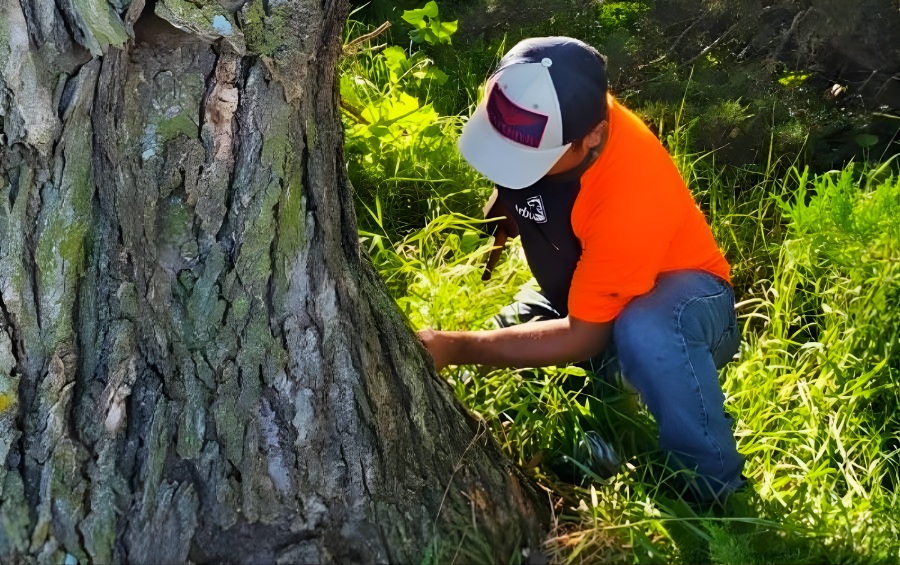
An Arbor Masters arborist inspects the root flare of a mature oak — the first step in diagnosing whether improper mulching or soil compaction is affecting tree health.
Schedule a Free Tree Assessment with Arbor Masters in Lee’s Summit
Spring mulching on Eastern Jackson County’s clay soils comes down to a few fundamentals:
- Keep it thin (2–3 inches)
- Use organic materials
- Shape it like a donut (never a volcano)
- Time it after the ground has drained
When these fundamentals are followed consistently, the results compound year after year.
For properties with mature trees that need evaluation, trees showing early signs of decline, or volcano mulching that’s been in place for years, call 816-524-3131 or schedule a free consultation online with Arbor Masters’ ISA Certified Arborists. We’ve been caring for Kansas City’s finest landscapes for over 60 years.
Learn More With These Related Articles

Want More Like This?
Get the latest local news, tree care tips, special offers, and company updates directly to your inbox! It's easy to subscribe and there's no spam - we promise.
"*" indicates required fields