Why Schedule a Structural Tree Assessment This Winter in Wichita?

Winter is the best time for structural tree assessments in Wichita. Arborists spot hidden risks while trees are dormant to protect your home and trees.
That massive oak in your yard that survived last February’s ice storm may be developing structural weaknesses you can’t see from the outside. Each winter, unseen structural failures develop in Wichita’s mature trees, becoming ticking time bombs that often collapse during the next winter or spring storm.
But there’s a strategic window when these hidden weaknesses become visible to expert eyes. Winter’s bare branches reveal what summer foliage conceals, offering a critical opportunity for professional assessment that could save both your prized trees and potentially thousands in emergency removal costs and property damage.
Key Takeaways
- Winter’s leafless conditions reveal critical structural issues that are hidden during growing seasons, allowing arborists to identify weaknesses before spring storms.
- Structural tree assessments can extend mature tree lifespans by several years through targeted support systems.
- The December through February window provides ideal assessment timing, offering sufficient time to implement support systems before spring storms arrive.
- Support systems, like cabling and bracing, can preserve high-value trees that define neighborhood character and enhance property aesthetics.
- A single professional assessment creates a multi-year tree management plan that protects both your property and your landscape investment.
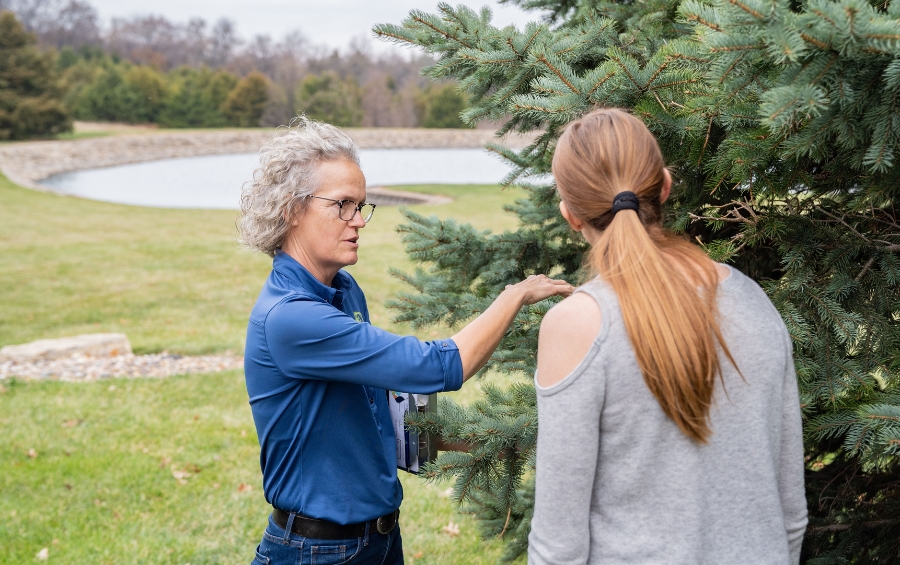
Professional consultations provide homeowners with clear explanations of tree structural issues and preservation options, creating informed partnerships for long-term tree care.
Why Is Winter the Best Time for Tree Structural Assessment?
Winter is the ideal time for tree structural assessments because leafless trees reveal critical issues that remain hidden during growing seasons. Without foliage obscuring the view, Certified Arborists can thoroughly examine:
- Branch structures
- Trunk unions
- Growth patterns that indicate potential failure points.
This complete visibility provides the most accurate evaluation of structural integrity.
“During winter months, we can see exactly how a tree carries its structural load. This visibility allows us to design preservation systems that work with each tree’s unique growth patterns rather than making assumptions based on partial views.” – Cody Siegrist, Plant Health Care Specialist at Arbor Masters
What Are the Warning Signs That Your Tree Needs a Structural Assessment?
Your tree needs a professional structural assessment if you notice any of the following:
- Leaning trunks
- Cracks in major limbs
- Mushrooms growing at the base
- Recent storm damage
- New leaning
- Soil heaving around the root zone
- Sudden deadwood development
These visible symptoms indicate potential structural compromise that could lead to catastrophic failure during Wichita’s storms.
Why Does Previous Storm Damage Require Professional Evaluation?
The hidden risks in storm-damaged trees can persist long after the initial damage occurs, making professional assessment crucial even months after weather events. Professional evaluation identifies these concealed issues before they progress to failure.
Previous storm damage creates entry points for decay and often masks underlying weaknesses that continue deteriorating long after visible damage has been addressed. After weather events, damaged trees develop compensatory growth patterns that can appear healthy but actually indicate structural compromise.
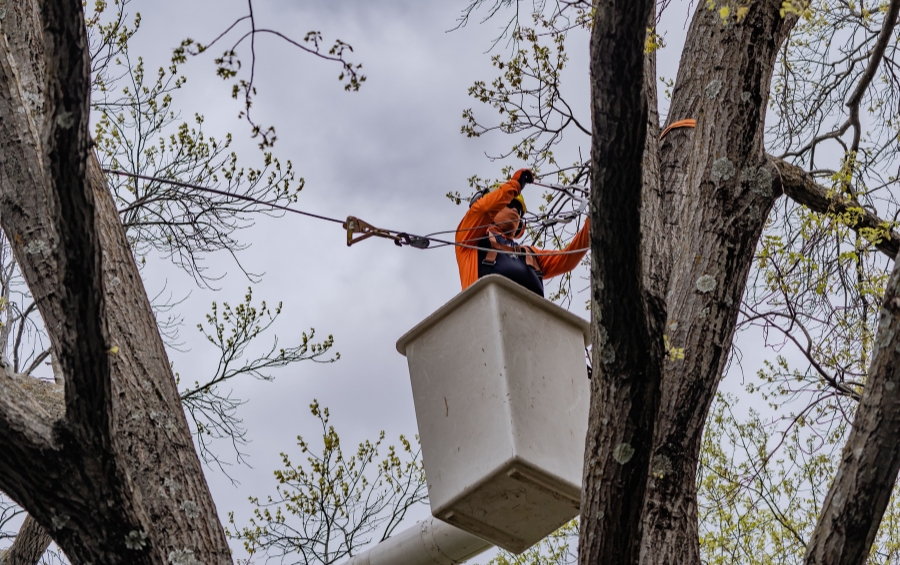
Winter structural assessments often identify immediate structural support needs that must be addressed before the next storm.
What Happens During Structural Tree Assessment?
During a structural tree assessment, ISA Certified Arborists thoroughly evaluate:
- Trunk integrity
- Branch structure
- Root conditions
- Overall tree architecture
This comprehensive inspection follows ANSI A300 standards to document current conditions and predict future performance.
Certified Arborists utilize advanced tools to quantify internal conditions, including:
- Resistance microdrills
- Sonic tomography
- Load testing equipment
These non-invasive technologies detect hidden decay, cavities, and weak points that visual inspection alone might miss.
Following the assessment, you’ll receive detailed documentation that outlines the health of your tree and any potential concerns for its long-term health.
How Do You Know If Your Tree Needs Cabling?
Cabling is often recommended when a tree has healthy limbs but needs extra support to handle wind, snow, or ice. High-strength support cables placed in the upper canopy limit excessive movement and help redistribute weight during storms.
Modern systems are designed to allow natural sway while preventing dangerous over-flexing. They blend easily into the canopy and don’t change the appearance of the tree, but they play a major role in stabilizing it.
Our cabling and bracing approach focuses on preserving mature trees whenever possible, keeping them safe, healthy, and beautiful. Structural support systems can extend the life of these valuable trees by decades, reinforcing weak points identified during winter assessments and helping them withstand seasonal storms while maintaining the shade, character, and property value benefits they bring to your landscape.
How Does Bracing Strengthen Vulnerable Trees?
Bracing strengthens vulnerable trees by installing threaded rods through weak branch unions or split trunks, creating rigid mechanical connections that prevent further separation. This technique is particularly valuable for trees with co-dominant stems or included bark that create structural weak points.
Professional bracing systems are specifically engineered for each tree’s unique structure and species characteristics, accounting for growth patterns, load distribution, and wood strength properties. These custom solutions provide decades of structural reinforcement while preserving aesthetic appeal.
PRO TIP: Our comprehensive tree support services include both preventative and corrective structural systems customized for each tree’s specific needs.
How Do You Know When a Tree Can’t Be Saved?
Sometimes, even with cabling, bracing, and corrective pruning, removal is the safest option. This typically happens when:
- Structural defects are too extensive to support reinforcement
- Internal decay affects more than 40% of the load-bearing wood
- Root damage has compromised the tree’s stability
Winter structural assessments help document these issues clearly so homeowners can make confident, informed decisions.
“We believe in preservation whenever possible. That’s why our winter assessments focus on identifying support options before recommending removal. But we also recognize our responsibility to provide honest evaluations when trees can’t be saved.” – Seth Blank, Arbor Advisor at Arbor Masters
Frequently Asked Questions About Structural Tree Assessments
When is the best time to schedule a structural tree assessment in Wichita?
The best time to schedule a structural tree assessment in Wichita runs from mid-December through February, when trees are fully dormant and branch structures are completely visible. Scheduling during January typically provides the best combination of visibility and sufficient time to implement support systems before spring’s growing season and storm activity.
What qualifications should I look for in a tree assessment professional?
Look for a company that employs ISA Certified Arborists and is accredited by the Tree Care Industry Association. These professionals:
- Adhere to industry standards
- Maintain appropriate insurance coverage
- Possess the specialized training necessary to provide accurate structural evaluations and preservation recommendations
How long does a comprehensive tree assessment take?
A thorough winter structural assessment typically requires 1-2 hours per significant tree, with comprehensive property evaluations often completed in a single day. The process includes:
- Visual inspection
- Tool-based testing
- Documentation
- Development of specific recommendations
What happens after an assessment identifies structural problems?
After identifying structural issues, you’ll receive a detailed report with prioritized recommendations ranging from immediate action to long-term monitoring. For trees requiring support systems, the report includes design specifications and implementation timelines. When removal is necessary, the documentation often satisfies municipal permit requirements.
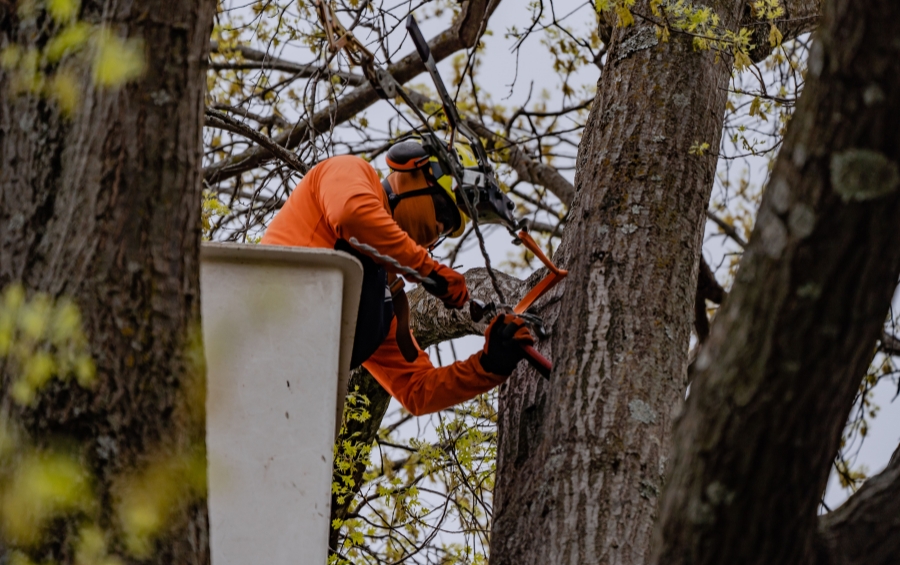
Arborists often recommend installing structural support systems after an inspection to strengthen structural defects of your tree.
Protect Your Trees This Winter with a Structural Assessment from Arbor Masters
With over 60 years of experience and a team of ISA Certified Arborists, Arbor Masters delivers unmatched expertise in structural assessment and preservation techniques.
Scheduling a structural assessment with Arbor Masters’ ISA Certified Arborists is simple: just call 316-838-3111 or request a quote online for a comprehensive evaluation of your valuable trees. Our TCIA Accredited team provides the highest level of professional service, ensuring your mature trees receive the expert care needed for long-term preservation and safety.
Learn More With These Related Articles

Want More Like This?
Get the latest local news, tree care tips, special offers, and company updates directly to your inbox! It's easy to subscribe and there's no spam - we promise.
"*" indicates required fields