
How ISA Certified Arborists Protect Liberty Trees from Destructive Pests
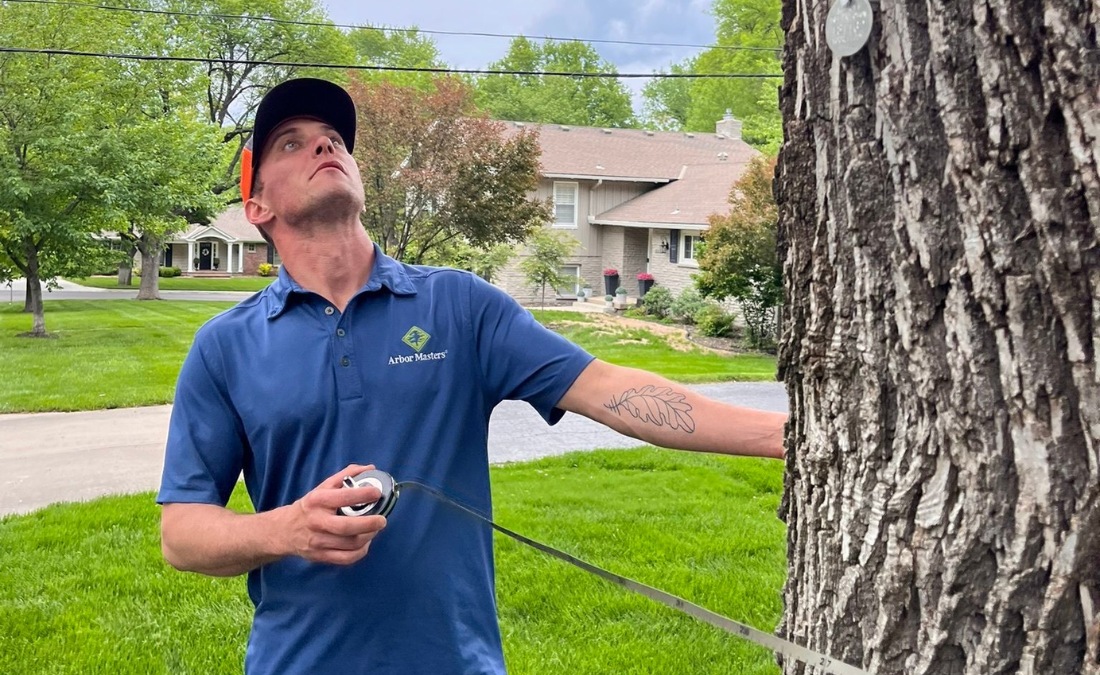
Professional tree pest protection isn't just spraying chemicals. See how arborists use precision injections and holistic care to actually save Liberty trees.
Back in 2012, Parkville became the first place in Missouri to confirm emerald ash borer. That moment marked the start of a long-term issue for ash trees across the Kansas City area – and it’s still something Liberty and Parkville homeowners are dealing with today. While emerald ash borer gets the most attention, it’s just one of several pests that can threaten the health of your trees.
Early spring offers the optimal window for professional tree pest protection before most of these threats emerge. ISA Certified Arborists deliver treatments that homeowners simply can’t replicate with DIY products, using advanced injection systems and integrated pest management strategies that address multiple threats simultaneously.
Key Takeaways
- Professional tree injection treatments use systemic insecticides and application methods unavailable to homeowners, delivering highly effective protection against emerald ash borer and other destructive pests.
- Early spring is the optimal treatment window because pre-emergence timing prevents pest establishment before insects emerge and damage trees during the growing season.
- Four major pests threaten local trees: emerald ash borer, spotted lanternfly, elm bark beetles spreading Dutch elm disease, and Japanese beetles.
- Preventive treatments cost far less than tree removal and landscape restoration while preserving property values in Liberty’s fast-moving market.
- ISA Certified Arborists use integrated pest management techniques to address soil health, watering, and structural pruning alongside treatments for long-term protection with community-wide benefits.
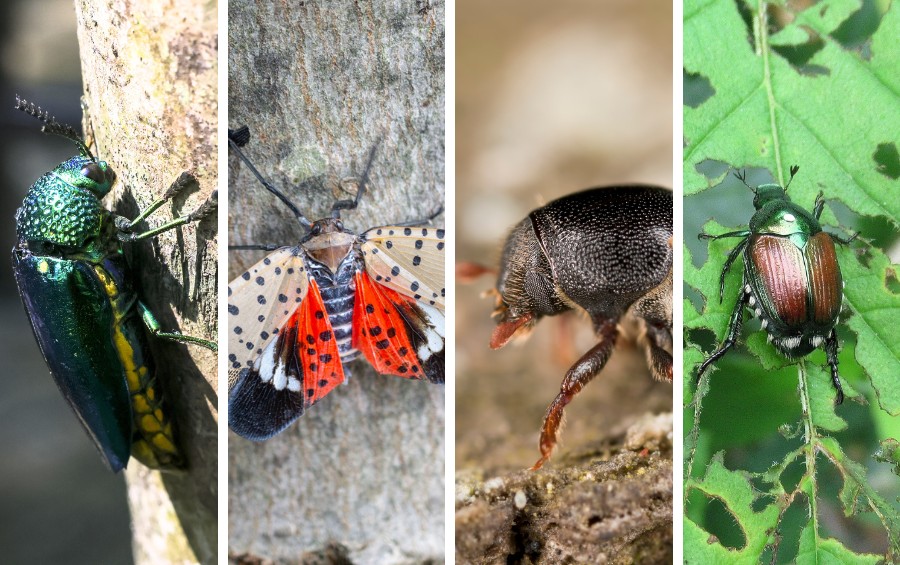
Liberty and Parkville trees face threats from four destructive pests. They are (from left) emerald ash borer, spotted lanternfly, elm bark beetles, and Japanese beetles.
What Tree Pests Threaten Liberty and Parkville?
Liberty and Parkville’s mature tree canopy faces threats from four destructive pests, each requiring professional monitoring and treatment. Understanding these pests helps homeowners recognize when expert intervention is needed to protect tree health and property value.
- Emerald Ash Borer (EAB): This invasive beetle remains the most serious threat to local trees. First confirmed in Parkville in 2012, the state enacted a quarantine to slow the spread. The beetle creates distinctive D-shaped exit holes in ash bark and causes progressive canopy thinning. Without professional treatment, infested ash trees typically die within three to four years.
- Spotted Lanternfly: While not yet confirmed in Missouri, this destructive pest has been detected in 19 states, including neighboring Illinois. This invasive insect feeds on a wide range of host trees, and heavy feeding causes honeydew dripping and sooty mold that damages bark and attracts other pests.
- Elm Bark Beetle: These beetles spread the deadly Dutch elm disease fungus throughout tree populations. The disease causes rapid tree death by blocking water transport in the vascular system. Once Dutch elm disease establishes in a neighborhood, it spreads quickly to neighboring trees.
- Japanese Beetle: Heavy seasonal activity from June through August makes Japanese beetles a persistent problem across the Kansas City metro. Adults skeletonize leaves on susceptible tree species throughout the summer months. Repeated defoliation weakens overall tree health and makes trees vulnerable to other pests and diseases.
PRO TIP: For more detailed information about identifying and managing these threats, see our comprehensive guide to Kansas City tree pests.
How Do Professionals Protect Trees from Pests?
ISA Certified Arborists protect Liberty and Parkville trees through comprehensive assessment, advanced treatment technology, and integrated pest management programs. This professional approach delivers superior results compared to DIY methods and addresses tree health holistically to enhance long-term pest resistance.
Comprehensive Tree Health Assessments Identify Problems Early
Protecting your trees from pests starts with understanding what you’re dealing with. ISA Certified Arborists begin every treatment plan with a thorough assessment that goes far beyond looking for visible pest damage. They evaluate tree species, age, vigor, and environmental stress factors that affect how vulnerable your trees are to infestation. Some symptoms they look for include:
- Canopy thinning or dieback in specific branches
- Unusual bark texture, cracks, or discoloration
- Exit holes, galleries, or sawdust accumulation on bark
- Premature leaf drop or off-season color changes
- Excessive insect activity around the trunk or canopy
- Fungal growth, oozing sap, or unusual odors
- Poor annual growth or reduced leaf size
These subtle indicators often signal pest issues before major damage becomes obvious, allowing treatment when it’s most effective.
The assessment also reveals underlying health issues that make trees more susceptible to pests. Poor soil conditions, inadequate watering, and structural problems all weaken a tree’s natural defenses. Many times, correcting these problems is enough to protect trees from insects.
Professional-Grade Preventive Injections Deliver Superior Results
When tree assessments reveal active infestations or high pest pressure, professional injection treatments become essential. These advanced systems deliver systemic insecticides directly into the tree’s vascular system, protecting the entire canopy from a single application point. The treatment spreads throughout the tree as it transports water and nutrients, creating comprehensive protection that surface applications simply can’t match.
Professional injection offers important environmental advantages. Unlike spraying or soil drenching, which put chemicals in the air and ground, injection puts all the product inside the tree during application. This targeted approach minimizes environmental impact while maximizing treatment effectiveness.
Treatment often requires just one application with protection lasting multiple years, making it far more economical than ongoing ground spraying.
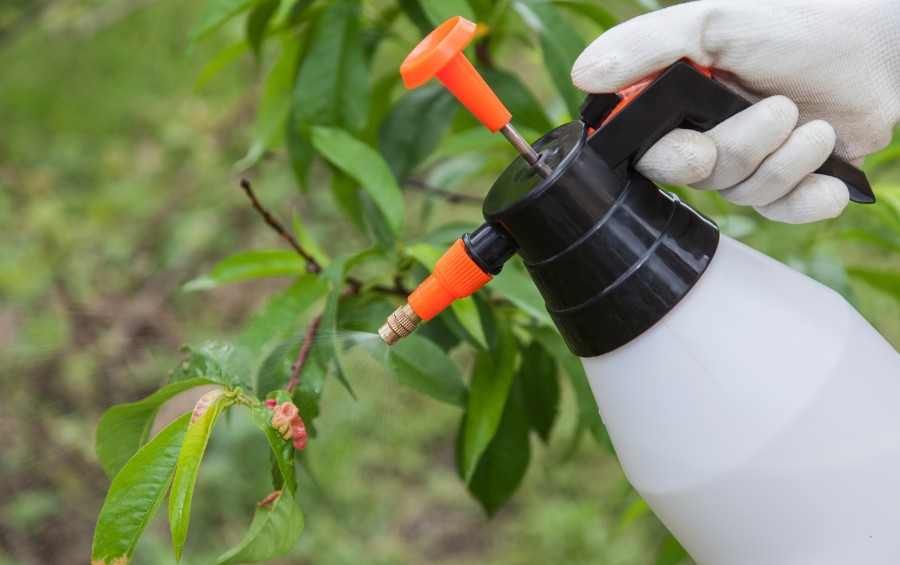
DIY pest treatments have significant limitations compared to professional trunk injection systems that deliver systemic protection throughout the entire tree.
Why DIY Treatment Has Limited Effectiveness
DIY products have significant limitations that make them unsuitable for serious pest threats. Consumer soil treatments only work effectively on trees smaller than 15 inches in diameter and require perfect timing plus adequate soil moisture for uptake.
Drought conditions, increasingly common during Kansas City summers, severely limit DIY product effectiveness. Consumer products also lack the effective concentrations available to licensed professionals.
For the best possible protection for your trees, stick with professional trunk injections from professional arborists.
Integrated Pest Management Programs Protect Trees Long-Term
Integrated pest management (IPM) takes a comprehensive approach to tree protection by combining multiple strategies rather than relying solely on chemical treatments. The goal is to treat the underlying causes of pest problems and tree stress. These programs include:
- Soil and Water Management: Testing and improving soil conditions to support healthy root systems, along with proper watering practices that help trees stay resilient – especially during Kansas City’s hot summers when stress can make them more vulnerable to pests.
- Structural Pruning and Sanitation: Removing dead or damaged branches that provide entry points and breeding sites for pests while improving air circulation through the canopy to discourage fungal growth and insect activity.
- Regular Monitoring and Early Intervention: Scheduling seasonal inspections to catch pest activity at early stages when treatment is most effective and least invasive, preventing small problems from becoming major infestations.
This coordinated approach protects your long-term property investment and lowers the risk of tree pest problems in the coming years.
When Should Liberty and Parkville Homeowners Schedule Pest Treatments?
Pre-emergence timing prevents pest establishment before damage occurs. Early spring treatments protect trees throughout the active growing season as systemic insecticides distribute through the vascular system. This window maximizes treatment uptake as trees break dormancy and begin moving nutrients from roots to canopy.
Waiting until the insect establishes itself makes controlling the population much more difficult. As most insects become active in spring, handling any treatments early will prevent them from infesting your tree and causing damage. Don’t wait until you see obvious tree stress indicators, because by then, your tree will have already received considerable damage.
Frequently Asked Questions About Tree Pest Protection
How much does professional tree pest treatment cost compared to tree removal?
Professional treatments cost a fraction of removal expenses while preserving property value. Treatment often requires just one application with long-lasting protection, making prevention economically superior to removal and landscape restoration costs.
Can I treat my own trees for pests?
DIY treatments have significant limitations that make them unsuitable for most properties. Specialty insecticides in effective concentrations are only available to licensed professionals. Homeowner products work only on smaller trees and depend on perfect timing and soil moisture.
When is the best time to treat trees for pests?
Early spring offers the optimal preventive treatment window before pest emergence. Spring treatments protect trees throughout the growing season as systemic insecticides work through the vascular system. ISA Certified Arborists time applications based on regional climate patterns, tree species, and pest life cycles for maximum effectiveness.
Will treating my trees help protect my neighbors’ trees?
Professional pest management provides community-wide benefits by reducing local pest populations and preventing spread. Treated trees don’t harbor emerging pests, breaking reproduction cycles that would otherwise affect neighboring properties. In densely canopied neighborhoods, like Hallbrook and Bent Oaks, coordinated professional treatment creates protection zones that benefit the entire community.
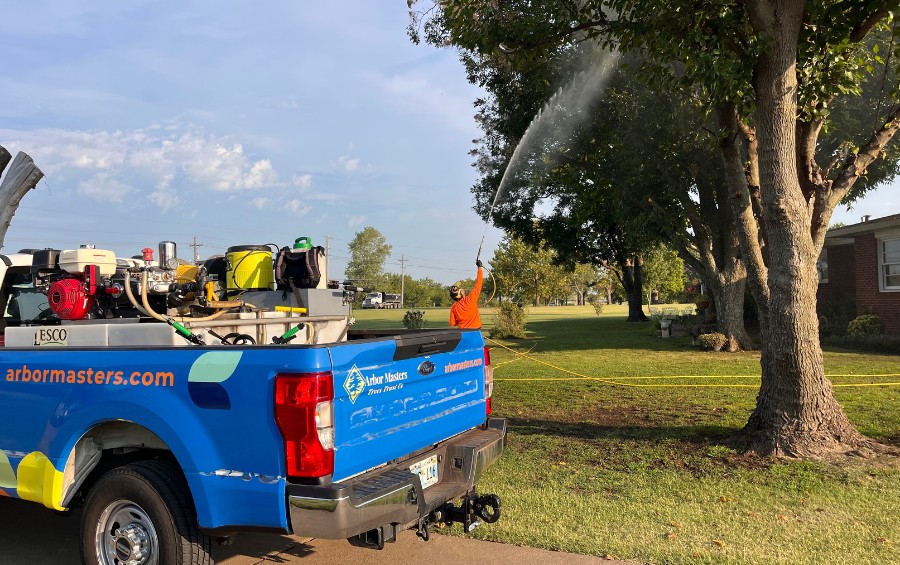
ISA Certified Arborists begin every treatment plan with comprehensive assessments that identify pest threats and underlying health issues before damage becomes visible.
Protect Your Liberty and Parkville Trees This Spring
Mature trees add real value to properties across Liberty and Parkville—but they also need the right care to stay healthy. Spring is the best time to get ahead of pest issues with professional treatment, before insects have a chance to cause serious damage.
If you’re concerned about your trees this season, the team at Arbor Masters can help. We offer targeted insect treatment plans to protect against the pests that commonly affect trees in this area. Our arborists will evaluate your trees, recommend the right approach, and handle treatment from start to finish. Call us today at 913-441-8888 or request a quote online for help with tree insects.

Get the latest local news, tree care tips, special offers, and company updates directly to your inbox! It's easy to subscribe and there's no spam - we promise.
"*" indicates required fields
