Tree Removal on Steep Lots: What Parkville Homeowners Should Know
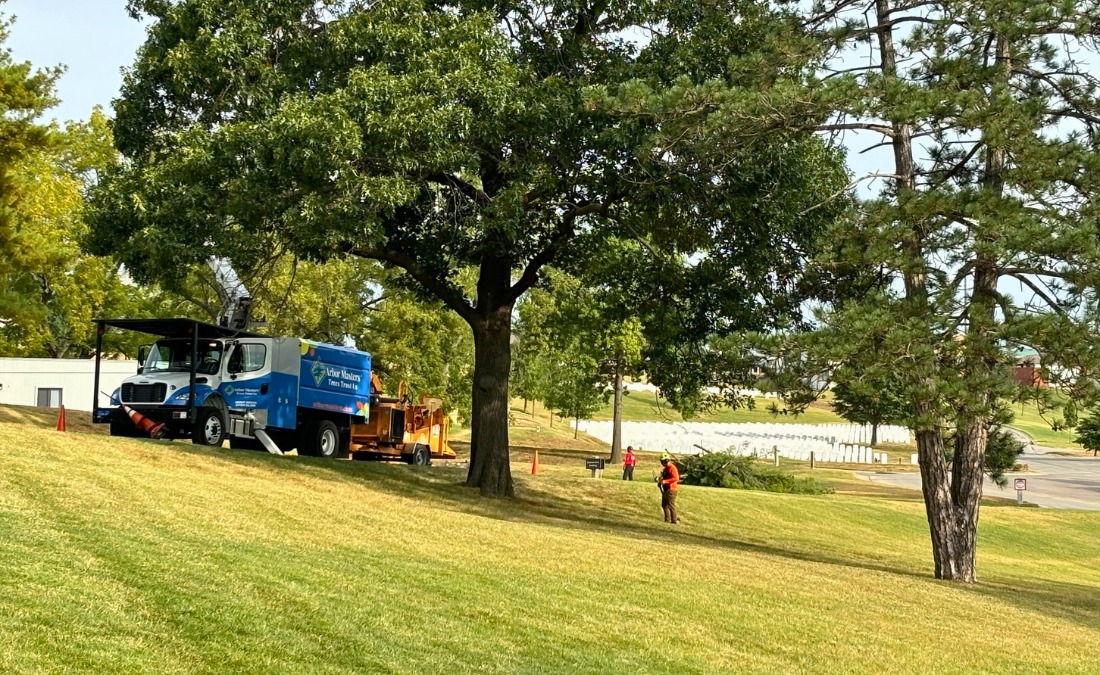
After winter storms, damaged trees on Parkville’s steep hillsides can become dangerous fast. Learn why tree removal on slopes requires expert care & equipment.
When last winter’s ice storm finally passed, Parkville homeowners woke to a landscape transformed: power lines sagging, roads impassable, and trees on hillside lots snapped, split, or leaning at alarming angles. Over 10 inches of snow and significant ice accumulation left damaged trees clinging to slopes throughout the Northland.
If you’re facing tree removal on a steep lot in Parkville — whether from storm damage or years of decline — you’re dealing with a situation that’s fundamentally different from removing a tree on flat ground.
Key Takeaways
- Tree removal on slopes over 15% grade requires specialized rigging or crane-assisted techniques that most general tree services can’t safely perform.
- The best time for steep-slope removal in Missouri is during frozen ground conditions (December through February) or dry periods, when soil is stable.
- Post-removal erosion control is critical — root systems take three to five years to decompose, and slopes become increasingly unstable during that time.
- Always verify your tree service carries proper insurance and has experience with technical removals before signing a contract.
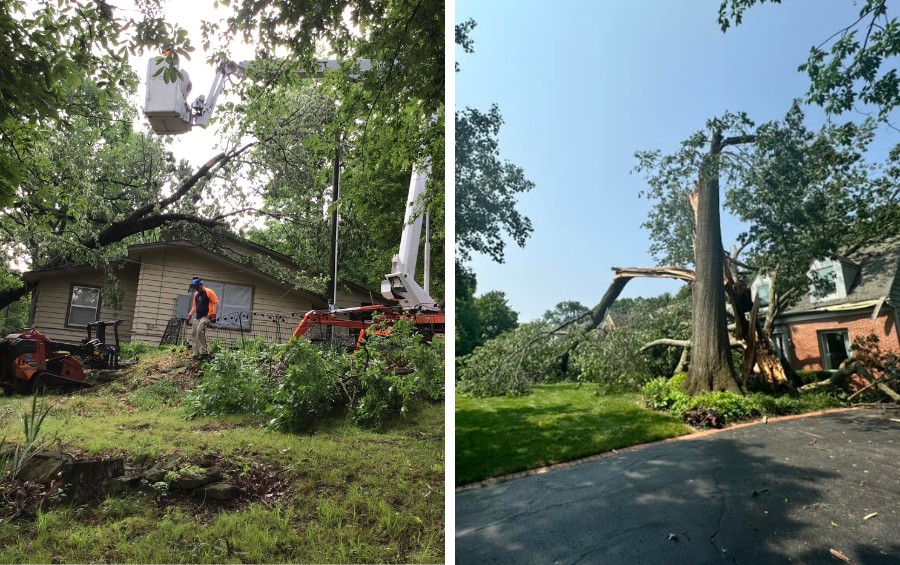
Left photo: Tree crew on a spiderlift and on the ground cleaning up some tree debris after a storm on an elevated property; Right photo: A fallen tree after a storm showing a slopy entrance on a property near Parkville.
How Do Arborists Remove Trees on Steep Hillsides?
Professional arborists use two primary approaches for steep-slope tree removal: a crane or technical rigging. The choice depends on your specific site conditions, tree size, and access limitations. Fortunately, you don’t need to specify or figure out which method you want, your arborist will assess your situation and recommend the best approach.
Crane-Assisted Removal Eliminates Drop Zone Needs
Crane-assisted removal lifts cut sections vertically away from the tree, eliminating the need for a ground-level drop zone entirely. The crane operator and climber plan every cut in advance, carefully estimating the weight of each section to avoid overloading the crane. This method can extract debris over obstacles, like fences, landscaping, or neighboring structures, that would otherwise complicate the removal. The main requirement is a stable, level surface for crane setup, which sometimes means constructing temporary pads to support the equipment.
Technical Rigging Works Where Cranes Can’t Reach
Technical rigging uses ropes, pulleys, and friction devices to control the descent of cut sections with precision. On slopes, the lowering points must account for the terrain angle, and arborists sometimes use “negative rigging” techniques when the drop zone sits uphill from the cut. Load control becomes even more critical than on flat ground because cut pieces can roll or slide unpredictably once they’re on the slope. This method is often preferred when crane access isn’t feasible or when the cost of crane mobilization isn’t justified by the tree’s size.
Why Does Tree Removal on a Steep Lot Require Specialized Techniques?
Steep slopes eliminate the safe “drop zone” that standard tree removal depends on, meaning that cut sections can’t just fall to the ground because that ground angles sharply downhill. But how steep is “steep”? Understanding the classifications helps explain why specialized techniques become necessary.
Most municipal codes classify slopes of 15% to 25% as “steep” and anything over 25% as “extreme.” Slopes exceeding roughly 35 degrees (about 70% grade) typically require either specialized hand labor or crane assistance — there’s simply no safe way to position conventional tree removal equipment on terrain that steep.
Parkville’s bluff neighborhoods along the Missouri River and the rolling terrain around Riss Lake feature some of the Northland’s most dramatic topography, with many properties containing slopes that exceed 15% and some reaching well beyond the 25% threshold that the city’s municipal code flags for special attention. Clay County’s erosion and sediment control requirements reflect these challenges, with specific provisions for work on steep terrain.
Beyond regulations, the physical risks increase dramatically on slopes. A 500-pound log that lands safely on flat ground can become a runaway hazard on a hillside, gaining speed and force as it moves downhill. Standard bucket trucks can’t safely operate on angled terrain without tip-over risk, and ground crews face unstable footing while managing heavy equipment and moving material.
On steep lots, safe tree removal isn’t about cutting faster – it’s about controlling gravity, protecting structures below, and using techniques designed specifically for the terrain.
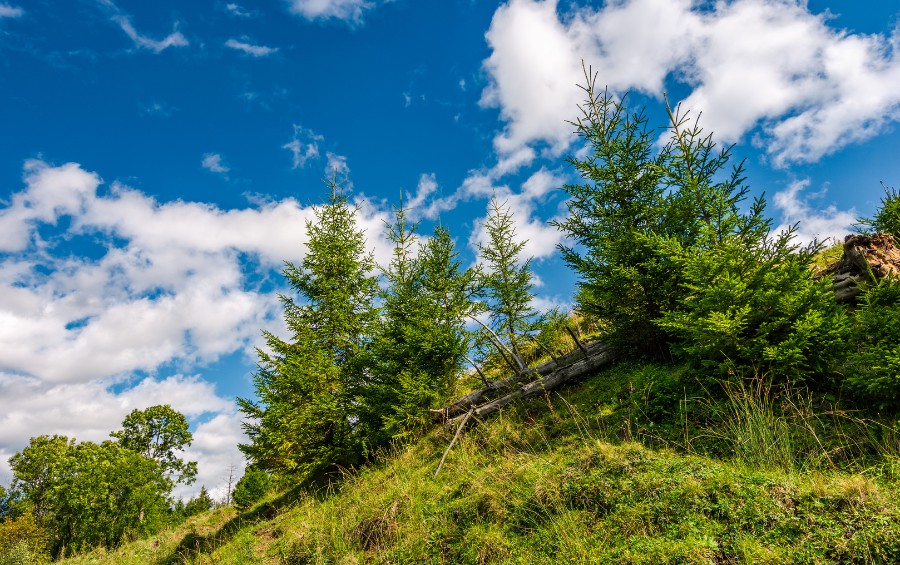
Slopes like this one make traditional drop-zone removal impossible — cut sections can roll or slide downhill unpredictably.
When Is the Best Time for Steep-Slope Tree Removal in Missouri?
Winter is the best time for tree removal on steep slopes – specifically December through February – is typically the best window for steep-slope removal in Missouri because the frozen ground provides a
stable surface for heavy equipment. Dormant trees are also easier to work with and transport because they’re lighter without their foliage.
However, if the tree is an immediate hazard (i.e.: leaning toward a structure, showing signs of imminent failure, etc.) schedule the removal regardless of season. Safety always trumps optimal timing.
How to Prevent Erosion After Hillside Tree Removal
Tree roots anchor soil in place — and when they decompose over the 3-5 years following removal, that anchoring system disappears. That’s why post-removal erosion control is critical on steep terrain.
Several options can help stabilize your slope:
- Leave the Stump in Place: This surprises many homeowners, but an intact stump continues anchoring soil while it slowly decays. Grinding creates a bare patch immediately where roots no longer hold.
- Erosion Control Blankets: Biodegradable mesh mats that hold soil in place while new vegetation establishes. They shield bare soil from rain impact and slow water runoff until roots take hold.
- Fiber Reinforced Matrix (FRM): A spray-on mixture of mulch, tackifier, and fiber that bonds to the soil surface. It’s particularly effective on steep grades where blankets are difficult to install.
- Revegetation with Deep-Rooted Plants: Native grasses and shrubs eventually provide the best long-term stabilization. Certain species perform especially well on Missouri slopes.
DID YOU KNOW?: Parkville’s Site and Landscape Design Standards (Section 407) may require slope stabilization measures when steep slopes are disturbed, and the city has authority to mandate vegetation placement to protect hillsides.
How to Find a Tree Service Qualified for Steep-Slope Removal
Look for a company with specialized equipment, technical training, and documented experience on steep terrain – not every tree service has all three. These questions can help you separate qualified crews from those who’ll be in over their heads.
Questions That Reveal Experience
Hillside tree removal is a complicated endeavor. Asking specific questions about their experience in this area ensures your trees – and your property – remain as safe as possible throughout the removal process:
- “Do you have experience with technical tree removals on steep terrain?”: Ask for specific examples of similar projects, not just a generic “yes.”
- “Will you use rigging or crane-assisted removal, and why?”: Their answer determines whether they’ve actually assessed your site rather than giving a cookie-cutter answer.
- “What’s your plan for protecting the slope during and after removal?”: A contractor who mentions erosion concerns demonstrates awareness of hillside-specific challenges.
Questions About Safety and Credentials
When scheduling a tree removal on a steep property, it’s equally important to verify the company’s credentials and licensing so that you remain protected should anything go awry:
- “Are you fully insured for this type of work?”: Steep-slope work carries higher risk than standard removals — verify their coverage matches the job complexity.
- “Do you have ISA Certified Arborists on staff?”: Certification indicates proper training for complex removals and the judgment to know when specialized techniques are necessary.
Frequently Asked Questions About Tree Removal on Steep Lots in Parkville
How much does it cost to remove a tree on a steep slope?
Steep-slope removal typically costs more than flat-ground removal due to specialized equipment and additional labor. Factors include tree size, slope angle, access, and whether crane assistance is needed. The best way to get an accurate estimate is to request an on-site assessment from a qualified arborist.
Can I remove a tree on my own property in Parkville without a permit?
Parkville does not generally require permits for tree removal on private property. However, if your property is in an HOA community, like Riss Lake, check your covenants for any restrictions. The city does have authority to require slope stabilization measures when steep slopes are disturbed.
How long does steep-slope tree removal typically take?
A single tree removal on challenging terrain can take a full day or more, compared 2-4 hours on flat ground. The timeline depends on tree size, access challenges, and whether crane setup is required. Your arborist should provide a time estimate during the assessment.
Will heavy equipment damage my lawn or landscaping?
Professional arborists take precautions to minimize property impact, including using plywood or mats to protect turf and planning equipment routes carefully. Some temporary lawn damage may be unavoidable on steep terrain, but reputable companies will discuss restoration options upfront.
What certifications should I look for when hiring for hillside tree work?
When hiring for hillside tree work, look for:
- ISA (International Society of Arboriculture) Certified Arborists for overall expertise
- TRAQ (Tree Risk Assessment Qualified) certification for hazard evaluation
- CTSP (Certified Treecare Safety Professional) for safety-focused operations
For crane work, the operator should also hold CCO (Certified Crane Operator) certification.
Can a partially damaged tree on a slope be saved instead of removed?
Sometimes, yes. Options like crown reduction pruning or installing structural support systems, like cabling and bracing, can stabilize storm-damaged trees if the trunk and root system are sound. An ISA Certified Arborist can assess whether preservation is viable or if removal is the safer choice for your property.
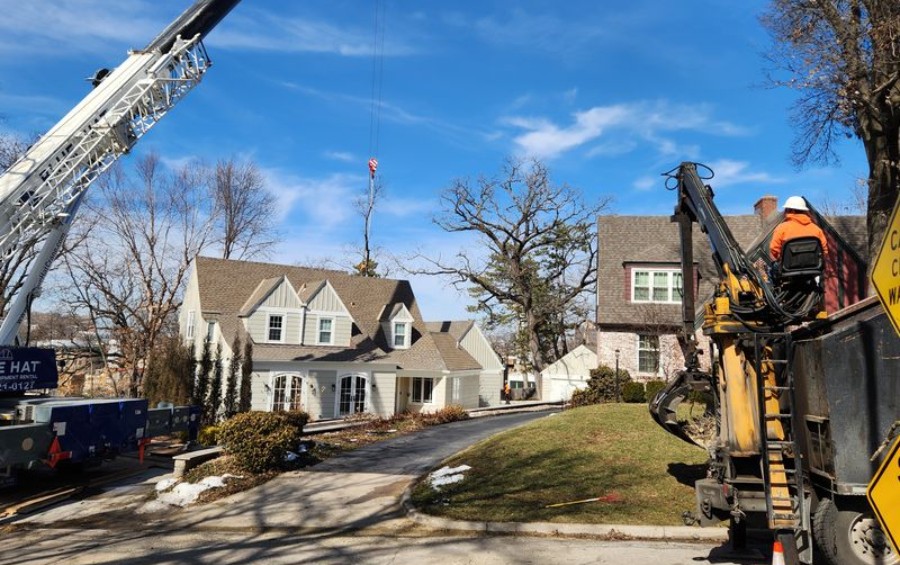
Ready to Address a Hazardous Tree on Your Parkville Property?
Parkville’s hillside properties come with tradeoffs; the views are worth it until a damaged tree needs to come down and you realize not every crew knows how to work a 25% grade. The wrong equipment, the wrong technique, or the wrong timing can turn a routine removal into a property damage claim or worse.
Arbor Masters has spent over 60 years working Kansas City’s most challenging terrain, with cranes, specialized rigging, and ISA Certified Arborists who know when each method is called for. If you’ve got a damaged or hazardous tree clinging to a slope, give us a call at 816-781-8914 or schedule a free assessment online today.
Learn More With These Related Articles

Want More Like This?
Get the latest local news, tree care tips, special offers, and company updates directly to your inbox! It's easy to subscribe and there's no spam - we promise.
"*" indicates required fields