How Weight Reduction Pruning Can Help Prevent Property Damage During Iowa Winters
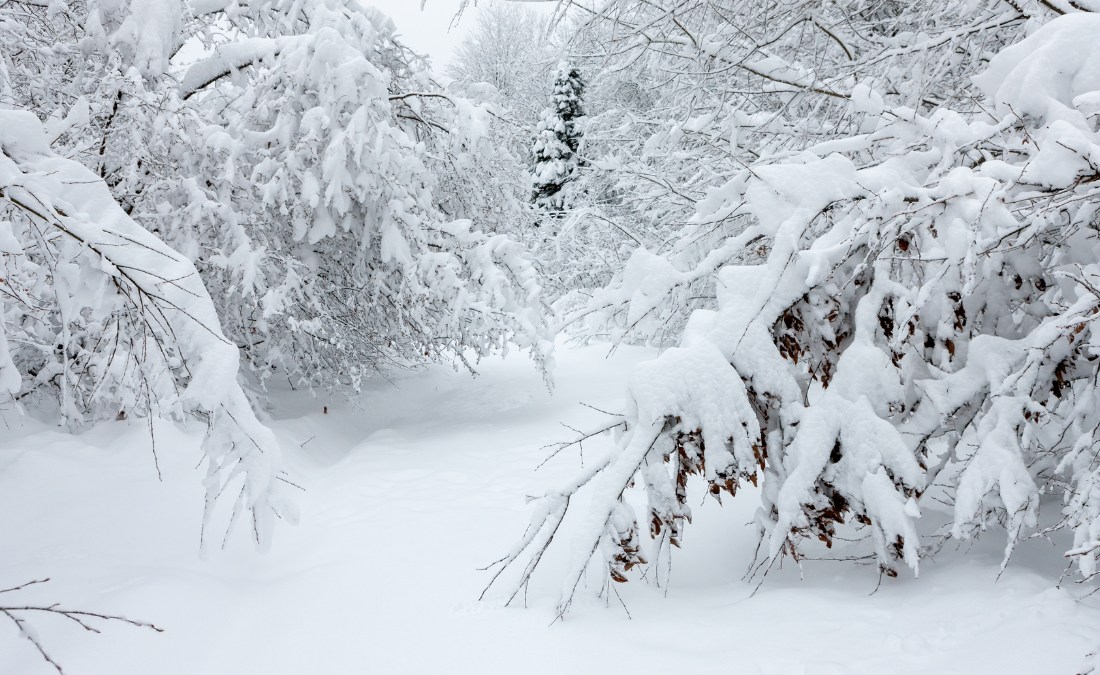
One storm can cost thousands in damage. Weight reduction pruning removes the branch weight that causes failures — before the next winter storm hits Des Moines.
Snow and ice don’t have to be extreme to break branches. What matters more is how much weight a tree is carrying and where the stress is distributed. And with Des Moines already seeing more snowfall this season than all of last winter, even average storms are adding more load than many trees are used to handling.
Weight reduction pruning helps thin heavy limbs and relieve stress at weak attachment points so trees can handle winter weather with less risk of breakage. A quick winter assessment can reveal whether your trees would benefit from this pruning technique.
Key Takeaways
- Weight reduction pruning selectively removes end-weight from spreading branches, allowing snow to sift through instead of accumulating.
- Silver maples, box elders, and other fast-growing trees are most vulnerable to snow and ice damage in Des Moines.
- Utility companies only prune near power lines — protecting your roof and driveway is your responsibility.
- Late fall through early winter is the ideal window to schedule preventive pruning before major storms.
What Is Weight Reduction Pruning and How Does It Prevent Snow Damage?
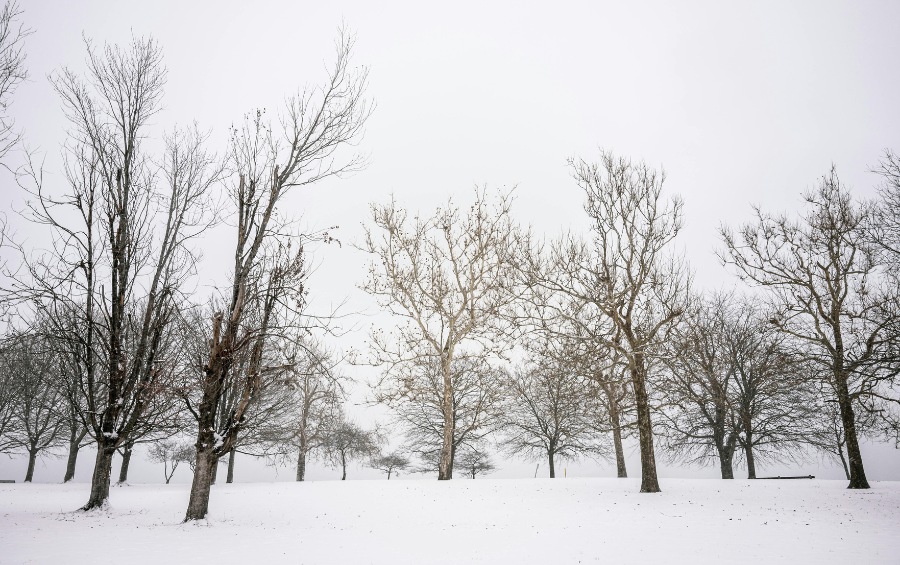
Weight reduction pruning is a targeted structural technique that removes excess weight from the outer portions of a tree’s canopy — specifically the branch tips and ends of spreading limbs. By reducing what those limbs are carrying, the tree maintains better balance and less leverage on weak attachment points.
How Does Weight Reduction Pruning Reduce the Risk of Snow and Ice Damage?
When arborists remove end-weight from long limbs, they also thin the crown. This let’s snow and ice sift through the branches instead of clinging to dense, twiggy growth. The result is less mass on a limb, less leverage at the branch union, and less chance of failure under the weight of snow and ice.
The difference can be dramatic:
- Ice accumulations can increase branch weight by 30 times or more.
- Even a quarter-inch of ice can cause weak limbs to fail.
Reducing what the branch carries in the first place gives trees a fighting chance against Iowa’s winter storms.
Why Isn’t Regular Pruning Enough for Storm Protection?
Standard pruning and weight reduction pruning have different goals:
- Routine Maintenance: This pruning service removes deadwood, improves airflow, and shapes the tree for curb appeal.
- Weight Reduction Pruning: This kind of pruning is about physics: it targets the outer canopy where snow and ice accumulate most heavily, reducing leverage on branch unions and thinning the dense growth that catches precipitation.
It’s important to note that a tree can look well-maintained and still carry too much end-weight to survive a heavy ice storm.
Which Des Moines Trees Are Most Vulnerable to Snow and Ice Damage?
Fast-growing trees are most likely to suffer storm damage because rapid growth produces weaker wood structure. Species that grow quickly often sacrifice density and strength in the process, leaving them with brittle branches and poor attachment points at branch unions.
That’s why silver maples, box elders, and similar fast-growers dominate the list of storm casualties every winter. When ice loads branches that grew quickly but lack internal strength, something has to give.
These common Des Moines trees are especially prone to ice and snow damage:
- Silver Maple: Weak wood, poor crotch angles, steep branch unions.
- Box Elder: Brittle wood that rarely lives beyond 80 years; easily damaged by storms.
- Siberian Elm: Weak branch structure and prone to splitting.
- Green Ash: Often has multiple leaders that fail under load.
- Pin Oak: Dense branching catches snow and ice.
- Cottonwood: Fast growth leads to weak wood.
How Can I Tell If My Trees Need Weight Reduction Pruning?
Certain structural defects make trees far more likely to fail under snow and ice loads. Knowing what to look for can help you decide whether to call an arborist before the next storm.
These warning signs indicate elevated risk:
- V-Shaped Crotches or Co-Dominant Leaders: Two main trunks competing for dominance often split apart under heavy loads.
- Included Bark at Branch Unions: When bark grows into the joint between the trunk and branch, the connection is weaker than it appears.
- Multiple Trunks: Common in silver maples and box elders, this structure creates stress points that fail during storms.
- Previous Storm Damage: Broken branches still hanging in the canopy (called “hangers”) can fall without warning.
- Dense, Unpruned Canopy: Trees that haven’t been maintained in three or more years are more likely to catch snow and ice.
- Long, Heavy Limbs Over Structures: Branches extending over your roof, driveway, or walkway – especially those with minor cracks or splits – deserve professional attention.
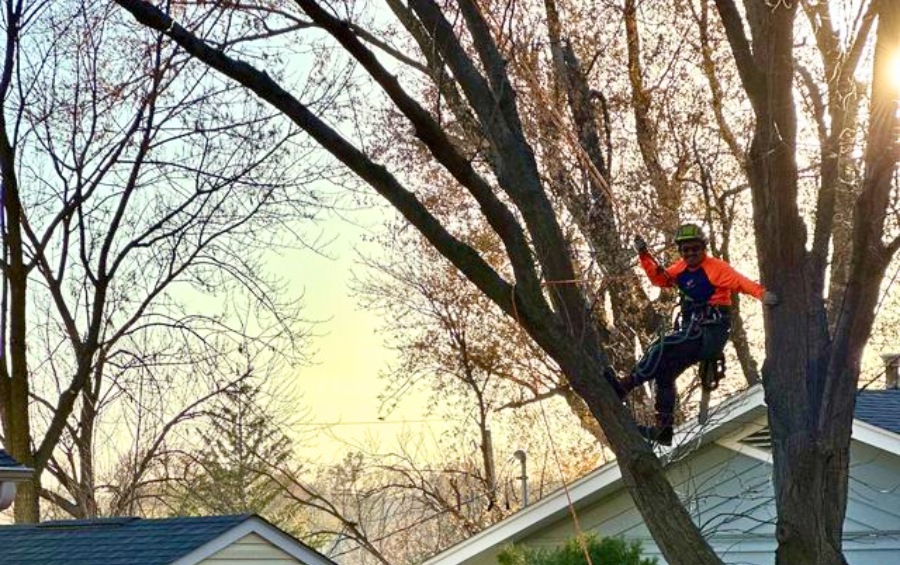
Professional arborists can safely access branches overhanging structures—work that’s too risky for DIY.
When Should I Schedule Winter Pruning to Prevent Snow Damage?
Late fall through early winter is the ideal window for structural pruning in Iowa.
Once leaves drop, arborists can clearly see the tree’s branch structure and identify weak points that need attention. Dormant trees also recover more easily from pruning cuts, making this season ideal for structural work.
Since Iowa’s snowfall risk typically doesn’t pass until mid-to-late April, that’s a long season of potential storms to prepare for, and good reason to act before the worst of winter arrives.
When Should You Call a Professional Arborist?
Some tree work is too risky for DIY — especially in winter conditions. Call an arborist if you’re dealing with:
- Ice-Laden Trees: Branches can fall without warning, even after a storm passes; stay clear until conditions improve.
- Work Near Power Lines: Contact your utility company first to de-energize or verify the line is safe. Per OSHA regulation 1910.269, only certified line clearance professionals should work within 10 feet of power lines.
- Post-Storm Cleanup: Many injuries actually happen during DIY cleanup after storms, not during the storm itself. Downed branches may be under tension or tangled in debris, and damaged limbs still in the tree can fall unexpectedly.
For trees with branches over your home or driveway, professional tree pruning services are the safest choice. For high-risk trees that may need more than pruning, arborists can install professional cabling and bracing systems that provide additional structural support.
Frequently Asked Questions About Weight Reduction Pruning
How much snow weight can tree branches handle before they break?
It varies by species and branch condition, but ice accumulations can dramatically increase branch weight. Even a quarter-inch of ice can cause small branches and weak limbs to fail.
Can I shake snow off my trees to prevent damage?
You can brush light, fluffy snow off smaller shrubs, but don’t shake branches — and never touch ice-covered limbs. Frozen wood snaps easily and shaking often does more harm than leaving it alone.
Is it too late to prune my trees once winter starts?
No – dormant season (late fall through early spring) is actually ideal for structural pruning and other intensive tree work. An ISA Certified Arborist can assess your trees and perform weight reduction pruning throughout winter.
What should I do if a tree branch is already hanging over my roof?
Don’t attempt to remove it yourself — branches under tension can behave unpredictably when cut. Call a professional arborist for an assessment.
How often should trees be pruned to prevent storm damage?
Most trees benefit from structural assessment every 2-3 years. High-risk species like silver maple and box elder, however, may need more frequent attention, especially as they mature.

Weight reduction pruning targets the outer canopy where snow and ice accumulate most heavily.
Schedule Your Winter Tree Assessment Before the Next Storm
Weight reduction pruning isn’t just tree care – it’s property protection. By reducing the load on vulnerable branches before storms arrive, you’re investing in fewer emergency calls, lower repair bills, and peace of mind when the snow starts falling.
This winter is already tracking above normal for snowfall, and more storms are on the way. The trees that survive without damage won’t be the lucky ones; they’ll be the ones that got professional attention before conditions got worse.
Arbor Masters’ ISA Certified Arborists can assess your trees, identify structural risks, and recommend the right approach for your property. We’ve been serving Des Moines-area homeowners for more than 60 years, and we’re here to help you get ahead of the next storm.
Call 515-218-2025 to schedule your winter tree assessment, or request a free consultation online.
Learn More With These Related Articles


Want More Like This?
Get the latest local news, tree care tips, special offers, and company updates directly to your inbox! It's easy to subscribe and there's no spam - we promise.
"*" indicates required fields