How to Tell When Your Tulsa Tree Needs Cabling or Bracing
Discover the warning signs your Tulsa trees need structural support. Learn why winter cabling and bracing installation protects property values and prevents costly storm damage.
After Tulsa experienced 4-6 inches of snowfall in January 2025, many homeowners began noticing new signs of stress in their mature trees – limbs bending under weight, fresh cracks along the trunk, and co-dominant stems starting to separate. These are classic indicators of structural weakness and early signs that a tree may fail during the next major storm.
And in Oklahoma, homeowners know severe weather is a matter of when, not if. The good news is that these warning signs don’t always mean removal. In many cases, they simply mean the tree needs cabling or bracing to stabilize weak points and prevent storm failure.
Key Takeaways
- V-shaped branch unions and co-dominant stems are the most common structural weaknesses requiring immediate professional assessment by an ISA Certified Arborist.
- Winter installation provides clearer assessment conditions and reduces stress on dormant trees, while completing the work before spring prepares trees for Oklahoma’s severe storm season.
- ANSI A300-compliant installation ensures long-term effectiveness using proper hardware and placement techniques.
- Professional cabling and bracing costs far less than an emergency tree removal and the property damage that often comes with it.
- Annual inspections maintain protection through Tulsa’s severe spring and summer storm seasons.
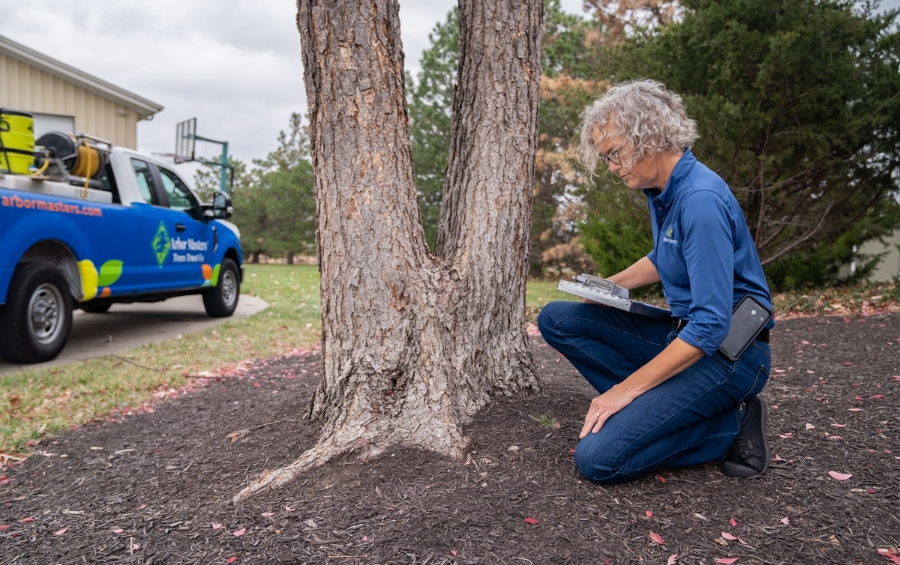
Professional tree assessment by ISA Certified Arborists identifies structural weaknesses like co-dominant stems before winter installation.
What Are the Most Common Signs of Structural Weakness in Tulsa Trees?
These warning signs indicate when professional assessment is needed:
- Co-Dominant Stems and V-Shaped Unions: When a tree develops multiple main trunks growing from the same point, it creates co-dominant stems. U-shaped unions (wider than 45 degrees) form strong attachments. On the other hand, V-shaped unions (narrower than 45 degrees) create weak points prone to splitting. As they grow larger and heavier, those V-shaped unions become more dangerous.
- Visible Cracks and Splitting: Cracks signal that structural failure has already begun, and Tulsa’s freeze-thaw cycles make these worse. When water gets into small cracks, it freezes and expands, then melts and refreezes, pushing the crack wider each time. You might see dark lines running along limbs, bark starting to separate, or areas where the tree appears to be pulling apart.
- Included Bark: Included bark occurs when bark grows between branches instead of forming a proper wood connection. Rather than overlapping wood fibers creating strength, bark acts as a wedge, forcing the union apart. This is particularly common in trees with upright branches, like maples and elms. From ground level, included bark looks like a dark line running through the branch union.
- Heavy Lean or Asymmetrical Canopy: A lean greater than 15 degrees from vertical, or one that has increased over time, suggests structural instability. Trees in Sherwood Forest and Burning Tree often lean toward open spaces, creating unbalanced weight distribution. An asymmetrical canopy with most foliage on one side creates similar problems.
- Over-Extended Branches: Large branches extending far from the main trunk create leverage that stresses the attachment point. When these branches hang over homes, driveways, or power lines, they pose structural and safety concerns. The weight of ice during winter storms or heavy foliage during summer multiplies the stress.
“When we evaluate trees in neighborhoods, we’re not just looking at current risk – we’re assessing whether structural support can preserve a tree that’s been part of the property for generations. These landscape investments significantly impact property values and neighborhood character, and it’s our job to decide whether structural support can safely extend the life of a tree that means something to the people who live there.” – Michele Sandor, Branch Manager at Arbor Masters Tulsa
How Cabling and Bracing Helps Stabilize At-Risk Trees
Cabling and bracing give weak or damaged trees the support they need to stay safely standing. When a tree can be preserved instead of removed, homeowners get to keep the shade, beauty, and value that mature trees provide.
Some of the biggest benefits of supporting a tree rather than losing it include:
- Increases Property Value: A study found that properties with mature, well-maintained trees typically command 7-30% higher sale prices than comparable properties without significant tree canopy. Research from the University of Nebraska-Lincoln found that trees have a $31.5 billion annual impact on home values across the United States.
- Saves Money Compared to Replacement: A 60-year-old oak provides immediate shade, privacy, and aesthetic value. Even a newly planted mature tree – one that costs thousands of dollars – won’t offer the same benefits for 15-20 years. Professional cabling and bracing typically costs a fraction of removal plus replacement.
- Preserves Environmental Benefits: During Tulsa’s hot summers, strategically placed shade trees can reduce cooling costs and save money. These same trees buffer winter winds, prevent erosion on clay-heavy soil, manage stormwater runoff, and improve air quality. A mature tree can intercept hundreds of gallons of stormwater during severe weather events.
- Reduces Costs Compared to Removal: Keeping a tree standing and healthy is often much more cost-effective than removing it. Installing structural support costs a fraction of the price of removing a tree.
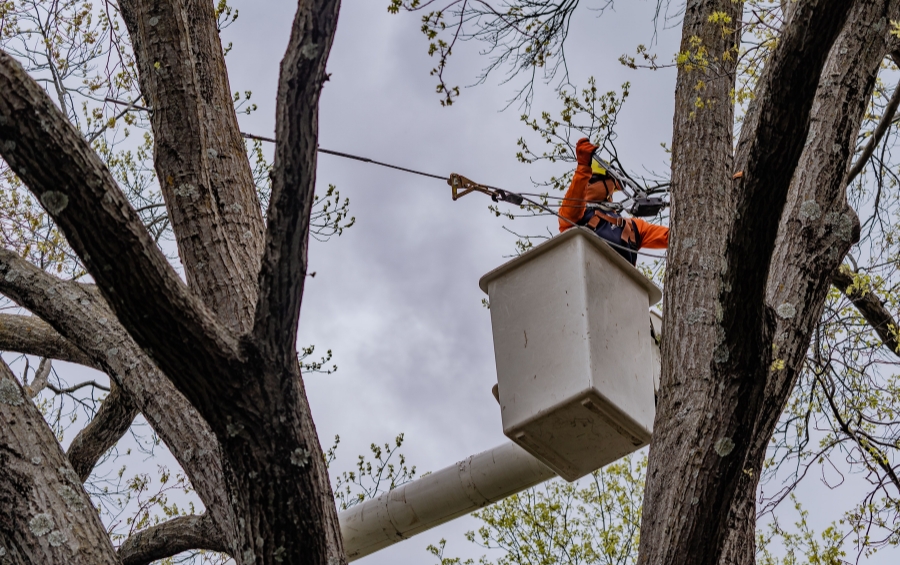
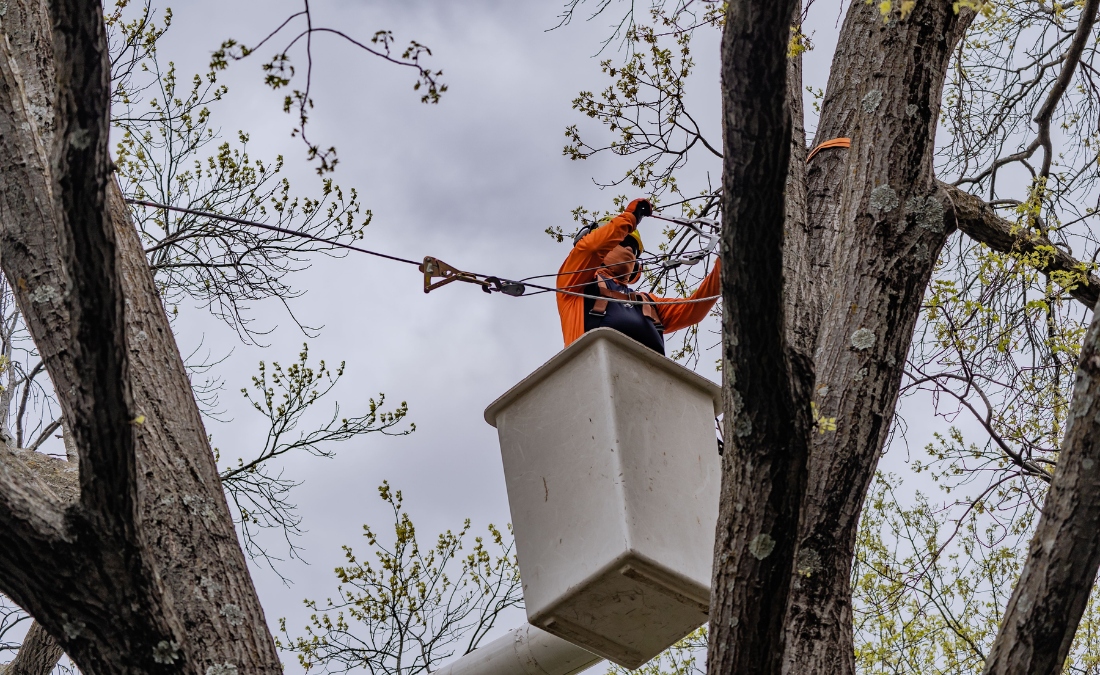
Winter’s leafless conditions provide optimal visibility for accurate structural assessment and cable placement.
When Is the Best Time for Tree Cabling and Bracing Installation in Tulsa?
Winter is the best time for tree cabling and bracing installation because it makes the job easier, more efficient, and more effective for arborists. Some of the primary benefits of installing cabling and bracing during the winter include:
- Reduced Stress During Dormancy: When trees enter dormancy, they shut down most metabolic processes and stop growing. Installation causes minimal disruption because the tree isn’t actively moving water and nutrients. During the growing season, drilling into active wood interrupts flow and adds stress. In dormancy, the tree can wait until spring to begin healing.
- Clear Visibility Without Foliage: ISA Certified Arborists can see the entire branch structure clearly in winter. What looks solid when covered in summer foliage often reveals included bark, cracks, or weak attachment points in winter. Proper cable installation requires identifying exact points of weakness and best locations for hardware placement, which demands clear sight lines that only winter provides.
- Preparation Before Spring Storm Season: Oklahoma’s severe weather season typically runs from April through June. Installing structural support in winter means your trees are ready before this dangerous period begins. Trees with proper support systems fare significantly better, even in areas with direct storm impacts.
PRO TIP: For trees damaged during storms, restoration pruning combined with structural support offers the best preservation strategy.
Frequently Asked Questions About Tree Cabling and Bracing
How long does properly installed tree cabling and bracing last?
Professionally installed systems using ANSI A300-compliant materials typically last 10-20 years or longer with regular inspections. Inspections ensure the cables haven’t begun to wear from the weather and are still effective at protecting the tree as its branches grow.
Will the cables and hardware be visible in my tree?
During the growing season, properly installed cables are typically not noticeable from ground level. Professional arborists install cables high in the canopy where they’re naturally concealed by leaves. In winter, when branches are bare, you may see the cables in the upper canopy, but they will blend with the tree’s natural structure.
Can structural support be installed any time of year, or is winter really best for Tulsa trees?
While support can be installed year-round in emergencies, winter is ideal because dormant trees:
- Handle installation stress better
- Arborists can see the entire branch structure clearly
- Installation before spring protects trees during Oklahoma’s severe storm season.
The Oklahoma State University Extension emphasizes dormant-season work for tree treatments involving drilling.
What kind of ongoing maintenance does tree cabling and bracing systems require?
Systems require annual visual inspections and a detailed inspection every 3-5 years by an ISA Certified Arborist. Inspectors check cable tension, hardware integrity, signs of tree growth impacting the system, and overall tree health. The Tulsa Planning Office recommends regular professional inspections for any trees with structural support.
How can I tell if a tree service company is qualified to install structural support systems?
Some things to look for in a tree service company include:
- ISA Certified Arborists on staff
- TCIA accreditation
- Commitment to ANSI A300 standards
- Proper insurance coverage
- Detailed written specifications
Are there trees that shouldn’t be cabled or braced?
Trees with advanced decay, severe root damage, overall poor health, or extremely tight V-shaped crotches that have already significantly split are generally not good candidates for cabling and bracing. If a tree is too far gone, removing the tree with a crane may be the only option to safely eliminate the threat.

Professional arborists combine structural support installation with corrective pruning to preserve valuable Tulsa trees safely.
Preserve Your Tulsa Trees with Expert Structural Support from Arbor Masters
Don’t wait until structural weakness becomes structural failure. Winter offers the ideal window for professional cabling and bracing installation before the spring storm season arrives. At Arbor Masters, our ISA Certified Arborists bring over 60 years of experience, ANSI A300-compliant installation, and TCIA accreditation to every tree preservation project.
Contact us today at 918-258-3444 or request a quote online to schedule your winter tree assessment. Remember, when it comes to protecting Tulsa’s trees, Trees Trust Us.
Learn More With These Related Articles

Want More Like This?
Get the latest local news, tree care tips, special offers, and company updates directly to your inbox! It's easy to subscribe and there's no spam - we promise.
"*" indicates required fields