Dogwood Trees: A Complete Guide to Selecting, Planting, and Care
Which dogwood tree is right for your yard? Compare bloom times, hardiness zones, and care needs across Zones 5–8. Expert advice from ISA Certified Arborists.
30 feet tall, while cornelian cherry dogwood grows slightly larger at 20-25 feet tall and 15-20 feet wide at maturity. Few trees deliver a spring spectacle quite like a dogwood in full bloom. These small flowering trees offer four-season interest with their showy spring bracts, summer foliage, brilliant fall color, and attractive winter bark. But not all dogwood species thrive equally across every climate, and choosing the wrong one means disappointment instead of decades of beauty.
Here’s what you need to know about dogwood tree selection, bloom timing, care requirements, and whether a dogwood fits your landscape.
Key Takeaways
- Flowering dogwood (Cornus florida) is marginally hardy in Zone 5; Kousa dogwood (C. kousa) is a better cold-hardy alternative for northern landscapes, while flowering dogwood thrives in Zone 6–8 climates.
- Dogwoods bloom in spring and typically grow 15-30 feet tall at maturity.
- These trees prefer well-drained, slightly acidic soil and dappled shade, especially in hotter climates.
- Annual pruning and proper watering help dogwoods thrive and prevent common diseases like anthracnose and powdery mildew.
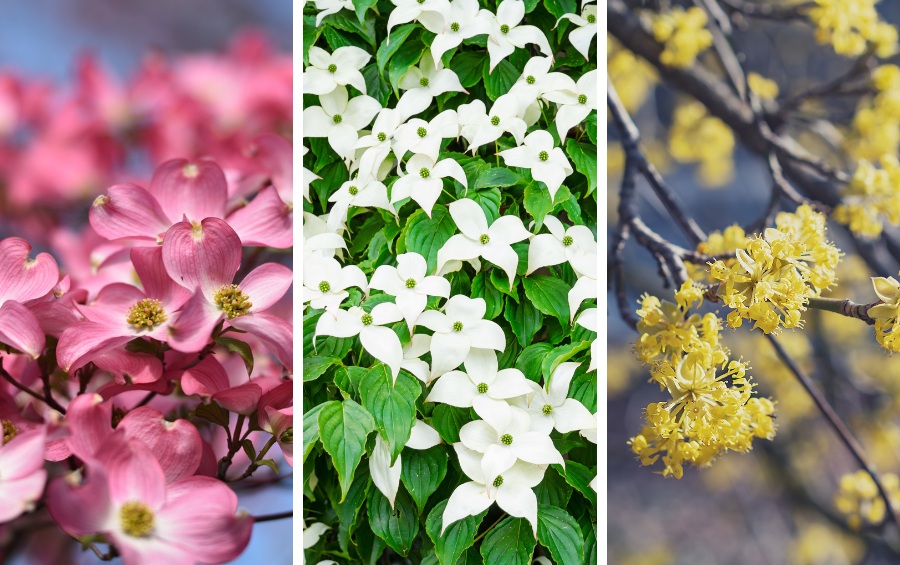
Dogwood species offer different bloom colors and timing: flowering dogwood (pink, left) blooms in late April, Kousa dogwood (white, center) blooms in May-June, and Cornelian cherry (yellow, right) blooms as early as March.
What Does a Dogwood Tree Look Like?
Dogwood trees are small ornamental trees with distinctive grayish-brown bark that develops scale-like ridges. Several species are commonly planted in landscapes, including:
- Flowering Dogwood (Cornus florida): Produces the classic spring display though it is only marginally hardy in Zone 5 but performs reliably in Zone 6–8 climates across the South and lower Midwest.
- Kousa Dogwood (C. kousa): Offers better cold tolerance and disease resistance, making it the most reliable choice for Zone 5 landscapes in the northern half of the country.
- Cornelian Cherry Dogwood (C. mas): Blooms earliest with yellow flowers, thrives down to Zone 4, and tends to be the longest-lived option for colder-climate homeowners.
What Do Dogwood Flowers Look Like?
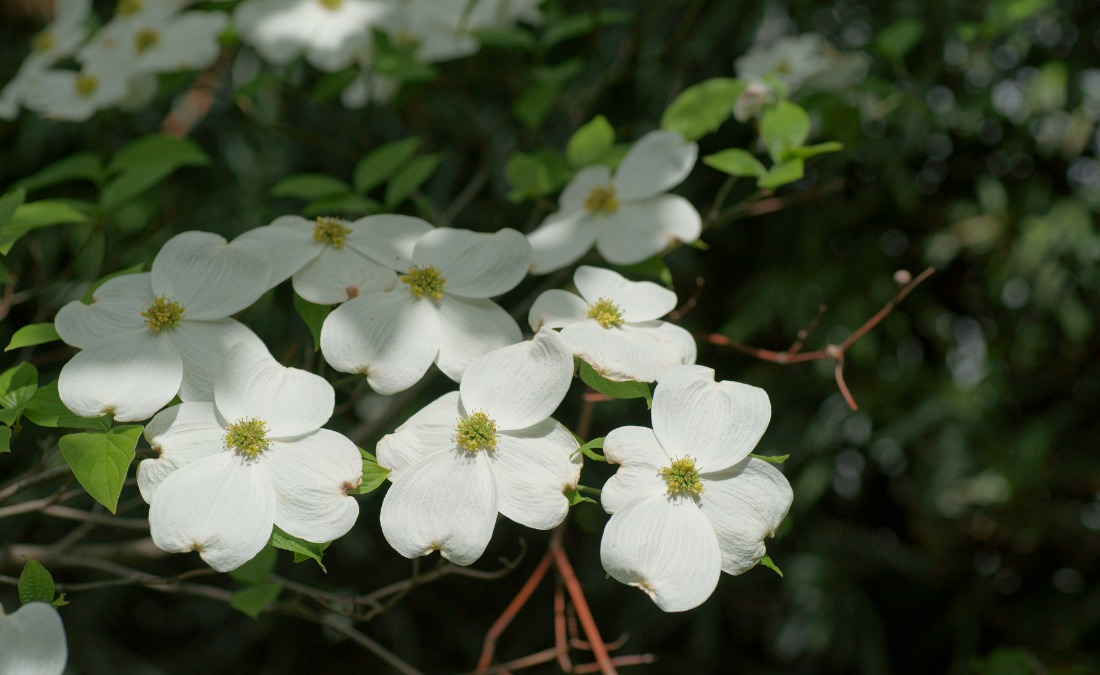
Most dogwood species produce flowers that appear as four-petaled blooms in white, pink, or red, though what you’re seeing are actually bracts — modified leaves surrounding tiny greenish-yellow flower clusters in the center. Cornelian cherry dogwood differs with small, clustered yellow flowers that bloom directly on bare branches. Regardless of species, dogwoods offer year-round visual transformations:
- Spring: Showy blooms appear before leaves fully emerge.
- Summer: Dark green foliage fills out the canopy; red or yellow berries ripen in late summer, attracting birds.
- Fall: Leaves turn deep burgundy or purple, rivaling the spring display.
- Winter: Distinctive bark patterns and branch structure add visual interest.
When Do Dogwoods Bloom?
Dogwoods bloom at different times depending on species, with flowering dogwood blooming in late April to early May, kousa dogwood blooming in May through early June, and cornelian cherry blooming as early as March.
Bloom timing also shifts by region. In northern climates (Zone 5), flowering dogwoods typically bloom in late April when winter temperatures are mild, while kousa dogwoods extend spring color into early summer with their May-June display. In southern regions, like Oklahoma and Texas, flowering dogwood blooms arrive 2-3 weeks earlier, in early-to-mid April.
How Big Do Dogwood Trees Get?
Dogwood trees typically mature at 15-30 feet tall with a similar spread, making them ideal for residential landscapes where space is limited.
However, these trees can reach up to 40 feet tall in ideal conditions, though most cultivated specimens max out at 25-30 feet depending on species. Flowering dogwood and kousa dogwood typically reach 15-
How Fast Do Dogwood Trees Grow?
Dogwood trees grow 13-24 inches annually, making them medium-growth-rate trees that reach mature size in 10-15 years. Their manageable size makes dogwoods valuable for planting near homes, patios, and in foundation beds where larger shade trees would quickly overwhelm the space. The modest dimensions also mean dogwoods provide filtered shade without creating the heavy canopy that prevents grass growth beneath larger trees.
How Do You Care for Dogwood Trees?
Dogwood trees thrive with proper site selection, consistent watering, annual late-winter pruning, light fertilization, and protection from lawn equipment damage.
How Do You Properly Plant a Dogwood Tree?
Plant in early-to-mid spring as soon as the ground thaws, or in fall after leaf drop. In colder climates (Zone 5), spring planting is preferred because it gives roots maximum time to establish before winter.
Planting depth depends on your soil type. In heavy clay soils, plant dogwoods 1-3 inches above grade to prevent water from pooling around the trunk; in sandy or well-drained soils, plant at the original grade.
What Kind of Soil Do Dogwoods Need?
Dogwoods thrive in well-drained soil with a pH between 5.5 and 6.6 — slightly acidic conditions. While they tolerate morning sun, dappled shade is ideal, and afternoon shade becomes critical in hot climates, like Oklahoma and Texas, where full sun exposure causes leaf scorch.
What Year-Round Care Do Dogwood Trees Need?
Dogwoods thrive with consistent attention to four key maintenance practices:
- Watering: Provide approximately one inch of water weekly during the growing season (dogwoods have shallow root systems in the top 2-3 feet of soil).
- Fertilization: Professional fertilization with a complete formula (12-4-8 or 16-4-8) applied in March and July supports healthy growth in young trees.
- Pruning: Annual pruning in late winter or early spring, before flowering, maintains shape and removes dead wood.
- Trunk Protection: Dogwoods have thin bark that wounds easily. Be cautious when operating mowers, trimmers, and any other lawn equipment near a dogwood tree as wounds create entry points for damaging diseases and pests like borers.
Which Dogwood Species Should I Plant?
Choosing the right dogwood species requires an understanding of how each performs in your specific hardiness zone. While all three common species offer spring beauty, they differ significantly in cold hardiness, disease resistance, and berry safety — factors that determine whether your tree thrives for decades or struggles through harsh winters.
| Feature | Flowering Dogwood (C. florida) | Kousa Dogwood (C. kousa) | Cornelian Cherry (C. mas) |
|---|---|---|---|
| Hardiness Zones | 5-9 (marginal in Zone 5) | 5-8 (reliable in Zone 5) | 4-8 (excellent in Zones 4-5) |
| Bloom Time | Late April – Early May | May – Early June | March (earliest) |
| Bloom Color | White, pink, red | White, pink | Yellow |
| Mature Height | 15-30 ft | 15-30 ft | 20-25 ft |
| Berries | Toxic (red) | Edible (pinkish-red) | Edible (bright red) |
| Disease Resistance | Moderate | Excellent | Excellent |
| Best Climate Fit | Zone 6-8 (South/lower Midwest) | Zones 5-7 (North/upper Midwest) | Zones 4-6 (coldest climates) |
What Are Common Problems with Dogwood Trees?
Most dogwood problems stem from improper site selection — planting in full sun or poorly drained soil increases susceptibility to issues such as leaf scorch, fungal diseases, and insect pests.
Common Dogwood Diseases and Issues
Here are the most common problems and how to prevent or address them:
- Leaf Scorch: Brown, crispy leaf edges appear during hot, dry weather from drought or full sun exposure. Prevent scorch by planting in partial shade and water adequately during dry periods.
- Powdery Mildew: White, powdery fungal growth appears on leaves, especially in shaded locations with poor air circulation. Choose disease-resistant cultivars and ensure adequate spacing between plants to improve airflow.
- Dogwood Borer: This insect targets stressed trees, burrowing into the trunk and weakening the tree’s structure. Healthy, well-maintained dogwoods are less susceptible to infestation.
- Spot Anthracnose: A less severe disease that worsens in full sun exposure, providing another reason to plant dogwoods in partial shade. Chemical treatment is rarely needed, suggesting proper site selection prevents most issues.
- Dogwood Anthracnose: While serious in some regions, this is not a significant problem across most of the Midwest and South. The fungal disease thrives at higher elevations with cool, wet weather — conditions less common across the central and southern U.S.
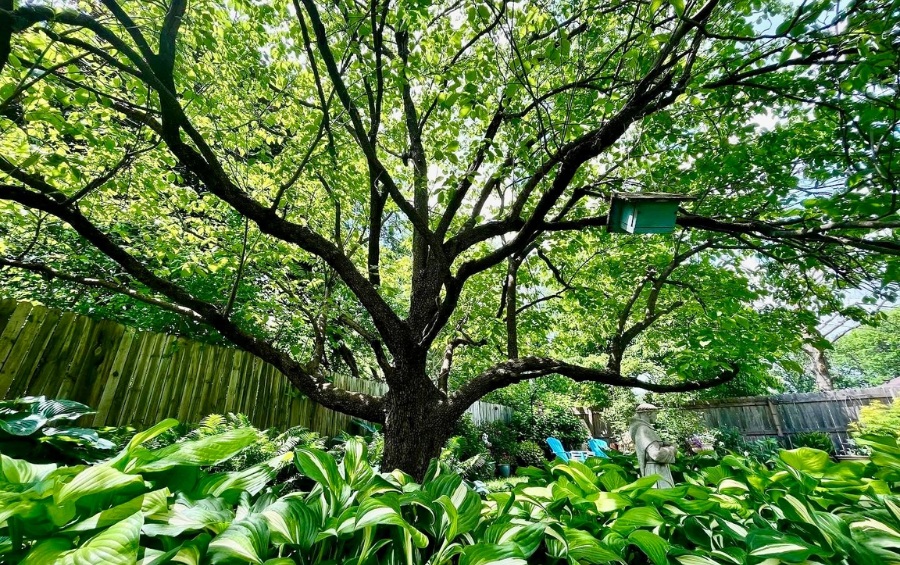
A well-established dogwood tree demonstrates the manageable 15-30 foot mature size ideal for residential landscapes, providing dappled shade without overwhelming the yard.
Frequently Asked Questions About Dogwood Trees
Can I plant a dogwood tree near my house?
Yes, dogwoods are a good choice for planting near your home. They stay relatively small at maturity, so they can provide shade and seasonal color without overwhelming the space or posing the same storm risk as larger trees.
Their root systems are also less aggressive than larger species like oaks or maples, making them a safer option for planting closer to foundations, patios, and walkways. Just be sure to leave enough space for proper airflow and future growth.
Do dogwoods attract wildlife?
Yes, dogwood berries (from edible species) feed birds when other food sources become scarce during autumn and winter, while spring flowers attract butterflies and pollinators. The dense branching also provides nesting sites for songbirds.
Can dogwood trees grow in full sun?
While dogwoods can tolerate full sun in cooler climates, they prefer dappled shade or morning sun with afternoon shade. Full sun increases stress, susceptibility to spot anthracnose, and risk of leaf scorch — especially in hot regions like Oklahoma and Texas.
How long do dogwood trees live?
Dogwoods typically live 50-80 years with proper care, though cornelian cherry can exceed 100 years in ideal conditions. Longevity depends on proper planting depth, adequate water, protection from lawn equipment damage, and choosing the right species for your climate.
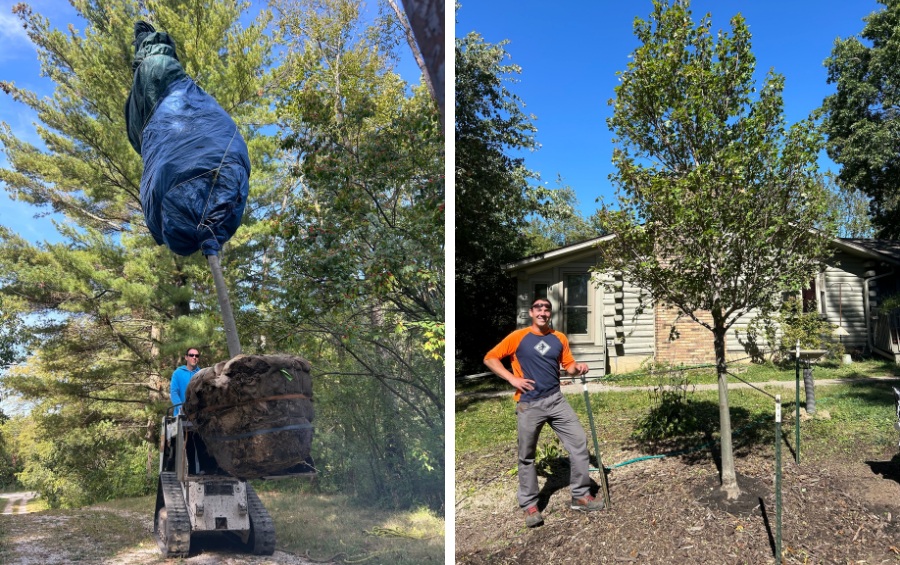
Professional tree planting by ISA Certified Arborists ensures proper depth and technique for long-term dogwood health in Quad Cities landscapes — critical factors that determine whether your tree thrives for decades or struggles from the start.
Need Help Choosing the Right Dogwood for Your Quad Cities Landscape? Call Arbor Masters
The difference between a dogwood that thrives for 50 years and one that struggles through its first harsh winter often comes down to a single decision: choosing the right species for your hardiness zone. With spring planting season just weeks away, now’s the time to make that choice count.
Don’t gamble on a tree that looks beautiful at the nursery but can’t handle your climate. Arbor Masters ISA Certified Arborists understand which species perform in your specific region — and which ones don’t.
Ready to plant a dogwood that delivers decades of spring blooms instead of years of disappointment? Call 563-355-7508 or request a free quote online to get species recommendations tailored to your specific site conditions, today!
Learn More With These Related Articles
Want More Like This?
Get the latest local news, tree care tips, special offers, and company updates directly to your inbox! It's easy to subscribe and there's no spam - we promise.
"*" indicates required fields