Bagworms on Oaks and Elms — Why Your Deciduous Trees Are at Risk in Broken Arrow and Jenks
Bagworms don't just target evergreens. Learn why your oaks, elms, and maples in Broken Arrow and Jenks are at risk — and what happens if you ignore them.
When most Tulsa homeowners think about bagworms, they picture the spindle-shaped bags dangling from their cedars and junipers. But bagworms on deciduous trees — the oaks, elms, and maples across Broken Arrow and Jenks — are targets, too. These caterpillars feed on more than 130 plant species, and most people never think to check their deciduous trees.
The tricky part is that bagworm damage on deciduous trees is harder to spot, easier to dismiss, and can set off a chain of problems far worse than a few chewed leaves. Here’s how to tell if your trees are at risk and what to do before the treatment window closes.
Key Takeaways
- Bagworms feed on over 130 plant species, including oaks, elms, maples, and sycamores common throughout the Tulsa metro, not just the evergreens most homeowners associate them with.
- Homeowners often miss bagworm infestations on deciduous trees because they aren’t looking for them, the bags blend in with deciduous foliage, and the trees refoliate after defoliation, masking the damage.
- Oklahoma’s treatment window is narrow; schedule applications by early June, when larvae are small and actively feeding, to deliver the best results.
- Repeated bagworm defoliation stresses deciduous trees and can leave them vulnerable to secondary problems, like hypoxylon canker, a fungal disease with no chemical cure.
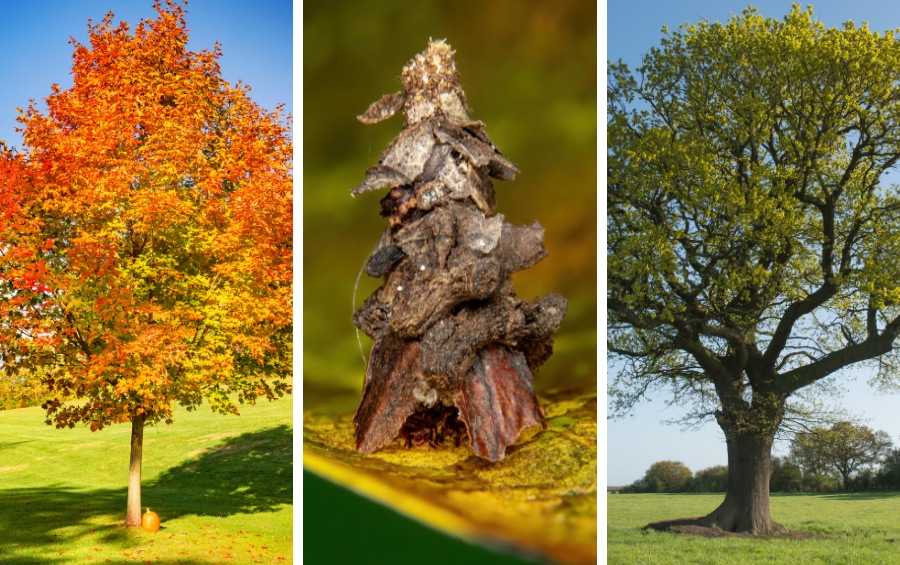
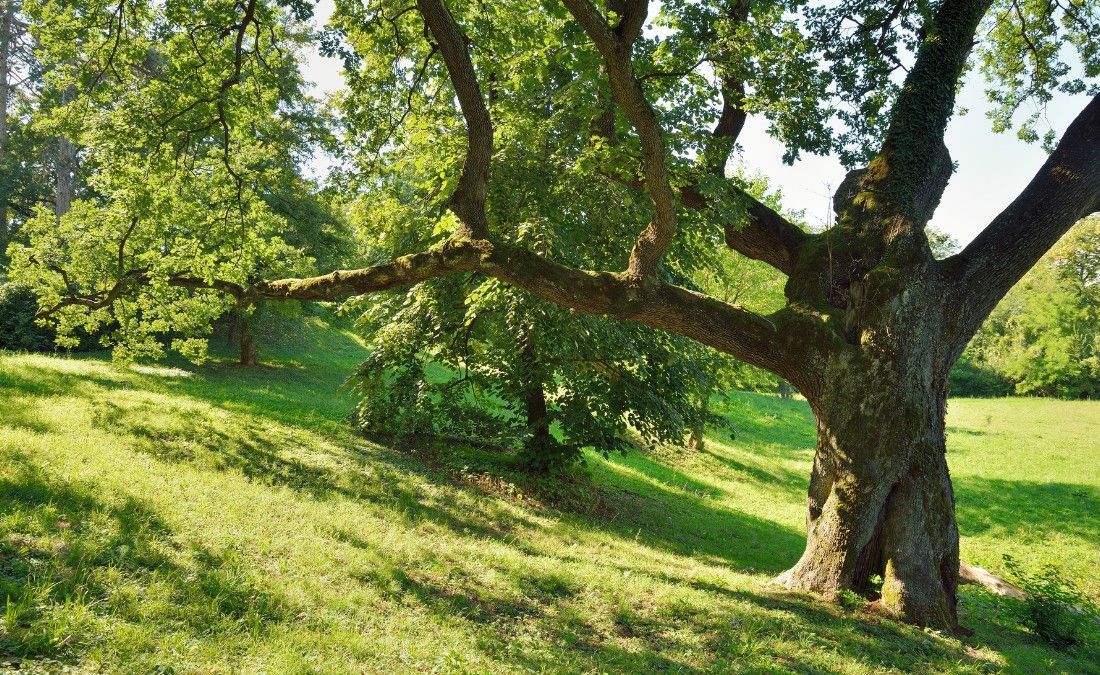
Oaks, elms, and maples throughout the Tulsa metro are all on the bagworm menu.
Do Bagworms Attack Oak, Elm, and Maple Trees?
Yes, bagworms feed on more than 130 plant species, and deciduous trees are often hosts. In Oklahoma, common targets include:
- Post oak
- Red oak
- Elm
- Maple
- Sycamore
- Hackberry
- Black locust
- Willow
Most people don’t realize this because the pest is commonly called the “evergreen bagworm,” and most discussion around their hosts focuses on cedars and junipers. Oklahoma State University Extension notes that while bagworms won’t typically kill a broadleaf tree outright, repeated feeding weakens them and opens the door to wood-boring insects and disease.
In the Tulsa metro, established neighborhoods with mature canopies, especially along the Broken Arrow and Jenks corridor, have abundant host trees. If you’ve had bagworms on your evergreens, there’s a good chance your deciduous trees may have suffered damage as well.
What Does Bagworm Damage Look Like on Deciduous Trees?
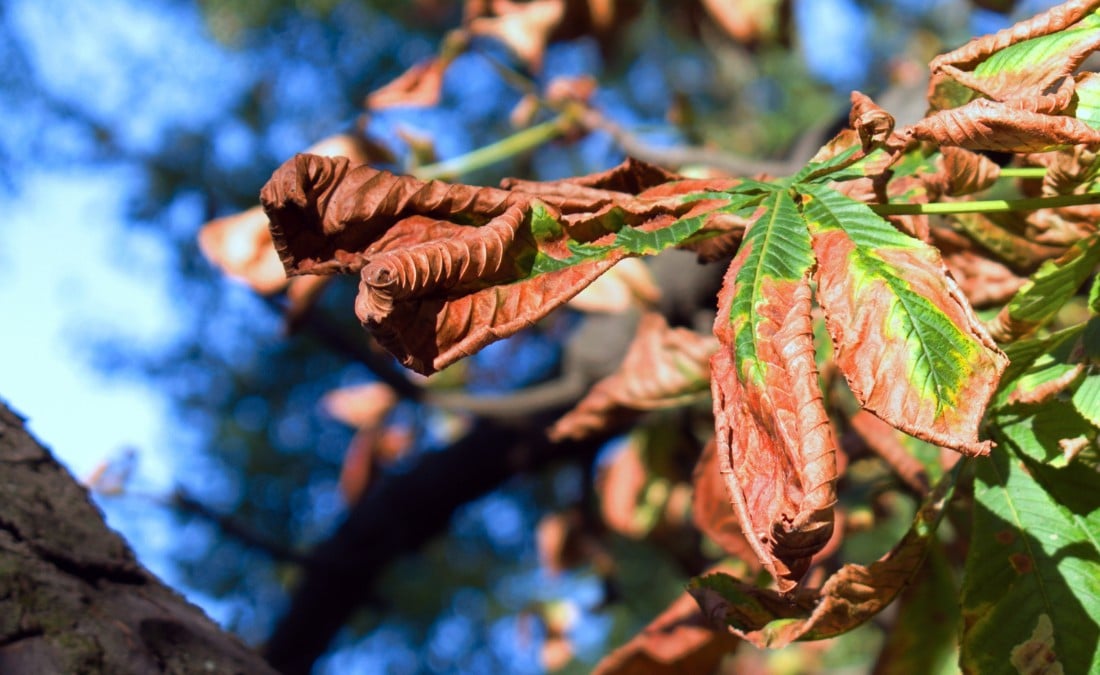
Bagworm damage on deciduous trees progresses from tiny holes chewed in individual leaves to skeletonized foliage and full branch defoliation — and it typically starts at the top of the canopy, where it’s hardest to see from the ground.
Early-stage larvae create small, scattered holes that are easy to miss or blame on wind or other insects. As the caterpillars grow, the damage becomes more distinctive — older larvae create “windowpane” feeding patterns where only the leaf skeleton remains, eventually stripping entire branches bare.
Bagworm feeding begins high and works downward, and the infestation is often weeks old by the time chewed leaves are visible from ground level. Making matters worse, deciduous trees can push new leaves after defoliation, leading many homeowners to assume the problem has resolved itself. The tree did recover its canopy, but it spent significant stored energy to do it, and the bagworms that caused the damage are still there.
Why Are Bagworms Harder to Spot on Deciduous Trees?
Bagworms often go unnoticed on deciduous trees for a few reasons. Most homeowners don’t expect to find them on deciduous trees, so they aren’t actively looking for them on oaks, elms, or maples.
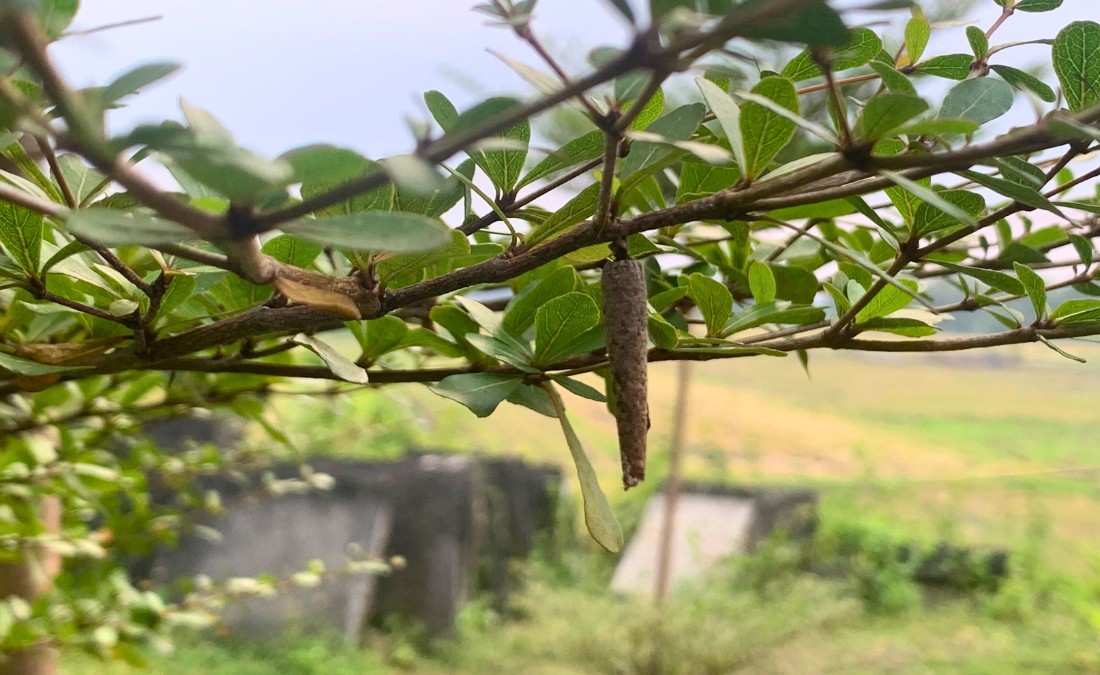
Even when they do look, the bags are easy to miss. Bagworms build their cases from bits of leaves and twigs, so they blend in with the surrounding foliage. On evergreens, the contrast eventually makes them stand out — but in a leafy canopy, they can disappear completely.
What Happens If Bagworms Go Untreated on Deciduous Trees?
The real issue isn’t just spotting bagworms — it’s what happens when they go unnoticed.
Repeated defoliation weakens trees over time, draining their energy reserves and making them more vulnerable to secondary problems like hypoxylon canker, a fungal disease with no chemical cure.
A single season of leaf loss may not cause lasting damage, but bagworm populations grow quickly. Each female lays hundreds of eggs, leading to heavier infestations the following year. Without treatment, that cycle repeats, and the tree has less energy to recover each time.
How Do You Get Rid of Bagworms on Large Deciduous Trees?
The most effective approach for large deciduous trees is a professionally timed insecticide application in late May to early June, targeting larvae while they’re small and actively feeding. Homeowners can handle small, accessible trees on their own, but mature oaks and elms present challenges that usually require professional equipment and expertise.
DIY Bag Picking
Handpicking bags in late winter or early spring, before eggs hatch, works well on trees you can reach. You need to catch every bag, destroy them, and put them in the trash, not on the ground or into a compost pile where larvae can still emerge.
However, DIY methods have their drawbacks. On mature oaks and elms, most bags are concentrated in the upper canopy, where homeowners can’t safely get to them. Trying to climb a tree yourself is extremely dangerous, so the only way to deal with bagworms in the canopy of mature trees is working with a professional.
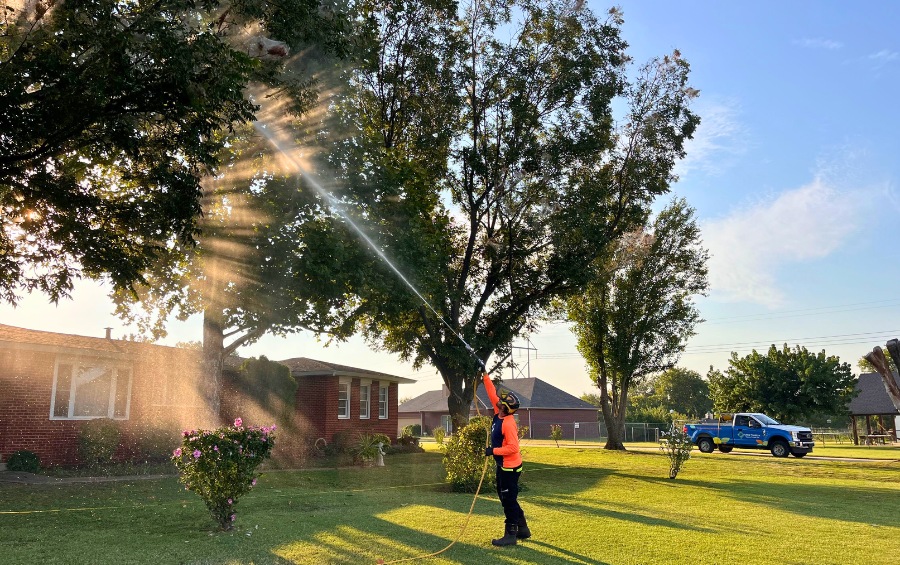
A professional canopy application reaches the upper branches where bagworm feeding is heaviest.
Professional Treatment
Effective bagworm control comes down to timing and canopy coverage. The most effective treatment window is late May through early June, when larvae are newly hatched, exposed, and vulnerable. Once they mature and retreat deeper into their bags, control becomes much more difficult and less reliable.
On large deciduous trees, reaching the upper canopy is just as important as timing. That’s where most feeding occurs, and it’s not accessible with homeowner equipment. Professional applications are designed to cover the full canopy and are timed to match the larval stage for the best results.
Depending on the size of the infestation and when it’s caught, a follow-up treatment may be needed later in the season to fully control the population.
PRO TIP: If your trees had bagworms last year, don’t wait for visible damage this spring. Each female bag can contain 500 or more eggs, and bagworms can quickly attack your tree before you even realize something is wrong.
Frequently Asked Questions About Bagworms on Deciduous Trees
What is the difference between bagworms and webworms?
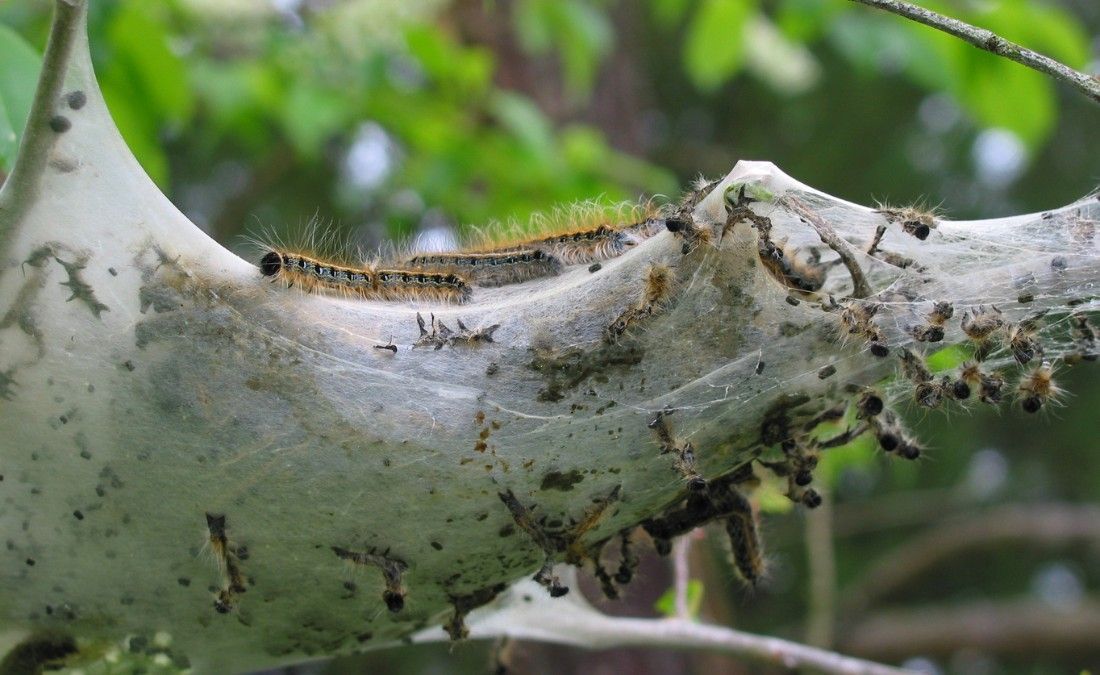
Bagworms build individual spindle-shaped bags from silk and plant material, while webworms create large communal silk webs over branch tips. Bagworms attack both evergreen and deciduous trees, while webworms primarily target deciduous species. Webworms are generally less damaging to mature trees.
Do bagworms come back every year?
Yes, because each female lays 500 or more eggs inside her bag before dying. Those eggs overwinter and hatch the following spring, so untreated infestations tend to grow worse year after year.
Are bagworms harmful to humans or pets?
No, bagworms do not bite, sting, or pose any direct health risk to people or animals. The concern is strictly the damage they do to trees.
Should I remove dead bagworm bags from my trees in winter?
Yes, even old bags may contain viable overwintering eggs. Remove them, destroy them, and dispose of them in the trash, not on the ground or in compost. For bags in the upper canopy of large trees, contact an arborist rather than climbing a ladder.
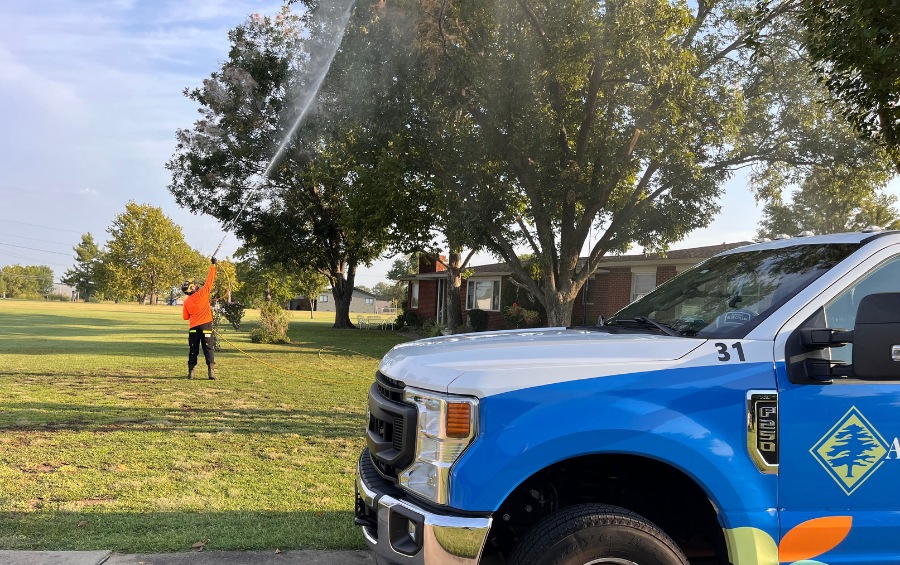
Arbor Masters’ PHC team treats mature deciduous trees across Broken Arrow and Jenks throughout the spring bagworm window.
Don’t Overlook Bagworms on Your Deciduous Trees — Call Arbor Masters
Bagworms are not just an evergreen problem. The oaks, elms, and maples that shade neighborhoods across Broken Arrow and Jenks are targets, too, and the damage is harder to spot, easier to dismiss, and more dangerous to ignore than most homeowners realize.
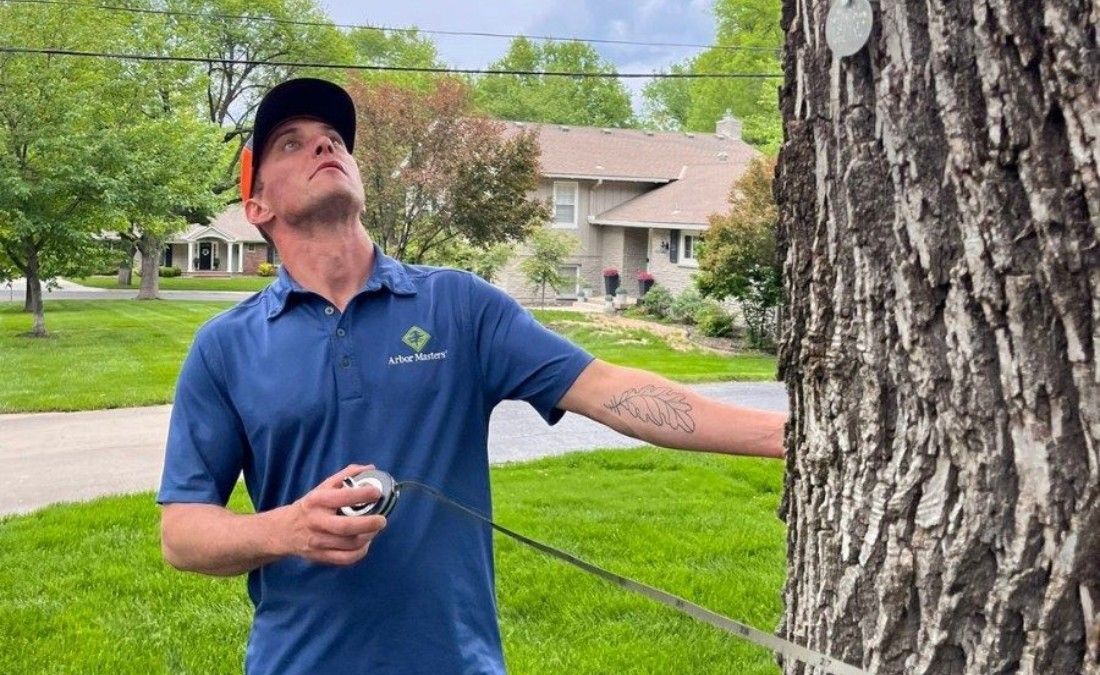
If you’ve noticed chewed leaves, suspicious bags, or thinning canopies on your deciduous trees, Arbor Masters’ ISA Certified Arborists can assess the situation and recommend an insect treatment plan tailored to your property.
Call us at 918-258-3444 or request a quote online for help with your bagworm problems.
Want More Like This?
Get the latest local news, tree care tips, special offers, and company updates directly to your inbox! It's easy to subscribe and there's no spam - we promise.
"*" indicates required fields