How to Spot and Treat Magnolia Scale in the Cedar Rapids Area
In Iowa, magnolia scale is one of the most common and damaging insect pests on ornamental magnolias. It’s also one of the most misidentified, as homeowners often mistake the sticky residue and black-coated leaves for sap or disease before realizing thousands of small insects are feeding on their tree. Without proper magnolia scale treatment, the…
In Iowa, magnolia scale is one of the most common and damaging insect pests on ornamental magnolias. It’s also one of the most misidentified, as homeowners often mistake the sticky residue and black-coated leaves for sap or disease before realizing thousands of small insects are feeding on their tree. Without proper magnolia scale treatment, the damage can get worse with every new season.
Whether you’re in Hiawatha, Cedar Rapids, or one of the neighboring areas, it’s important to know what magnolia scale looks like, why it matters, and the treatment window that can save your tree before damage worsens.
Key Takeaways
- Magnolia scale produces the sticky honeydew and black sooty mold you’re seeing on and underneath your magnolia; it’s neither sap nor disease.
- Cedar Rapids homeowners have two important treatment windows: a spring systemic drench (April–June, after bloom) and a late summer crawler spray (late August–September).
- Major infestations usually require two or more years of professional treatment to get under control.
- Early identification gives you the best chance of keeping your magnolia safe before the damage gets more serious.
- Star magnolia, saucer magnolia, and lily magnolia, all popular ornamental varieties in the Cedar Rapids area, are some of the most vulnerable species.
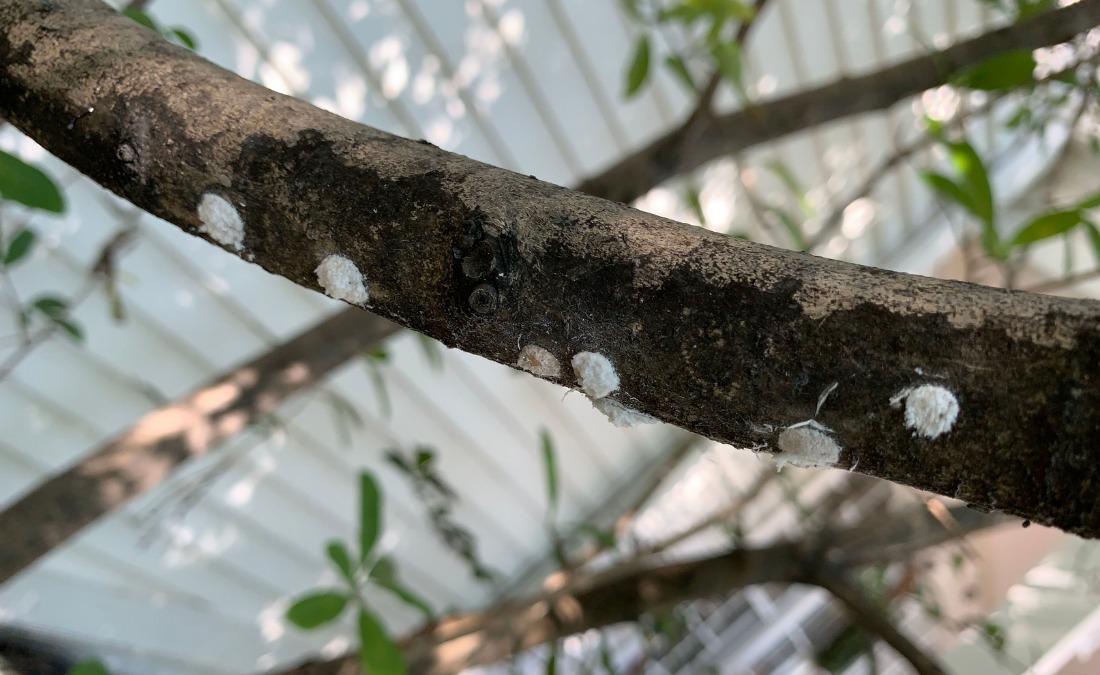
In their mature waxy stage, scale insects can be mistaken for fungal growth or bark abnormalities — an ISA Certified Arborist can confirm the diagnosis.
What Does Magnolia Scale Look Like?
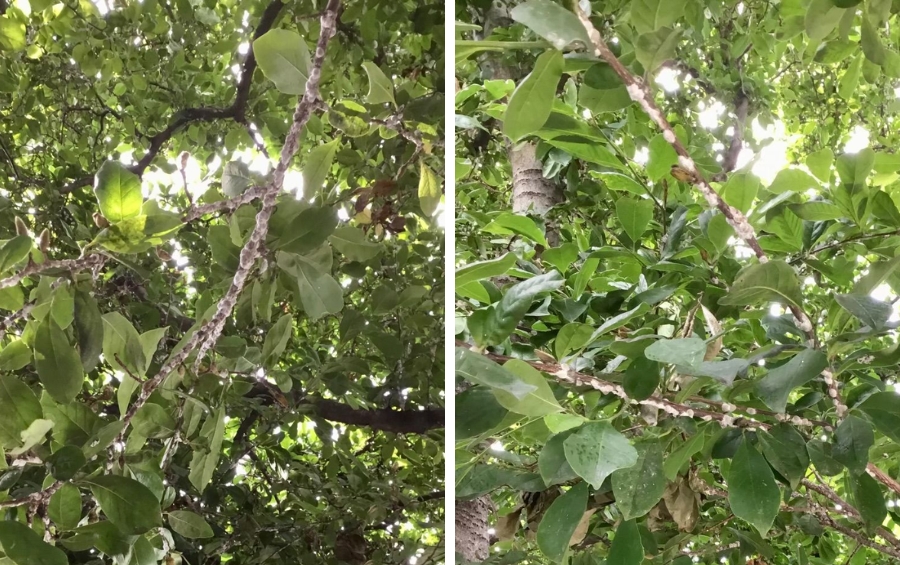
Magnolia scale is a large soft scale insect that appears on the twigs of magnolia trees, not the leaves. It’s most noticeable in late spring and summer, when populations build and become easier to spot. Because it resembles buds or natural growth on the branches, it’s often overlooked or misidentified.
Keep an eye out for:
- Shiny, convex bumps on one-to-two-year-old twigs (not the leaves)
- Color that ranges from brown to pink-orange early in the season
- A white, waxy coating that grows on females later in summer
- Bumps that don’t easily scrape off, as they are living insects and not abnormalities in the bark
- Dead shells that stay on branches after reproduction, making the population appear larger than it actually is
Star magnolia (Magnolia stellata), saucer magnolia (M. × soulangeana), and lily magnolia (M. liliiflora) are some of the most commonly affected species, and they’re popular varieties found throughout Cedar Rapids and Hiawatha neighborhoods. If you have one in your yard, it’s worth checking the twigs for scale every spring.
Why Is Your Magnolia Tree Dripping Sticky Sap?
The sticky sap all over everything under your magnolia is actually honeydew, a sugary waste product that is excreted by feeding magnolia scale insects. As their population grows, honeydew production does as well, coating leaves, branches, patio furniture, and sidewalks below the tree.
The subsequent black grime? That’s sooty mold, a colonizing fungus on deposits of honeydew. Sooty mold looks alarming, but it isn’t inherently dangerous to your tree. However, it does block sunlight from reaching leaves, which gradually weakens the tree.
You might notice ants, bees, and wasps swarming your magnolia. They want the sugary honeydew, and that increased insect activity is another early indicator of a scale problem. In the Cedar Rapids area, most homeowners first notice these symptoms in July, right when the honeydew production hits its peak. If you have a magnolia that’s dripping and drawing insects, it’s time to take a closer look. Professional insect and disease control could be the next step.
What Is the Magnolia Scale Life Cycle in Iowa?
Every year, magnolia scale produces one generation. The timing of each stage determines when treatment is most effective. Here’s what you should look for in each season:
- Winter: Tiny, dark-colored nymphs overwinter on one-to-two-year-old twigs, mostly invisible to the naked eye.
- Spring (April–May): Nymphs resume feeding as temperatures warm and go through their first molt.
- Late Spring/Early Summer: Males emerge, mate, and die. Females continue feeding and growing.
- Midsummer (July): Females produce large amounts of honeydew; this is when most homeowners notice the sticky mess and sooty mold.
- Late August–September: Females give birth to live crawlers, the most vulnerable stage and the pivotal window for contact treatments.
- Fall: Crawlers settle onto twigs to overwinter, and so the cycle repeats again.
Many of the ornamental magnolias in Cedar Rapids and Hiawatha neighborhoods are younger trees, some planted after the 2020 derecho that destroyed 70% of the city’s tree canopy. The ReLeaf Cedar Rapids initiative has been replanting the urban canopy ever since, and younger trees under stress can be particularly vulnerable to scale feeding pressure.
When Should You Treat Magnolia Scale in Cedar Rapids?
Effective magnolia scale treatment depends on hitting the right window. Miss it, and you’ve got to wait months for the next chance. There are two primary treatment windows to make note of, plus a supplemental option.
Spring Systemic Drench (April–June)
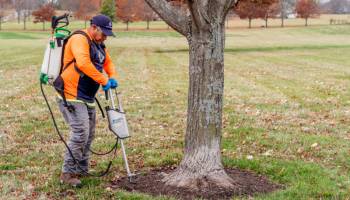
A Certified Arborist provides a systemic treatment as a soil drench around the root zone. The product moves through the vascular system of the tree and targets scale insects as they feed. To be effective, this treatment has to go in weeks before crawlers emerge. It is also applied after the magnolia is done blooming to protect pollinators, which is an approach that aligns with reduced-risk treatment practices.
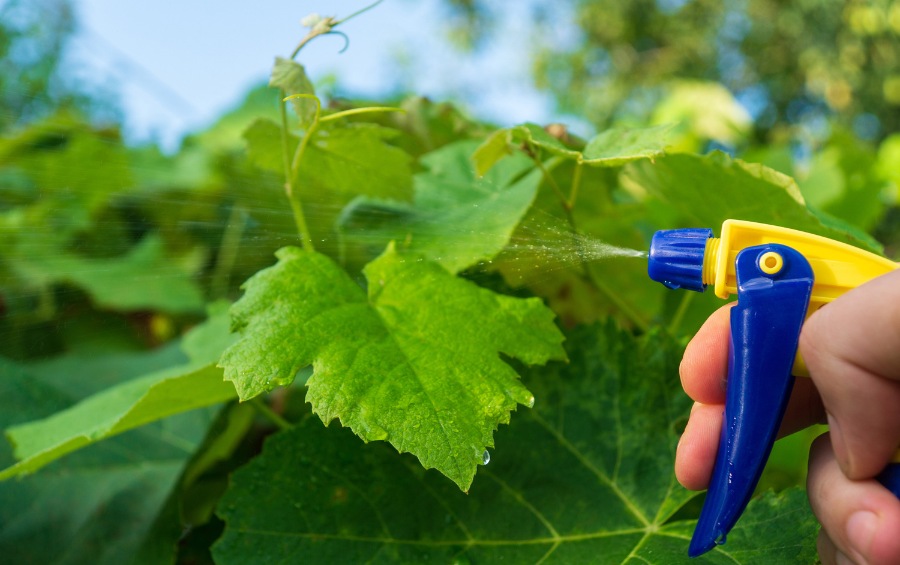
Contact sprays like horticultural oil require thorough coverage of affected branches — and precise timing during the crawler window in late summer.
Late-Summer Crawler Spray (Late August–September)
This window targets crawlers, the newly born and soft-bodied nymphs that are the most vulnerable life stage before they develop a protective waxy covering. Contact products, like horticultural oil and insecticidal soap, require meticulous coverage of affected branches. Expect two or more applications spaced 7 to 14 days apart. In the Cedar Rapids area, this window usually falls in late August through early September.
Dormant Oil (Early Spring, Before Bud Break)
Applied to overwintering nymphs before buds open in early spring, dormant oil smothers the small nymphs on twigs. This is a supplemental treatment, not a standalone solution, but it can limit the population heading into the growing season. In Iowa, dormant oils should be applied in late March to April, just before the buds break.
Pruning out largely infested branches can also help decrease the scale population as part of a broader plan for treatment. Talk to an arborist about whether targeted tree pruning makes sense for your tree.
PRO TIP: With magnolia scale, timing is everything. The spring treatment window is already open for homeowners in Cedar Rapids, but it won’t stay open for long. Contact an ISA Certified Arborist to get your magnolia on a treatment plan before the production of midsummer honeydew starts.
How Long Does It Take to Get Rid of Magnolia Scale?
For the most part, heavy infestations take two or more growing seasons of professional treatment to get under control.
HONEST ASSESSMENT: Most heavy magnolia scale infestations can take a while to be fully controlled. So, the earlier you start, the sooner you will see results.
In the first year, expect some continued adult feeding, honeydew, and sooty mold even with a spring systemic treatment in place. The treatment diminishes the population, but mature females that were already established may continue through the season.
By year two, with ongoing professional treatment and adequately timed crawler sprays, you should see a major drop in scale numbers and honeydew production. Light infestations that were caught early may respond within just one season.
Supporting your magnolia with proper watering, mulching, and tree fertilization helps the tree recover while treatments do the heavy lifting. An arborist can evaluate the overall health of your tree and recommend a plant health care program to support recovery while treating scale.
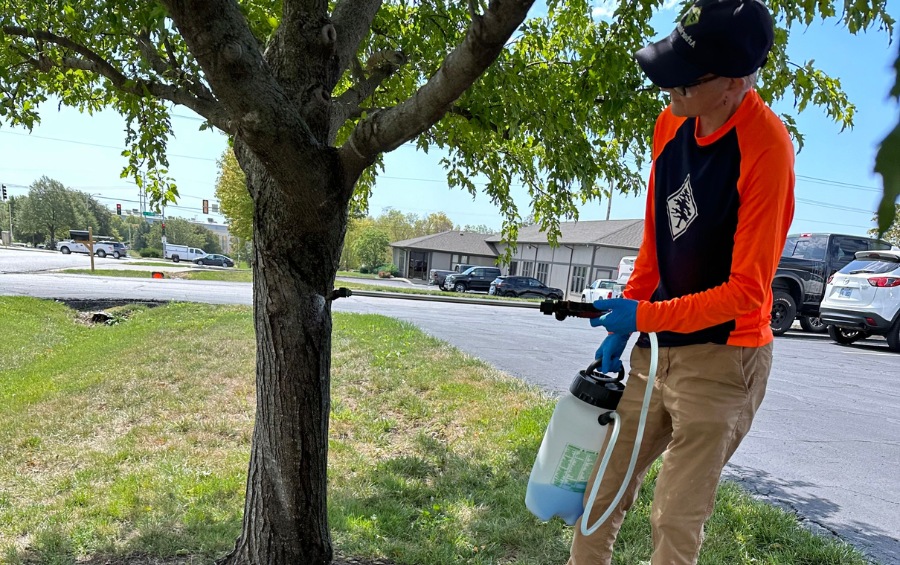
Arbor Masters’ Certified Arborists apply professionally timed systemic treatments to control magnolia scale at the root zone.
Frequently Asked Questions About Magnolia Scale
Can magnolia scale kill a tree?
Magnolia scale can significantly weaken and eventually kill a magnolia if left untreated for multiple seasons. Heavy feeding drains the tree’s energy reserves, causing branch dieback, thinning canopy, and increased vulnerability to secondary stresses like other pests or drought. Trees that go three or more seasons without treatment may experience irreversible damage.
What is the black stuff on my magnolia tree leaves?
The black stuff on your magnolia tree’s leaves is sooty mold, a fungus that grows on the sticky honeydew created by magnolia scale insects. Sooty mold doesn’t instantly infect or attack the tree, but it blocks sunlight from reaching leaves. This gradually weakens the tree. Controlling the scale gets rid of the honeydew, and the sooty mold clears up on its own.
What causes white bumps on magnolia branches?
White or waxy bumps on magnolia branches are more than likely adult female magnolia scale insects that have developed their waxy coating that protects them. Typically, this appears in early to midsummer as the females mature. The bumps are soft to the touch and concentrated on younger twigs instead of leaves or larger branches.
Why are ants and wasps swarming my magnolia tree?
Ants, wasps, and even bees are attracted to the sugary honeydew that magnolia scale insects produce while they feed. If you notice enhanced insect activity on your magnolia, especially when it’s paired with sticky residue on surfaces beneath the tree, check the twigs for raised, oval-shaped bumps that point to a scale infestation.
Can I treat magnolia scale myself?
Light infestations on small, reachable trees may respond to over-the-counter horticultural oil sprays applied during the window for crawlers in late summer. Still, systemic soil drenches, which are the most effective treatment for moderate to heavy infestations, require professional equipment, proper licensing, and precise timing that is hard to replicate with retail products.
Get Expert Magnolia Scale Treatment from Arbor Masters
Magnolia scale is treatable — but timing and proper diagnosis make the difference between a tree that recovers and one that continues to decline. Left alone, it tends to come back year after year.
If you’re seeing signs of scale on your magnolia, the team at Arbor Masters can help. Our ISA Certified Arborists serve Hiawatha, Cedar Rapids, Marion, and the neighboring areas. Call 319-359-6135 or contact us online to schedule a magnolia health assessment.
Want More Like This?
Get the latest local news, tree care tips, special offers, and company updates directly to your inbox! It's easy to subscribe and there's no spam - we promise.
"*" indicates required fields