
Do Trees Need Soil Testing Before Fertilization in Spring?
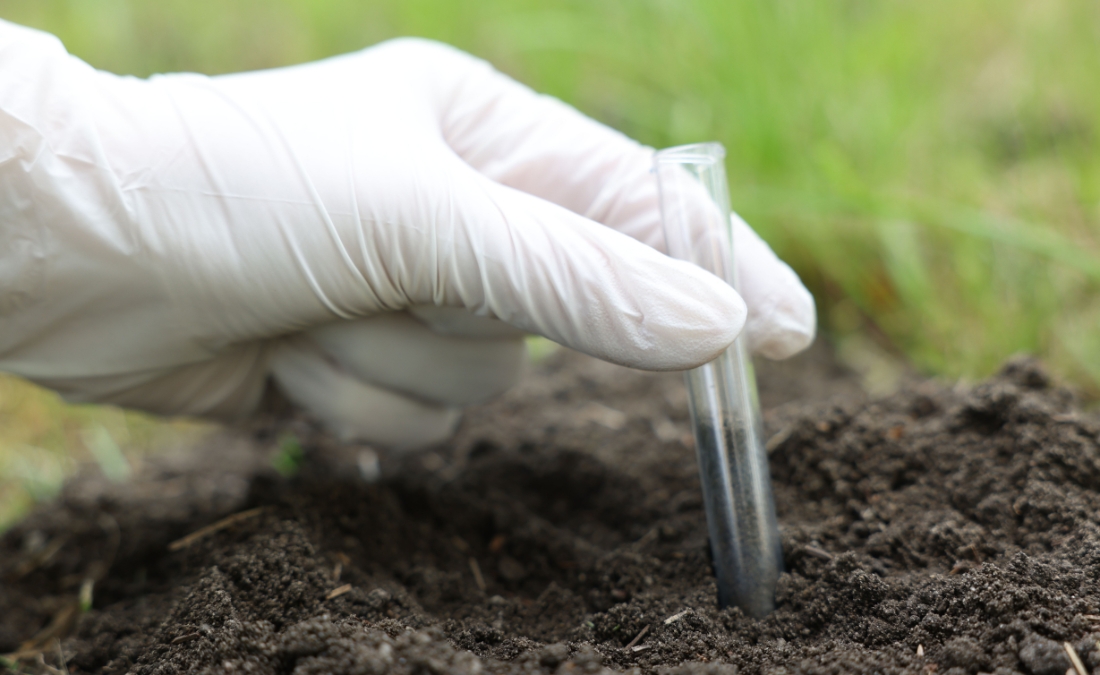
Still paying for tree fertilization with nothing to show for it? Spring soil testing shows why — and what Johnson County's alkaline clay soil actually needs.
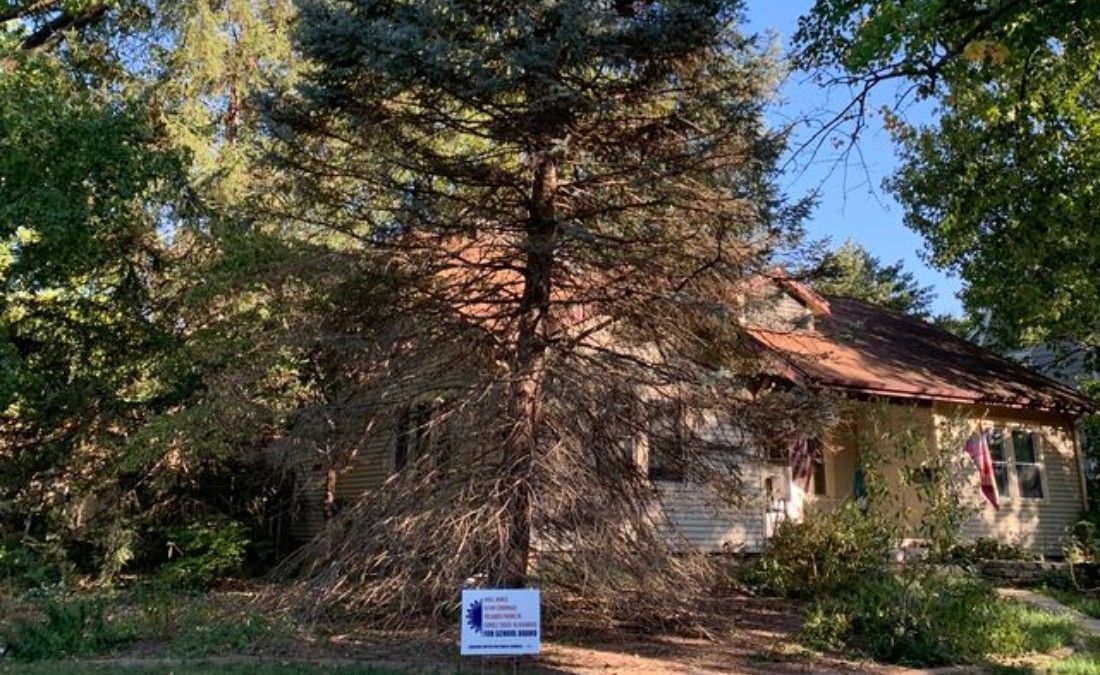
You’ve been paying for tree fertilization in Leawood or Mission Hills for years now. The trucks show up every spring, the invoices arrive on schedule, and your pin oaks still look like they’re dying. Yellow leaves, thin canopy, same story — season after season. No one’s mentioned spring soil testing for your trees, and at some point, the question stops being “what’s wrong with my trees?” and becomes “what’s wrong with this program?”
The answer is usually the same: nobody tested the soil first. A soil test reveals pH, nutrient levels, and organic matter content — the data that should drive every treatment decision. In Johnson County’s alkaline clay soils, skipping that step almost always means money going toward treatments that can’t work. But when you start with the data, you stop guessing and finally see results.
Key Takeaways
- A soil test is the diagnostic step that should come before any tree fertilization program — it reveals pH, nutrient levels, and organic matter that determine what your trees actually need.
- Johnson County’s alkaline clay soils commonly lock out iron and other micronutrients, which means generic fertilization programs can waste money and even make problems worse.
- Spring is the ideal time to establish a baseline soil test before scheduling any seasonal treatments.
- If your arborist isn’t testing your soil before recommending treatments, they’re making decisions without the data that matters most.
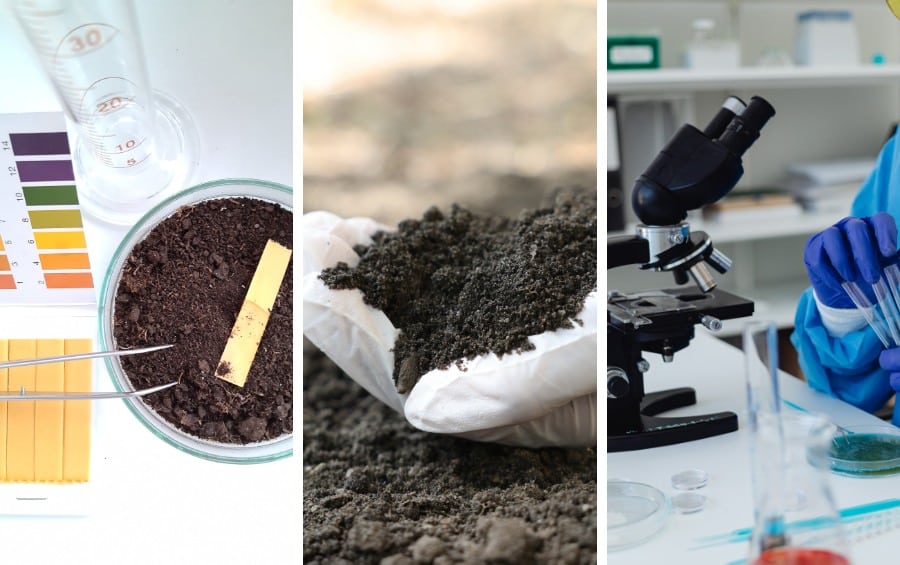
A professional soil test goes beyond a simple pH reading — it measures nutrient levels, organic matter, and exchange capacity to build a complete picture of what’s happening underground.
What Does Spring Soil Testing Reveal About Your Trees?
A soil test reveals the key data points that determine whether your trees can actually access the nutrients in the ground. Spring is the ideal time to establish that baseline — before seasonal treatments start and while soil temperatures are stable enough to produce accurate results. Understanding these numbers and categories is the first step to evaluating whether your fertilization program is working.
What a Tree Soil Test Measures
A standard soil test reports four categories of data that directly affect your trees’ health:
- pH (acidity/alkalinity): The single most important number on the report. pH acts as a gatekeeper — it determines which nutrients your tree roots can actually absorb, regardless of how much fertilizer is in the ground.
- Macronutrients and Micronutrients: Your report will list nitrogen, phosphorus, and potassium (N-P-K) alongside micronutrients like iron, manganese, and zinc. What’s present in the soil isn’t always what’s available to your trees, though; high pH can render nutrients chemically inaccessible even when the lab shows adequate levels.
- Organic Matter Percentage: An indicator of your soil’s biological health. Residential soils in Johnson County often test low because topsoil was removed or compacted during home construction — sometimes decades ago.
- CEC (Cation Exchange Capacity): How well your soil holds and releases nutrients. Clay soils have high CEC, which sounds like a good thing — but in alkaline conditions, that holding capacity can actually trap nutrients in forms tree roots can’t use.
Why Is It Hard to Fertilize Trees in Johnson County?
Johnson County’s alkaline, clay-heavy soils create a chemical environment where the nutrients your trees need most become inaccessible — regardless of how much fertilizer gets applied.
How Alkaline Clay Soil Starves Tree Roots
When soil pH rises above 7.0 — which is typical across Johnson County — iron binds into insoluble chemical forms that tree roots can’t access. The iron is physically there, but it’s chemically off-limits. Manganese and zinc follow the same pattern, becoming less available as pH climbs. Adding more of any of these nutrients rarely helps because the pH is the underlying problem, not the supply.
Compaction makes it worse. Johnson County’s heavy clay holds water and resists drainage, and when that clay gets compacted — by foot traffic, mowing equipment, or years of settling — oxygen levels in the root zone drop. Roots need oxygen to absorb nutrients, so even if you correct the chemistry, compacted soil can still limit what your trees take in.
The species most affected in Johnson County include:
- Pin oaks
- Red maples and silver maples
- Sweetgum
- Birch
These trees evolved in more acidic conditions and struggle to access iron when soil pH rises above 7.0. If you have any of them on your Leawood or Mission Hills property, you’ve probably already noticed the telltale yellow leaves with green veins — that’s iron chlorosis.
How Home Construction and Renovation Damage Soil Health
Home renovations and new construction — common in established Leawood and Mission Hills neighborhoods — can make soil conditions even worse for trees. Concrete washout drives soil pH higher, while heavy equipment compacts the clay and cuts off oxygen to tree roots. If your property has had any significant work done in the last decade, there’s a good chance your soil chemistry and nutrient availability have shifted from what they were when your trees were planted.
How Should Soil Test Results Guide a Tree Fertilization Program?
Your soil test results tell your arborist exactly what your trees need — and just as importantly, what they don’t. That data shapes every decision, from which amendments go into the ground first to how the program adjusts as your trees respond.
What a Soil-Test-Driven Program Looks Like
In Johnson County, most soil tests come back showing a familiar pattern: high pH, low available iron and micronutrients, and depleted organic matter. A diagnostic program addresses those results in a specific order rather than starting from a product catalog:
- pH Correction First, Then Nutrients: Adjusting soil chemistry comes before adding supplements. Without it, additional nutrients just get locked up by the same alkaline conditions that caused the problem.
- Chelated Micronutrients and Humic Acids: In alkaline soils, chelation protects iron from binding to high-pH soil particles, making it available where standard iron supplements fail.
- Deep Root Fertilization (Subsurface Injection): Delivers amendments directly to the root zone rather than spreading them on the lawn surface where they’d primarily feed the grass.
- Microbial Soil-Building Components: Adding biological amendments, like mycorrhizal fungi and beneficial bacteria, improves nutrient cycling and root efficiency over time, building long-term soil health rather than just addressing this season’s leaf color.
- Multi-Application Schedule (3–5 Treatments Over 12 Months): Allows adjustments based on how the tree responds rather than locking you into a fixed spray calendar.
That flexibility is the difference between a reactive spray schedule and an adaptive plan — and it’s what sets apart professional tree care services in Johnson County from generic fertilization programs.
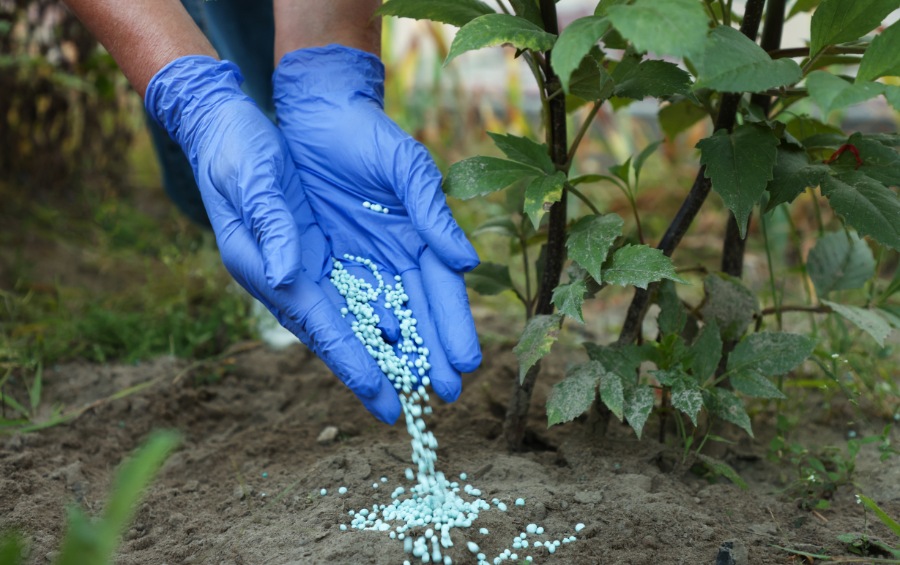
Applying fertilizer without knowing what your soil needs is one of the most common — and most expensive — mistakes in tree care. A soil test tells you whether those pellets are helping or making things worse.
How Do You Know If Your Fertilization Program Is Actually Working?
A fertilization program that’s working shows measurable results in the canopy — stronger spring leaf-out, fuller coverage year over year, and foliage that shifts from washed-out yellow to consistent green.
If that’s not what you’re seeing, these are the signs your current program may be missing the mark:
- Leaf chlorosis that persists or worsens despite ongoing treatments
- Canopy density that hasn’t improved — or has declined — over two or more growing seasons
- No visible change in overall tree vigor compared to where it was before the program started
Generic programs apply the same NPK blend on a set calendar regardless of what your soil actually needs. That’s a problem in Johnson County because excess nitrogen can increase pest susceptibility, and excess phosphorus can further lock out iron and other micronutrients in alkaline soil. The wrong fertilizer doesn’t just waste money — it can actively make things worse.
PRO TIP: Take photos of the same branches each April before any treatments begin. Year-over-year comparison photos give you and your arborist a visual baseline to measure whether the program is actually producing results — and they’re far more reliable than trying to remember what your canopy looked like last spring.
When Should You Ask Your Arborist for a Soil Test?
Certain situations make professional soil testing especially important — and waiting another season to schedule one can mean another year of wasted treatment dollars:
- You’ve Never Had Your Soil Tested: If you’ve been on a fertilization program without a baseline soil test, every treatment so far has been a guess.
- You’re About to Invest in New Plantings or Transplants: Knowing your soil conditions before you plant helps you choose species that will actually thrive in your soil’s pH range.
- You’re Managing High-Value Mature Trees: Large oaks, canopy trees, and specimen plantings on properties in Leawood, Mission Hills, or Prairie Village are worth the precision that comes with data-driven care.
- You’re Switching Fertilization Providers: A soil test gives your new arborist a starting point based on data rather than assumptions about what the last company was doing.
DID YOU KNOW? Johnson County residents can get one free soil test per year. Submit your samples through the Johnson County office — not directly to K-State’s lab in Manhattan — and expect results in about 5–6 weeks.
Frequently Asked Questions About Soil Testing for Tree Health
How deep should you take a soil sample for trees?
Tree and shrub soil samples should be taken at 10–12 inches deep — much deeper than the 3–4 inches recommended for lawns. Take 4–5 samples from different spots within the tree’s root zone and combine them into a single composite sample for the most representative results.
How often should you test your soil?
Most landscape professionals recommend testing your soil every 3–5 years to track changes in pH and nutrient availability. However, if you’ve recently had construction or renovation work done, or if your trees are declining despite treatment, testing sooner gives your arborist the data needed to adjust the program.
Can you fix alkaline soil permanently?
Permanently lowering soil pH in Johnson County’s clay soils is extremely difficult because the underlying geology continually buffers the pH back up. The more practical approach is ongoing soil amendments — using chelated micronutrients, humic acids, and organic matter to improve nutrient availability within the existing pH range rather than trying to change the pH itself.
Is the free Johnson County soil test enough for trees?
The free K-State Extension test gives you a solid baseline — pH, phosphorus, potassium, and organic matter. For trees showing specific symptoms, like chlorosis, your arborist may recommend an additional micronutrient panel (iron, manganese, zinc) that isn’t included in the standard free test. It’s a great starting point, but it may not tell the whole story.
What is the difference between fertilization and soil amendments?
Traditional fertilization adds specific nutrients — usually nitrogen, phosphorus, and potassium — to promote growth. Soil amendment is a broader approach that improves the soil environment itself by adjusting biology, organic matter, and nutrient availability so tree roots can access what they need long-term. Many arborists are shifting toward amendment-based programs because they address root causes rather than just symptoms.
Will fertilizing my trees help my lawn, too?
Deep root fertilization targets the tree’s root zone at depths well below where lawn roots grow, so the two programs serve different purposes. Surface-applied lawn fertilizers can sometimes work against tree health — excess nitrogen encourages shallow root growth and can increase pest susceptibility. Trees and lawns benefit from separate, targeted approaches.
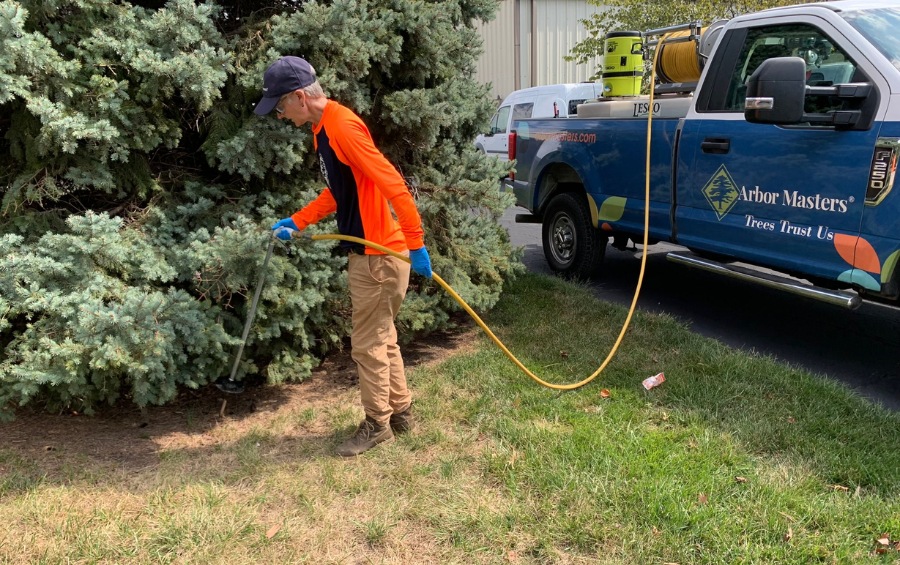
Deep root fertilization delivers soil amendments directly into the root zone, bypassing the lawn surface where they’d do little good for your trees. Arbor Masters uses subsurface injection to target the specific depth where tree roots actively absorb nutrients.
Book a Soil Test in Johnson County with Arbor Masters
If you’ve been paying for fertilization and your trees still aren’t responding, you already know something’s off. A soil test answers the question your current provider probably never asked — and it’s the single most cost-effective step you can take before spending another dollar on treatments.
Arbor Masters’ ISA Certified Arborists understand Johnson County’s alkaline clay soils — not just the products, but the chemistry driving your results. Call us today at 913-441-8888 or request a free consultation online to schedule a soil health consultation. We test before we treat — because your trees deserve better than guesswork.

Want More Like This?
Get the latest local news, tree care tips, special offers, and company updates directly to your inbox! It's easy to subscribe and there's no spam - we promise.
"*" indicates required fields
