What Davenport Homeowners Should Do About Trees Near Power Lines
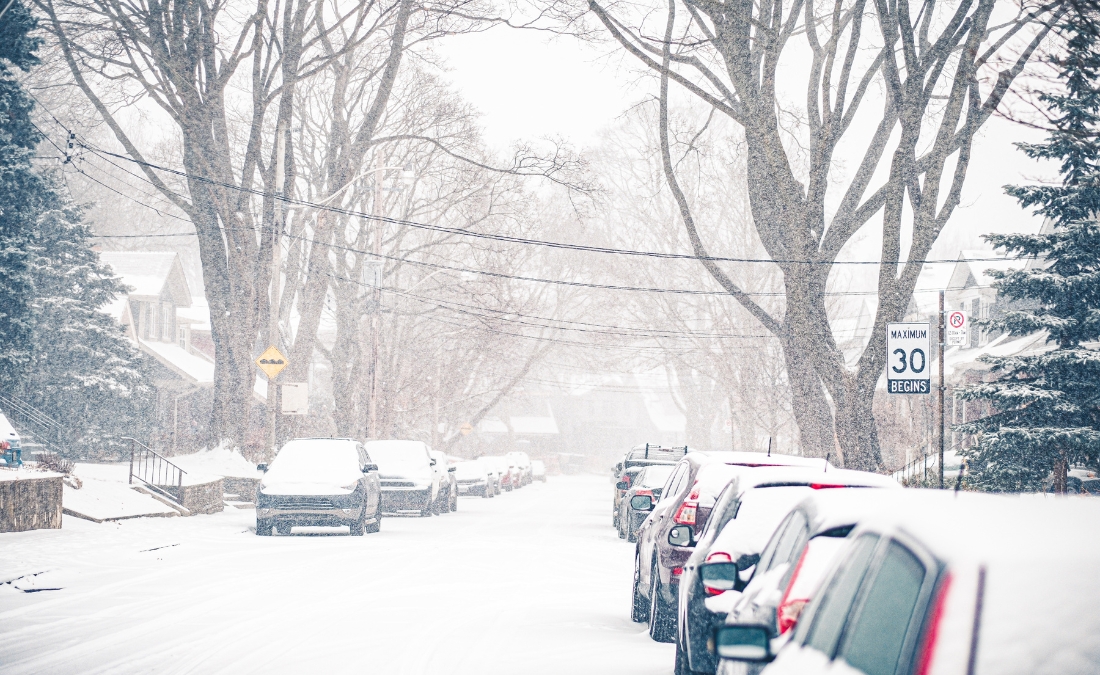
Who's responsible for Davenport tree power line issues – you or the utility company? Here's how to know and when to act before the next storm forces your hand.
A familiar anxiety settles in when you notice the old oak in your backyard, its branches swaying uncomfortably close to the power lines. Is it your responsibility or the utility company’s? If you’re in Davenport and your trees are getting a little too friendly with the wires, here’s what falls on you, what MidAmerican handles, and how to keep everything safe.
Key Takeaways
- Trees growing toward distribution lines (pole-to-pole along your street) are MidAmerican Energy’s responsibility to trim at no cost to you.
- Trees near your service drop (the line running from the pole to your house) are your responsibility to manage.
- Never trim trees within 10 feet of any power line yourself – this is an OSHA safety requirement, not a suggestion.
- Professional arborists can safely prune trees near your service drop by coordinating temporary disconnects with the utility company.
- Winter (November through February) is the ideal time for proactive pruning before storm season.
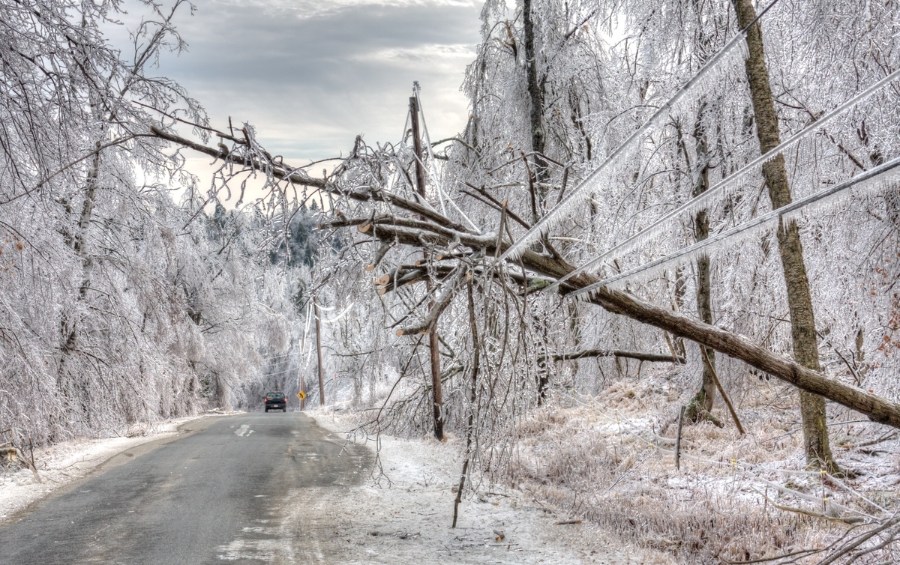
When trees fall on power lines, stay back and call MidAmerican Energy at 800-799-4443 – never assume downed lines are safe.
Who Is Responsible for Trees Near Power Lines in Davenport?
Who is responsible for trees near power lines depends on which type of power line the tree is near. MidAmerican Energy manages trees near distribution lines, while homeowners are responsible for the trees affecting the smaller line that runs directly to the house.
What Is the Difference Between Distribution Lines and Your Service Drop?
Distribution lines and service drops serve different purposes and come with different maintenance responsibilities.
Distribution Lines (MidAmerican’s Responsibility):
- Run from pole to pole along your street
- Carry higher voltage electricity to neighborhoods
- Are like a public road – maintained by the utility
Your Service Drop (Your Responsibility):
- Runs from the nearest pole directly to your house
- Connects to your home’s electrical meter
- Is like your private driveway – your responsibility to maintain
Here’s a simple way to picture it: distribution lines run parallel to the street, while your service drop runs perpendicular toward your home. That perpendicular line connecting to your meter? That’s yours to manage.
How Do You Safely Trim Trees Near Your Service Drop?
The only safe approach is to hire an ISA Certified Arborist who can coordinate a temporary power disconnect with MidAmerican before any cutting begins.
Can You Trim Trees Near Power Lines Yourself?
No. OSHA standard 1910.333(c)(3) requires unqualified workers to maintain at least 10 feet of distance from energized power lines up to 50kV. This isn’t a suggestion – it’s a legal requirement with life-or-death consequences.
Even service drops, which carry lower voltage than distribution lines, remain dangerous. Electricity can arc through air, travel through branches, and conduct through wet wood without any direct contact. If you’re reaching toward a branch anywhere near power lines, you’re putting yourself at serious risk.
How Do Arborists Safely Work on Trees Near Power Lines?
Arborists coordinate temporary power disconnects with the utility company before beginning any work near energized lines.
The process works like this:
- Assessment: An arborist evaluates the tree’s condition and determines the safest approach.
- Coordination: The arborist contacts MidAmerican to schedule a temporary disconnect of your service drop.
- Safe Execution: Pruning proceeds when the line is de-energized.
- Restoration: Power is restored once work is complete.
Professional tree services handle this utility coordination as a standard part of the job, so you don’t have to navigate the process yourself.
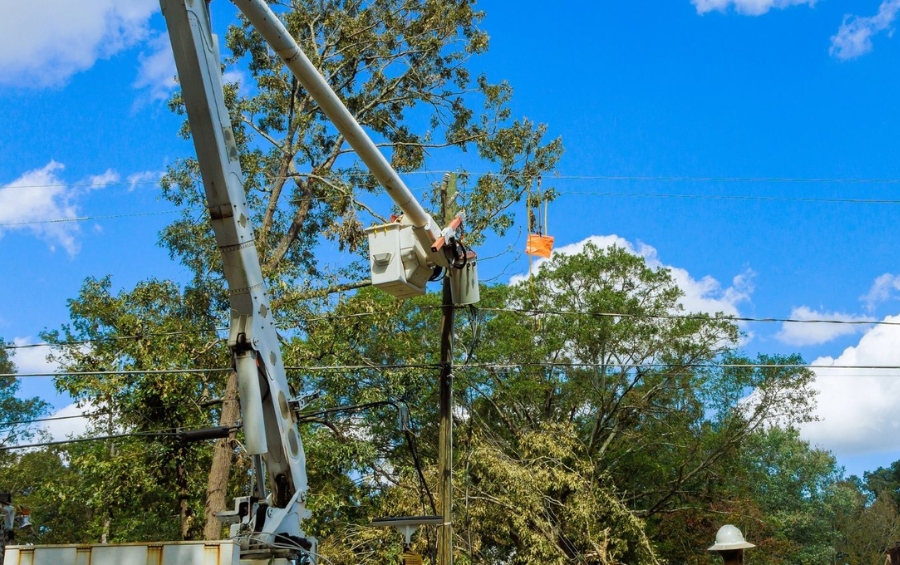
Does MidAmerican Energy Trim Trees Near Power Lines for Free?
Yes, but only for trees near their distribution lines – not your service drop. MidAmerican maintains clearance around their infrastructure at no cost to property owners.
What Does MidAmerican’s Free Tree Trimming Include?
MidAmerican trims trees that threaten their distribution lines as part of their regular maintenance schedule, visiting each area approximately every four to seven years.
At no cost to property owners, MidAmerican provides:
- Clearance maintenance around distribution lines (pole-to-pole)
- 10 to 15 feet of clearance from high-voltage infrastructure
To request service for trees interfering with distribution lines, contact MidAmerican at 800-799-4443 or visit midamericanenergy.com/tree-service-request.
Why Do Some Homeowners Prune Before MidAmerican Arrives?
Many homeowners prune proactively to protect their trees from aggressive utility cuts that prioritize clearance over health or appearance.
Utility crews often leave trees lopsided with one-sided clearance cuts – what many Davenport homeowners describe as “butchering.” Professional arborists can shape trees properly before utility crews arrive, maintaining both adequate clearance and the tree’s structural integrity.
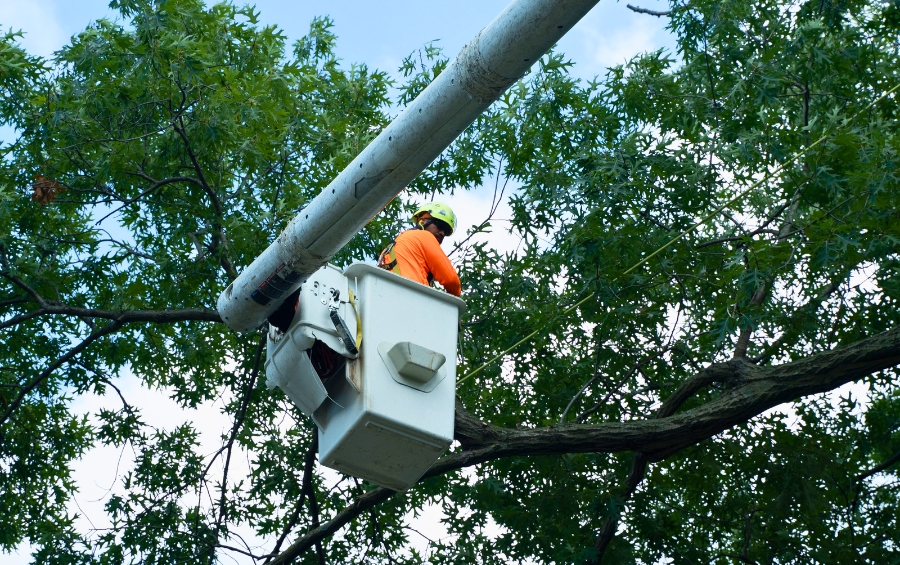
When Should You Trim Trees Near Power Lines?
Winter – specifically November through February – offers the best window for proactive pruning near power lines in and around the Quad Cities. During winter, dormant trees reveal their full branch structure, making problem areas easier to identify and address before spring growth pushes them closer to lines.
Additional benefits of winter pruning include:
- Reduced Stress: Trees heal more effectively during dormancy without the competing demands of active growth.
- Better Timing: Winter pruning lets you address potential line conflicts before spring growth pushes branches closer to infrastructure.
- Easier Scheduling: Tree services often have more availability during the slower winter months.
What Are the Signs a Tree Near Power Lines Needs Pruning?
Any visible growth toward power lines or structural weakness in the canopy warrants a closer look.
Watch for these specific warning signs:
- Branches growing toward power lines (service drop or distribution)
- Dead or dying branches that could fall during storms
- V-shaped branch unions indicating structural weakness
- Previous storm damage that was never properly addressed
- Trees within falling distance of power lines, even if branches aren’t touching yet
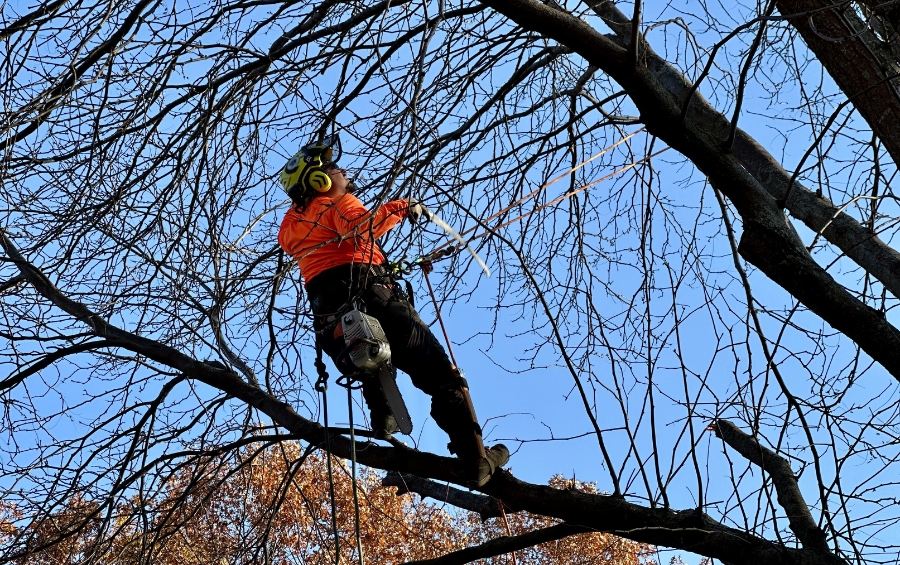
Dormant season pruning – November through February – is the ideal time to address branches growing toward power lines.
Frequently Asked Questions About Trees and Power Lines
Can I refuse to let MidAmerican Energy trim trees on my property?
Generally, no. Utility easements typically grant MidAmerican the legal right to maintain adequate clearance around their distribution lines. You can discuss timing and approach, but you usually can’t refuse access when their infrastructure is at risk.
What trees should I avoid planting near power lines?
Avoid fast-growing species that reach 25 feet or taller at maturity, including silver maple, cottonwood, and willow. Instead, choose smaller ornamental trees, like crabapple, redbud, or serviceberry, that won’t grow into the lines.
How do I know if a branch is close enough to be a problem?
If you can’t see clear daylight between branches and power lines, or if branches sway within a few feet of lines during windy conditions, it’s time for a professional assessment. When in doubt, schedule an inspection rather than waiting for a storm to decide for you.
What happens if I ignore a tree growing toward power lines?
The tree will eventually require emergency removal rather than routine pruning – often at a higher cost and with less control over timing. MidAmerican may also trim the tree themselves, prioritizing clearance over the tree’s health or appearance.
Make Sure Your Trees and Power Lines Don’t Clash This Winter
That old oak swaying near your power lines doesn’t have to keep you guessing. Distribution lines are MidAmerican’s responsibility, your service drop is yours, and the 10-foot rule means this is never a DIY project.
If you’ve noticed branches creeping toward your power lines, winter is your opportunity to act – before spring growth and storm season arrive. Schedule an assessment with Arbor Masters’ ISA Certified Arborists and address potential conflicts while you’re still in control of the timing. Call us today at 563-355-7508!
Learn More With These Related Articles


Want More Like This?
Get the latest local news, tree care tips, special offers, and company updates directly to your inbox! It's easy to subscribe and there's no spam - we promise.
"*" indicates required fields