9 Popular Wichita Trees That Are Least Likely to Survive Ice Storms
Not all trees handle ice storms the same. See which species are high-risk in Wichita and what you can do to reduce breakage, failures, and storm cleanup costs.
Wichita winters are full of rapid weather swings. Warm-then-cold setups can flip rain into freezing rain quickly – and that’s where ice storms become a major problem for trees, especially certain species.
Understanding how storms damage your trees and which trees pose an ongoing risk helps you make smart decisions before emergency crews are busy and removal costs triple. Proper seasonal tree care can help, but some species will always remain vulnerable regardless of maintenance.
Key Takeaways
- Great Plains weather patterns create ideal conditions for destructive ice accumulation that overwhelms weak tree structures.
- Bradford pears, silver maples, and multi-stemmed evergreens are most likely to split permanently during Wichita ice storms.
- Trees losing more than 50% of their crown or showing trunk splits cannot recover and require immediate removal for safety.
- Conifers, like arborvitae and juniper, that split apart during ice loading will never regenerate their original form.
- Proactive removal of vulnerable species before storm season prevents property damage and reduces emergency response costs.

Even small amounts of ice accumulation create enormous weight on tree branches, with just 0.25 inches qualifying as an ice storm capable of causing significant tree damage.
Why Are Ice Storms So Destructive to Wichita Trees?
Ice storms form when warm air sits above cold surface air, creating supercooled raindrops that freeze on contact. The flat Great Plains terrain makes Kansas particularly vulnerable to these conditions.
Just 0.25 inches of ice accumulation qualifies as an ice storm, with major 1+ inch events occurring roughly every 50 years in Kansas. Recent severe winter weather across Kansas demonstrates the ongoing vulnerability to destructive winter storms.
When considering the danger of ice, most people immediately think of vehicles and sidewalks. However, these storms can also heavily damage or kill many of your mature trees.
Why Can’t Some Trees Recover from Ice Damage?
Ice loading stresses entire tree structures simultaneously, unlike wind, which affects individual branches. Tree species with poor structure or weak wood fail catastrophically, creating massive wounds too extensive for natural healing. Evergreens cannot regenerate lost branches or repair major structural splits, making their damage permanent.
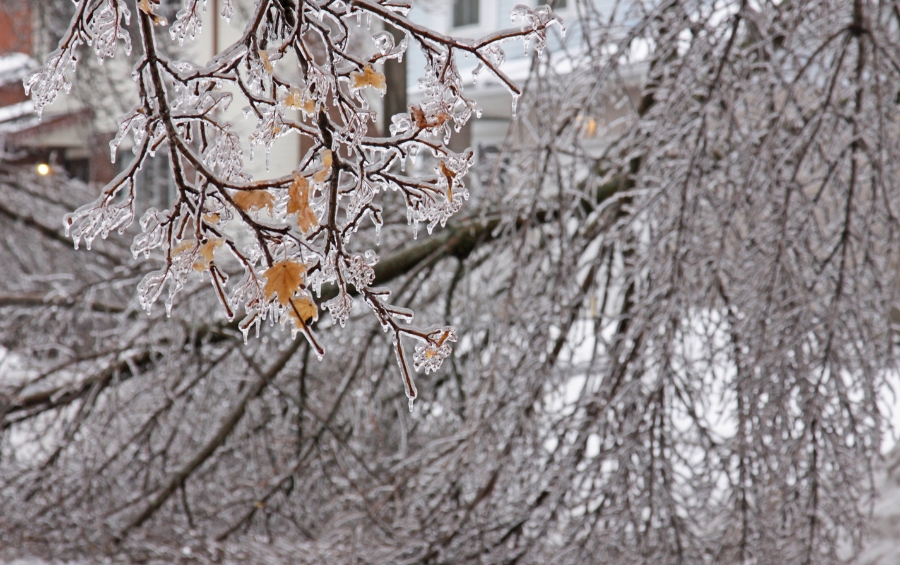
Ice loading stresses entire tree structures simultaneously, creating conditions that cause vulnerable species like Bradford pears and silver maples to fail catastrophically.
Which Tree Species Are Least Likely Survive Ice Storms?
While ice storms can damage any tree, certain species are virtually guaranteed to suffer permanent damage or complete failure when faced with significant ice loading. Understanding these vulnerable species helps you make informed decisions about removal before storm season arrives, rather than dealing with emergency cleanup and much higher costs afterward.
Bradford Pears Are the Most Vulnerable Trees to Ice Damage
Bradford pears are essentially time bombs waiting for ice storms. These ornamental trees became popular in Wichita neighborhoods during the 1980s and 1990s for their fast growth, early spring flowers, and attractive fall color. Unfortunately, they’re structurally doomed from the start.
The fundamental problem lies in their narrow crotch angles and included bark. As branches grow, they form V-shaped connections with bark trapped between the wood. This bark prevents proper fusion between the branch and trunk, creating an inherently weak connection that ice can break. Bradford pears also have brittle wood that cannot flex under ice weight like native species.
Many Wichita customers have learned this lesson the hard way, watching beautiful Bradford pears split down the middle during ice events. What starts as a single split often leads to complete tree failure within a year or two as decay spreads. Professional tree removal becomes necessary not just for aesthetics, but for safety as decay weakens the remaining structure.
“Bradford pears and silver maples make up a large chunk of our emergency calls after major ice storms. Homeowners are always surprised when I explain that their ‘beautiful’ Bradford pear was essentially a disaster waiting to happen. A lot of property owners have figured out it’s better to remove them now than wait for the trees to fail in a storm.” – DJ Waters, Branch Manager at Arbor Masters
Silver Maples Depend on Pruning History for Ice Storm Survival
Silver maples present a more complex problem because their ice storm vulnerability depends heavily on their pruning history and structural development. Properly maintained silver maples with strong central leaders can weather ice storms reasonably well, but improperly pruned trees become disasters waiting to happen. The biggest issue occurs with silver maples that have been “topped” or severely cut back, which creates rapidly growing branches with weak connections.
Fast growth leads to poor wood density and inadequate taper, making branches prone to failure under ice loading. Silver maples also tend to develop large, heavy branches that become increasingly vulnerable as trees mature. Without proper structural pruning during their early years, these trees develop co-dominant stems and included bark similar to Bradford pears.
It’s hard to forget how the 2007 Wichita ice storm demonstrated this vulnerability dramatically, destroying thousands of silver maples across the region. Trees with good structure and proper pruning history survived, while poorly maintained specimens failed catastrophically. Other trees with similar vulnerabilities due to their growth patterns include:
- Siberian elms
- Willows
- Poplars
Multi-Stemmed Evergreens Never Recover from Ice Storm Splitting
Arborvitae, junipers, and yews present unique challenges during ice storms because their damage is often permanent and immediately visible. Unlike deciduous trees that might surprise you with spring recovery, evergreen damage tells the whole story right away. Multi-stemmed evergreens split apart permanently when ice loading exceeds their structural capacity, and the individual stems separate at the base and cannot be rejoined.
Leyland cypress, with its weak branch attachments, is particularly vulnerable to ice damage. These popular screening trees often split apart dramatically during ice events, leaving property owners with gaps in their privacy barriers and dangerous hanging sections. Arborvitae commonly used in foundation plantings face similar issues, with ice loading forcing the outer branches away from the center and permanently destroying their natural columnar form.
Bent evergreens that survive ice loading rarely return to their normal upright form. The permanent lean or distortion affects both aesthetics and long-term health, often necessitating removal even if the tree technically survives. Preventive pruning or structural support installation can help reduce some risks, but the structural limitations of multi-stemmed evergreens make them inherently vulnerable to ice damage.
What Ice Damage Looks Like When Recovery Isn’t Likely
Ice storms can push certain trees past the point of recovery. When major structural components fail, those trees become safety hazards rather than candidates for preservation. Recognizing the types of damage that rarely heal helps homeowners make timely removal decisions and avoid property damage.
The 50% Rule for Ice-Damaged Trees
Trees losing more than 50% of their crown or major branches should be removed. Any trunk injury removing more than one-third of bark circumference also requires removal, as do any visible trunk splits.
Root Damage After Ice Storms
Trees leaning more than 60 degrees with root damage are unlikely to recover and pose safety risks. Emergency tree services evaluate immediate and long-term risks, considering structure proximity and tree condition. Proper storm damage inspection within the first few weeks provides the best opportunity for informed decisions.
Frequently Asked Questions About Ice Storm-Damaged Trees
Which trees are most likely to be damaged by ice storms in Wichita?
Bradford pears, silver maples, Siberian elms, and multi-stemmed evergreens, like arborvitae and junipers, are most vulnerable due to weak wood or poor structure.
Can Bradford pears survive ice storms?
Bradford pears rarely survive major ice storms intact due to their narrow crotch angles and brittle wood that splits under ice loading. We recommend removing these trees proactively to protect your property from tree failure.
When should you remove a tree after storm damage?
Remove trees immediately if they’re:
- Leaning over 60 degrees
- Have split trunks
- Lost more than 50% of their crown
- Pose safety risks to structures
Why do I need professional help for ice-damaged trees?
Ice-damaged trees pose serious safety risks from unstable branches and compromised structure that only trained arborists can safely assess and remove. An arborist knows what to look for to determine if a tree can remain standing or if it needs to be removed for safety reasons.
Can damaged evergreens recover their shape after ice storms?
No, conifers and evergreens that split apart during ice loading cannot regenerate their original form and typically require removal.

Arbor Masters crews respond quickly to ice storm emergencies across Wichita, using professional equipment to safely remove damaged trees that pose risks to homes and property.
When Ice Damage Forces You to Remove a Tree, Call Arbor Masters
When recovery isn’t likely, removal is the safest and most practical decision. Arbor Masters handles storm-damaged and structurally compromised trees safely, without the emergency scramble or surprise costs that come after a major storm.
Whether you need a hazardous tree removed or want recommendations for storm-resilient replacements, our Wichita team can help. Call us today at 316-838-3111 or request a quote online.
Learn More With These Related Articles


Want More Like This?
Get the latest local news, tree care tips, special offers, and company updates directly to your inbox! It's easy to subscribe and there's no spam - we promise.
"*" indicates required fields