
Healthier Trees in OKC Start This Winter: How Soil Testing Guides Spring PHC Care
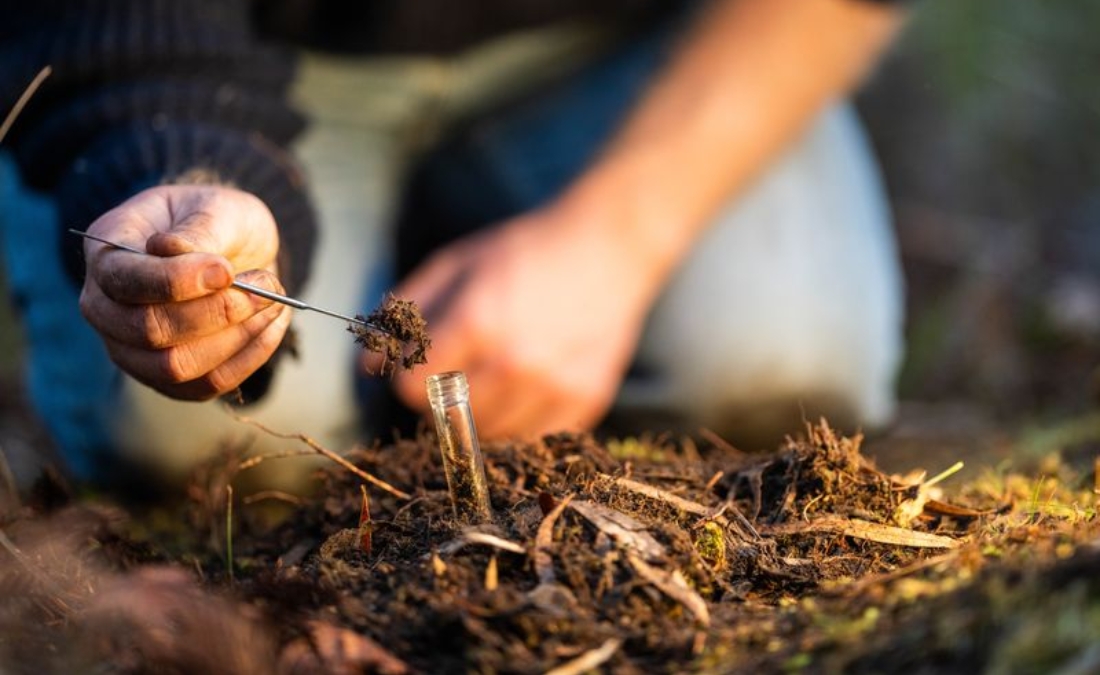
Boost your OKC trees before spring hits. Winter soil testing reveals hidden problems early and sets the stage for customized care when growth begins again.
Most Oklahoma City homeowners don’t think about tree health until spring leaves appear – but by then, they’ve already missed the best window to understand what their trees need for the coming growing season: winter soil testing.
From century-old oaks in Heritage Hills to post-tornado replanting in Moore, Oklahoma’s trees face unique challenges. Winter soil testing gives you months to address problems before spring growth kicks in, exactly when your trees need the strongest start possible.
Key Takeaways
- Winter soil testing provides accurate baseline data after the growing season ends, allowing you to identify nutrient deficiencies in Oklahoma’s challenging clay soil.
- Oklahoma’s clay-based soil often suffers from pH imbalances (typically 7.5-8.5), poor drainage, nitrogen deficiency, and compaction that only professional laboratory testing can accurately diagnose.
- A winter soil test sets the entire spring care plan in motion – revealing what your soil needs, allowing time for corrections, and ensuring your trees get the right treatments when growth starts.
- Proactive winter planning protects property values by preventing decreases from mature tree loss and catching deficiencies before they require expensive removal.
- Professional soil testing through Oklahoma State University Extension labs provides a detailed nutrient analysis that inexpensive hardware store kits cannot match.
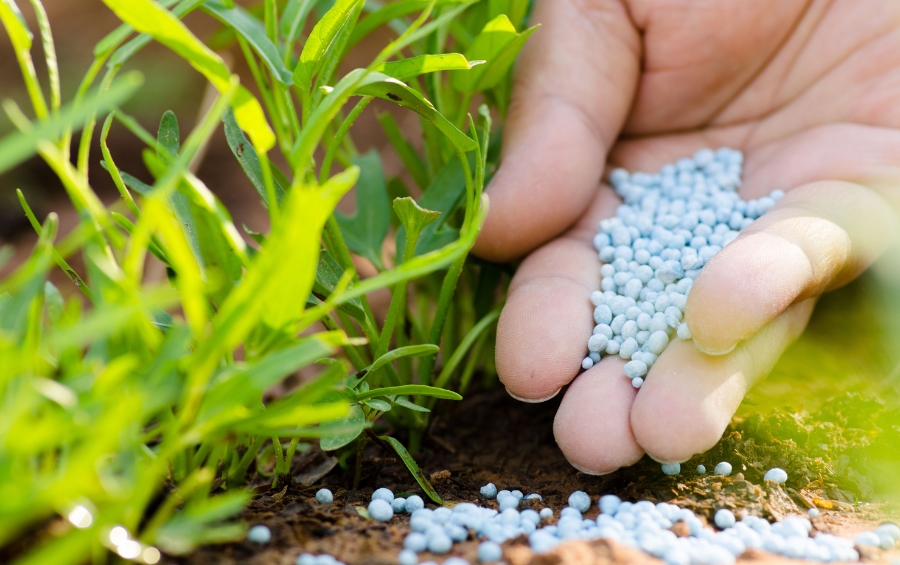
Professional fertilization delivers the right nutrients at the right time based on soil test results.
Why Is Winter the Best Time for Soil Testing in Oklahoma City?
Winter gives you the most accurate picture of what your soil is actually missing. By December, trees have already used up the nutrients they needed during the growing season, and the soil has settled after fall rain. Testing now shows a true baseline instead of the fluctuating results you’d get in spring or summer.
It’s also the best time because most soil treatments take weeks or months to start working. Products that adjust pH, like lime, can take two to three months to fully react with the soil, according to Oklahoma State University Extension. Testing in winter gives you time to make those changes so your trees can benefit as soon as spring growth begins.
While homeowners can collect samples themselves following Oklahoma State University Soil, Water and Forage Analytical Laboratory guidelines, professional collection by an arborist ensures proper technique and appropriate sampling locations for accurate results.
What Soil Problems Do Oklahoma City Trees Face?
Oklahoma City trees struggle primarily with clay soil that holds nutrients well but causes several other problems, such as:
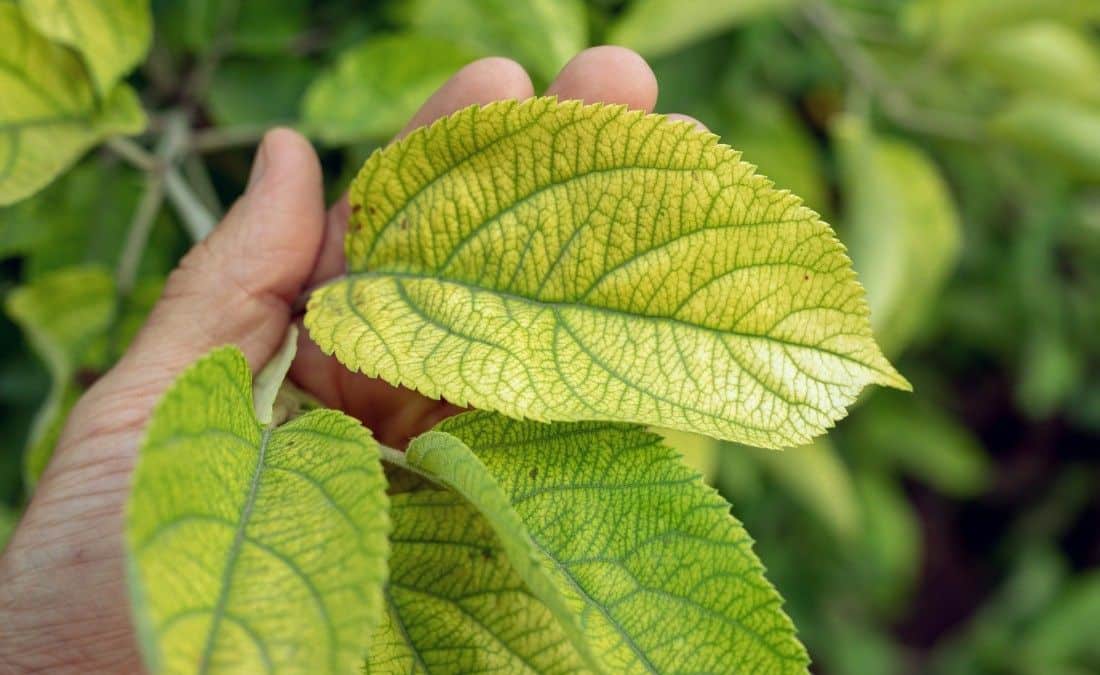
- Iron Chlorosis from High pH: Oklahoma City’s clay soil typically ranges from pH 7.5 to 8.5. At these alkaline levels, iron becomes chemically bound to soil particles in a form that trees cannot absorb. You’ll recognize this by yellowing leaves with green veins on pin oaks, red maples, and other species. No amount of iron fertilizer helps until you lower the pH to 6.0-7.0.
- Nitrogen Deficiency: Clay doesn’t hold nitrogen well. This essential nutrient leaches away with rain or converts to gases that escape into the atmosphere, causing pale green or yellow leaves, stunted growth, and thin canopies.
- Poor Drainage and Root Suffocation: Clay’s tight structure prevents water from percolating through the soil. After heavy rains, water sits around roots and fills soil pores completely, essentially drowning roots. The resulting root rot weakens trees and makes them susceptible to diseases and wind damage.
- Compaction Blocking Root Growth: Clay particles pack together so tightly that roots cannot physically penetrate to reach nutrients that are technically present in the soil.
Once you have your soil test results back, you’ll have a full idea of:
- pH levels
- Nitrogen-phosphorus-potassium ratios
- Essential micronutrients (iron, manganese, and zinc)
- Organic matter content
- Soil texture
What Happens After a Winter Soil Test
Once the results come back, arborists interpret them specifically for the trees on your property Different species, like Oklahoma redbuds, oaks, maples, and elms, have different nutrient and pH requirements. This helps identifies exactly what needs to change for your specific trees to thrive.
If the test shows a pH imbalance or nutrient deficiency, the first treatments happen while trees are still dormant. Products like lime or sulfur can take several weeks to react with the soil, so applying them in late winter ensures the soil is ready before spring growth. Once pH is balanced, arborists perform deep root fertilization, injecting nutrients directly into the soil where feeder roots absorb them best. This gives trees an immediate boost as growth begins, especially in Oklahoma’s compacted clay soils.
As leaves emerge and growth resumes, arborists look for improvements in color, growth rate, and overall vigor. Strong responses may mean yearly fertilization is ideal; slower improvements may call for follow-up testing to fine-tune the plan.
How Winter Soil Testing Protects Your Property Investment
Winter soil testing protects your property investment by strengthening the trees that add the most value to your landscape. Healthy, mature trees boost curb appeal, reduce energy costs, and can increase property value – while trees in decline often do the opposite.
By identifying nutrient deficiencies, pH problems, and early signs of stress before spring growth begins, winter testing gives you time to correct issues and prevent decline. This proactive approach is far more cost-effective than waiting until a tree becomes weak, hazardous, or needs removal.
Winter testing also sets the stage for long-term care. When an arborist evaluates your soil each year, they can track changes, adjust treatments, and prevent problems before they become expensive emergencies. It’s a strategic way to protect both your trees and the investment they represent.
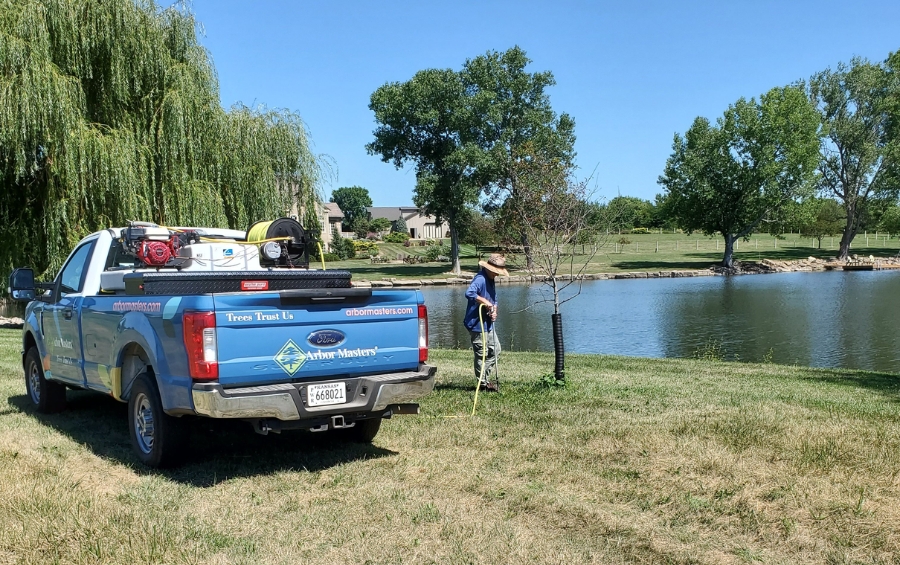
Proper fertilization can leave a tree healthy and thriving for years to come.
Frequently Asked Questions About Winter Soil Testing in Oklahoma City
How much does professional soil testing cost in Oklahoma City?
Professional soil testing typically costs $20-30 for basic analysis through OSU Extension’s lab, or $200-500 for comprehensive testing with ISA Certified Arborist consultation and customized treatment plan development.
Can I collect soil samples myself, or should an arborist do it?
You can collect samples yourself following OSU Extension guidelines, but professional collection ensures accurate sampling from appropriate locations at proper depth while avoiding contaminated areas.
What’s the difference between lawn soil testing and tree soil testing?
Lawn tests sample the top 3-4 inches where grass roots grow, while tree tests sample 6-12 inches deep where tree feeder roots absorb nutrients. Tree tests emphasize pH and micronutrients for long-term health rather than rapid grass growth.
How often should I test my soil in Oklahoma?
You should test your soil every 3-5 years for healthy established trees, annually for newly planted trees during their first 3-5 years, and immediately if you notice yellowing leaves, poor growth, or unusual leaf drop.
Will soil testing tell me if my tree has a disease or just nutrient problems?
Soil testing identifies nutrient deficiencies and pH imbalances but does not diagnose diseases. An ISA Certified Arborist combines soil test results with visual inspection to determine whether symptoms result from soil issues, diseases, pests, or environmental stress.
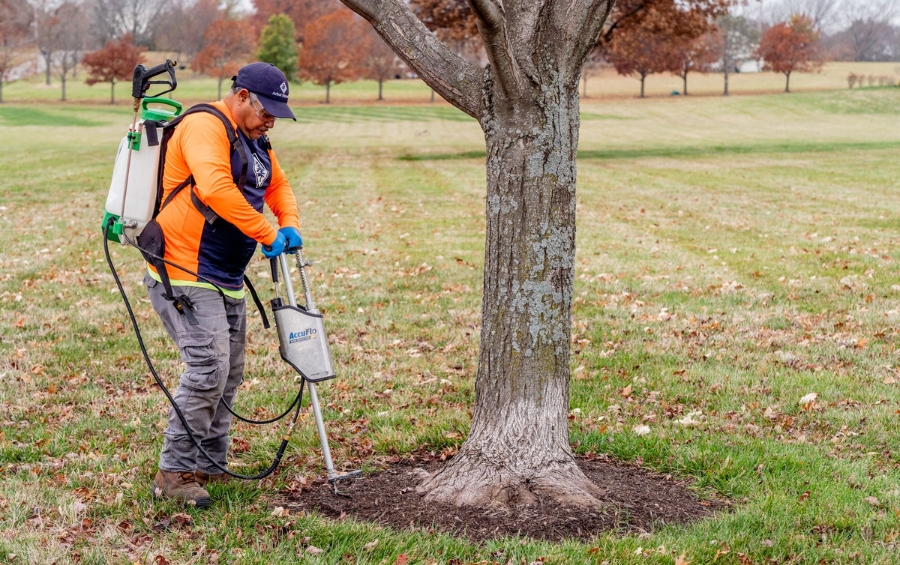
Deep root fertilization injects nutrients directly where feeder roots can absorb them while breaking through compacted clay soil.
Give Your Trees a Strong Start – Schedule Your Winter Soil Test with Arbor Masters Today
The winter window for soil testing closes quickly. December and January provide the optimal timeframe for collecting samples, getting laboratory results, and developing customized care plans before spring growth begins.
The ISA Certified Arborists at Arbor Masters understand Oklahoma’s clay soil challenges and develop treatment plans that work with local conditions. As a TCIA Accredited company, we follow the highest standards for tree care practices. Call us today at 405-495-8746 or request a quote online to discuss soil testing options and develop a customized care plan for your trees.
Learn More With These Related Articles


Want More Like This?
Get the latest local news, tree care tips, special offers, and company updates directly to your inbox! It's easy to subscribe and there's no spam - we promise.
"*" indicates required fields
