Why One Treatment for Japanese Beetles in Rock Island County Isn’t Enough
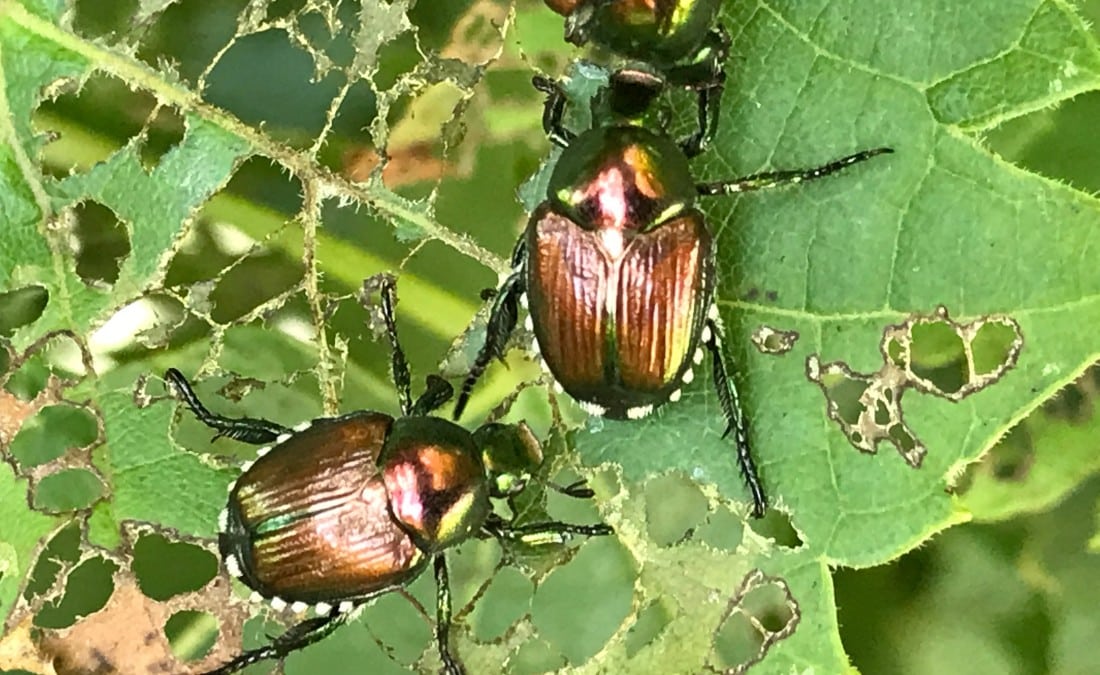
Japanese beetles return to Rock Island County every July. Learn why a single treatment won't protect your lindens, crabapples, and birches this season.
If your lindens, crabapples, or birches in Moline, Rock Island, or East Moline looked shredded by mid-August last year, it’s almost time for another round. Japanese beetles in Rock Island County generally emerge from the soil in early July, fan out across mature neighborhoods on both sides of the Mississippi, and feed for around six weeks before laying the next generation of eggs. The disappointment that follows a single hardware-store spray is as predictable as the damage from the beetles.
What makes them especially frustrating is how quickly these pests seem to return. Trees that looked fine a few days after treatment can suddenly be covered again, leaving homeowners wondering whether the spray worked at all. The answer usually has less to do with the product itself and more to do with how Japanese beetle infestations actually behave across the Quad Cities.
Key Takeaways
- Japanese beetles emerge in Rock Island County around early July and feed for roughly six weeks straight.
- Lindens, crabapples, and birches are the most targeted residential trees in the Quad Cities—and lindens come with a critical pollinator-safety consideration most homeowners don’t know about.
- A single foliar treatment lasts one to three weeks at most—and new beetles can fly in from miles away during the entire feeding window.
- An annual Plant Health Care program combines preventive spring treatments, summer grub control, and ongoing monitoring to shift year-over-year pressure on your property.
When Do Japanese Beetles Emerge in Rock Island County?
Adult Japanese beetles usually begin emerging in Rock Island County in early July, with feeding pressure peaking from mid-July through mid-August. Exact timing shifts slightly each year depending on spring soil temperatures, but once adults emerge, activity typically lasts around six weeks.
The Quad Cities provides nearly ideal conditions for Japanese beetle populations. Warm, humid summers combined with irrigated residential lawns along the Mississippi River corridor create excellent habitat for developing grubs. That’s part of why beetle-related tree damage becomes so noticeable across Moline, Rock Island, and East Moline by midsummer.
The Rock Island County Japanese Beetle Timeline
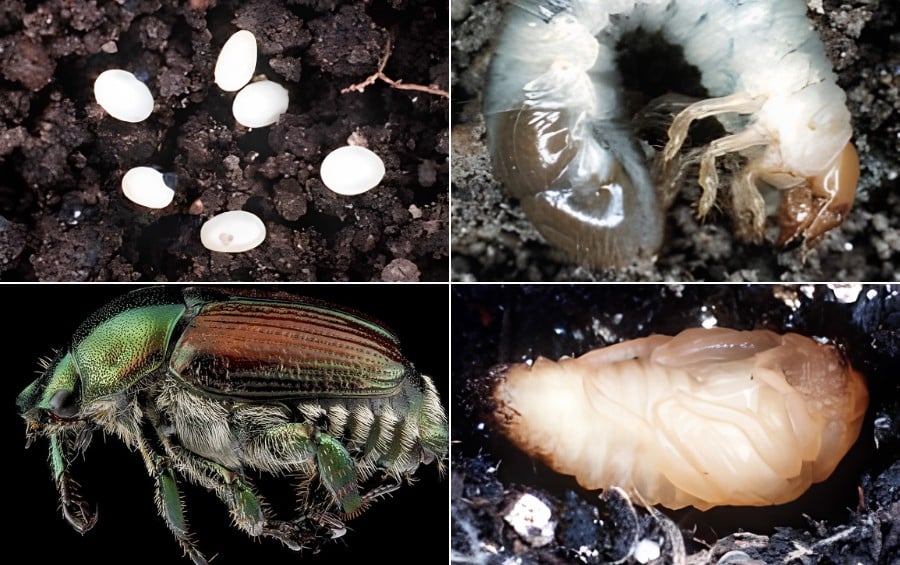
The annual cycle can look like this:
- Early July: First adults emerge from turf and begin feeding on canopy foliage
- Mid-July to mid-August: Peak adult feeding pressure across mature trees
- Late July through August: Females lay 40 to 60 eggs apiece in lawns and irrigated turf
- September and October: The new generation of grubs feeds on grass roots before burrowing deeper to overwinter
And so, the cycle continues. It’s a one-year lifecycle, and every stage can happen on your property.
What Trees Do Japanese Beetles Attack Most in the Quad Cities?
Japanese beetles do not feed evenly across the landscape. In Rock Island County, they consistently concentrate on certain ornamental and shade trees heavily planted throughout older neighborhoods in Moline, Rock Island, and East Moline.
The trees most commonly affected include:
- Linden (basswood)
- Crabapple
- Birch
- Norway and Japanese maples
- Purple-leaf plum
- Mountain ash
- Sassafras
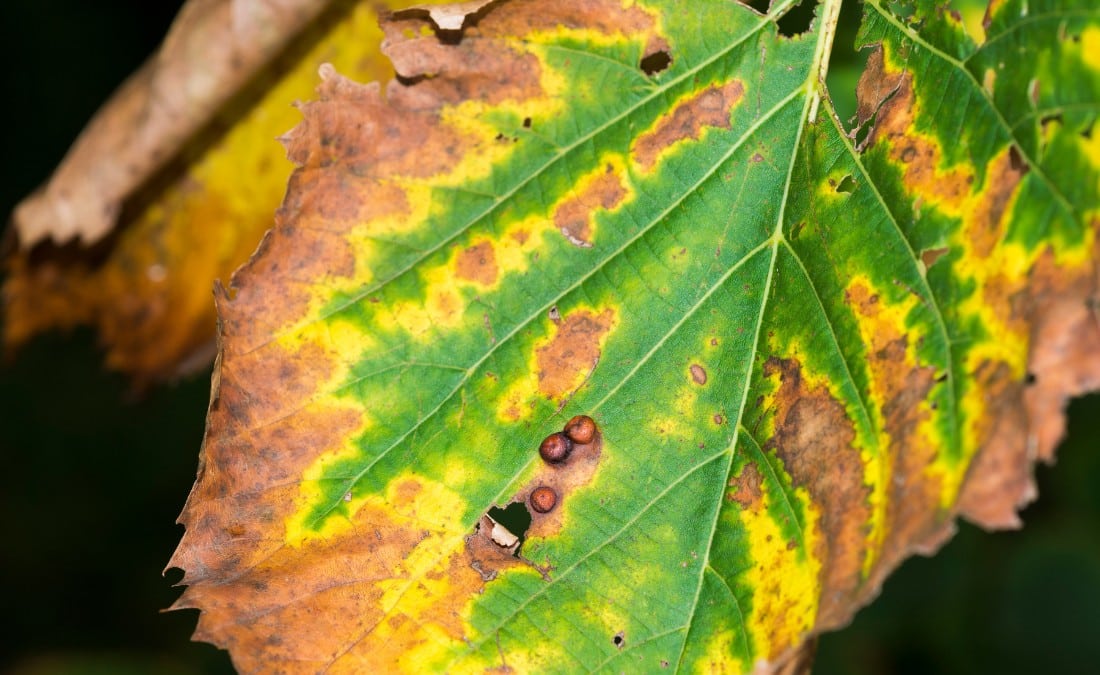
Beetles skeletonize the leaves they feed on, eating the soft tissue between the veins and leaving behind a lace-like pattern. They start at the top of the canopy and work their way down, which is partially why DIY ground sprays struggle to reach the trees that need protection most.
Why Doesn’t One Treatment Stop Japanese Beetles?
There are four reasons a one-and-done approach is ineffective:
- The Feeding Season Lasts Too Long: Adult beetles remain active for roughly six weeks, while many common foliar sprays only protect leaves for a much shorter window before breaking down.
- New Beetles Keep Arriving: Japanese beetles are strong fliers capable of traveling from nearby untreated properties. A tree that looks better after treatment can quickly become reinfested as surrounding beetles move back into the canopy.
- Egg-Laying Overlaps with Feeding Season: While adults are actively damaging trees, females are also laying eggs into nearby lawns and irrigated turf, which helps restart the cycle the following year.
- Some Trees Require More Limited Treatment Options: Lindens, one of the beetles’ favorite host trees, cannot always be treated with the same long-residual products used on other ornamentals because of pollinator concerns during bloom periods.
That combination of reinfestation pressure, overlapping life stages, and treatment limitations is why Japanese beetle management usually focuses on reducing damage through the season rather than eliminating every beetle with a single application.
What Does a Real Japanese Beetle Treatment Program Look Like?
An effective Japanese beetle program is built around the lifecycle:
- Preventive treatments timed before adult emergence
- Grub control timed for the summer egg hatch
- Monitoring to track pressure year after year
Each touch point exists because the pest is doing something specific in the soil or in the canopy that a generic spray would miss.
A typical annual schedule looks like this:
- Mid-to-Late April: Soil-applied or trunk-injected preventive treatments go in for trees where they’re appropriate (not lindens), giving products four to six weeks to translocate before adults emerge.
- Late June to Early July: Foliar treatments and monitoring begin. Trees that can’t receive systemics—especially lindens—get reduced-risk products applied in the evening when pollinators aren’t active.
- July 1 to 15: Soil-applied grub control on turf, timed to the narrow window when new grubs sit near the soil surface where treatments can reach them.
- August and Beyond: Continued monitoring, follow-up applications when pressure dictates, and a post-season evaluation that informs next year’s plan.
A well-designed insect and disease care program significantly reduces annually accrued damage on a specific property by interrupting the lifecycle at every stage you control.
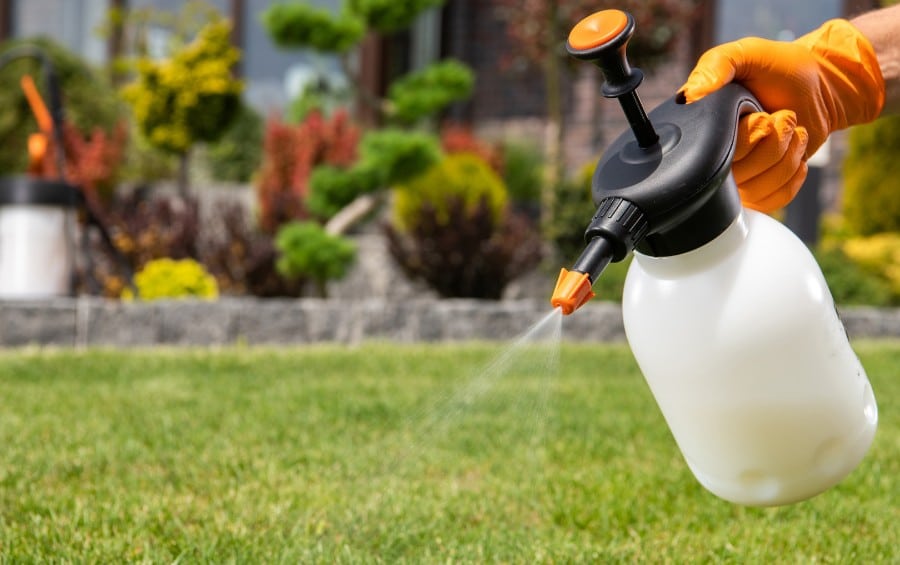
A handheld sprayer can reach the lawn and low shrubs, but not the upper canopy of a mature linden—which is exactly where Japanese beetle feeding starts.
Do Japanese Beetle Traps and DIY Sprays Work?
Japanese beetle traps tend to attract more beetles to a property than they catch, and most DIY sprays need to be reapplied every one to two weeks to provide consistent protection during a six-week feeding window. Both options seem productive but rarely change outcomes.
Why Pheromone Traps Backfire
Pheromone traps work by broadcasting a chemical lure that beetles can detect from a great distance. The problem is that many of the beetles attracted to the trap never actually get in it. Instead, they land on nearby trees and shrubs and start feeding.
Research across the Midwest has found the same result: setting traps in a residential yard tends to increase damage, not decrease it. The University of Kentucky found that traps draw more beetles than they capture, and plants in the vicinity of a trap typically suffer more damage than if no trap had been used at all.
The Limits of DIY Contact Sprays
Hardware-store sprays fall into two camps, and neither solves the problem on its own. Pyrethrin-based products knock down beetles on contact but degrade in a day or two. Pyrethroid products—like bifenthrin, lambda-cyhalothrin, permethrin—last one to three weeks, but neither category reaches the upper canopy of a mature tree from a backpack sprayer.
Across a six-week feeding window, even the longer lasting products need three to six reapplications, plus you’re still limited to whatever you can reach from the ground.
Frequently Asked Questions About Japanese Beetles
When do Japanese beetles come out in Rock Island County?
Typically, adult Japanese beetles emerge in Rock Island County around early July, with peak feeding running through mid-August. The exact timing varies a few days each year, depending on spring soil temperatures.
Can all trees be treated for Japanese beetles?
No. Different tree species often require different treatment methods, timing, and products depending on how attractive they are to pollinators, the size of the tree, and where beetles are feeding.
Lindens (basswoods), for example, require extra caution because they attract large numbers of bees during bloom. Some systemic insecticides commonly used on other ornamentals can move into nectar and pollen, creating pollinator concerns if applied improperly.
Tree size also matters. Mature shade trees with beetle activity concentrated high in the canopy are often treated differently than smaller ornamental trees that can be reached more easily with foliar applications. In some cases, arborists may recommend monitoring rather than treatment if damage is mostly cosmetic and the tree is otherwise healthy.
Will my tree die from Japanese beetle damage?
Rarely does a single season of feeding kill an otherwise healthy mature tree; however, repeated heavy defoliation every year stresses the tree and makes it more vulnerable to secondary issues. Young or already-stressed trees are at higher risk and should be prioritized for treatment.
Does grub control on my lawn stop adult Japanese beetles next summer?
Grub control reduces the population breeding in your turf, but adult beetles next summer can still fly in from miles away. Grub control is an important part of an effective program, not a standalone solution.
Why are Japanese beetles so bad some years and lighter in others?
Generally, population pressure builds for several years after beetles first establish in an area, peaks, and then begins to decline. Weather—spring soil moisture and summer rainfall, in particular—also affects emergence timing and adult survival rates.
Are Japanese beetle traps a good idea?
No. Traps attract more beetles to a property than they catch, usually increasing damage in the surrounding area. They’re useful for monitoring beetle presence at a community level, not for residential control.
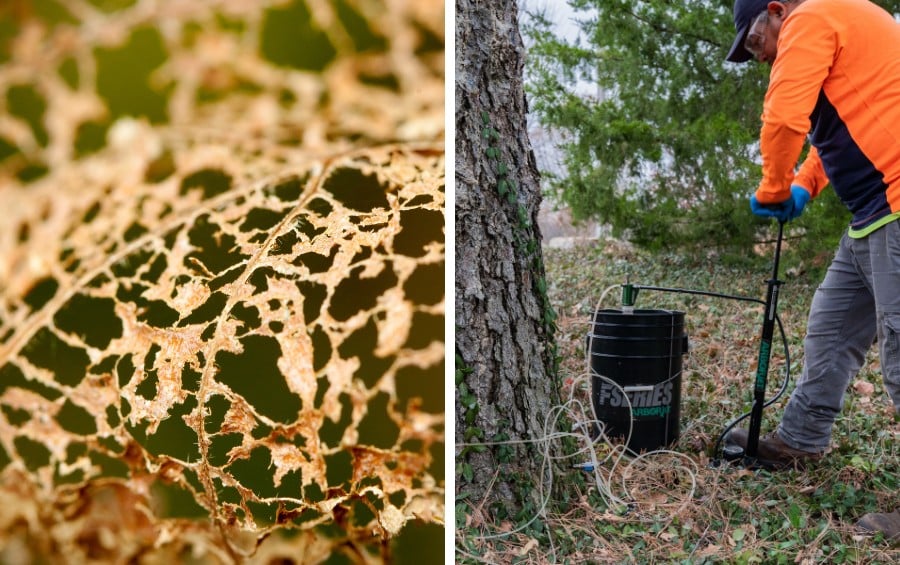
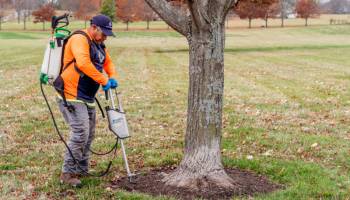
The damage on the left is what untreated lindens look like by August. The setup on the right—trunk injection delivered by a licensed applicator—is one of the ways to protect a linden without putting bees at risk.
Call Arbor Masters for Japanese Beetle Treatments You Can Trust in Rock Island County
If you’ve watched skeletonized leaves come back for two or three summers in a row or if you have a mature linden you’re trying to protect but can’t reach from the ground, you need to call a Certified Arborist.
The team at Arbor Masters of Davenport can inspect the trees on your property, identify what you’re dealing with, and create a treatment plan that is tailored exactly for your specific species. Call us at 563-355-7508 or schedule a free quote online and get ahead of the next emergence of Japanese beetles.
Want More Like This?
Get the latest local news, tree care tips, special offers, and company updates directly to your inbox! It's easy to subscribe and there's no spam - we promise.
"*" indicates required fields