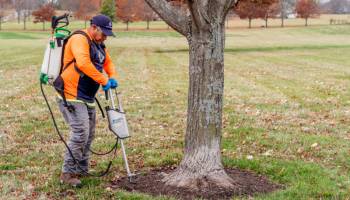
How Do You Spot Dutch Elm Disease Symptoms on a Quad Cities Elm?
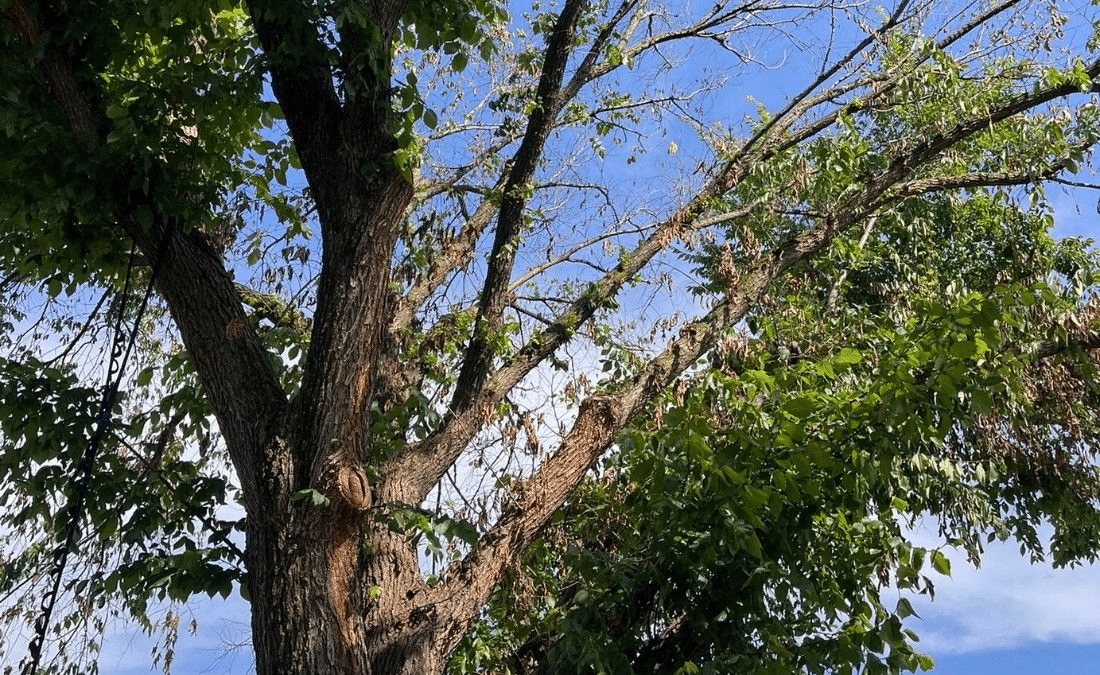
A single branch wilting and yellowing on your Quad Cities elm may signal Dutch elm disease. Learn the symptoms, how it spreads, and how to save your tree.
Across the Quad Cities, on either side of the river, mature elms still shade backyards and parkways. If one branch in your elm suddenly starts wilting while the rest of the tree still looks healthy, don’t ignore it. A single yellowing or browning branch is often one of the earliest signs of Dutch elm disease, and it can appear weeks before the rest of the tree declines.
Dutch elm disease is still a serious problem throughout the Quad Cities. The sooner it’s identified, the better the chance of slowing its spread to the rest of the tree or nearby elms. Knowing what those early symptoms look like can help you act before the damage becomes irreversible.
Key Takeaways
- Dutch elm disease usually begins with a single upper branch that suddenly wilts and turns yellow while the rest of the tree still appears healthy.
- Dark brown or olive-green streaks just beneath the bark of a wilting branch are one of the strongest indicators of Dutch elm disease.
- Dutch elm disease spreads through elm bark beetles and connected root systems, allowing it to move from one tree to another.
- If Dutch elm disease is caught before much of the canopy is affected, treatment may be possible, but advanced infections are usually fatal.
- A prompt inspection by an ISA Certified Arborist can confirm the diagnosis and help protect nearby elms from infection.
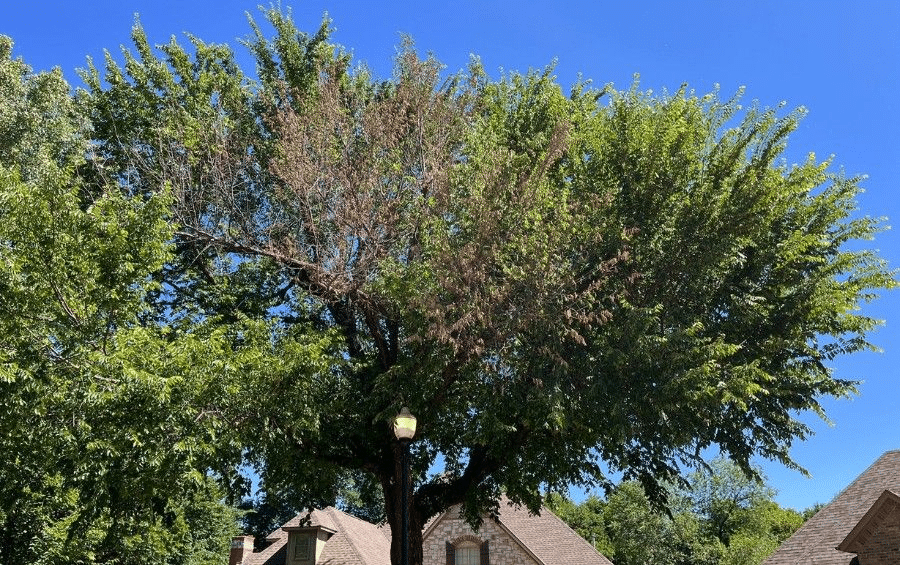
The telltale first sign is one section flagging, wilting and browning, while the rest of the elm still looks healthy. That lone off-color branch is your cue to have the tree looked at.
What Does Dutch Elm Disease Look Like on a Quad Cities Elm?
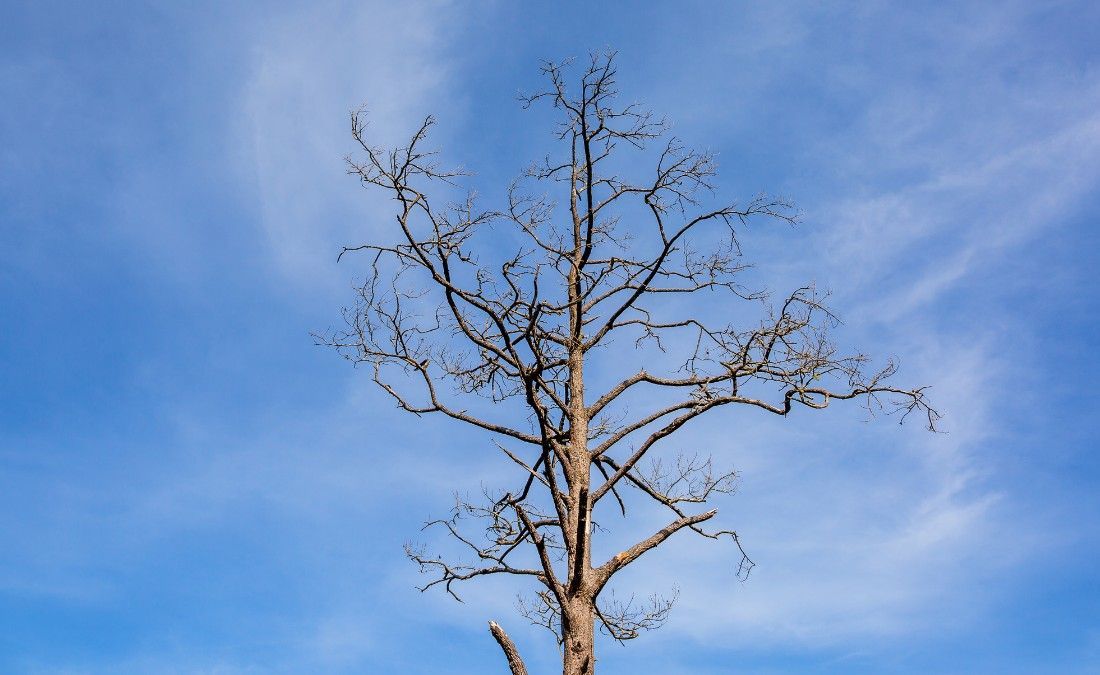
Dutch elm disease usually begins with a single upper branch that suddenly wilts while the rest of the tree still appears healthy. Arborists call this flagging, and it’s often the earliest visible sign that an elm has become infected.
On the affected branch, you’ll typically notice:
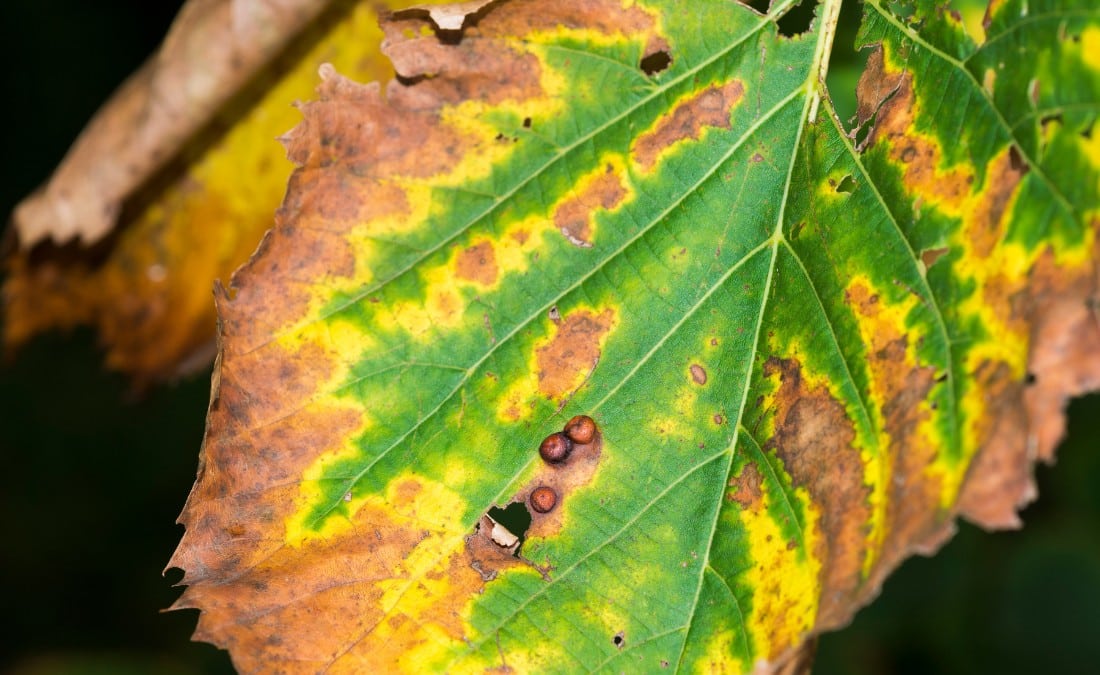
- Leaves that yellow before turning brown
- Leaves that curl or drop earlier than normal
- Wilting that gradually spreads down the branch toward the trunk
If you peel back the bark on a recently affected branch, you may also find brown or olive-green streaking in the sapwood. Those streaks are caused by the fungus blocking the tree’s water-conducting tissue and are one of the strongest indicators of Dutch elm disease. Clean, cream-colored wood usually points to another issue, though laboratory testing is needed for a definitive diagnosis.
Could It Be Something Else?
Not every elm with yellowing leaves has Dutch elm disease. Several other problems can produce similar symptoms:
- Elm Yellows : The whole crown declines fairly evenly rather than one branch at a time.
- Drought Scorch : Leaf edges brown across the entire tree, without the sapwood streaking.
- Root Damage or Soil Compaction: Trees may wilt or thin throughout the canopy because the roots can’t take up enough water, but the characteristic sapwood streaking is absent.
Because the look-alikes overlap, professional insect and disease diagnosis in Davenport is the accurate way to differentiate them.
How Does Dutch Elm Disease Spread from Tree to Tree?
In the Quad Cities, there are two ways in which Dutch elm disease travels between elms: on the backs of elm bark beetles, and through the roots that neighboring elms share underground.
Fungus-Carrying Elm Bark Beetles
Two beetles move the fungus above ground:
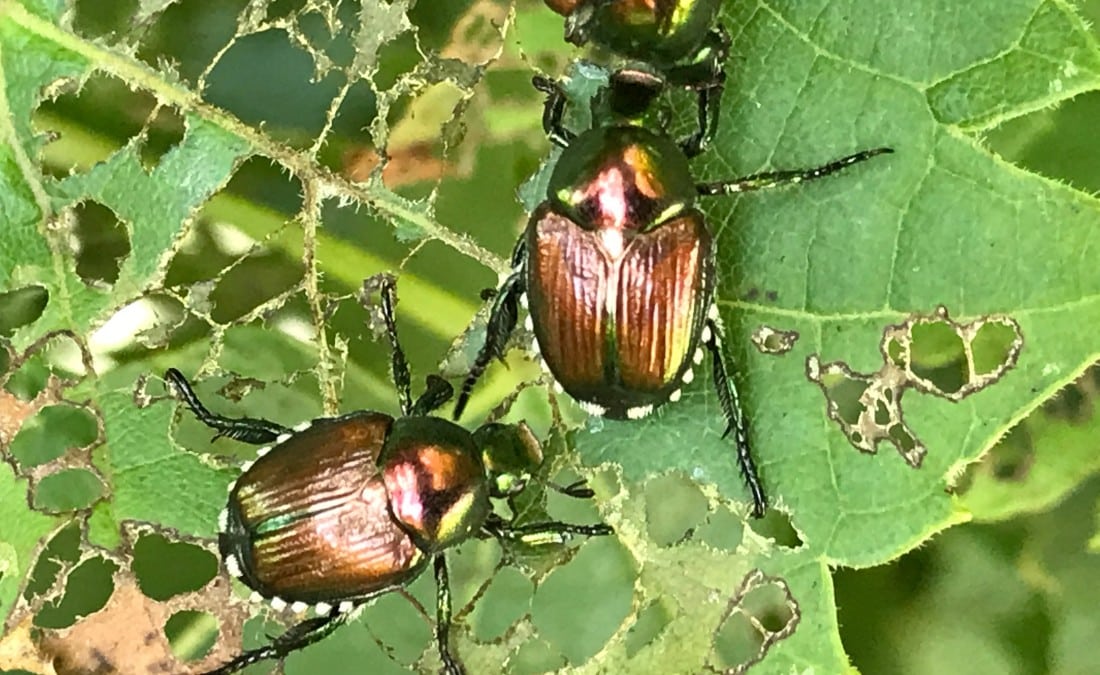
- The native and European elm bark beetles that carry it move spores from dead or dying elms to healthy ones.
- They feed in the small crotches of healthy twigs, where fresh wounds let the fungus in.
Summer pruning cuts are an open invitation to an infestation, which is why cutting an elm during the growing season can cause the very problem you’re trying to avoid.
Roots Shared Among Elms
Large elms growing within about 25 to 50 feet of each other are likely to have grafted their roots together underground, which is why closely spaced elms can pass the disease through their roots. That link matters because:
- An infected elm can pass the fungus straight into a healthy neighbor with no beetle involved.
- In older Muscatine and Bettendorf neighborhoods, where mature elms line the parkways, one infected tree can put a whole block at risk.
- If a neighbor’s elm was recently removed for the disease, it’s worth having yours checked even if it looks healthy, since shared roots can carry the fungus before symptoms show.
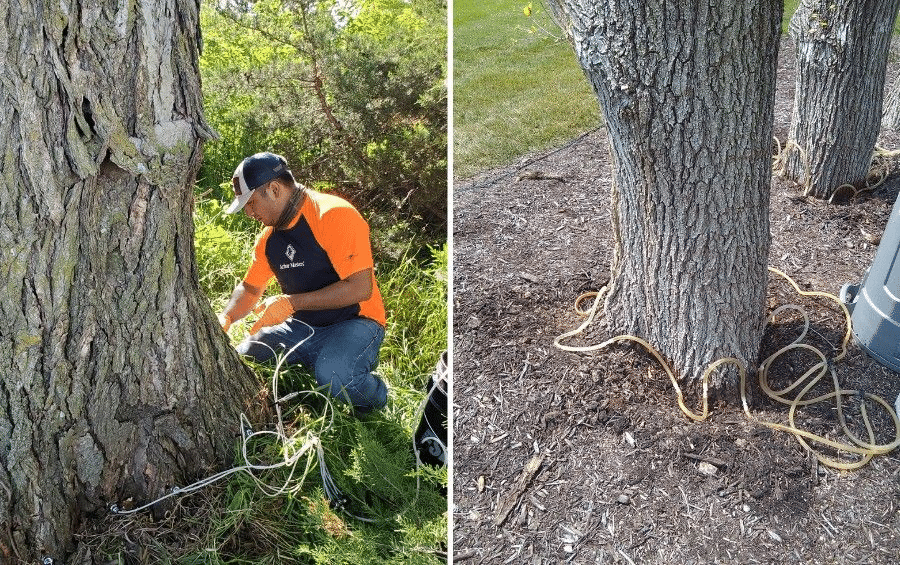
Caught early, a technician can inject a systemic fungicide at the base of the trunk, a treatment that works best as prevention or in the disease’s earliest stage.
Can an Elm With Dutch Elm Disease Be Saved?
Sometimes, but only when it’s caught quite early. Even then, there aren’t any guarantees.
What Can Work If It’s Caught Early
There are two things that can help when the disease is discovered in its earliest stage:
- Fungicide Injection: A trained arborist injects a systemic fungicide, usually propiconazole or thiabendazole, into the base of the tree. This works best as prevention or in the very early stages, when less than about 10 percent of the crown is affected, and it has to be repeated on a schedule. You can see when fungicide injection can still protect an elm and where its limits are.
- Sanitation Pruning: Removing the infected limb well below the lowest visible symptom can sometimes stop a single-branch infection before it reaches the trunk.
When Removal Is the Answer
Removal is often the safest option when Dutch elm disease has spread beyond the point where treatment is likely to succeed or when the tree poses a risk to nearby elms.
Removal is typically recommended when:
- More than about 10% of the canopy has declined.
- The disease has spread into the main trunk.
- The tree is structurally unsafe because of extensive dieback.
- Nearby healthy elms could become infected through root grafts or elm bark beetles.
- An ISA Certified Arborist determines the tree is no longer a good candidate for treatment.
Once Dutch elm disease has progressed too far, removal becomes part of managing the disease. Prompt removal helps limit opportunities for the fungus to spread and gives nearby elms a better chance of staying healthy.
Can You Protect a Healthy Elm Before It Gets Infected?
The best way to protect a healthy elm is to reduce its exposure to the fungus and the beetles that spread it. A few preventative steps can significantly lower the risk of infection.
Time Pruning and Preventive Treatments Carefully
Timing is everything when it comes to protecting a healthy elm:
- Don’t prune elms during the growing season, when beetles are active and fresh cuts draw them in.
- Do schedule preventive pruning or fungicide injection for the dormant season, before beetles take flight in spring.
- Winter cuts heal before spring beetle flight, so you aren’t leaving an opening for the fungus.
Eliminate Beetle Breeding Sites
Elm wood with the bark on is where beetles breed, so how you handle cut wood matters:
- Don’t store it, stack it as firewood, or move it to another property.
- Do have it chipped, debarked, burned, or buried promptly.
If you want to keep your mature elm for decades, regular monitoring and a plant health care plan can keep that valued tree ahead of the problem. In Muscatine and nearby towns, like West Liberty and Wilton, our Muscatine tree care team can create that plan specifically for the elms on your property.
Frequently Asked Questions About Dutch Elm Disease
Are there Dutch elm disease-resistant elm varieties for the Quad Cities?
Yes. Asiatic and hybrid elm cultivars are far less susceptible than the classic American elm (Ulmus americana). If you’re replacing a lost tree, ask a Certified Arborist which resistant varieties suit your site and soil.
Can Dutch elm disease infect other kinds of trees in my yard?
No. The disease is specific to elms, so your oaks, maples, and other species aren’t at risk from this particular fungus. They have their own concerns worth watching, but this isn’t one of them.
How often do preventive fungicide injections need to be repeated?
Typically every one to three years, depending on the product and the tree. It’s an ongoing commitment rather than a one-time fix, which is part of the cost and care decision to weigh with an arborist.
How long does an elm take to die once Dutch elm disease sets in?
It varies. Some infections take a year or two, but the fast ones move within a single season—which is why a flagging branch is worth diagnosing right away rather than watching it.
Can a young or newly planted elm get Dutch elm disease?
Yes. The disease still infects and kills young and newly planted elms across the region, which is why choosing resistant varieties and giving them good placement matters from the start.
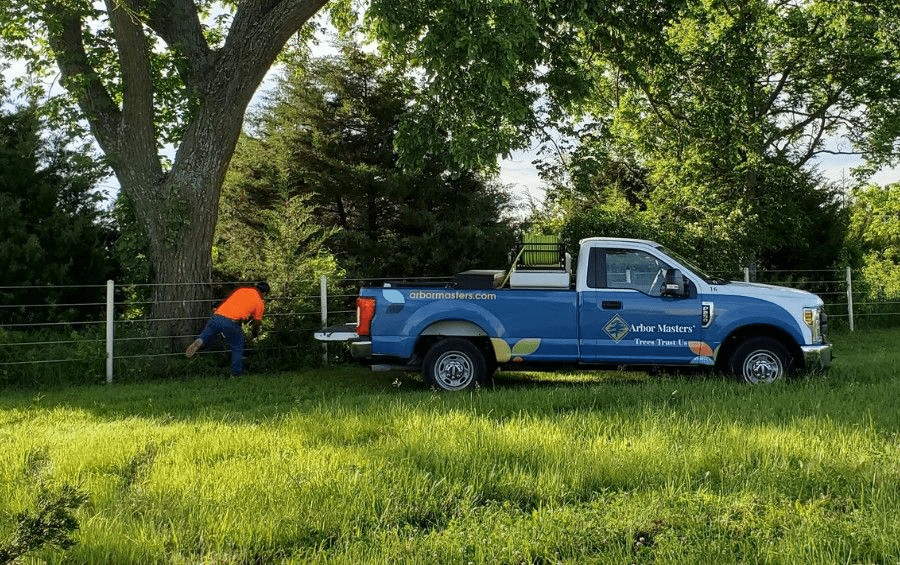
For an elm you want to keep for decades, a plant health care plan from Arbor Masters of Davenport keeps a valued tree monitored and ahead of problems like Dutch elm disease.
Call Arbor Masters of Davenport to Catch Dutch Elm Disease Early
If a branch on your elm is wilting and yellowing, the insect and disease control team at Arbor Masters of Davenport can confirm what’s going on and clarify your options. Call 563-219-7188 today or request a quote online to get an ISA Certified Arborist out to your property.
Want More Like This?
Get the latest local news, tree care tips, special offers, and company updates directly to your inbox! It's easy to subscribe and there's no spam - we promise.
"*" indicates required fields