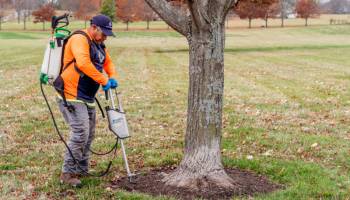
Why Are Japanese Beetles Eating My Tree Leaves in Cedar Rapids?
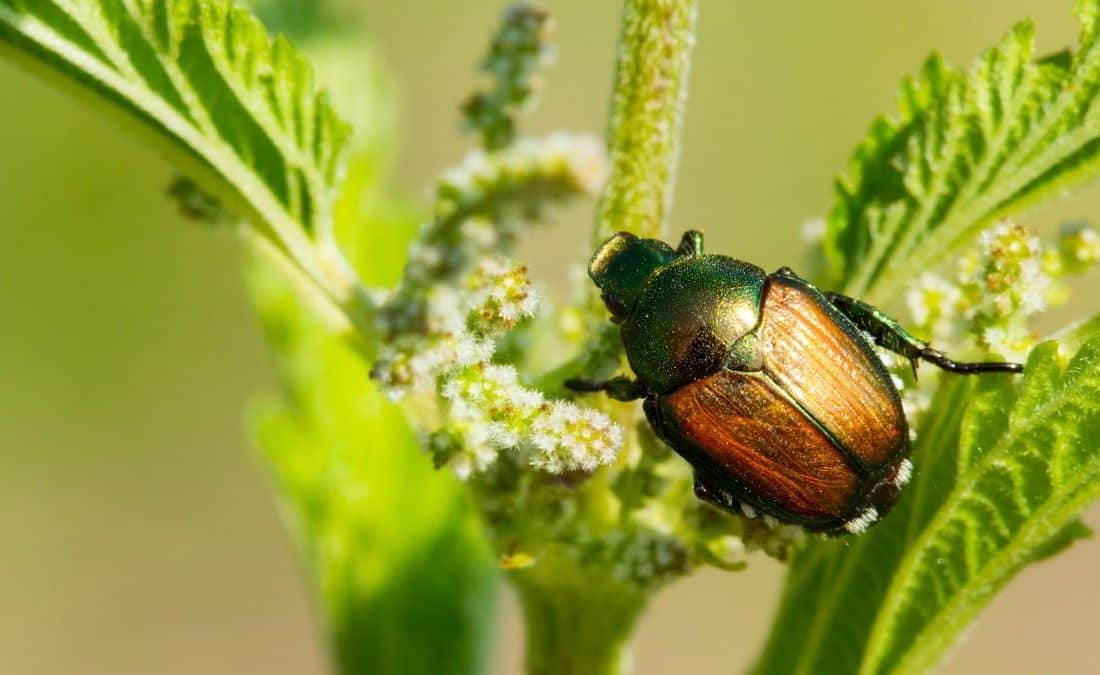
Japanese beetles peak in July across Eastern Iowa. A Cedar Rapids Certified Arborist explains the damage, the treat-vs-tolerate call, and your real options.
Earlier this month, Japanese beetles reached peak activity across Cedar Rapids and the Iowa City corridor—swarming the canopies of many backyard shade trees. If you have Japanese beetles eating your tree leaves, you’re probably looking at fresh damage.
On a tree you’ve watched grow for years, seeing foliage chewed down to a lace-like skeleton and clusters of shiny, green insects working the top of the canopy can be alarming and make you wonder whether it means trouble or not. For an established shade tree, the question is about whether the tree even needs treatment and what actually works in late summer. Our Cedar Rapids arborists handle calls like this throughout July.
Key Takeaways
- Skeletonized leaves plus clusters of shiny, metallic-green beetles at the top of the canopy point to Japanese beetles.
- A healthy, established shade tree usually recovers from a season of feeding—the trees worth protecting are young, newly established, or already stressed.
- Treatment only works while beetles are active, and the once-a-year systemic window in April and May has already closed by July.
- What still helps in July is a professional assessment and, where warranted, a foliar spray plan now with systemic protection scheduled for next spring.
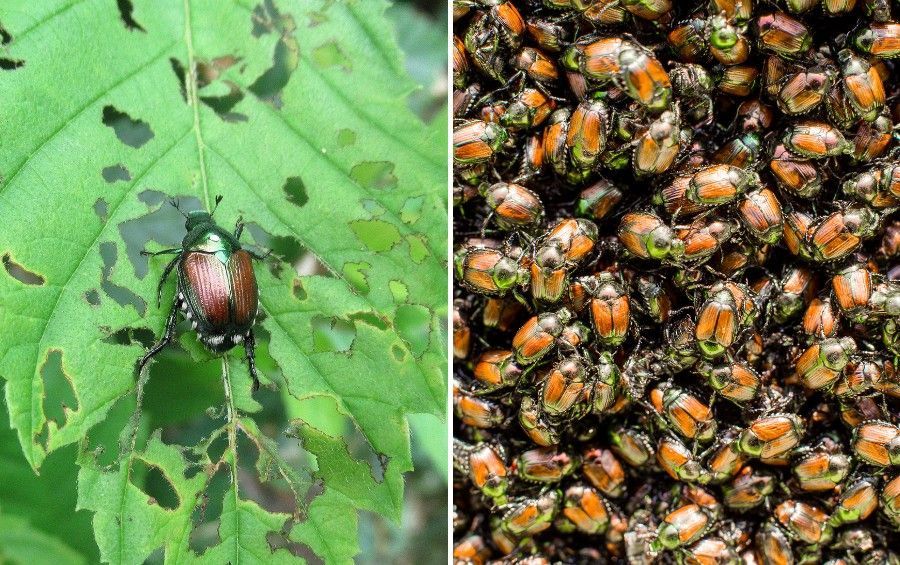
Classic Japanese beetle damage: leaf tissue eaten away between the veins, leaving a brown, lace-like skeleton.
Are Japanese Beetles Hurting My Tree?
In most cases, no—not permanently. On an established, healthy shade tree, a single season of Japanese beetle feeding usually looks worse than it is. While the canopy may appear thin or scorched by late summer, mature trees typically produce a healthy flush of new leaves the following spring.
The trees that deserve closer attention are young or newly established trees, along with trees already weakened by drought, disease, root damage, or other stress. Heavy defoliation can further reduce their energy reserves, making recovery more difficult.
That’s why the decision to treat isn’t based on how ugly the damage looks—it’s based on the tree itself. Before assuming a heavily chewed tree is beyond saving, have an ISA Certified Arborist evaluate its overall health and determine whether treatment is worthwhile.
What Does Japanese Beetle Damage Look Like on a Tree?
Japanese beetle damage shows up as leaves eaten down to a network of lace-like veins, usually worst at the top of the tree where the sun hits. Once you recognize the pattern, it’s hard to mistake it for anything else.
How to Confirm It’s Japanese Beetles
The beetles chew the soft green tissue between the veins and leave them behind, which is why damage is left as brown lace instead of tiny holes. There are a few signs that separate them from other pests:
- Adults skeletonize the leaf, eating the tissue between the veins; a heavily fed canopy can look scorched or brown across the top.
- They feed from the top down, in full sun, and gather in clusters—half-inch beetles with metallic-green bodies and coppery-brown wing covers.
- Damage tends to snowball, because feeding beetles release cues that draw even more beetles in.
Which Trees Are Most Susceptible to Japanese Beetle Damage?
While Japanese beetles feed on hundreds of plant species, they consistently target a handful of landscape trees found throughout Cedar Rapids.
- Linden and Basswood : Their favorite host and often the first trees to be heavily defoliated.
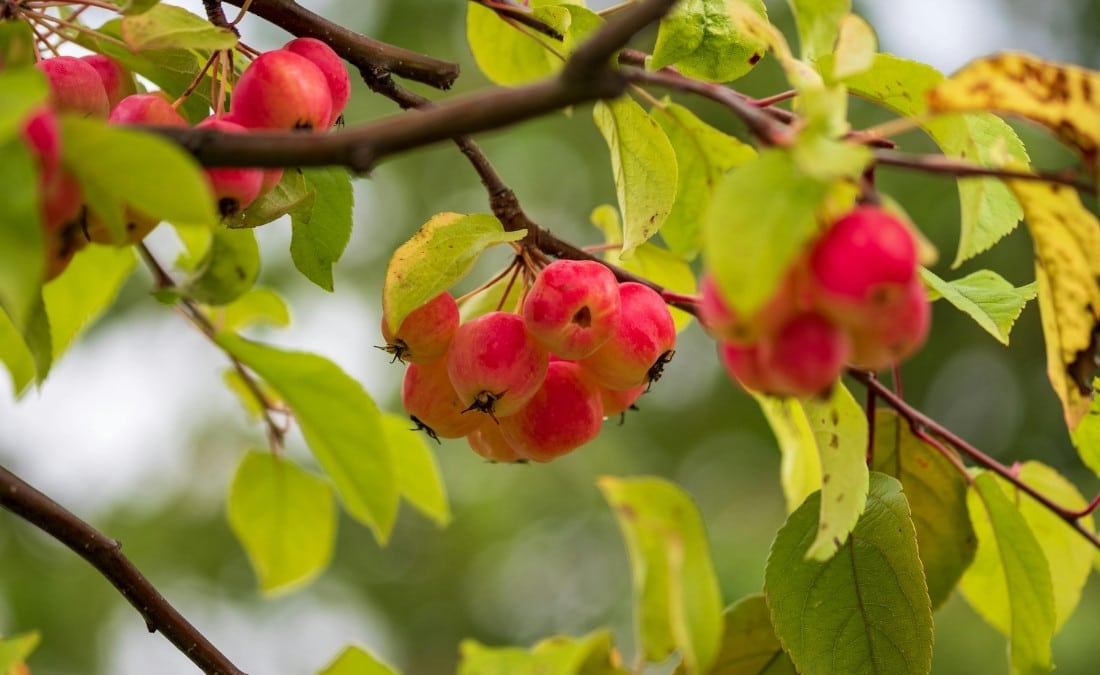
- Crabapple : Frequently skeletonized during peak beetle season.
- Cherry : Attractive to adult beetles throughout the summer.
- Birch : Can experience significant leaf loss during heavy infestations.
- Elm : Commonly fed on, especially in sunny locations.
- Pin Oak : More susceptible than many other oak species.
Damage can still vary dramatically from one neighborhood to the next. It’s common for one street in Cedar Rapids, Marion, or Iowa City to see heavy beetle activity while nearby trees remain relatively untouched.
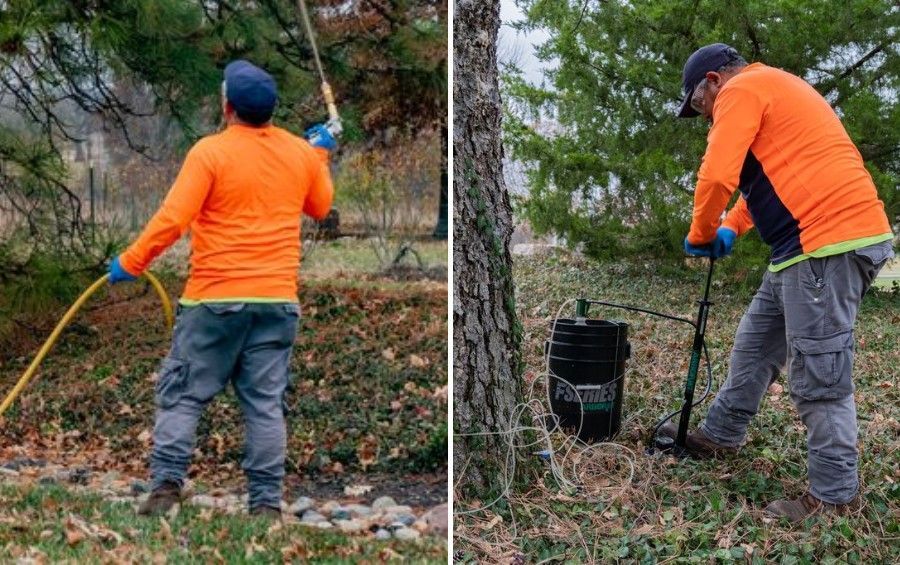
A certified plant health care technician matches the treatment method and timing to the tree’s species and condition.
How Does a Certified Arborist Treat Japanese Beetles?
An ISA Certified Arborist matches the treatment to the specific tree. In season, it usually comes down to two routes:
- Foliar Spray (Contact) Applications: Knock down the beetles present at the time but have a short residual, so they need repeating through the flight period—the realistic in-season tool
- Systemic (Root or Trunk) Treatments : Protect the whole canopy for the season but must go on in spring, making them next year’s plan rather than this week’s fix
An arborist will also steer you away from pheromone traps—which pull more beetles onto your property than they remove—and systemic imidacloprid on lindens and basswoods, where it’s a label violation.
When Should My Trees Be Treated for Japanese Beetles?
Treatment is only effective when the beetles are actively feeding, which is why your options in summer are different from what could’ve been done in spring. A few timing-related things drive every decision:
- You can’t protect leaves the beetles have already eaten, so timing shapes which treatments are even worth considering.
- In Eastern Iowa, adult Japanese beetles emerge in mid-June, peak throughout July, and remain active into early fall, making midsummer the height of feeding activity rather than the beginning of it.
- The most durable option, a systemic treatment the tree takes up through its roots, has to go on in April or May, so the tree can move it into the leaves before beetles arrive; by July that once-a-year window has closed.
- That doesn’t mean nothing can be done now—the right move is an assessment and, where warranted, a foliar spray approach, with systemic protection planned for next spring.
Frequently Asked Questions About Japanese Beetles
Where are Japanese beetles coming from?
The grubs develop down in lawn and turf, feeding on grass roots before emerging as adults in summer. Because those adults are strong fliers that move in from a wide area, treating the grubs in your own lawn won’t stop new beetles from flying in and feeding on your trees.
Can I knock the beetles off my tree myself?
On small trees and shrubs, yes—shaking them into a bucket of soapy water early in the morning, while they’re still sluggish, thins the population without chemicals. It’s impractical on a tall shade-tree canopy, which is where a foliar spray plan or a professional assessment makes more sense.
Do Japanese beetle traps work?
Not in your favor. The pheromone lure pulls in more beetles than the trap catches, so it tends to increase feeding on nearby plants. If you already own one, place it far from any tree or shrub you care about—or skip it entirely.
Will Japanese beetles be back next year?
Yes, they produce one generation a year and return each summer. Local numbers often climb for a few years after beetles first appear in a neighborhood, then settle into milder swings, which is why a street swarmed last July can be noticeably lighter this year.
Are Japanese beetles dangerous to people or pets?
No. Adult Japanese beetles don’t bite or sting and aren’t toxic to handle—the damage is entirely to plants. That’s why hand-removal is a safe option if you’d rather not spray.
Should I treat my tree if my neighbor’s tree is covered?
Not automatically. Feeding is patchy and driven by tree species and the beetles’ own aggregation cues, so base the decision on your tree’s species, age, and health rather than what’s happening next door.
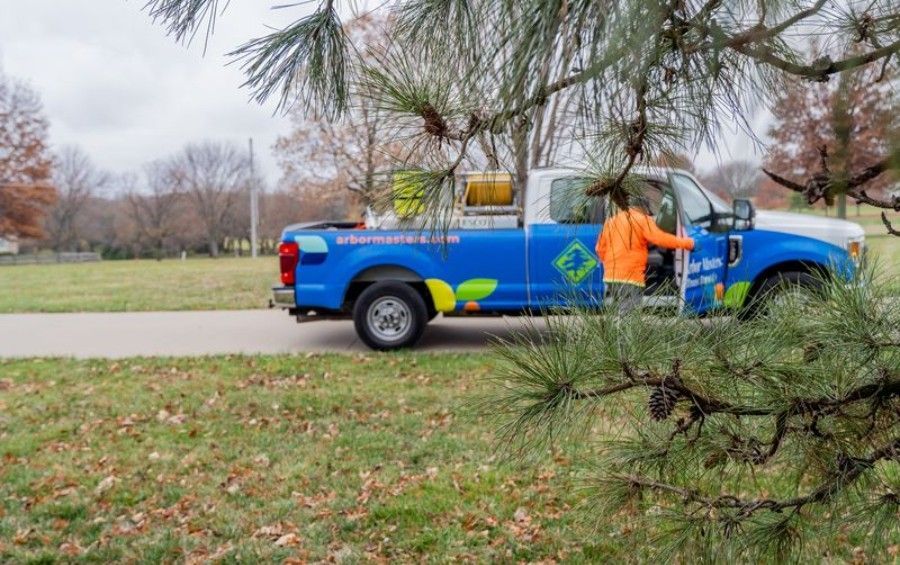
Arbor Masters serves Cedar Rapids and the Iowa City–Coralville corridor with professional plant health care.
Protect Your Trees From Japanese Beetles with Arbor Masters of Cedar Rapids
If your tree is skeletonized or has clustered metallic beetles, it should be assessed now. Then, if warranted, a foliar spray plan comes next with systemic protection scheduled for next spring. You shouldn’t wait it out, have our Cedar Rapids team take a look before you make a decision. Call 319-209-6558 or request a quote today to get started.
Want More Like This?
Get the latest local news, tree care tips, special offers, and company updates directly to your inbox! It's easy to subscribe and there's no spam - we promise.
"*" indicates required fields