
Why Are My Pin Oak Leaves Turning Yellow in Des Moines?
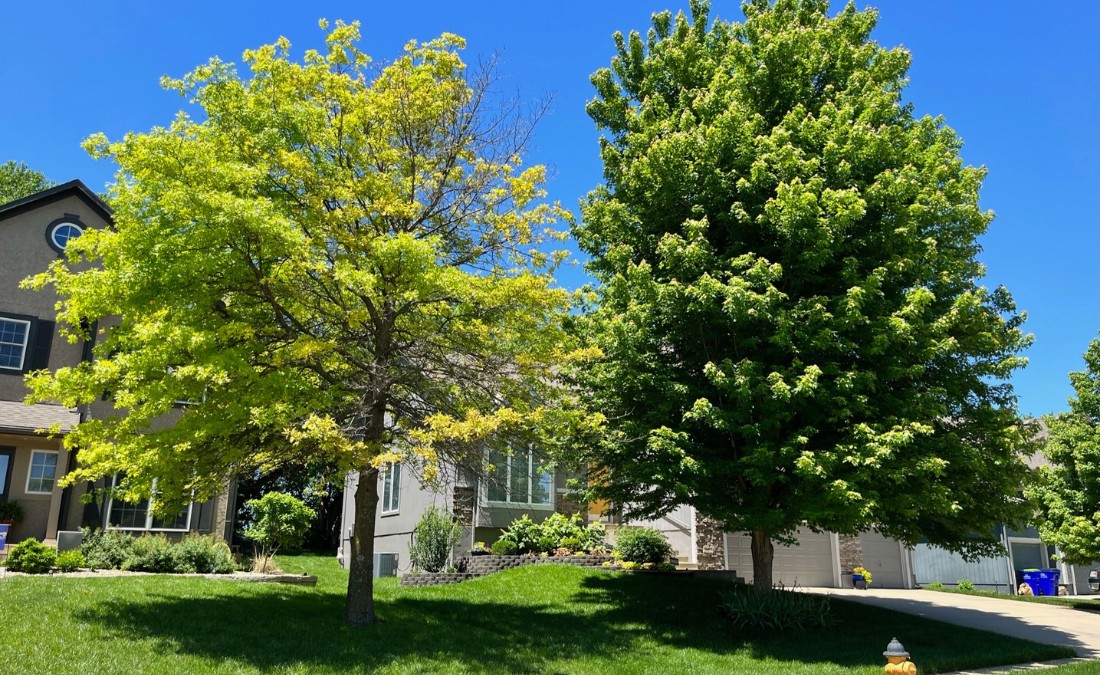
Learn how to identify a pin oak, recognize the signs of iron chlorosis, and explore treatment options for trees growing in Des Moines-area alkaline soils.
Yellow leaves on a pin oak can be more than a cosmetic issue. What begins as mild discoloration can eventually lead to canopy thinning, branch dieback, and overall decline when the underlying cause isn’t addressed.
For pin oaks growing in Central Iowa, yellow leaves frequently trace back to iron chlorosis. The condition is particularly common in areas with alkaline soils, where pin oaks can have difficulty accessing the nutrients they need to maintain healthy green foliage. While the underlying soil conditions don’t go away, several treatment options can improve a tree’s health and reduce symptoms.
Key Takeaways
- Pin oaks are identifiable by their tiered branching, drooping lower limbs, and deeply cut, U-shaped leaf lobes.
- They were planted heavily across western Polk County for their fast growth and stately appearance, long before the soil mismatch was understood.
- Yellow leaves with green veins signal iron chlorosis—not a lack of iron in the soil, but high pH locking it away.
- In many western Des Moines suburbs, construction and grading left pin oaks growing in alkaline clay soils, which can increase the risk of iron chlorosis.
- Treatments can manage the symptom, but a soil test and professional diagnosis must come first.
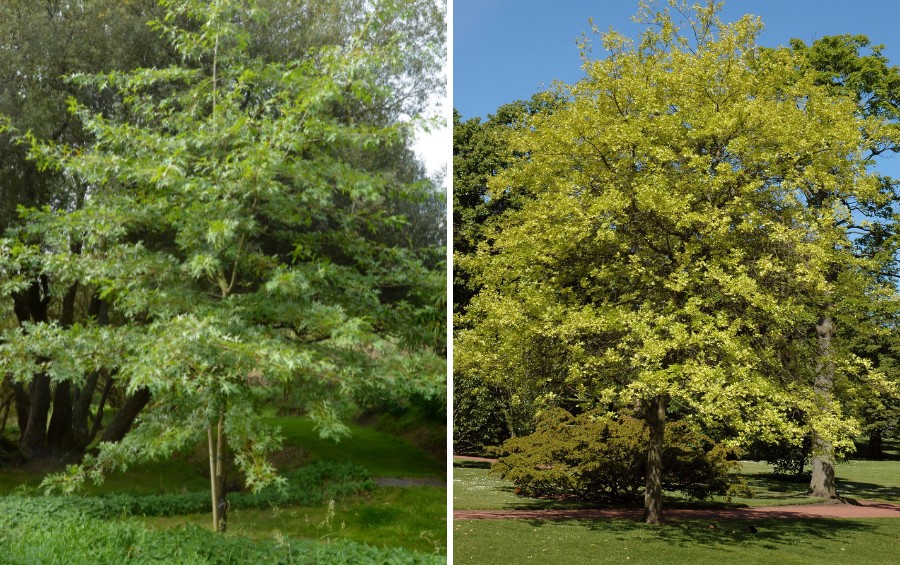
A pin oak’s shape changes with age—narrow and pyramidal when young (left), broadening into a rounded crown at maturity (right).
How Do You Identify a Pin Oak?
A pin oak is most commonly identified by its layered silhouette and the deeply cut, sharply pointed leaves that differentiate it from other red oaks.
Multiple features confirm a pin oak, even at a distance:
- Tiered Branching: Upper branches grow upward, middle branches extend horizontally, and lower branches droop toward the ground, creating the tree’s distinctive layered silhouette.
- Deeply Lobed Leaves: Leaves have sharply pointed lobes separated by deep, U-shaped sinuses that are more pronounced than those of red oak or Shumard oak.
- Distinctive Growth Habit: Young trees have a pyramidal shape that gradually broadens with age, typically reaching 60–80 feet tall at maturity.
- Persistent Lower Branches: Pin oaks tend to retain dead lower limbs longer than many other oak species, giving mature trees a fuller appearance.
How Can You Tell a Pin Oak from a Red Oak or Shumard Oak?
The easiest way to identify a pin oak is by looking at its leaves and branching pattern.
- Leaf Shape: Pin oak leaves have deep, U-shaped sinuses that cut more than halfway toward the center of the leaf. Red oak and Shumard oak leaves have shallower, less pronounced gaps between their lobes.
- Branch Structure: Pin oaks have a distinctive layered appearance, with upper branches growing upward, middle branches extending outward, and lower branches drooping toward the ground. Red oaks tend to have a more uniform branching pattern, while Shumard oaks develop a broader, more open canopy.
- Bark: Mature pin oaks typically retain relatively smooth gray-brown bark. Red oaks develop deeper ridges and a rougher appearance as they age.
- Acorns: Pin oak acorns are generally smaller and more rounded than those produced by red oak or Shumard oak.
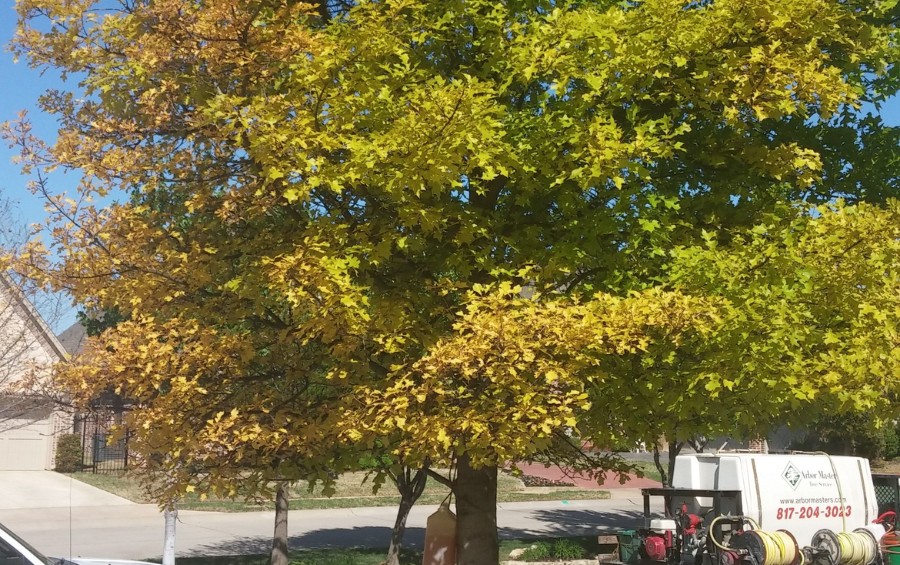
Iron chlorosis at an advanced stage: interveinal yellowing has spread across the canopy, with only scattered leaves still holding green.
Why Are My Pin Oak Leaves Turning Yellow?
Iron chlorosis is the most common cause of yellow leaves on pin oaks in Central Iowa. While the symptoms may look alarming, the problem is often tied to soil conditions rather than a disease or pest infestation.
What Causes Iron Chlorosis?
Iron chlorosis occurs when soil conditions prevent a tree from accessing the iron it needs to produce healthy green leaves. The problem isn’t usually a lack of iron in the soil. Instead, high soil pH makes that iron unavailable to the roots, even when it is present.
This is a common challenge for pin oaks in Central Iowa. Pin oaks prefer slightly acidic soils, but much of the Des Moines area has naturally alkaline soil conditions that make iron uptake more difficult. Because the species was widely planted throughout neighborhoods like Clive, Windsor Heights, and West Des Moines, iron chlorosis has become a frequent issue for many mature trees in the area.
Signs of Iron Chlorosis in Pin Oaks
Chlorosis typically appears in a fairly predictable order, gradually getting worse over a few seasons if the soil issue is left unaddressed:
- Early Stage: Leaves begin turning yellow while the veins remain green, a classic sign of iron chlorosis.
- Moderate Stage: The yellowing becomes more pronounced, with some leaves turning pale yellow or nearly white.
- Advanced Stage: Brown spots develop, leaf edges begin to scorch, and foliage quality declines.
- Long-Term Decline: Reduced growth, thinning canopies, twig dieback, and dead branches become more noticeable over several years.
Symptoms are often most severe in areas where construction disturbed or removed topsoil, exposing alkaline clay soils beneath.
How to Tell Iron Chlorosis from Other Common Problems
Several issues can cause leaves to change color, but iron chlorosis has a few characteristics that help distinguish it from other problems.
- Iron Chlorosis: Leaves turn yellow while the veins remain noticeably green, especially on newer growth.
- Drought or Root Stress: Leaves typically brown more uniformly, often starting at the edges or across the entire leaf rather than between the veins.
- Seasonal Leaf Drop: Yellowing that is limited to older leaves on the lower interior branches is often part of the tree’s normal seasonal shedding process.
When symptoms are severe, unusual, or difficult to identify, a soil test can help determine whether alkaline soil conditions are contributing to the problem.
How Do You Treat Iron Chlorosis in a Pin Oak?
Several treatment options can improve the appearance and health of a chlorotic pin oak, but they work in different ways and produce different results. The best approach depends on the severity of the symptoms, the condition of the tree, and how long you’re hoping the results will last.
- Foliar Spray (Iron Sulfate or Chelated Iron): Provides the fastest cosmetic improvement by temporarily greening the leaves. However, it only affects the foliage it directly contacts and does not address the underlying soil conditions.
- Soil Treatments (Elemental Sulfur or Chelated Iron): Improves iron availability in the root zone by lowering soil pH or supplying a form of iron the tree can more easily absorb. Results take longer to appear, and treatments often need to be repeated because soil conditions gradually return to their previous state.
- Trunk Injection: Delivers iron directly into the tree’s vascular system, bypassing the soil entirely. This is typically the fastest and most reliable treatment for moderate to severe chlorosis and may provide results for several years before retreatment is needed.
Frequently Asked Questions About Iron Chlorosis
Can iron chlorosis be cured?
In most established yards, not permanently. Treatments manage and reverse the symptoms, but the underlying alkaline soil tends to stay put, so care tends to be continuous.
How do you treat iron chlorosis in trees?
Iron chlorosis can be treated through foliar sprays, soil applications, or trunk injections. Each method is different in how fast they work and how long they last—a soil test helps guide the choice.
What soil pH does a pin oak need?
Around 7.0 to 7.3. Chlorosis often develops over 7.5, which is common in western Polk County soils.
How long do iron chlorosis treatments last?
Treatment longevity depends on the method used. Foliar sprays typically improve leaf color for a single growing season, while soil treatments may provide longer-lasting results but often require periodic reapplication. Trunk injections generally last the longest, with many trees maintaining improved leaf color and vigor for two to three years before retreatment is needed.
Should I plant a pin oak in Iowa?
Pin oaks can grow successfully in Iowa, but they often struggle in the alkaline soils common throughout much of Central Iowa. Before planting, it’s worth considering whether the site is a good match for the species or whether a more soil-tolerant oak would be a better long-term choice. An arborist can help evaluate soil conditions and recommend species that are more likely to thrive.
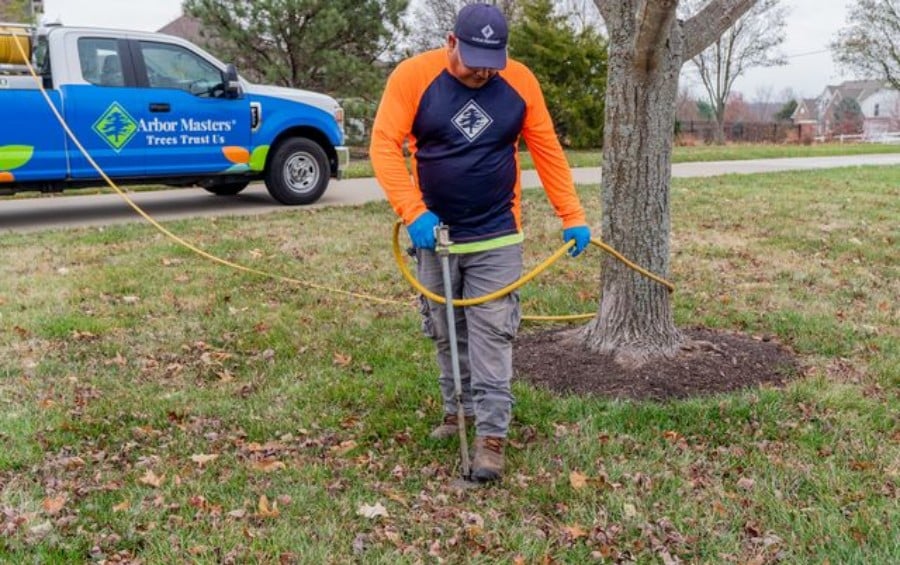
An Arbor Masters technician injects treatment into the root zone—one of the soil-based approaches used to manage iron chlorosis.
Get Expert Help Diagnosing Yellow Leaves on Your Pin Oak from Arbor Masters
Iron chlorosis is a common problem in Des Moines-area pin oaks, but treatment isn’t one-size-fits-all. The severity of the symptoms, the condition of the tree, and the surrounding soil all play a role in determining the best approach.
Arbor Masters’ Des Moines arborists can assess your tree, confirm the cause of the yellowing, and recommend treatment options that fit your situation. Early intervention often provides the best results and can help slow long-term decline.
Call us today at 515-218-2025 or request a quote online to get started!
Want More Like This?
Get the latest local news, tree care tips, special offers, and company updates directly to your inbox! It's easy to subscribe and there's no spam - we promise.
"*" indicates required fields
