
Should You Remove a Tree Near Your Dock?
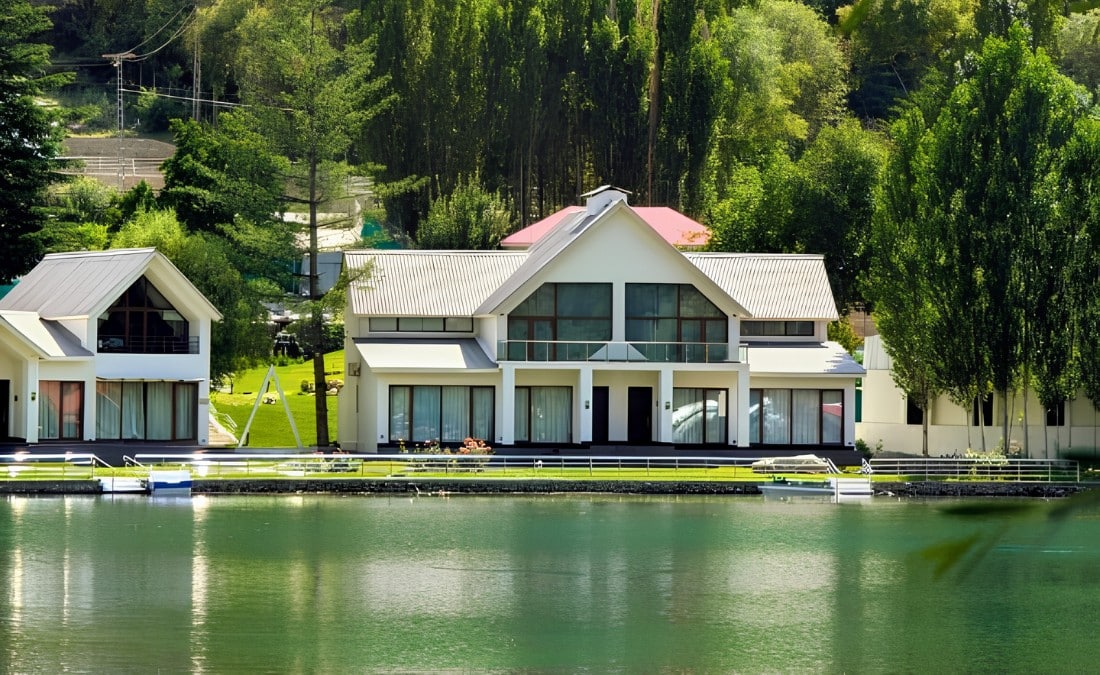
Worried about a tree near your dock, deck, or seawall? See what a Certified Arborist evaluates—and the preservation options before removal is ever considered.
All along Lake Lotawana and Lake Winnebago, long-standing sycamores and oaks are typically close enough to the dock, boathouse, or deck that one failed limb or a shifting root plate could have a costly landing. When a mature tree near the shoreline starts leaning toward the water, or its roots are exposed where the bank has eroded, the question is usually the same: Should you remove a tree near your dock?
Rarely is removal the first move, and it can sometimes even be the wrong one. Pulling a tree off an eroding shoreline can worsen the very bank its roots were holding together. The right call is completely dependent on what an ISA Certified Arborist finds in several parts of the tree.
Key Takeaways
- A tree does not have to look unhealthy to warrant assessment—a dock, deck, or boathouse beneath it changes the risk equation entirely.
- Waterfront trees fail differently than inland yard trees, with saturated soil, shifting banks, and seasonal ice all playing a role.
- A Certified Arborist evaluates the roots, trunk, canopy, and the target beneath the tree before recommending the most appropriate next steps.
- Removal is the last resort; targeted pruning, cabling, and bracing preserve many lakeside trees.
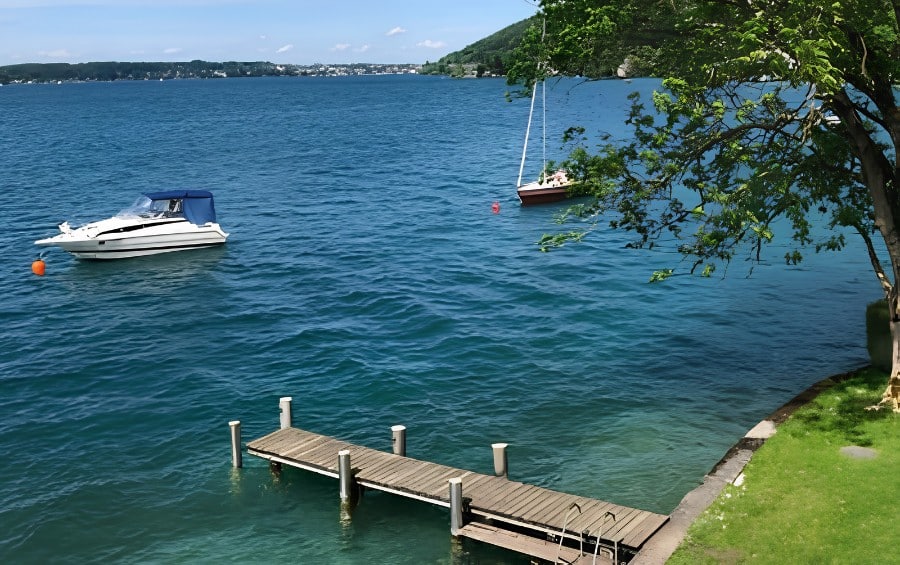
Trees overhanging docks, decks, and moored boats raise the stakes — even a sound-looking limb becomes a serious concern when the target below is high-value.
Is a Tree Near Your Dock or Deck a Safety Risk?
Yes, but your concern should be less about how the tree looks and more about what’s beneath it. A structurally sound tree over open lawn is generally low risk. That same tree over a dock, deck, or other valuable shoreline structure is a different story because the consequences of failure are much greater.
When arborists evaluate tree risk, they consider three factors:
- Likelihood of Failure: How likely the tree—or part of it—is to fail.
- Likelihood of Impact: Whether it would strike a person, structure, or other target if it did.
- Consequences of Failure: The damage or injury that would result.
A dock, deck, seawall, or other lakeside amenities are high-value targets that raise the consequences of failure regardless of how healthy the canopy looks. That’s why mature trees over shoreline structures need a closer look even when nothing seems wrong.
Why Are Waterfront Trees More Likely to Fail?
Waterfront trees face environmental conditions that can gradually weaken their root systems and structural stability. Common shoreline stressors include:
- Saturated soils that reduce root stability
- Erosion that exposes or undermines roots
- Strong winds across open water
- Ice movement and fluctuating water levels
These conditions don’t automatically make a tree hazardous, but they can increase the likelihood of failure over time. That’s why regular inspections are especially important for trees growing near docks, decks, and other shoreline structures.
What Are the Warning Signs of a Failing Tree Near Lakeside Structures?
Certain shoreline-specific signs warrant a call even when the tree looks fine. Waterfront conditions create warning signals an inland tree hardly ever shows, and most are visible from the dock or bank if you know where to look.
A Change in Lean or Trunk Angle
A new or increasing lean toward the water or structure is one of the clearest signals worth attention. Trunks that curve or angle near the base tend to reflect soil creep along the bank where saturated ground slowly shifts downslope and carries the root plate with it.
Soil Heaving, Cracks, or Movement Near Retaining Walls and Seawalls
Mounded or lifting soil at the base of the tree can point to the root plate starting to move. The same can be said about fresh cracks in a retaining wall or seawall, or hardware and footings that have become unaligned near the tree.
Exposed or Undercut Roots at the Waterline
Roots laid bare by erosion or wave action showcase anchorage that becomes compromised in real time. When the soil that once held the major roots has washed away, the tree depends on less than what it’s used to.
Deadwood or Large Limbs Over the Dock
Dead, broken, or hanging limbs are a concern separate from the tree’s overall health when they’re above the:
- Dock
- Mooring
- Gathering area
A lone failed limb over a fixed structure is enough to cause serious damage.
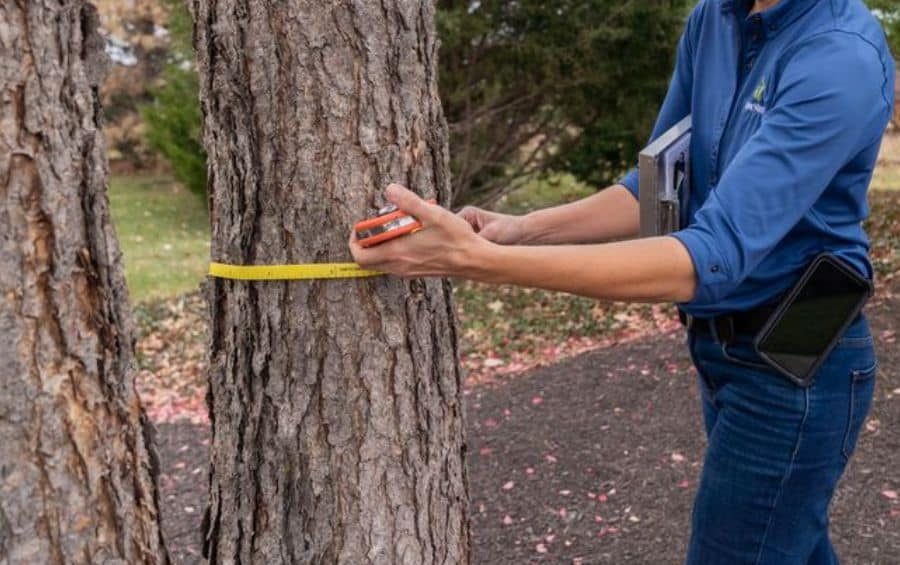
An Arbor Masters Certified Arborist works methodically through the tree—here recording trunk diameter, one of the structural details weighed in a risk assessment.
What Does a Certified Arborist Check on a Waterfront Tree?
A Certified Arborist works systematically through the entire site to confirm what the above signs hint at and catch what they can’t, which are defects hidden inside the trunk, roots, and unions. It’s a zone-by-zone inspection that folds in lakeside-specific factors.
Roots and Shoreline Soil
On a waterfront tree, the roots and the ground holding them are the first and most important zone. The arborist examines the root collar and anchoring roots for movement or decay and tests how firmly the soil still holds them, since decline on these sites traces to the root zone more frequently than the canopy.
Something unique to the shoreline is that the same roots that stabilize the bank can heave a nearby seawall or footing, so both effects are considered before making a recommendation. A lot of the time, this is where tree preservation begins.
Trunk and Branch Unions
The trunk and points where limbs join are inspected for structural defects that determine how the tree will behave under load. The following all weaken a tree in ways that are difficult to accurately judge from the ground:
- Codominant stems of near-equal diameter
- Branch unions with included bark
- Internal decay
- Cavities
- Vertical cracks
Canopy Over Structures
Everything above the dock or deck is the final zone, and it’s judged against the targets below. An arborist analyzes how securely the limbs over the structure are attached and how much leverage each carries. Then, those findings are turned into a clear risk rating you can act on.
Can a Lakeside Tree Be Saved Instead of Removed?
Oftentimes, yes. There is a preservation sequence an arborist goes through before removal is ever a consideration. The goal is to manage risk while keeping an irreplaceable landscape asset in place, so several options come first.
Reduce the Load with Pruning
Usually, pruning to lower the leverage the canopy exerts on weak points is the first step. Carefully planned pruning, performed to ANSI A300 standards, eases the strain on weak unions and lightens the limbs hanging over the structure without compromising the tree’s form.
Stabilize Weak Unions with Cabling and Bracing
When structure needs reinforcing, cabling and bracing systems limit how far codominant stems and heavy limbs can move. Typically, these support systems are installed alongside pruning rather than instead of it, sharing the load between a lighter canopy and a steadier framework.
Monitor with Removal as the Last Resort
Once structural support is in place, regular inspections help ensure the tree remains stable over time. Many lakeside trees can be safely retained with ongoing monitoring and maintenance. Removal is typically recommended only when pruning, cabling, bracing, or other risk-reduction measures can’t reduce the risk to an acceptable level.
Frequently Asked Questions About Trees Near Docks
How close is too close for a tree near a dock or structure?
There isn’t a single distance that applies to every property, and the right answer depends on:
- The target beneath the tree
- The species and structural condition of the tree
- The soil holding it in place
A modest tree in firm ground may sit comfortably close to a dock, while a large tree on an eroding bank can pose a concern from farther away.
Does removing a shoreline tree increase erosion?
It can. Tree roots bind and hold bank soil in place, so removing a shoreline tree sometimes worsens stability rather than improving it.
How often should waterfront trees be inspected?
Mature trees standing over docks, decks, or seawalls benefit from regular professional inspection on a consistent schedule. They also warrant a fresh look after major storms or periods of high water.
Will cabling and bracing be visible from my dock or entertainment area?
Usually not. Properly placed support hardware is positioned high in the canopy and sized to be unobtrusive.
Does tree species affect the risk of failure near the shoreline?
Yes. Some species are more prone to structural problems or shallow root systems, while others tolerate shoreline conditions better. However, species alone doesn’t determine whether a tree is hazardous. A healthy tree of a more failure-prone species may be safer than a declining tree of a more resilient one.
During a risk assessment, a Certified Arborist considers the tree’s species, condition, rooting habits, wood strength, and surrounding site conditions before making recommendations.
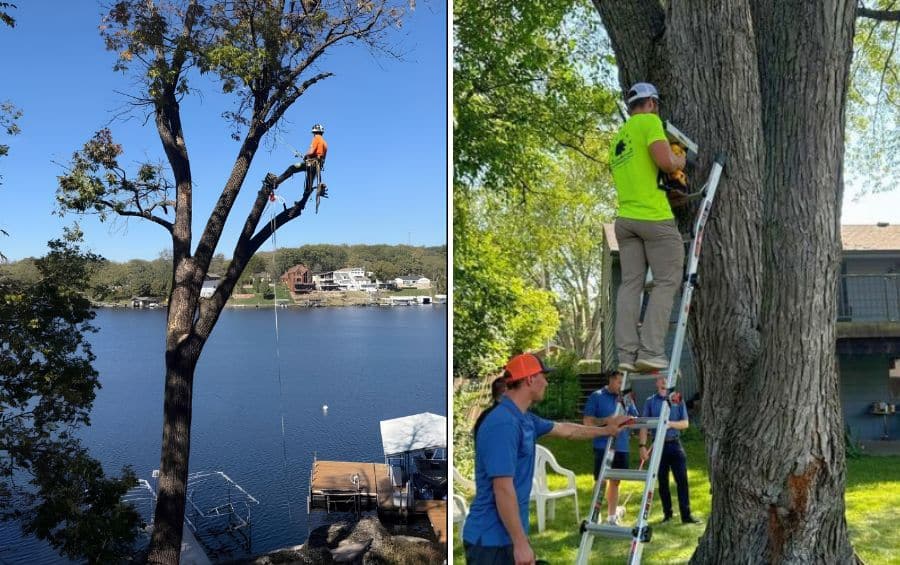
When no combination of preservation measures can make a tree safe over its target, an Arbor Masters crew handles removal over docks and shorelines across Eastern Jackson County.
Protect Your Lakeside Trees and the Structures Beneath Them with Arbor Masters
A tree growing near your dock or deck doesn’t automatically need to be removed. The first step is finding out whether it poses a real risk.
Arbor Masters’ ISA Certified Arborists evaluate the tree, the surrounding site, and any nearby structures to recommend the right solution. That may be monitoring, pruning, cabling, bracing, or, when necessary, removal.
If you’re concerned about a shoreline tree, call 816-524-3131 or schedule an inspection with Arbor Masters of Lee’s Summit before the next storm puts it to the test.

Want More Like This?
Get the latest local news, tree care tips, special offers, and company updates directly to your inbox! It's easy to subscribe and there's no spam - we promise.
"*" indicates required fields
