What Are Those White Webs on Your Tree Branches?
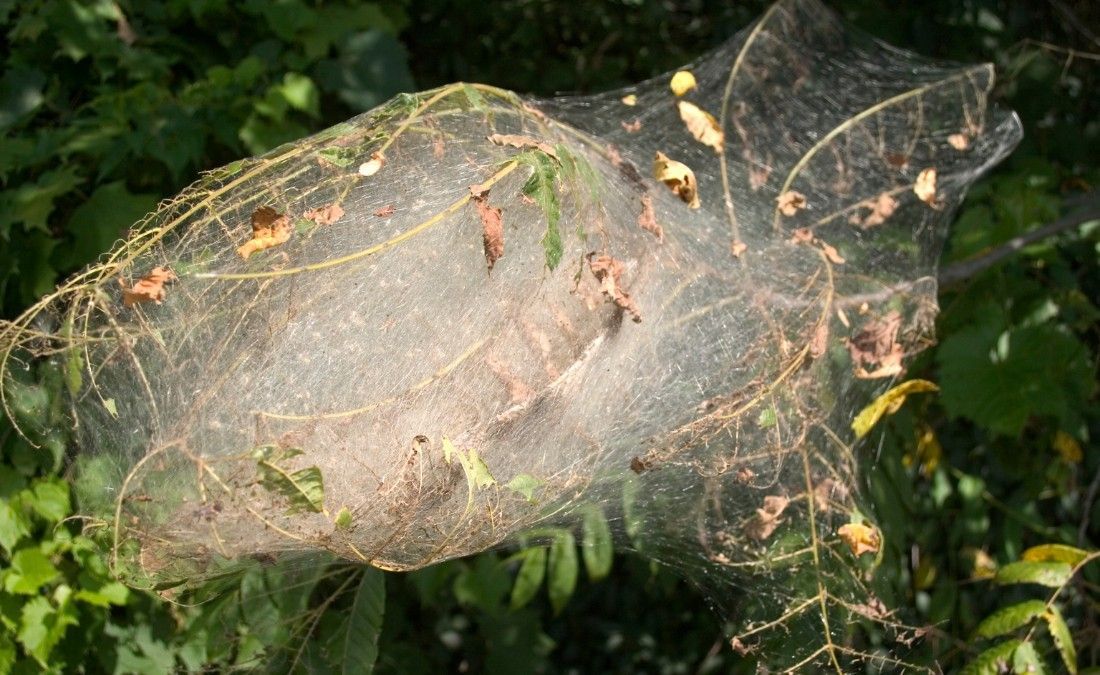
Those white webs on your tree branches look alarming – but almost never are. See what fall webworm actually risks and when to call in a Certified Arborist.
One day your tree looks perfectly healthy. The next, white webs seem to have appeared out of nowhere. It’s easy to assume the worst, especially when the webs keep getting larger by the day. But that silky webbing on your tree branches is evidence of fall webworm, a native caterpillar that spins loose nests around the outer branch tips of hardwoods from midsummer into fall.
The good news is that on a healthy tree, it looks far worse than it is. Once you know what to look for, you can tell the difference between normal fall webworm activity and a problem that deserves a closer look.
Key Takeaways
- Those white webs are usually fall webworms, not spiders or a serious tree disease.
- Healthy, established trees typically recover with little to no lasting damage, even if the webs look dramatic.
- Young, stressed, or repeatedly defoliated trees are the ones most likely to need professional attention.
- Never burn or torch the webs, as the heat can damage your tree far more than the caterpillars will.
What Are Those White Webs on My Tree Branches?
Those webs are the result of the fall webworm (Hyphantria cunea). People often mistake it for the eastern tent caterpillar, but the two build in different places at different times of year, so telling them apart is the first step – particularly before deciding whether a tree needs any attention at all.
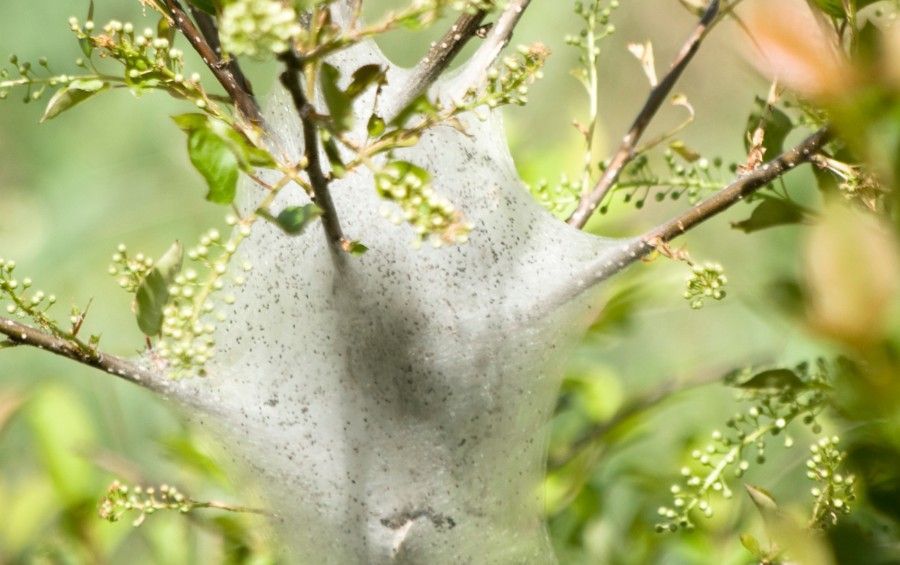
Fall webworm caterpillars feed inside their web, expanding it outward as they go.
How to Tell Fall Webworm From Eastern Tent Caterpillar
You can settle the question with three quick observations:
| Observation | Fall Webworm | Eastern Tent Caterpillar |
| Where is the silk? | Spins its nest over the outer branch tips, enclosing the foliage it feeds on. | Builds a dense tent in the crotches and forks where limbs meet. |
| What month it appears? | Appears from mid-to-late summer into fall. | A spring and early-summer pest, gone by the time webworm shows up. |
| Does the web enclose the leaves being eaten? | Feeds inside its web and expands it outward as it goes, so the leaves are wrapped up with the caterpillars. | Leaves its tent to feed elsewhere on the tree. |
The caterpillars themselves are about an inch long, yellowish-green to dark gray, and thinly covered with long, pale hairs. Their host range is wide, which is why they might turn up on a tree in Blue Springs that has never had them, while a neighbor in Grain Valley or Oak Grove sees them every few years.
Eastern tent caterpillar keeps to a shorter menu – mainly cherry, crabapple, and apple. On a property-defining canopy tree, getting this distinction right up front is what separates watching and waiting from scheduling a Certified Arborist’s visit.
Are Fall Webworms Dangerous to Your Tree?
In most cases, no. Although the webs can make a tree look unhealthy, fall webworms rarely cause lasting damage to mature, established trees. Healthy trees can usually tolerate the late-season feeding and produce a full canopy again the following spring.
Fall webworms become more of a concern when:
- The Tree Is Young or Newly Planted: Younger trees have fewer energy reserves and are more affected by repeated defoliation.
- The Tree Is Already Stressed: Drought, disease, root damage, or other health problems make it harder for a tree to recover.
- Heavy Defoliation Happens Year After Year: Repeated leaf loss can weaken a tree over time and leave it more vulnerable to insects, disease, and environmental stress.
For most established trees, however, a single season of fall webworms is more of a cosmetic problem than a health threat.
Why Don’t Fall Webworms Usually Kill Healthy Trees?
The timing works in the tree’s favor.
- They Feed Late in the Season: By late summer, trees have already produced most of the energy they’ll store for winter.
- They Stay Near the Branch Tips: Unlike some defoliating insects, fall webworms rarely strip an entire mature canopy.
- Healthy Trees Recover Well: New leaves emerge the following spring, replacing those lost during late-summer feeding.
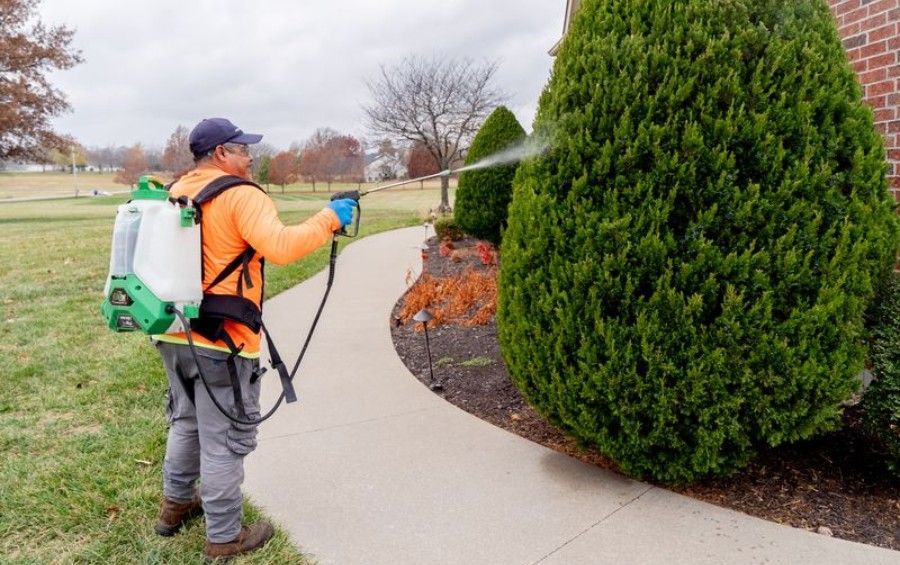
Professional treatment can help control fall webworms before they cause repeated defoliation on vulnerable trees.
How Do You Get Rid of Fall Webworms in Trees?
The most effective treatment is a targeted application of Bacillus thuringiensis (Bt), a naturally occurring soil bacterium that acts as a biological insecticide.
Bt (Bacillus thuringiensis var. kurstaki) works because the caterpillars eat the sprayed foliage, ingest the bacterium, and stop feeding soon after – a selective mechanism that spares the beneficial predators and parasitoids that naturally keep webworm populations in check.
The catch is timing and coverage. Because Bt has to be eaten to work, coverage needs to be thorough and larvae need to be young, which means by the time nests are large and obvious, the caterpillars are often past the stage where spraying Bt does much good.
What Not to Do
Three common reactions cause more damage than the pest:
- Don’t Burn the Webs: Torching webbing scorches living bark, cambium, and buds, doing far more lasting harm to a tree than the caterpillars ever would.
- Don’t Reach for Broadcast Chemical Sprays: They are usually unwarranted and wipe out the natural enemies – tachinid flies, ichneumon wasps, and birds – that bring populations back down on their own.
- Don’t Count on Ground-Level Treatment for a Big Tree: Reaching webbing at the top of a mature canopy is difficult from the ground, which is the honest case for professional insect and disease treatment on a tree of real value.
PRO TIP: For a mature tree carrying heavy webbing, the most useful thing you can do is usually not spraying; it’s keeping the tree well-watered heading into fall. Because stress (not the caterpillars) is what actually endangers a valuable tree, a deep soaking during dry spells protects it more than any nest you remove.
Frequently Asked Questions About Fall Webworm
Are fall webworm caterpillars dangerous to people or pets?
No. Fall webworms do not sting or bite, and their hairs are not venomous, so they pose no threat to people or pets. They are an eyesore to deal with, not a hazard to be near.
Can I prune out the webbed branches myself?
It’s tempting, but improper cuts on a mature tree can do more lasting damage than the webbing itself, and reaching high branch tips safely isn’t a DIY job. If you’re concerned, contact a Certified Arborist and they’ll be able to tell you whether a valuable tree needs attention at all.
What trees are most likely to get fall webworms?
Fall webworm feeds on a wide range of hardwoods – more than 100 species recorded as food plants in Missouri – so almost any yard or estate tree can host it, from hickory and oak to maple, walnut, and cherry.
Will the webbing hurt my property’s curb appeal?
Not for long; most nests clear on their own by the time the tree drops its leaves for winter, so it’s rarely worth reshaping landscaping plans around. On an estate property where appearance matters year-round, a Certified Arborist can advise whether removing a few visible nests is worth it, even though the tree itself isn’t at risk.
Why did so many trees in my neighborhood get webworms this year?
Fall webworm populations run in cycles, so a heavy year across a neighborhood is usually followed by lighter ones as predators and parasitic insects catch up.
What’s the difference between a webworm and a bagworm?
Fall webworm spins loose, communal silk webs over the leaves at branch tips on hardwoods, while bagworms are individual caterpillars that each build and carry a small spindle-shaped bag, usually on evergreens like juniper and arborvitae. Different pest, different host, and different treatment.
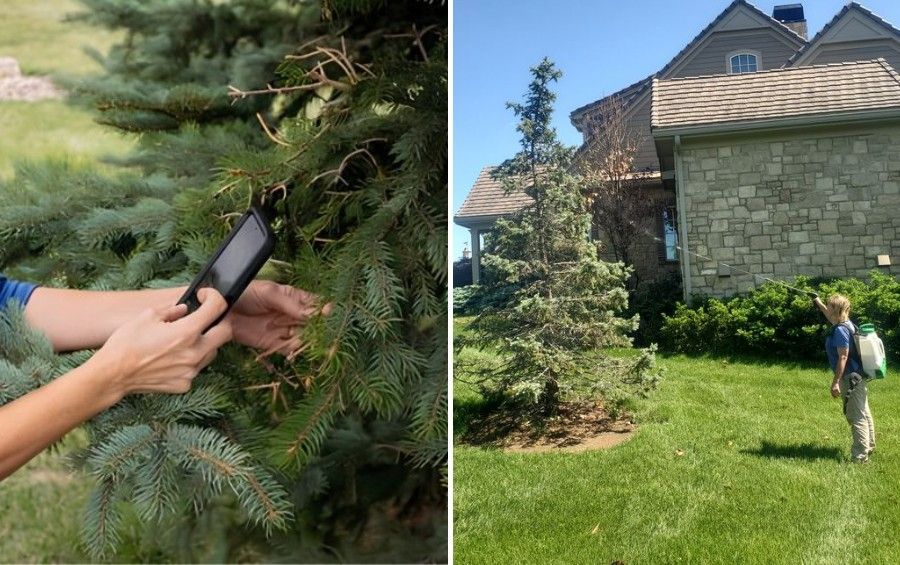
Protecting the Trees That Matter Most on Your Property
That first glimpse of silk strung across your branch tips rarely turns out as bad as it looks. On a healthy tree, fall webworm is a passing eyesore, not a threat, and patience is the right response.
That’s not always the case for others; trees that are young, very old, have been hit hard more than once, or already under stress warrant a second opinion. Using tree risk assessment methodology as a lens, the Certified Arborists at Arbor Masters of Lee’s Summit can tell you whether the webbing on your tree is truly harmless or a factor worth managing.
If your estate property has a tree carrying more than its share of webbing, professional insect and disease treatment and a consultation are the surest way to protect it. Give us a call at 816-533-3559 to learn more.

Want More Like This?
Get the latest local news, tree care tips, special offers, and company updates directly to your inbox! It's easy to subscribe and there's no spam - we promise.
"*" indicates required fields