
Why Heritage Trees Decline on Well-Maintained Cass County Estates
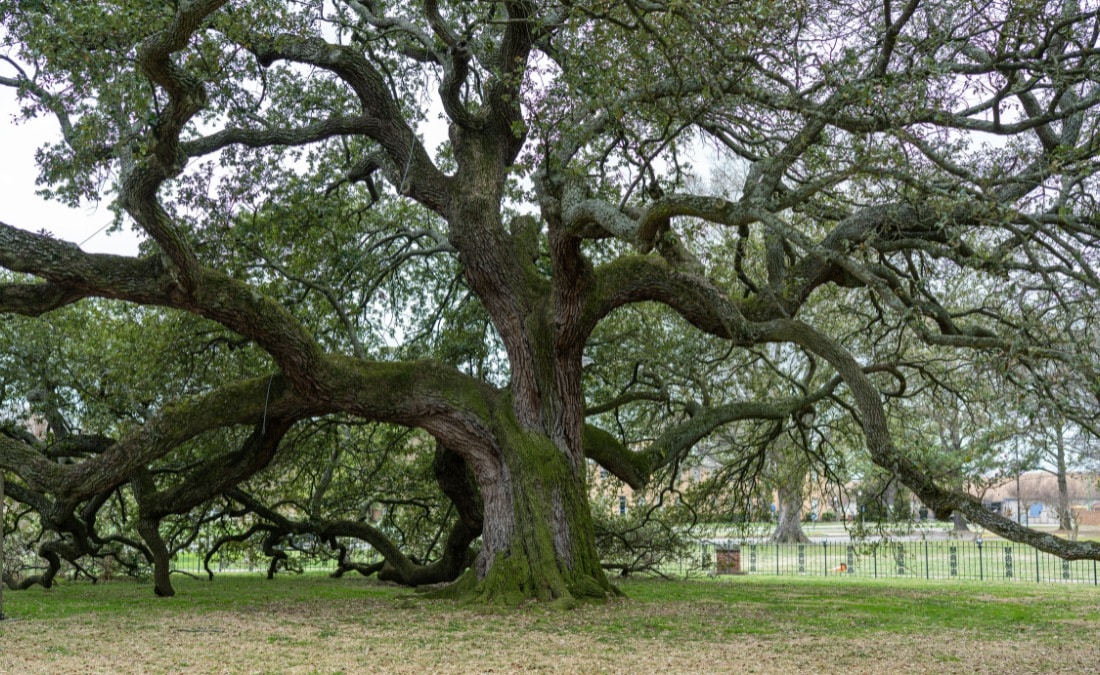
Your heritage trees may be showing subtle signs of stress long before decline becomes obvious. Learn what most homeowners often overlook in Cass County.
Mature trees on well-maintained estate properties don’t usually decline because homeowners ignored them. In many cases, the opposite is true — the irrigation runs properly, fertilization stays on schedule, and the landscape is meticulously maintained, yet canopy thinning and dieback still begin appearing year after year.
Across Cass County estates, one of the most overlooked causes of slow tree decline is soil and root stress that developed gradually over decades of construction, grading, traffic, and landscape changes. By the time symptoms appear in the canopy, the real problem has often been developing underground for years.
Key Takeaways
- Decline symptoms often appear 2-3 years after the actual stress event, so today’s thinning canopy may be reacting to a patio installation, pool build, or heavy crew traffic from years ago.
- Soil compaction suffocates the shallow feeder roots most trees depend on, and neither fertilization nor pest treatments can reverse it.
- Estate properties face compaction sources most property owners overlook — riding mowers, hardscape construction, equipment staging, and event traffic all contribute.
- Root zone remediation through air spading, vertical mulching, and soil amendment is the required intervention, and it takes a Certified Arborist to diagnose and perform it correctly.
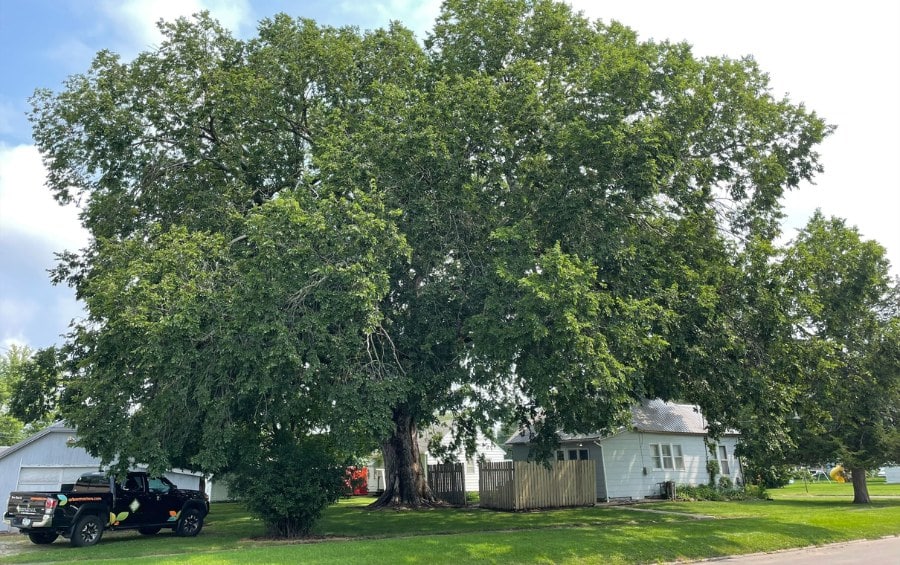
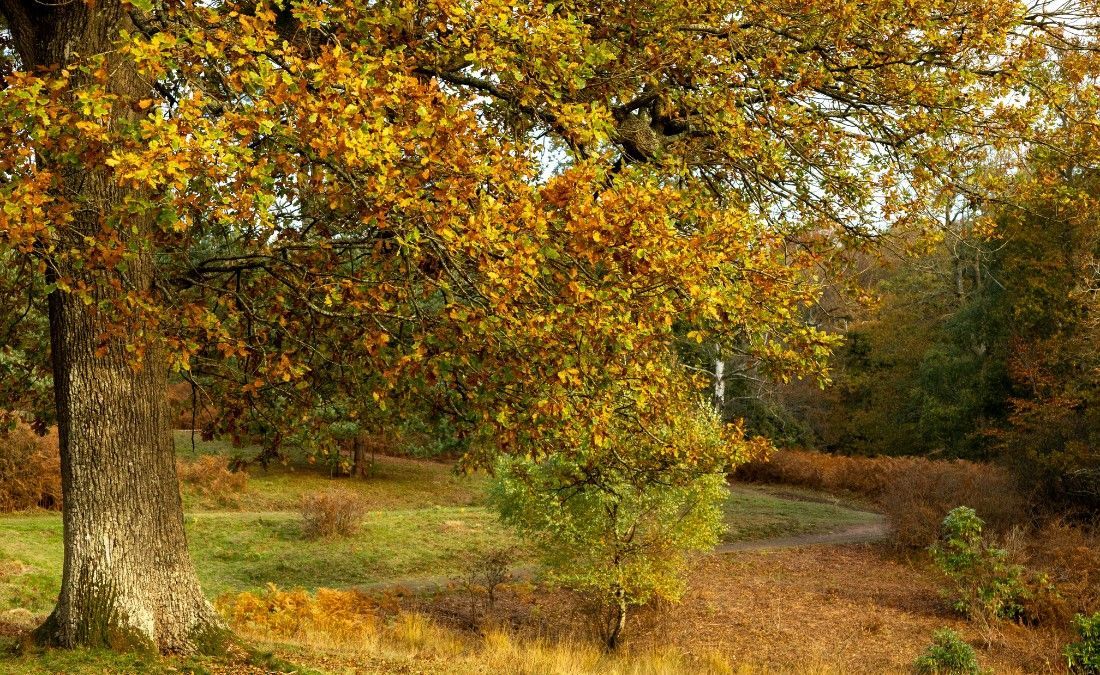
Mature trees like this define a property’s character and value. On Cass County estates, a Certified Arborist evaluation is the starting point for protecting trees that took generations to establish
Why Do Trees Decline Even with Professional Care?
Tree decline on estate properties is often delayed, which makes it easy to miss the connection between the stress event and the symptoms that eventually appear. Nearby construction, grading changes, trenching, repeated equipment traffic, or even years of foot traffic can all affect the root system long before the canopy reacts.
A mature tree may continue looking healthy for several growing seasons before thinning, dieback, or reduced vigor finally become noticeable. Unless someone is paying close attention to gradual canopy changes over time, the early warning signs are easy to overlook — especially when the construction or landscape changes that caused the stress happened years earlier.
Subtle Signs of Tree Decline to Watch For
The most common signs of decline in a mature tree are visible in the canopy and leaves once energy reserves run low:
- Delayed spring leaf emergence compared to neighboring trees
- Premature fall color and early leaf drop
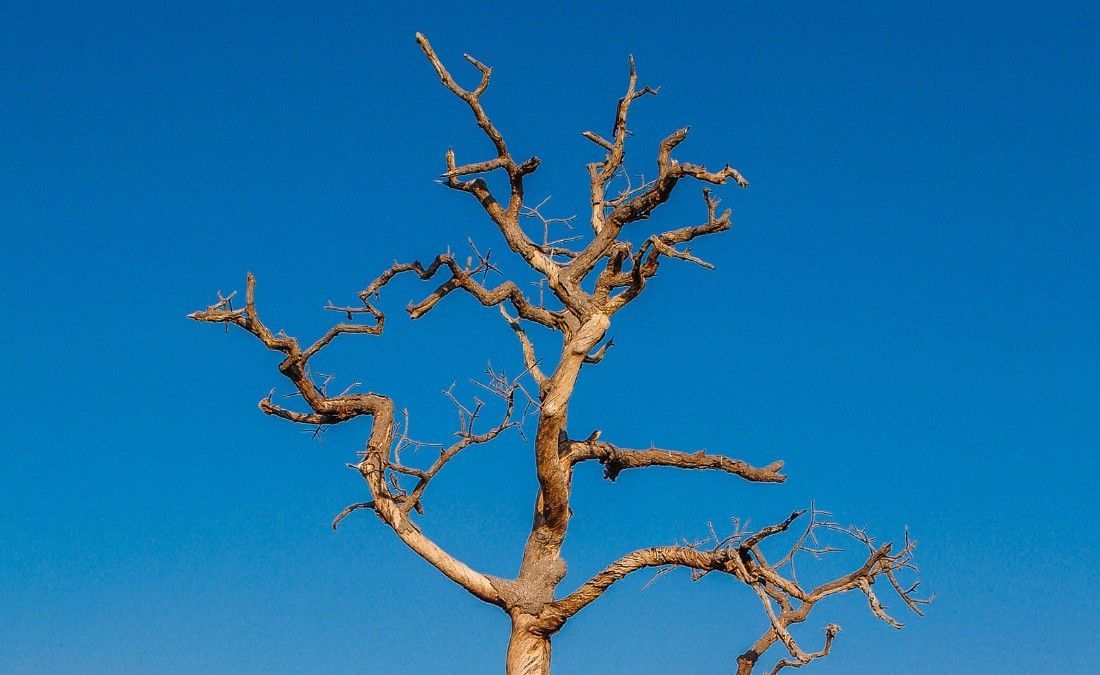
- Thinning in the upper crown, with gaps you can see sky through
- Smaller or paler leaves, sometimes with scorched edges
- Twig dieback progressing from the outside of the canopy inward
One of the Most Common Causes of Unexplained Tree Decline
Of the stressors that push mature trees into decline on well-maintained properties, soil compaction is the one most consistently missed. It doesn’t announce itself the way storm damage, construction injury, or a drought year does — it accumulates quietly underfoot, across seasons of routine maintenance, until the canopy starts telling the story.
On estates where the care program has been consistent for years, compaction is a frequent reason for decline — and fortunately, also one that’s recoverable when caught in time.
How Does Soil Compaction Damage Mature Trees?
Soil compaction damages mature trees by crushing the pore space their roots depend on for oxygen and water exchange. Cass County’s clay soils already struggle with air and water exchange, and compaction accelerates the problem underground while the surface looks unchanged.
Even so, it rarely kills a mature tree directly. Rather, compacted soil weakens the tree’s defenses, opening the door to secondary invaders like:
- Armillaria root rot
- Hypoxylon canker
- Wood-boring insects — pathogens and pests that rarely attack vigorous trees, but finish off stressed ones
What Happens When Soil Becomes Compacted
Each failure triggers the next. On a mature tree whose shallow feeder roots extend 2-3 times the canopy radius beyond the drip line, compacted soil:
- Cuts off oxygen and water at root depth
- Forces surviving roots shallower, amplifying drought stress
- Restricts new root growth the tree needs to compensate
- Leaves the tree running on declining reserves season after season
What Causes Soil Compaction on Estate Properties?
Soil compaction on estate properties comes from a combination of routine maintenance and major projects concentrated within the tree’s root zone. On most Loch Lloyd estates, the recurring sources are:
- Heavy ride-on mowers crossing the same ground week after week
- Hardscape construction within the critical root zone, i.e. patios, pools, pickleball courts, outdoor kitchens, firepit additions, etc.
- Irrigation installation and repair trenching
- Equipment and material staging areas, including leaf piles, mulch piles, and seasonal décor storage
- Event traffic: catering setups, tents, and valet parking on lawns during holiday gatherings
- High-pressure watering on exposed soil, which can gradually reduce the air and water movement roots depend on
The worst part of compaction is the way damage compounds. A single event is harmless, but decades of weekly mowing, a wave of patio and pool projects, and ongoing work create soil conditions mature trees cannot recover from on their own.
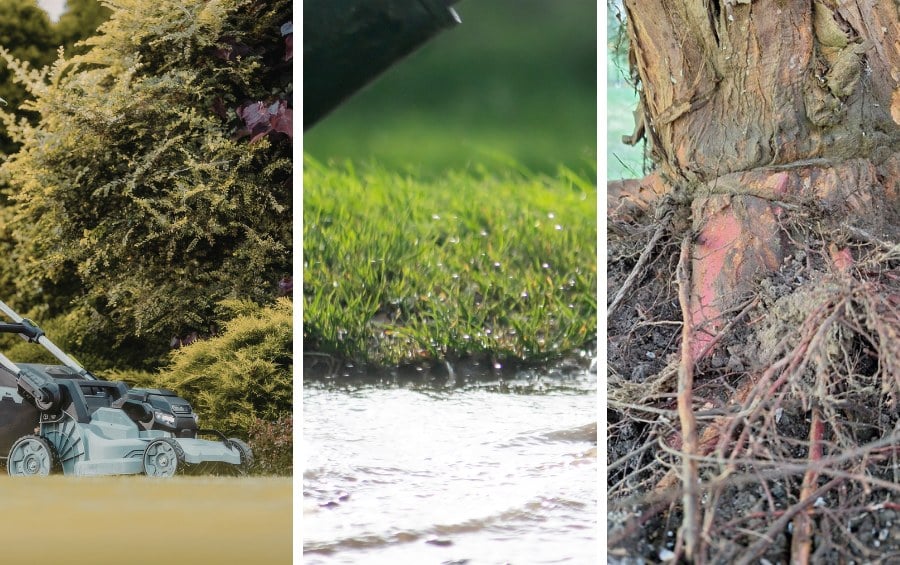
Three of the earliest signs that compaction is damaging your trees: repeated mower passes that compress the soil over time, water pooling instead of soaking in, and roots forced upward to reach oxygen the tree can no longer find at depth.
What Are the Signs of Soil Compaction Around Trees?
While canopy symptoms reveal a tree in decline, ground-level signs reveal the cause. The earliest signs show up in the turf and soil long before the canopy reacts:
- Persistent tracks in the turf where mowers pass repeatedly — healthy turf bounces back between passes; compacted turf doesn’t
- Water pooling or running off rather than soaking in after a good rainfall
- Roots appearing at the surface where there were none before, as the tree pushes shallower in search of oxygen
- Soil that meets resistance underfoot within a few inches of the surface
- Turf struggling directly under the canopy, with thinning grass or bare patches
Any two or three of these signs appearing together on a mature tree warrant a professional diagnosis. Catching compaction early versus after terminal decline is the difference between a tree that recovers and one that doesn’t.
Can Compacted Soil Around Mature Trees Be Fixed?
Yes, when soil compaction is caught early enough, mature trees can often recover with targeted root-zone treatment. The goal is to restore the air, water movement, and soil structure roots need to function normally again.
That’s why declining trees sometimes continue struggling even when the property has a strong care program in place. Fertilization and pruning are valuable tools, but they don’t directly solve underground compaction problems.
How Arborists Treat Compacted Soil Around Mature Trees
Root zone remediation is a two-part procedure that reaches the compacted layer other methods can’t:
- Step 1 — Air Spading: This process involves compressed-air excavation that fractures compacted soil without damaging roots. The technique is used to loosen compacted soil around established trees, and because it also exposes the root flare, the arborist can identify whether girdling roots or root collar issues are compounding the compaction — which, on mature estate trees, they almost always are.
- Step 2 — Structural Amendment: Once the soil has been opened, the arborist rebuilds soil structure over time through three methods:
- Vertical Mulching: Narrow vertical holes filled with compost or biochar to create lasting air and water channels.
- Radial Trenching: Narrow, spoke-like trenches cut from the trunk outward and backfilled with amended soil.
- Organic Soil Amendment: Compost worked into the root zone to restore biological activity.
And because air spading gives the arborist a full view of the root zone, a single diagnostic visit typically reveals several issues that can be addressed in one treatment plan.
Frequently Asked Questions About Heritage Tree Decline in Cass County
How much does air spading cost for a single tree?
The scope of work — and therefore the investment — depends on tree size, root zone area, and whether soil amendment or root collar work is performed in the same visit. A Certified Arborist defines the scope after evaluating the tree on site, because what the remediation requires depends on what’s actually happening underground.
What’s the best time of year for root zone remediation?
Spring and fall are ideal because trees are actively growing roots during those windows. Summer work is possible with attentive watering, and winter is limited by frozen soil. The more important factor is not waiting — mid-stage decline this year may be past recovery by next spring.
Do certain tree species tolerate compaction better than others?
Oaks, hickories, and beeches — the heritage specimens most common on Loch Lloyd estates — are particularly sensitive because of their deep, slow-developing root systems. Honey locust and some elms tolerate disturbance slightly better but still decline under sustained compaction.
How do we keep compaction from coming back after remediation?
Ongoing management matters as much as the initial work. Permanent mulch rings, rerouting mower paths and foot traffic away from critical root zones, and keeping crew staging areas outside tree canopies all extend the value of remediation for years.
Does tree decline affect property value when selling an estate?
Yes, particularly on properties where mature trees define the landscape. Buyers touring Cass County estates factor established canopy into valuation, and declining specimen trees raise questions during inspection. A documented tree inventory with preservation records is a meaningful asset during a sale.
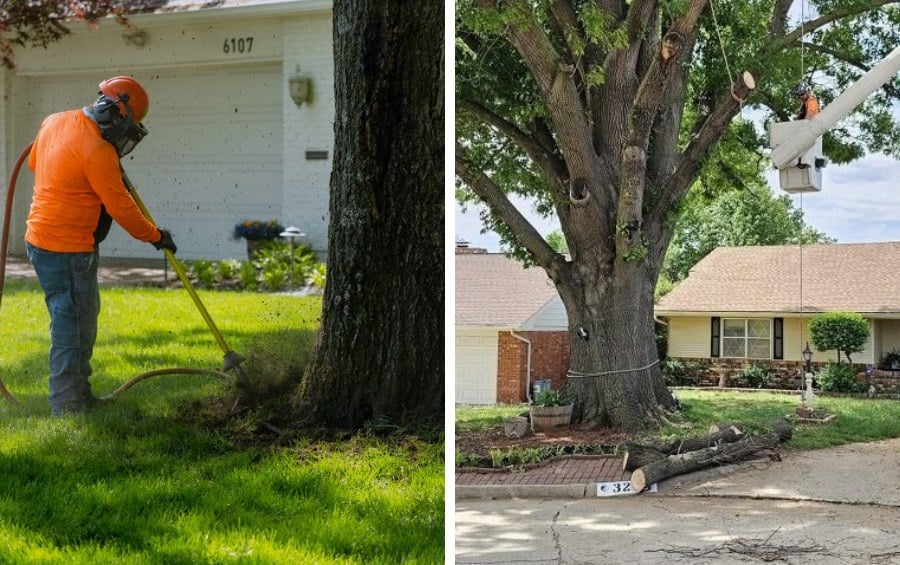
Air spading (left) uses compressed air to fracture compacted soil and expose the root flare without damaging roots — the diagnostic step that surface inspections cannot replicate. Structural canopy work (right) is one of several services that can be coordinated in a single visit once the root zone has been evaluated.
Protect Your Loch Lloyd Estate Trees While Recovery Is Still Possible
Heritage trees on Cass County estates may take decades to establish but seconds to lose. If you’re seeing crown thinning, persistent mower tracks, or exposed surface roots on one of your mature trees, call Arbor Masters at 816-524-3131 or request a consultation to have someone come out to your property to take a look.
Our team is TCIA-accredited, TRAQ-qualified, and has been serving estates throughout Cass County for over six decades. The trees on your property deserve that kind of professional attention.
Want More Like This?
Get the latest local news, tree care tips, special offers, and company updates directly to your inbox! It's easy to subscribe and there's no spam - we promise.
"*" indicates required fields
