
Why Is My Tree Changing Color Before Fall?
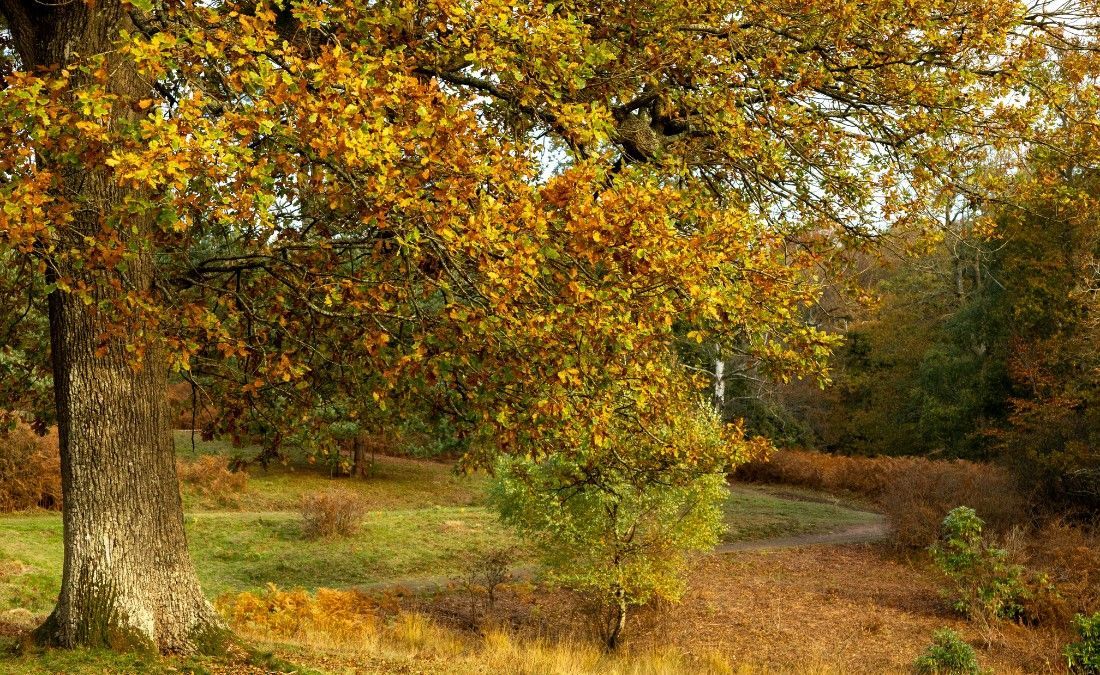
Fall color showing up weeks too early can be a sign your tree is under stress. Learn what causes early color change in Eastern Jackson County and what to do.
When one tree in your yard starts turning red or gold while everything around it is still green, it can look like fall arrived early. In Eastern Jackson County, though, premature color can be one of the first visible signs that a tree has been under stress for weeks or even months.
The color change itself won’t tell you exactly what’s wrong. What matters is when it started, where the color appears in the canopy, and what other symptoms are showing up with it.
Key Takeaways
- Early fall color can be a sign of tree stress, especially when it appears earlier than usual and is accompanied by thinning foliage, dieback, or early leaf drop.
- Drought, root damage, compacted or waterlogged soil, transplant stress, pests, disease, and soil problems can all cause trees to change color prematurely.
- What happened around the tree before the color changed, such as construction, drought, planting, or drainage changes, can help narrow down the cause.
- Early color itself isn’t something you treat; correcting the underlying root, soil, moisture, pest, or disease problem gives the tree the best chance to recover.
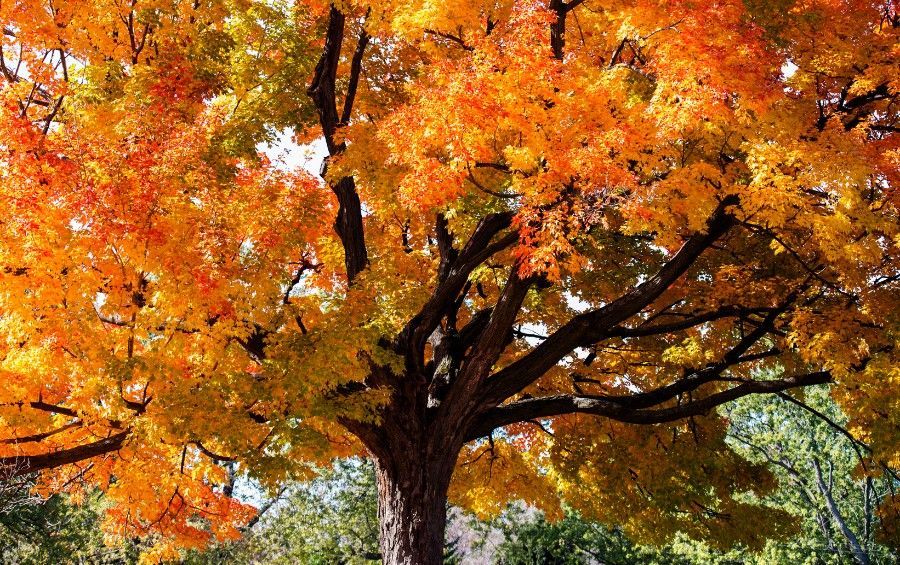
Healthy fall color develops as part of a tree’s normal seasonal cycle, while color that appears unusually early or unevenly across the canopy can be a sign of stress.
Why Is My Tree Changing Color Before Fall?
When a tree changes color weeks before it normally would, it’s often responding to stress that has disrupted its ability to take up or move water and nutrients. The cause may be in the roots, soil, trunk, or canopy, and the problem can begin well before the early color becomes noticeable.
Common causes of premature fall color include:
- Drought and Heat Stress: Hot, dry conditions can leave a tree without enough water to support its canopy, triggering early color and leaf drop. Symptoms may continue even after temperatures cool or rainfall returns because the tree is still recovering from earlier stress. Learn more about heat stress on Midwest trees.
- Root Damage: Construction, trenching, landscaping, or digging near a tree can cut or damage roots. Because canopy symptoms may take time to develop, early color can appear months or even years after the original disturbance.
- Compacted or Waterlogged Soil: Compacted soil limits the air and water available to roots, while poorly drained soil can leave roots without enough oxygen. Both conditions can interfere with normal root function.
- Girdling or Buried Roots: Roots that circle the trunk can restrict the movement of water and nutrients as the tree grows. Planting too deeply or adding soil over the root flare can create similar long-term problems.
- Transplant Stress: Newly planted trees have smaller, less-established root systems and are more vulnerable to moisture problems. Improper planting depth, inadequate watering, poor drainage, and root damage can all contribute to early color or leaf drop.
- Pests and Diseases: Insects and diseases that damage leaves, roots, or the tree’s vascular system can cause premature color, often along with other symptoms such as leaf spots, branch dieback, cankers, holes, or abnormal bark.
- Nutrient or Soil pH Problems: Nutrient deficiencies and unsuitable soil pH can affect leaf color and tree health, but symptoms alone aren’t enough to determine what’s missing. Soil or tissue testing may be needed before fertilization is recommended.
How Can You Tell Early Fall Color from a Sign of Tree Stress
The timing alone isn’t enough to tell you whether a tree is stressed. Different species begin changing color at different times, and weather, sunlight, and growing conditions can shift the timing from year to year. Early color becomes more concerning when it appears much sooner than expected for that tree and comes with other signs of decline.
What Signs Point to Tree Stress?
Look at what’s happening along with the color change:
- Thinning Foliage: The canopy looks noticeably less full than it did earlier in the growing season.
- Smaller Leaves: New leaves are undersized compared with the tree’s typical growth.
- Branch Dieback: Twigs or branch tips are bare or dead while other portions of the canopy remain alive.
- Uneven Color Change: One branch, one side of the tree, or a section of the canopy changes well before the rest.
- Early Leaf Drop: Leaves begin falling shortly after changing color rather than remaining on the tree into the normal fall season.
Brown, crispy leaves with scorched edges are different from an early fall-like color change and can point to other problems. Learn more about what causes leaves to turn brown and crispy in summer.
What Clues Can Help Narrow Down the Cause of Early Fall Color?
The most useful clue may be what happened before the leaves started changing. Tree stress often shows up in the canopy well after the original problem began, so think back over the past several months or even years. Was the tree planted recently? Has there been construction, trenching, a new driveway, grading, or other work near its roots? Did the property go through an extended dry period, or has water started collecting somewhere it didn’t before?
Next, consider whether anything else about the tree has changed. A tree that has always changed color a little earlier than its neighbors is different from one that suddenly does so for the first time. Likewise, a tree that still has a full canopy and normal growth tells a different story than one that has become progressively thinner or developed dead branches over several seasons.
You don’t need to diagnose the tree yourself. The goal is to establish when the change started, what happened around the tree beforehand, and whether its condition has been getting better or worse. Those details help narrow down whether you’re dealing with a temporary stressor or an underlying problem that needs to be corrected.
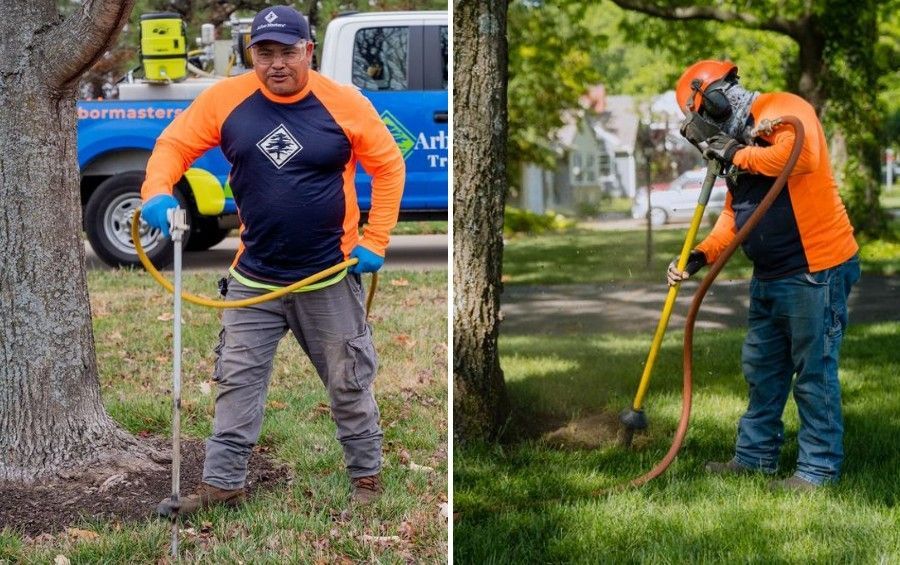
Fall is the season for root-zone work. Air spading relieves compacted soil without cutting roots, while deep-root fertilization follows a soil test to correct nutrient depletion.
What Can You Do This Fall to Help a Stressed Tree?
Early fall color itself isn’t something you treat. What you do next depends on what’s causing the stress, and fall can be a good time to correct some problems while planning ahead for treatments that need to happen in another season.
- Correct Soil and Root Problems: Compacted soil, buried root flares, and girdling roots may require professional root-zone work. Air excavation can expose roots and compacted soil without cutting through them, allowing an arborist to see what’s happening below ground and determine what corrections are appropriate.
- Keep the Root Zone Moist: If soil is dry, water slowly and deeply enough to reach the root zone. Continue checking soil moisture through fall and supplement as needed rather than watering on a fixed schedule.
- Test Before Fertilizing: If a nutrient deficiency or soil pH problem is suspected, testing can determine whether fertilization is appropriate. Fertilizer shouldn’t be used as a general treatment simply because a tree looks stressed.
- Address Dead or Damaged Branches: Dead, broken, or hazardous branches may need to be removed, but avoid unnecessary pruning of healthy foliage while the tree is already under stress.
- Identify and Treat Pests or Disease: If insects or disease are contributing to the early color, treatment should target the specific problem. Some treatments can be performed in fall, while others need to be scheduled for the appropriate point in the pest or disease life cycle.
Don’t expect the leaves that have already changed color to turn green again. The better indication of recovery will come during the next growing season, when you can look for healthy new growth, a fuller canopy, and leaves that remain healthy through their normal growing season.
Frequently Asked Questions About Early Fall Color in Trees
Does early color mean my tree is dying?
Usually not. What matters is whether the tree recovers or continues to decline over time. A tree that changes color early during one stressful season but produces a full, healthy canopy the following year may have experienced temporary stress, while continued thinning, dieback, or early color year after year points to an ongoing problem.
How long does a stressed tree take to recover?
A stressed tree may take two to three growing seasons to fully recover, although the timeline varies with the severity of the stress, tree species and age, and how quickly the underlying problem is corrected. You may see signs of improvement sooner, such as stronger new growth or a fuller canopy the following spring.
Can a stressed tree get worse without treatment?
Yes. If the cause of the stress isn’t corrected, the tree may develop more canopy thinning and dieback and become more vulnerable to borers, cankers, root diseases, and other secondary problems. Prolonged stress can make recovery more difficult and, in severe cases, contribute to structural decline.
When should I call an arborist about early fall color?
Have a Certified Arborist evaluate the tree if early color is accompanied by canopy thinning, branch dieback, trunk or root damage, mushrooms or decay at the base, or a noticeable decline from year to year. You should also schedule an assessment if the tree changes color unusually early for several years in a row or you suspect construction, soil compaction, drainage problems, pests, or disease may be involved. Large trees with signs of structural problems should be evaluated promptly because the concern may extend beyond tree health to the risk of branch or tree failure.
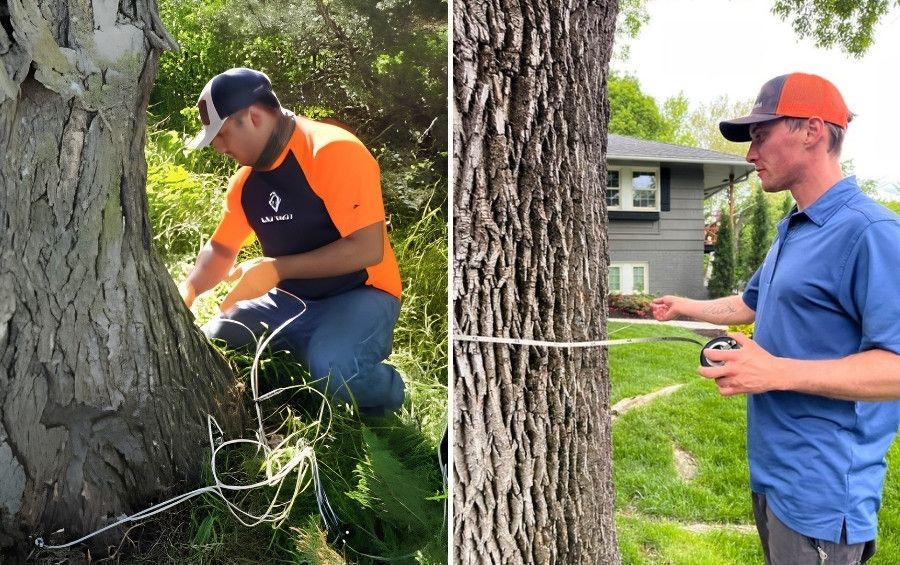
Pinpointing the cause takes a trained eye. Arbor Masters technicians assess the trunk, root flare, and canopy to determine what’s stressing a tree before recommending any treatments.
Find Out Why Your Tree Is Changing Color Early
Early fall color doesn’t automatically mean a tree is dying, but it can be an early warning that something is affecting its health. Finding the cause now gives you a chance to correct problems with roots, soil, moisture, pests, or disease before the tree declines further.
If a valued tree in Greenwood, Pleasant Hill, Lee’s Summit, or the surrounding area is changing color earlier than usual, Arbor Masters can determine what’s causing it and whether it can be corrected. Learn more about our tree preservation services or schedule a consultation to have it assessed this fall.


Want More Like This?
Get the latest local news, tree care tips, special offers, and company updates directly to your inbox! It's easy to subscribe and there's no spam - we promise.
"*" indicates required fields
