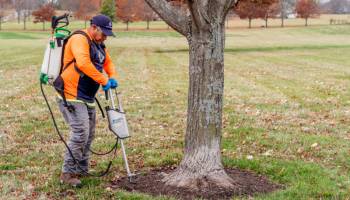
Could Your Tree Fall? Warning Signs to Check Before Winter
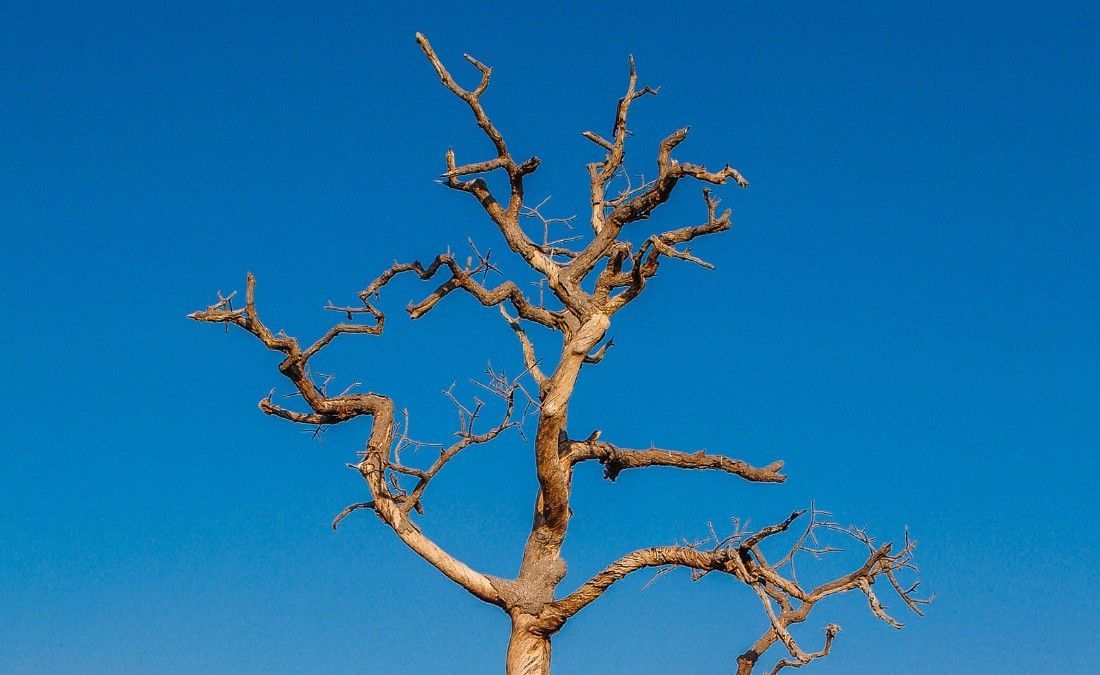
Learn how arborists assess cracks, decay, root damage, leaning, and other defects to determine whether a tree poses a risk to your home or property.
A tree doesn’t have to be dead, severely leaning, or dropping large branches to be at risk of falling. Cracks in the trunk, damaged roots, hidden decay, or changes in the soil around the base can all weaken a tree while the canopy still looks relatively healthy.
As leaves fall across Lee’s Summit and Eastern Jackson County, some of those problems become easier to spot. Knowing what to look for now can help you identify a potentially hazardous tree before winter wind, snow, or ice puts it under additional stress.
Key Takeaways
- Fall is a good time to check trees because bare branches can make cracks, weak branch unions, and other structural problems easier to see.
- Pay the closest attention to large, mature trees that could reach your home, driveway, patio, or other frequently used areas if they failed.
- A new or worsening lean, trunk cracks, weak codominant stems, previous limb loss, and changes around the roots are all reasons to have a tree professionally assessed.
- One warning sign doesn’t necessarily mean a tree will fall or needs to be removed; arborists evaluate the tree as a whole to determine its level of risk.
- Some structurally weak trees can be preserved with pruning, cabling, or bracing rather than removal.
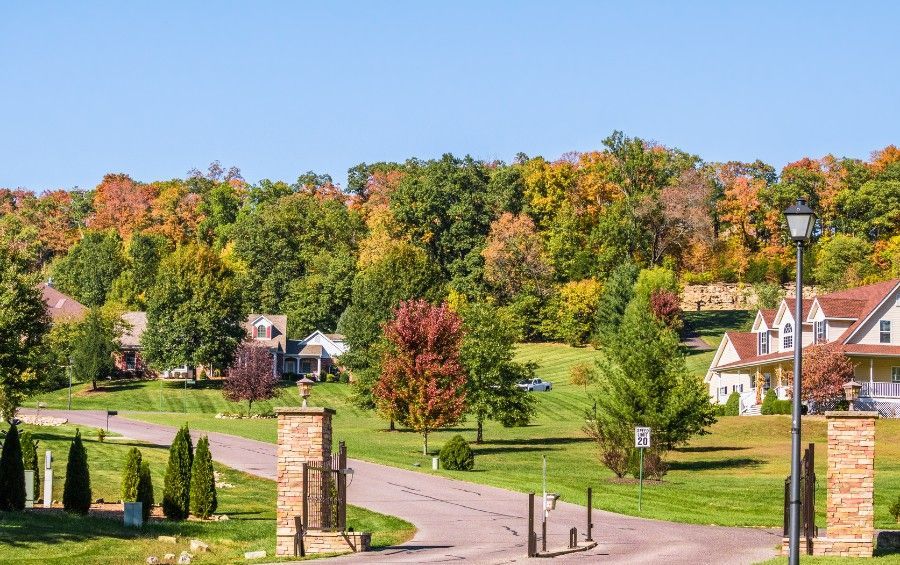
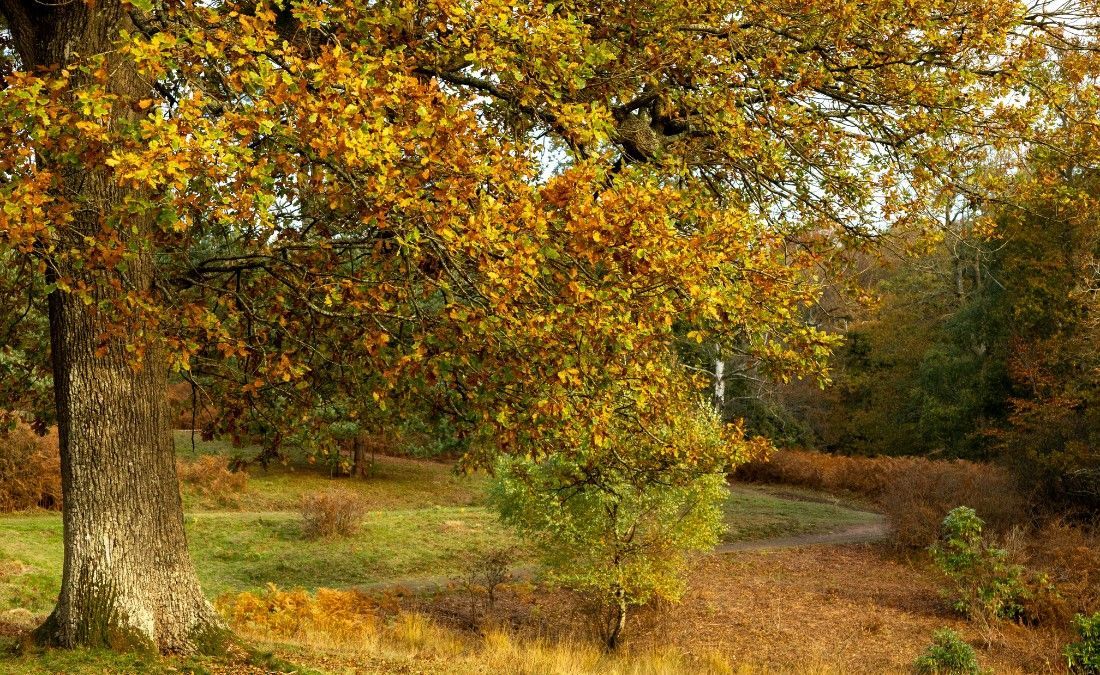
Once these leaves drop, the branch structure beneath becomes fully visible, which is exactly why fall is a great time to check for hidden defects.
Why Fall Is a Great Time to Check for Tree Risk
Fall gives homeowners and arborists a clearer look at a tree’s structure. Once the leaves drop, defects that were obscured by a full summer canopy become easier to see, including codominant stems, included bark, cracks at branch unions, and areas where large limbs have previously failed.
Those defects matter more heading into winter because ice and wet snow add weight to branches, while winter winds put additional force on already-weak unions. A crack or weak attachment that held through summer doesn’t necessarily have the same capacity once that extra load is added.
Which Trees on Your Property Warrant a Closer Look
Tree risk isn’t determined by a defect alone. Arborists also consider the size of the tree and what could be damaged or injured if part or all of it failed. A large tree leaning over an open lawn presents a different level of risk than the same tree positioned over a bedroom, driveway, or frequently used patio.
A few trees deserve closer attention even before an obvious warning sign appears:
- Large Trees Near Structures or High-Use Areas: Mature trees within striking distance of your house, driveway, patio, play area, or other frequently occupied space have greater consequences if a branch or the entire tree fails.
- Trees with a History of Limb Loss: Previous branch failures can reveal weak unions, decay, or structural problems elsewhere in the canopy that deserve a closer look.
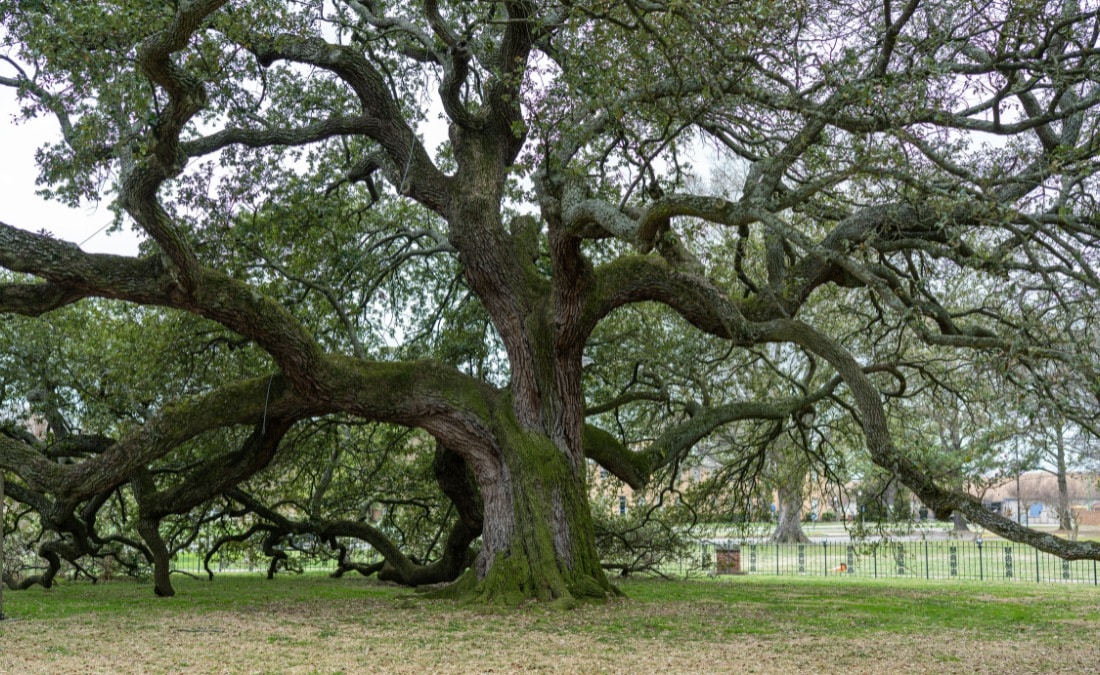
- Specimen and Heritage Trees: Large, established trees can be difficult or impossible to replace within a homeowner’s lifetime. Identifying structural problems early may provide more options for preserving them.
A tree preservation evaluation can identify which trees deserve additional attention and whether an apparent problem actually increases the likelihood of failure.
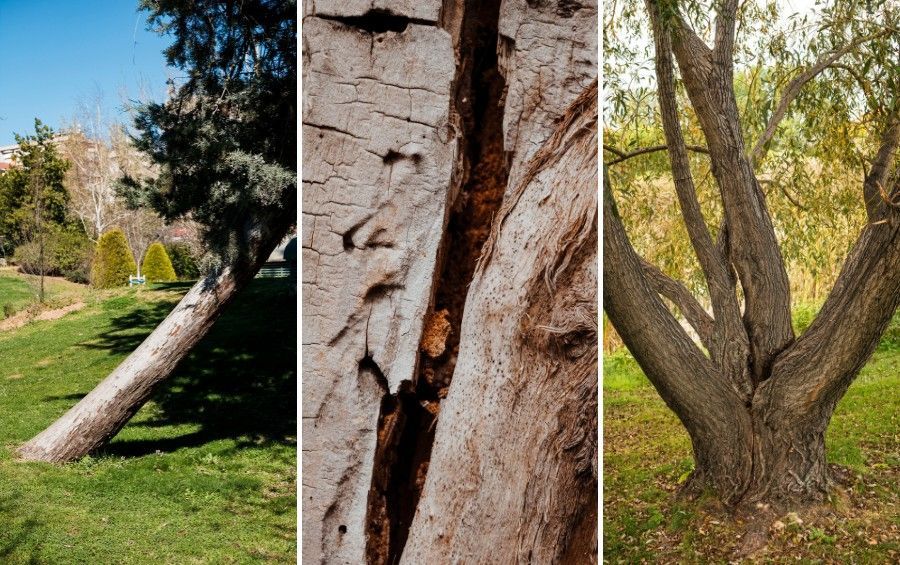
A leaning trunk, visible cracks, and codominant stems are three structural warning signs to watch for as winter approaches.
What Warning Signs Point to Elevated Risk?
Once you know which trees deserve a closer look, the next step is understanding what you’re looking for. Some warning signs indicate that part of the tree is no longer supporting loads the way it should, while others suggest movement or weakness in the root system.
Look for:
- A New or Worsening Lean: Not every leaning tree is unstable. A tree that has grown at an angle for decades may be well anchored. A lean that has recently appeared or increased is more concerning, especially when soil is lifting or cracking on the opposite side of the trunk.
- Trunk or Branch Cracks: Deep cracks can indicate that wood fibers are separating under stress. Cracks extending into a major branch union deserve particular attention because they can weaken the connection between large sections of the canopy.
- Codominant Stems with Included Bark: Codominant stems are two or more trunks or large leaders of similar size growing from the same point. When bark becomes trapped between them instead of strong wood forming across the union, the attachment can be more vulnerable to splitting under wind, ice, or snow loads.
- Previous Large Limb Failure: A missing limb isn’t automatically evidence that the rest of the tree is unsafe, but it can expose decay, weak attachments, or an uneven canopy that changes how forces are distributed through the tree.
- Changes Around the Root Zone: Newly heaving or cracked soil, exposed or damaged roots, recent excavation, or changes in grade around the tree can affect its anchoring. Soil lifting near a newly leaning tree is particularly important to have evaluated.
None of these signs alone tells you that a tree is going to fall. A professional risk assessment considers the defect, the tree’s overall condition, the likelihood of failure, and what could be affected if failure occurs.
Why a Structural Defect Doesn’t Automatically Mean Removal
A tree with a structural defect doesn’t automatically mean it needs to be removed, since cabling and bracing offer a standard alternative for large trees with codominant stems or other structural weaknesses. Cables installed high in the crown limit movement between competing leaders, while braces or rods placed at the union add direct physical support where the wood is weak. Eligibility is determined by:
- Overall Health: A tree with extensive decay alongside the structural defect is a poor candidate for a support system.
- Value and Placement: Large, otherwise healthy specimens near structures are the most common candidates for this kind of investment.
- Defect Type: Not every defect can be corrected with cabling or bracing, which is why eligibility gets determined case by case.
Finding a structural defect is only the first step in the decision-making process. An arborist evaluation determines whether your tree qualifies for cabling and bracing before there’s even a mention of tree removal.
Frequently Asked Questions About Tree Warning Signs
Is a leaning tree always dangerous?
No. Some trees develop a lean while young as they grow toward sunlight, and their root systems adapt to support that position over time. What matters more than the angle is whether the lean is new or getting worse. A tree that has recently shifted, especially with cracked or lifting soil around the base, exposed roots, or changes after a storm, may indicate movement in the root system and should be evaluated by an arborist.
Can a tree with cracks be saved?
Often, yes. A shallow crack from frost or sun exposure is largely cosmetic and typically closes over with new growth, while a crack that widens with the seasons or coincides with a swollen branch union is the version that points to an active structural problem worth an in-person look.
How often should large trees be inspected?
An annual check, ideally in late fall when branch structure is fully visible, catches most developing issues before winter loading turns them into failures. Trees with a known defect or a recent storm history may warrant a closer look more often than that.
What does a TRAQ credential mean?
TRAQ stands for Tree Risk Assessment Qualification. It means an arborist has completed specialized ISA training in how to evaluate the likelihood of tree failure, what could be affected if it fails, and the overall level of risk. TRAQ is a qualification held by the arborist, not a separate type of tree inspection or report.
Does storm damage from earlier in the year raise winter failure risk?
Yes. A tree stressed by an earlier storm may carry unresolved damage, like a partially cracked union, that wasn’t severe enough to fail immediately but becomes more vulnerable once ice or snow adds weight.
Can I inspect my own trees?
You can check your trees for visible warning signs, such as a new lean, large dead branches, trunk cracks, or changes in the soil around the roots. However, some structural problems and decay aren’t easy to recognize from the ground. An arborist can take a closer look at anything concerning and determine whether it actually increases the tree’s risk of failure.
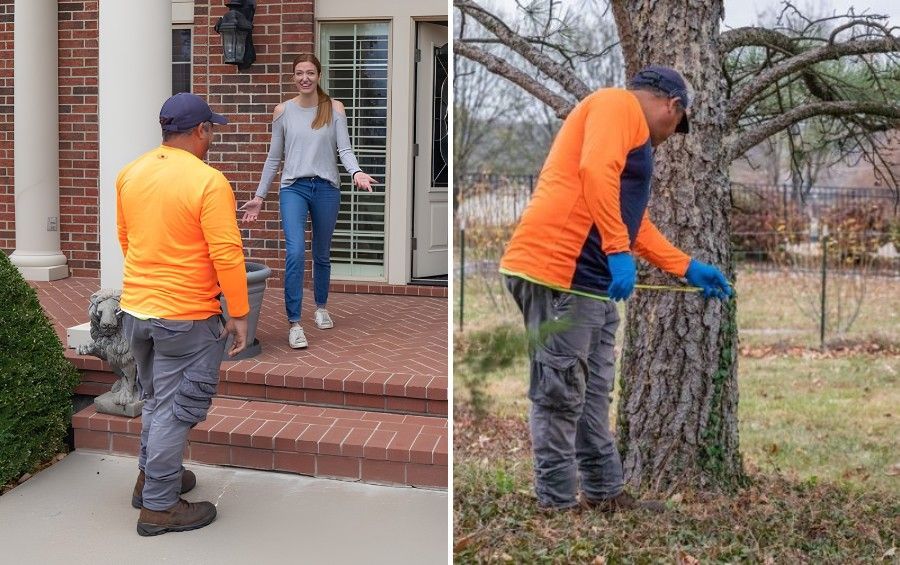
Large trees near homes, driveways, and other high-use areas deserve closer attention because of the potential consequences if they fail.
Get a Tree Assessment Before Winter from the Tree Care Professionals at Arbor Masters
You don’t have to diagnose a weak union, determine whether a lean is getting worse, or decide if a crack makes a tree unsafe. If something about a tree near your home, driveway, or other frequently used area has you concerned, an assessment can determine whether there’s a real risk and what, if anything, needs to be done about it.
The Certified Arborists at Arbor Masters can evaluate your trees before winter weather puts additional stress on existing weaknesses. Call 816-533-3560 or request a consultation online to schedule an assessment with our Lee’s Summit team.

Want More Like This?
Get the latest local news, tree care tips, special offers, and company updates directly to your inbox! It's easy to subscribe and there's no spam - we promise.
"*" indicates required fields