
Why Is One Side of My Maple Tree Dying?
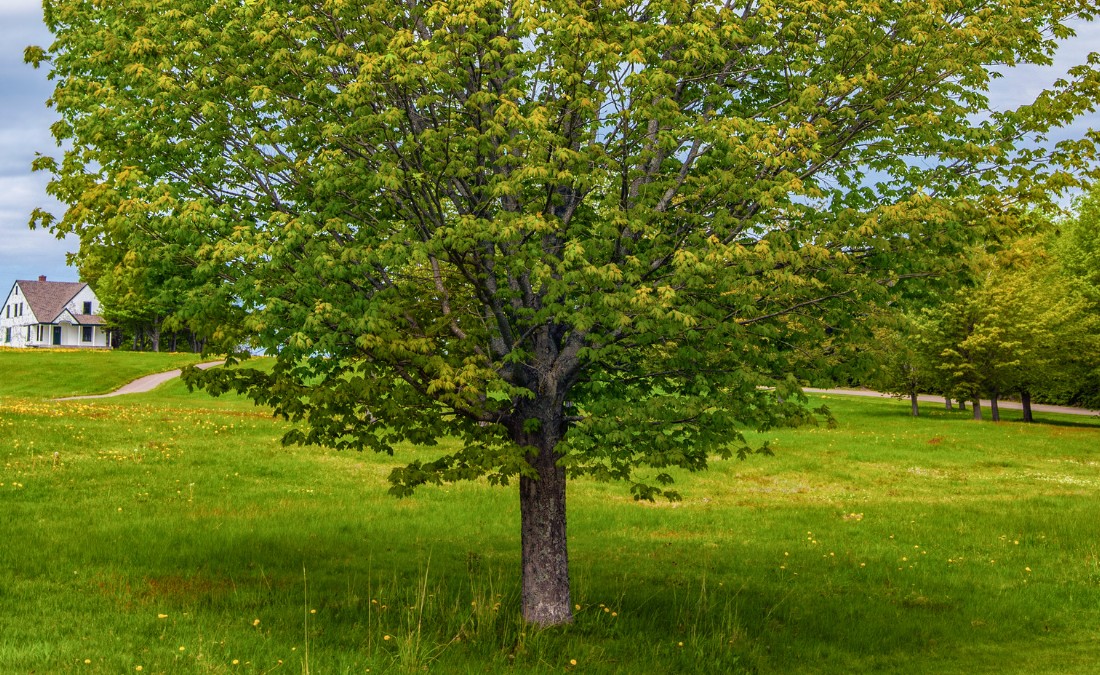
Verticillium wilt is a common cause of one-sided dieback in maples and redbuds. Learn the symptoms, treatment options, and when removal is necessary.
If one side of your mature maple or redbud is dying while the rest of the tree looks healthy, it’s easy to assume the problem is isolated. Many homeowners try watering more or pruning the affected branches, only to watch the decline continue. One-sided dieback is often an early sign of verticillium wilt, a soilborne fungal disease that spreads through the tree’s vascular system and has no fungicide cure.
It’s already common in Lenexa’s established neighborhoods, and the clay soils throughout most of Johnson County make trees especially vulnerable. Knowing what’s taking place and what does and doesn’t help is the difference-maker between a tree that compartmentalizes the infection and one that keeps declining.
Key Takeaways
- Verticillium wilt is a soilborne fungal disease that blocks a tree’s water-conducting tissue—once it’s in the soil, it cannot be eradicated.
- The signature symptom of verticillium wilt is one-sided or single-branch wilting while the rest of the tree appears healthy.
- There is no fungicide that cures an established verticillium wilt infection in trees.
- Johnson County’s clay soils amplify infection risk by stressing roots and addressing that soil-root dynamic is where management can make a real difference.
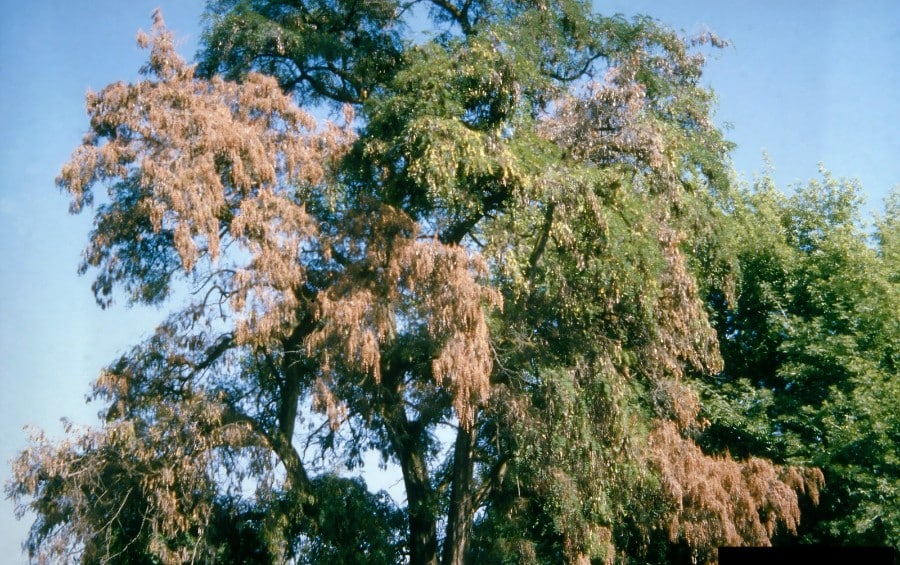
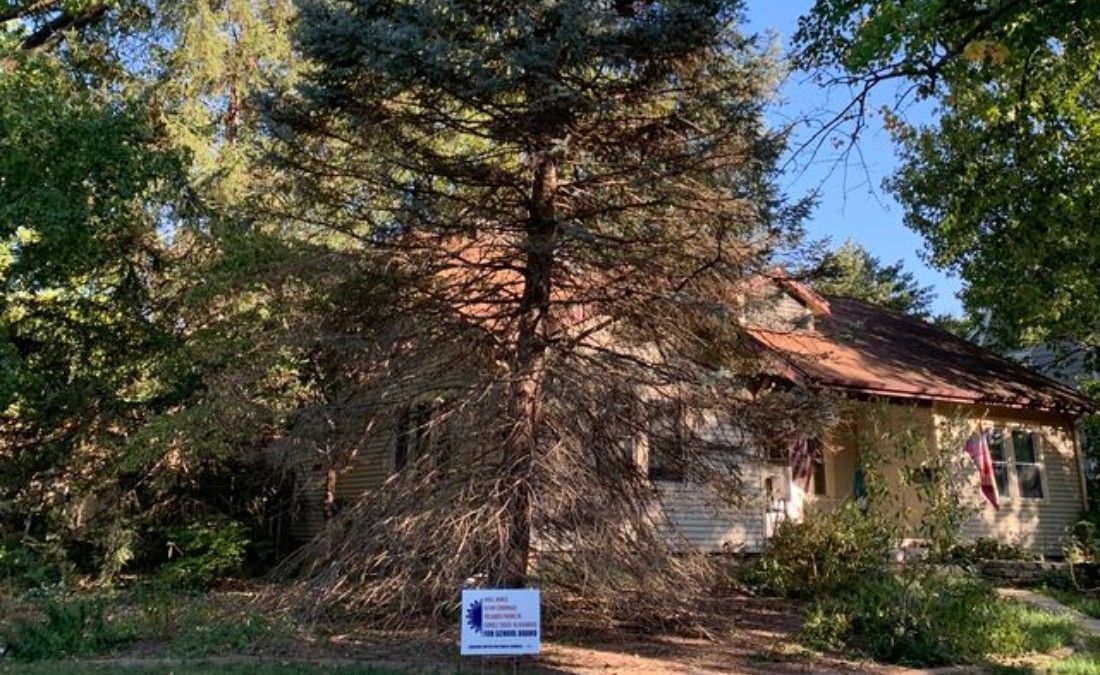
The one-sided wilt pattern is the defining symptom of Verticillium wilt — one half of the canopy browns and dies while the other appears healthy. (CC – USDA Forest Service – Northern and Intermountain Region, Public domain, via Wikimedia Commons)
What Is Verticillium Wilt?
Verticillium wilt is caused by Verticillium dahliae, a soilborne fungus that survives in the soil as resting structures called microsclerotia. They typically last 10-15 years (or more) without a host plant. The fungus enters the trees through their roots, particularly roots that are:
- Stressed
- Wounded
- Growing through compacted soil
Once inside the tree, the fungus spreads through the xylem, the tissue that carries water from the roots to the canopy. As the tree detects the infection, it tries to contain it by sealing off the affected vessels. While this defense helps slow the spread, it also restricts the flow of water and nutrients to branches above the infection. That’s why leaves wilt, branches die back, and one side of the canopy often declines while the rest of the tree still looks healthy.
PRO TIP: Over-the-counter fungicide treatments don’t work, either. No foliar spray or soil drench can reach the xylem once the fungus is established inside the vascular system. Once verticillium is in your soil, the focus completely shifts to managing the tree and not eliminating the pathogen.
What Does Verticillium Wilt Look Like on a Tree?
The symptoms of Verticillium wilt are a recognizable set, though it can closely mimic other vascular diseases enough that a visual diagnosis alone is rarely conclusive.
One-Sided Wilt Pattern
The distinctive clue is one branch, limb cluster, or entire side of the canopy that wilts and browns while the rest of the tree appears normal. Typically, leaves first yellow at the margins, then scorch and turn brown. They tend to stay attached to the branch instead of dropping. In Johnson County, symptoms often peak in July and August, when heat stress compounds what’s actively taking place in the vascular system.
Some trees show an acute form, like rapid, dramatic collapse of a major branch. Others show a chronic form that plays out over numerous growing seasons, such as:
- Undersized leaves
- Poor annual growth
- Heavier-than-normal seed production
- Gradual thinning of the canopy
Sapwood Discoloration
An internal diagnostic sign can help pinpoint things. Peel back the bark on a wilting branch and look at the sapwood underneath. Verticillium wilt produces characteristic discoloration: olive-green streaking in maples and brown streaking in elms. If the sapwood is white and healthy-looking, a vascular disease may not be the cause.
Still, sapwood discoloration by itself doesn’t confirm verticillium wilt. Dutch elm disease produces almost identical internal signs, despite spreading through elm bark beetles instead of the roots, which is a fundamentally different transmission pathway. Lab testing is the only way to confirm the diagnosis with clarity.
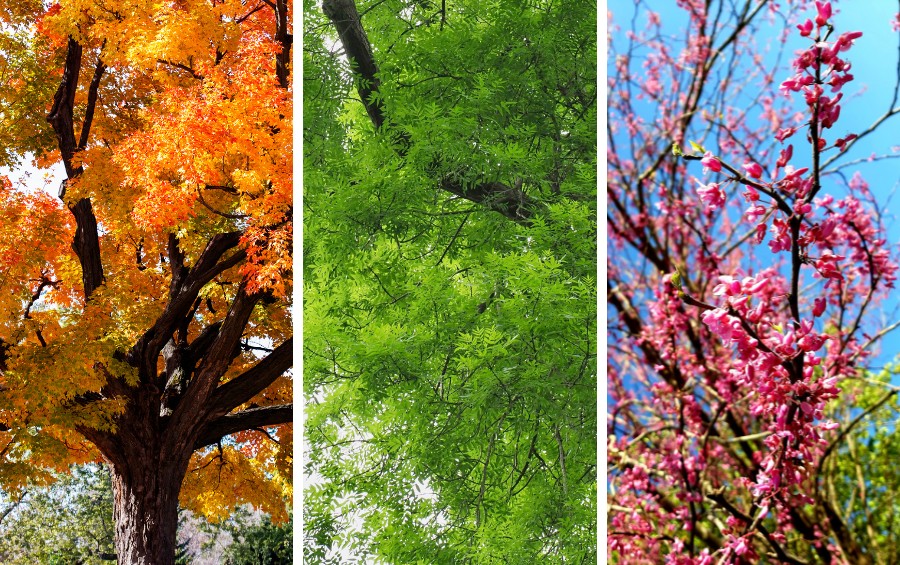
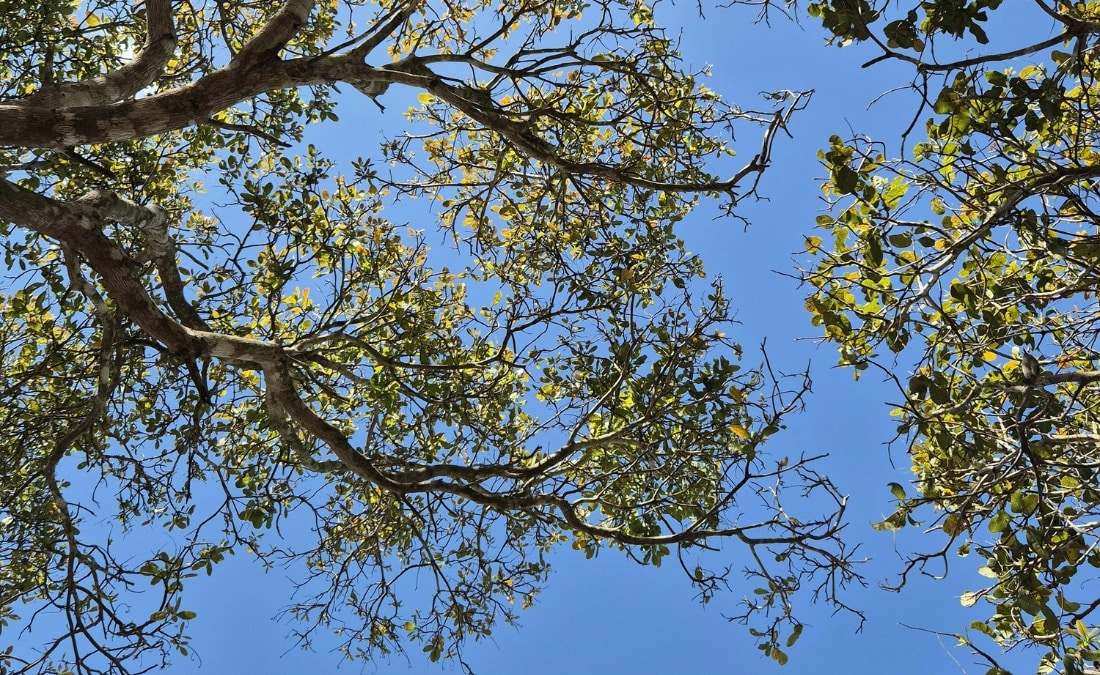
Sugar maple, elm, and eastern redbud are three of the most Verticillium-susceptible species commonly planted in Johnson County subdivisions.
Which Johnson County Trees Are Most at Risk?
Verticillium dahliae infects hundreds of plant species, and trees most common in Lenexa, Olathe, and Shawnee neighborhoods are among the most vulnerable. The species list reads like a catalog of what was planted in Johnson County’s subdivisions:
- Sugar Maple, Norway Maple & Silver Maple: Highly susceptible; the dominant shade trees in established Johnson County neighborhoods
- American Elm & Siberian Elm: Susceptible; still present in older neighborhoods across the county
- Eastern Redbud: Susceptible; heavily planted as an ornamental and understory tree throughout Lenexa and Olathe
- Green Ash: Susceptible; populations already weakened by emerald ash borer pressure face compounded risk
- Smoke Tree: Susceptible; a common suburban ornamental throughout Johnson County
The compounding problem is that many of these species were planted in the same subdivisions during the same decade. When decline appears, it can show up on an entire street, affecting multiple trees at once in ways that can look more like a neighborhood-level problem than an isolated yard incident.
Why Do Johnson County’s Clay Soils Increase Verticillium Wilt Risk?
Johnson County’s heavy clay soils create conditions that increase verticillium wilt risk in ways that most general resources don’t address, and it’s one of the reasons that conventional watering and pruning usually aren’t enough on their own.
Three mechanisms are at work:
- Poor Drainage: Clay soils drain slowly, and waterlogged root zones stress roots directly. Verticillium enters trees most easily through stressed or wounded roots, so chronically wet soil creates a persistent entry point.
- Compaction: Common in established subdivisions where foot traffic, lawn equipment, and years of development have compressed the soil, compaction restricts root development and cuts off oxygen exchange. A root system that can’t expand properly is a root system that stays stressed.
- Slow Spring Warmup: Clay soils retain cold temperatures longer, compressing the window during which roots can recover before summer heat arrives.
Much of Johnson County’s residential development was built on former agricultural land, where prior cultivation of susceptible vegetable or field crops can mean that Verticillium inoculum was already present in the soil before subdivision trees were ever planted.
PRO TIP: Healthy trees start below ground. Our plant health care services improve soil conditions and root health because long-term tree health depends on more than what’s happening in the canopy.
What Helps a Tree Struggling with Verticillium Wilt?
There isn’t a cure for verticillium wilt, but that doesn’t mean nothing can be done. Mature trees can and do compartmentalize verticillium infections and survive for years. The goal is to reduce every other source of stress, so the tree’s own defense system has a chance to do its job.
Here’s what makes a difference:
- Deep, Slow Watering: Regular deep irrigation during Kansas summers reduces drought stress, which is one of the primary factors that accelerates verticillium’s spread through a tree’s vascular system.
- Pruning Infected Branches: Remove branches at least 12 inches below the lowest point of visible discoloration. Sterilize tools between cuts and dispose of the pruned material rather than composting it.
- Deep Root Fertilization: Delivers nutrients directly to the root zone, supporting the tree’s compartmentalization response. This is especially important in compacted clay soils where surface applications don’t reach active root tissue.
- Air Spading: Decompacts the soil mechanically, restores oxygen exchange, and creates conditions in which roots can recover and resist further infection. This addresses the clay soil problem at its source rather than working around it.
- Mulching: A 3- to 4-inch layer of organic mulch over the root zone helps maintain soil moisture, moderate temperature, and reduce compaction. It’s one of the few interventions homeowners can do immediately while a broader management plan is being developed.
Frequently Asked Questions About Verticillium Wilt
Can a tree recover from Verticillium wilt?
Some trees do recover, particularly those with robust root systems and those experiencing a mild or chronic infection rather than an acute one. The key is limiting all other stress factors, so the tree can devote energy to compartmentalizing the fungus. Mature maples in otherwise good health can survive for years after infection.
Is there a fungicide for verticillium wilt in trees?
In trees, no fungicide is effective against established Verticillium wilt infections. The fungus travels inside the tree’s vascular tissue, where foliar sprays and soil drenches cannot reach it. Management focuses on supporting the tree’s health rather than attempting to eliminate the pathogen.
How does verticillium wilt spread?
Verticillium wilt spreads through infected soil, including:
- Contaminated nursery stock
- Infected mulch
- Equipment that moves soil between sites
It doesn’t spread through the air like some fungal diseases. Once it’s established in your soil, it can’t be eradicated.
Is verticillium wilt common in Kansas?
Verticillium wilt is identified as one of the most common and serious wilt diseases affecting trees in Kansas, alongside Dutch elm disease and oak wilt. In Johnson County, the combination of clay soils and mature subdivision tree stock makes it an especially relevant concern for homeowners with older maples, elms, or redbuds.
An Arbor Masters arborist meets with a homeowner to assess tree health and discuss a plant health care plan.
If You Suspect Verticillium Wilt, Call Arbor Masters
One-sided dieback on a mature shade tree is not something to wait on. The window to effectively act narrows as the infection progresses, and verticillium wilt shares enough symptoms with other vascular diseases that a visual diagnosis itself isn’t reliable. An ISA Certified Arborist can confirm what you’ve got, assess whether the tree is a candidate for management, and design a PHC plan built around your specific site and soil conditions.
If you see unexplained decline on a maple, elm, or redbud this season, request a quote or call Arbor Masters at 913-441-8888.
Want More Like This?
Get the latest local news, tree care tips, special offers, and company updates directly to your inbox! It's easy to subscribe and there's no spam - we promise.
"*" indicates required fields
