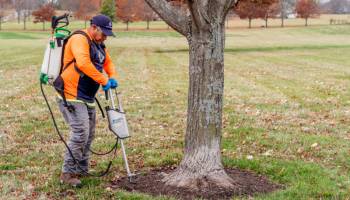
Why Is My Tree Wilting When My Grass Is Green?
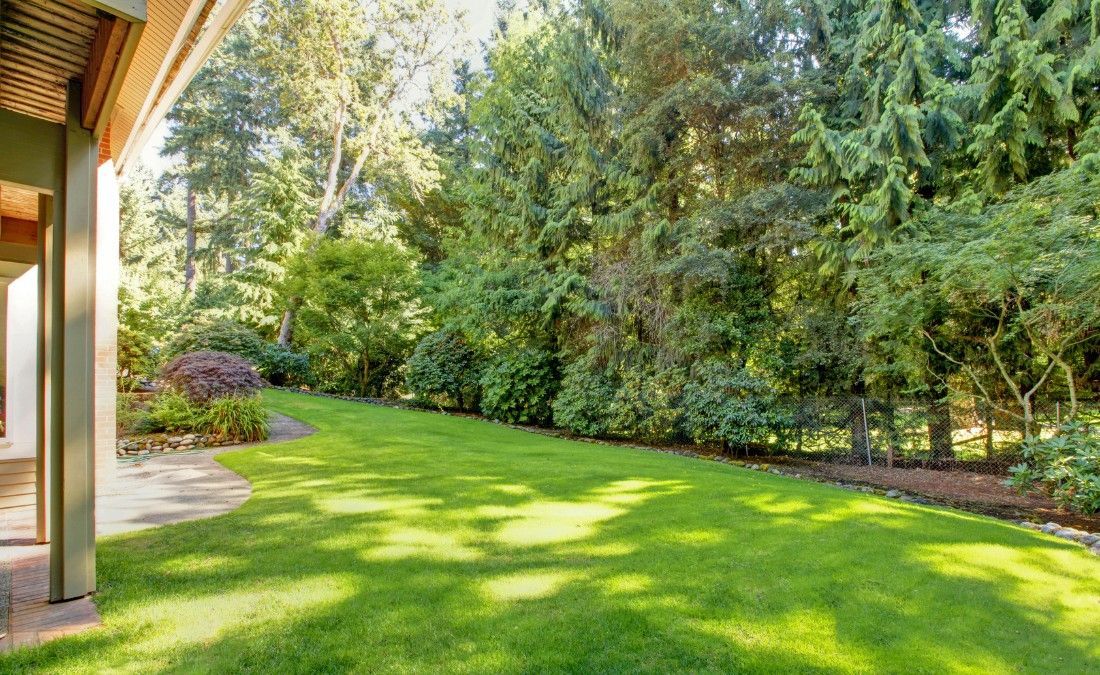
A green lawn doesn't always mean your tree is getting enough water. Learn why mature trees wilt in summer in NE Johnson County and what you can do about it.
By the peak of a Kansas summer, when the metro hits its hottest, driest stretch, Prairie Village homeowners with big, established shade trees often watch them wilt even though the grass underneath still looks green. If you’ve found yourself asking why your tree is wilting in summer while your lawn looks fine, you’re running into one of the most common – and most fixable – problems mature trees face in Northeast Johnson County.
Key Takeaways
- A green lawn does not mean a properly watered tree – heavy Northeast Johnson County clay sheds surface water before it reaches deep tree roots.
- Brown leaf edges and afternoon wilting that returns by the next morning are classic drought-stress signals.
- Mature trees need a slow, deep soak of the whole root zone, not the trunk, to a depth of 10 to 12 inches, roughly every two weeks during a drought.
- If deep watering isn’t improving your tree, a soil assessment can identify what’s limiting root health and what treatments may help.
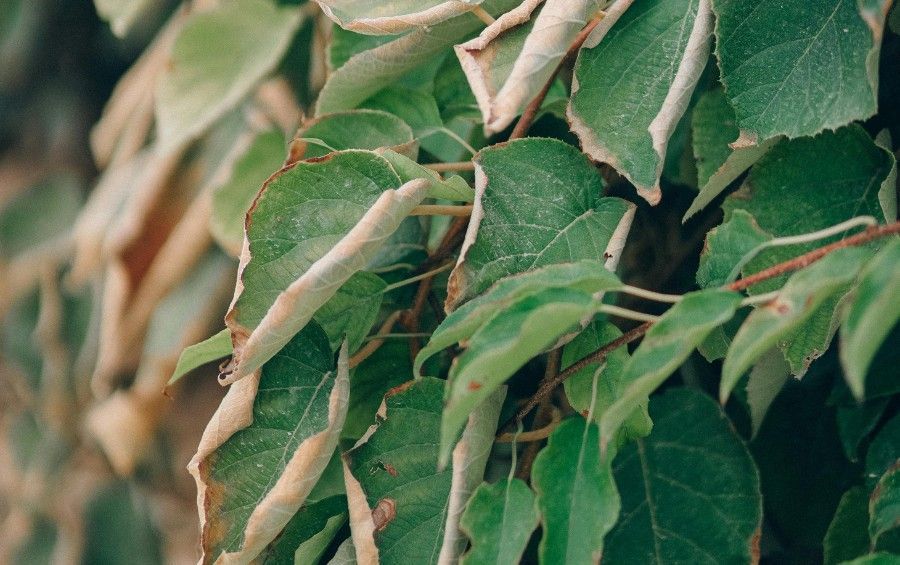
Browning leaf edges and midday wilting are often the first signs a mature tree is running short on water.
Why Is My Mature Tree Stressed When My Lawn Looks Fine?
Your mature tree can be running dry even while your lawn looks lush, because the two pull their water from completely different depths. Your sprinkler system wets the top inch or two of soil, which is plenty for shallow turf roots but nowhere near deep enough for a mature tree.
A large tree, on the other hand, pulls most of its moisture from feeder roots that spread well past the branch tips and reach down about a foot and a half, far wider and deeper than any lawn sprinkler reaches.
Heavy clay soil that is common throughout Johnson County makes the gap worse because it:
- Repels Water When Dry: Instead of soaking in, water often runs off, puddles, or evaporates before it reaches the tree’s deeper roots.
- Soaks Up Water Slowly: Fast, shallow watering rarely penetrates far enough to reach the root zone where mature trees need moisture.
- Holds Moisture Once Saturated: After clay soil is thoroughly soaked, it retains moisture well. That’s why deep, infrequent watering is more effective than watering a little every day.
On top of all this, your turf competes with the tree for the same water and nutrients, and grass is very good at grabbing surface moisture first. The result is a green, healthy-looking lawn sitting directly over a tree that’s quietly running dry.
What Does a Drought-Stressed Tree Look Like?
A drought-stressed tree shows its distress in the leaves and canopy, often well before any branches actually die. Spotting these signs early gives you the best chance to turn things around with watering alone.
Watch for these common signs of drought stress:
- Marginal Leaf Scorch: The edges and tips turn brown first, and the browning can creep inward, which points to a moisture problem rather than a fungal disease.
- Afternoon Wilt That Returns: Wilting that eases overnight but is back by the next morning signals real, ongoing stress rather than a single hot afternoon.
- Yellowing and Early Leaf Drop: Leaves discolor and fall ahead of schedule, and the canopy looks thinner or more sparse than usual.
- Heat-Stress Overlap: Scorch and wilt can resemble heat heat stress, since the two often show up together in a Kansas summer.
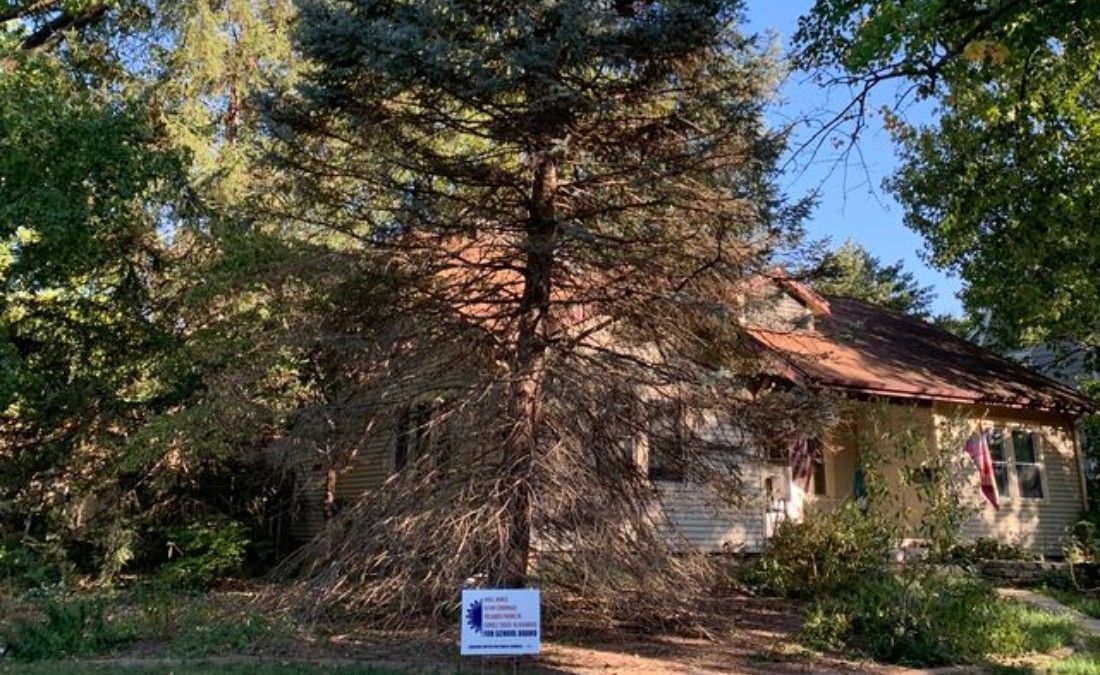
Those symptoms are easiest to read on deciduous trees; evergreens hide their drought stress far longer, so damage can be well advanced before you notice it.
How Can You Tell if It’s Drought Stress or Something Else?
Drought, overwatering, and disease can look similar at a glance, but a few details separate them:
- Drought Damage: This tends to manifest as dry, brown, and crispy at the leaf edges.
- Overwatering: Too much water usually leaves foliage soft, limp, and sometimes yellow
- Vascular Disease: Diseases usually show up as wilting or dieback on just one side of the tree or a single branch.
If your tree’s leaves are turning yellow in summer, the pattern and feel of the leaves will help you tell which problem you’re dealing with.
How Should I Water a Mature Tree in Johnson County Clay?
Watering a mature tree in Johnson County clay means giving it a slow, thorough soak that sinks past the surface and down to the deep roots. A quick blast from the hose won’t do it; five or ten minutes on full pressure mostly sheets off the hard clay before any of it reaches the roots that matter.
The Slow, Deep Watering Method for Clay Soil
The slow, deep watering method comes down to four habits that work with clay instead of against it:
- Cover the Whole Root Zone: Water out to roughly twice the width of the branch spread, rather than pooling water at the base of the trunk.
- Go Slow: Apply water gradually so it soaks in instead of running off. A five-gallon bucket with small holes drilled in the bottom, or a soaker hose laid in a ring under the canopy, both work well.
- Aim Deep: Target a soaking depth of 10-12 inches. During a drought, an established tree generally needs a deep soak about every two weeks.
- Let It Dry Between Soakings: Allow the clay to dry out rather than keeping it constantly wet.
How to Check Your Watering Depth
You can check your watering depth two easy ways, and neither takes more than a minute or requires special tools:
- Dig a Small Hole: Aim for about 10-12 inches deep under the canopy after you water; if the soil is cool and damp that far down, you’re done, and if it’s still dry, continue watering.
- The Screwdriver Test: Push a long screwdriver or other object into the ground. It should slide easily through moist soil and stop where the soil turns dry, showing you how deep the water reached.
PRO TIP: Don’t wait for wilting to water. By the time a mature tree shows drought stress, it’s been struggling for a while; during a hot, dry stretch, keep it on a deep-soak schedule instead of reacting once the leaves droop.
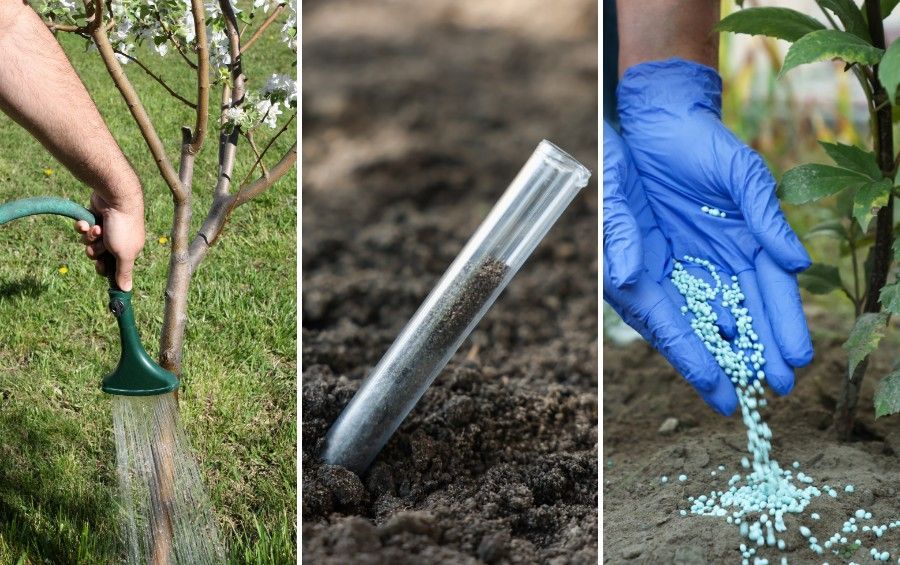
Recovery follows a sequence — rehydrate the root zone first, then test the soil, and finally treat based on what it’s actually missing.
What Should You Do If Your Tree Is Wilting?
Deep root care can help a drought-stressed tree recover, but only after watering has done its job – and never as an overnight fix. When a tree is clearly struggling, it’s tempting to reach for fertilizer, but feeding one that’s already short on water backfires, adding stress instead of relieving it.
The key is following the right sequence:
- Rehydrate First: Restore the soil and roots with slow, deep watering before anything else, so the tree is no longer running on empty.
- Assess the Soil: A soil test shows what the soil is actually lacking, so any treatment addresses the real problem instead of guessing.
- Plan for Fall Care: Once summer stress has passed, fall is the ideal time to address nutrient deficiencies and improve soil health based on the results of your soil assessment.
Done in that order, deep root care gives a stressed mature tree real, lasting support. This is where professional plant health care can make a real difference. Arbor Masters’ ISA Certified Arborists sequence rehydration, diagnosis, and treatment correctly, so a struggling tree gets what it needs when it needs it, rather than a one-size-fits-all bag of fertilizer.
Frequently Asked Questions About Trees Wilting in the Summer
Can drought really damage a mature tree that’s survived years of Kansas summers?
Yes, even a long-established tree can decline during a prolonged drought. Drought alone rarely kills a healthy tree outright, but paired with extreme heat, it weakens the tree’s defenses.
How long does it take a drought-stressed tree to recover?
Most drought-stressed trees recover once consistent deep watering is restored, though visible recovery can lag by a full season as the tree rebuilds its roots and canopy. If a tree keeps declining after you’ve corrected the watering, have it assessed by an arborist.
Does drought stress make my tree more likely to get pests or disease?
Yes, prolonged water stress lowers a tree’s natural defenses and leaves it more open to insects and pathogens. Restoring steady, deep watering helps the tree rebuild the strength it needs to fend off problems a healthy tree would normally shrug off.
Will mulch help protect my tree during a heat wave?
Yes, a ring of mulch over the root zone helps hold soil moisture, keeps soil temperatures steadier, and cuts down competition from turf. Keep the mulch a few inches back from the trunk so the bark can breathe.
Should I prune the scorched or dead branches while my tree is drought-stressed?
Hold off on major pruning while a tree is actively drought-stressed, since cutting adds stress and diverts energy the tree needs to recover. You can remove clearly dead or hazardous branches, but save any real shaping or thinning until the tree bounces back. If you can’t tell whether a limb is dead or just struggling, an arborist can make the call.
What time of day is best to water trees in summer?
Early morning is the best time to water, giving moisture a chance to soak in before the day’s heat and evaporation set in. A slow, thorough soak matters far more than the exact hour you start.
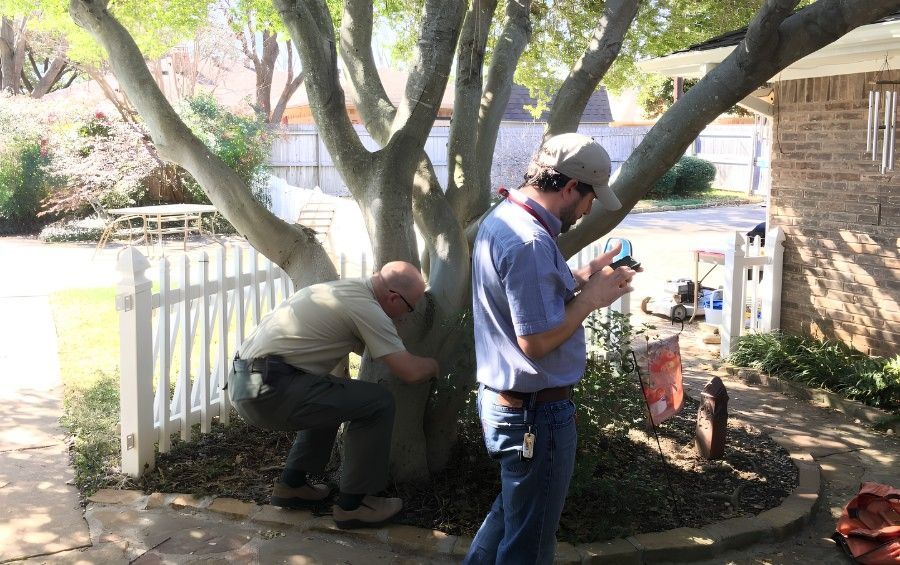
Arbor Masters’ ISA Certified Arborists assess soil and root conditions to pinpoint what a struggling tree actually needs.
Protect Your Mature Trees Before Drought Does Lasting Damage
Protecting a mature tree through a Kansas summer comes down to one honest truth: a green lawn is no proof your tree is watered. Whether you’re in Prairie Village, Mission, or Fairway, Northeast Johnson County clay can leave a big shade tree running dry, and slow, deep watering is what closes that gap. Caught early, a drought-stressed tree usually recovers.
When watering alone isn’t enough, or you’d rather have a professional confirm what your tree needs, Arbor Masters’ ISA Certified Arborists can assess your soil and root zone and recommend the right deep root care for your situation.
Request a quote online or give us a call at 913-308-3791 and give your mature trees the support they need to make it through the heat.


Want More Like This?
Get the latest local news, tree care tips, special offers, and company updates directly to your inbox! It's easy to subscribe and there's no spam - we promise.
"*" indicates required fields