
What Are These Webs, Holes, and Spots on My Trees in Johnson County?
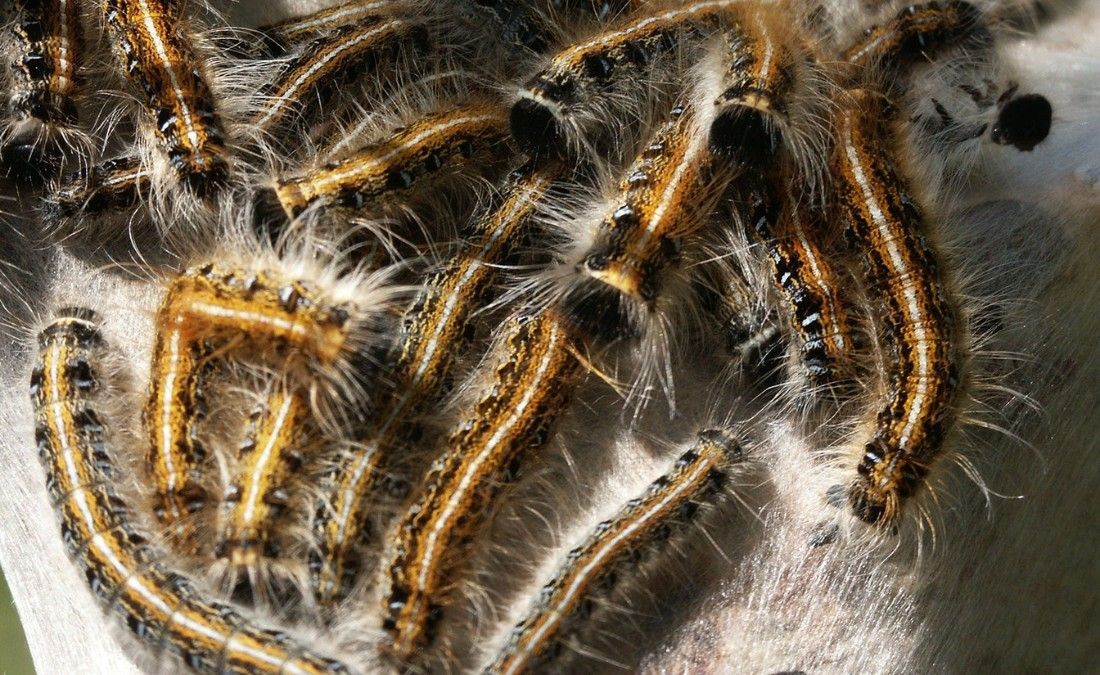
Find out what’s behind the strange symptoms on your Johnson County trees and whether they need treatment, monitoring, or extra care before dormancy.
You know your trees well enough to notice when something looks different. Maybe you don’t remember those webs being there this time last year, or you’ve suddenly noticed holes in the trunk, sawdust near the base, or spots spreading across the leaves. Whatever caught your attention, late summer is often when symptoms that weren’t obvious earlier in the season start showing up on your trees.
In Johnson County, those strange symptoms can point to anything from mostly cosmetic leaf diseases to pests actively damaging the tree. And because some of the signs look surprisingly similar, it’s easy to treat something harmless while overlooking a problem that actually needs attention before dormancy.
Key Takeaways
- Late summer is when many pest and disease symptoms become more noticeable, even when the underlying problem started earlier in the growing season.
- Small holes with sawdust or frass can indicate wood-boring insects, while D-shaped exit holes on an ash are a key sign of emerald ash borer.
- Webbing around leaves at branch tips usually points to fall webworm, while webbing limited to the trunk or limbs may come from harmless bark-dwelling organisms.
- Leaf spots and unusual coatings may be caused by Tubakia leaf spot, bacterial leaf scorch, powdery mildew, or sooty mold, while woody growths on oak twigs may be gouty or horned oak galls.
- Avoid spraying, fertilizing, heavily pruning, or removing a tree based on symptoms alone until you know what’s actually causing the problem.
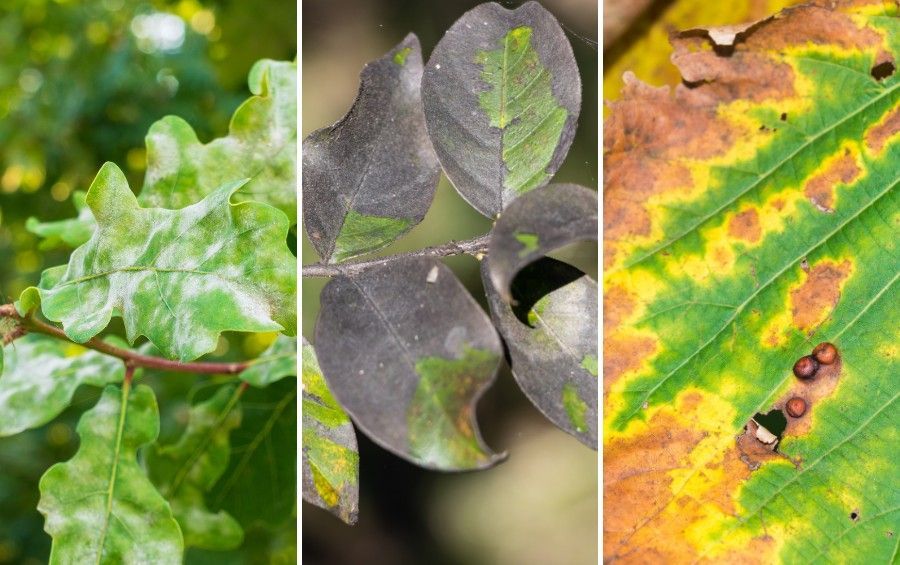
Powdery mildew, sooty mold, and bacterial leaf scorch leave different patterns on foliage that can help narrow down what’s affecting a tree.
What Tree Problems Show Up in Late Summer in Johnson County?
Johnson County trees have had an entire growing season for insect feeding, fungal diseases, and other problems to leave visible signs. By late summer, that can mean everything from webbing and unusual growths on leaves to discoloration, holes in the bark, and sawdust around the trunk. What those signs look like (and where they appear on the tree) can offer important clues about what’s causing them.
- Webbing on the Trunk: Webbing limited to the bark is usually unrelated to fall webworm and may come from spiders or other arthropods. Identify what’s making it before treating the tree.
- Round Lumps on Leaves: Small bumps or unusual growths on leaves are often leaf galls caused by insects or mites. They may look concerning but rarely harm an established tree.
- Webbing Around Leaves at Branch Tips: Large, silky nests enclosing leaves near the ends of branches are a common sign of fall webworm. The feeding is usually cosmetic, although reachable nests can be pruned out if desired.
- White Powder on Leaves: A dusty white coating is often powdery mildew, a fungal disease favored by certain weather conditions. It typically doesn’t require treatment on otherwise healthy, established trees.
- Dark Spots on Oak Leaves: Brown to dark spots developing on oak foliage in late summer may be Tubakia leaf spot. It can make the canopy look rough by the end of the season but is usually more cosmetic than threatening.
- Black Coating on Leaves: A dark, soot-like coating is often sooty mold growing on honeydew left behind by sap-feeding insects. The coating itself isn’t infecting the tree, so the insect activity is what matters.
- Brown Leaf Edges With a Colored Border: Browning that starts along leaf margins and is separated from green tissue by a reddish or yellow band can be associated with bacterial leaf scorch. Persistent or spreading symptoms warrant an assessment.
- Woody Lumps on Twigs: Hard, rounded growths along twigs or branches are often galls caused by insects. A few may have little effect, but extensive galling accompanied by branch dieback can become more concerning.
- Small Holes With Sawdust: Small exit holes accompanied by sawdust or frass can indicate wood-boring insects beneath the bark. Because borers may target already-stressed trees or contribute to further decline, this is worth having assessed.
- D-Shaped Holes on an Ash: D-shaped exit holes are a hallmark sign of emerald ash borer activity. If you find them on an ash tree, have an arborist assess the tree promptly to determine whether treatment is still an option.
What Are the Silky Webs I’m Seeing on My Tree?
The silky webs on your tree are common in the late summer in Johnson County, coming from fall webworm or harmless bark-surface insects. Where the webbing sits tells you exactly what you’re dealing with.
Webbing at the Branch Tips
Webbing wrapped around the leaves at the ends of branches is fall webworm. Come late summer, a single nest holds hundreds of caterpillars and can stretch three feet across. Because the insect feeds on nearly any deciduous species, nests tend to turn up on several different trees on the same block.
On an established tree, that feeding is more of an eyesore than a threat. Bags hanging from a spruce or juniper are bagworms, not webbing.
Webbing on the Trunk and Limbs
Webbing on the trunk and major limbs that never touches the foliage is harmless. Some harmless bark-dwelling organisms can produce thin webbing on trunks and limbs; if the webbing does not involve foliage, identify the cause before treating it.
What’s Making Small Holes and Sawdust on My Trunk?
Small holes and frass can indicate wood-boring insects, although the appearance alone doesn’t identify which insect is responsible. A healthy tree floods a beetle’s entry wound with sap; a drought-stressed one can’t. Shothole borers are one-sixteenth to one-eighth inch long and hardly ever seen; the holes are what confirm them.
Trees showing fresh borer activity are often already stressed by drought, poor site conditions, injury, or other factors; improving growing conditions can reduce susceptibility to some borers.
What the Shape of the Hole Means
The hole’s shape is how you differentiate a tree worth watching from one that needs you to make a call within the week:
- D-Shaped Exit Holes on an Ash : Indicate emerald ash borer, which has been in Johnson County since 2013. By late summer, the characteristic D-shaped exit holes may already be present, so also look for canopy thinning, epicormic shoots, bark splits, and woodpecker activity.
- Round Exit Holes : These come from a variety of borer species, so identifying which one takes an assessment.
Why Does My Tree Have Spots or a Powdery Coating on Its Leaves?
Spots and unusual coatings on leaves can come from fungal diseases, bacterial infections, or fungi growing on the leaf surface rather than infecting the tissue itself. Several are common on Johnson County trees:
- Tubakia Leaf Spot : Circular dark red to brown spots a quarter to a half inch across on oak, worst where drought or high soil pH has stressed the tree, which is why pin oaks in the area’s alkaline clay show it most.
- Bacterial Leaf Scorch : Brown leaf margins with a defined reddish or yellow border between the dead tissue and the green. The border can be a useful clue, but bacterial leaf scorch can’t be confirmed from the leaf pattern alone and should be distinguished from drought and other causes of scorch.
- Powdery Mildew : White powdery growth on the leaf surface, favored by poor air circulation and warm days with cool nights.
- Sooty Mold : A black coating that grows on honeydew, so the real problem is the aphids or scale feeding above it.
Oftentimes, heavy spotting is mistaken for oak wilt or anthracnose. Anthracnose in Kansas is a spring disease, and oak wilt can cause rapid leaf discoloration and wilt, particularly in susceptible red-oak species, rather than the discrete spotting typical of Tubakia.
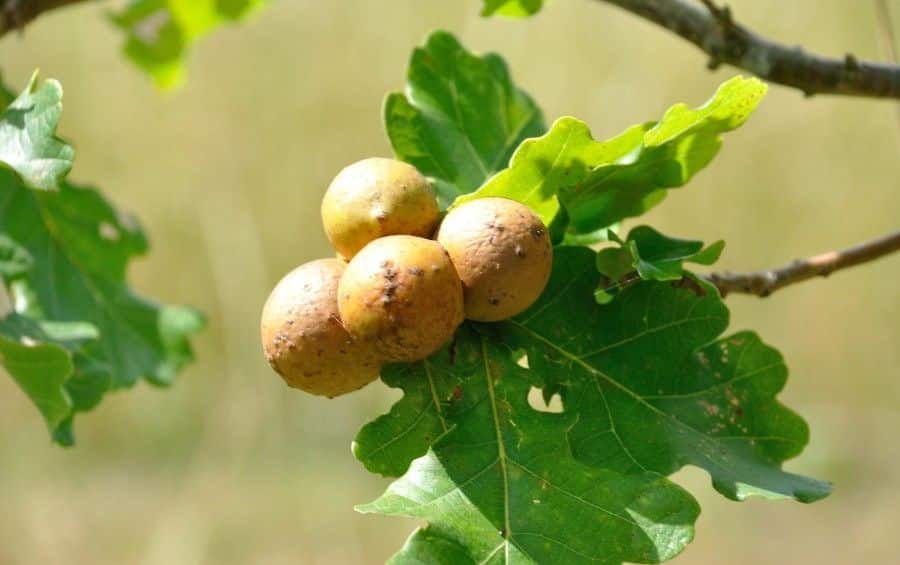
Galls that form on oak leaves can look alarming, but most cause little harm to an otherwise healthy tree.
What Are These Lumps on My Leaves and Twigs?
Many of the unusual lumps that appear on oak leaves and twigs are galls, abnormal plant growths triggered by insects or mites. Where the gall is growing is one of the easiest ways to tell whether you’re looking at a mostly cosmetic leaf problem or something that could eventually affect the branch.
- Leaf Galls: Round or irregular bumps that form directly on the leaves. They may look concerning, but they rarely affect the overall health of an established tree and typically don’t require treatment.
- Twig Galls: Hard, woody growths that form around twigs and branches. Gouty and horned oak galls can grow more than two inches across, and heavy infestations can girdle branches, contribute to dieback, or add enough weight to increase the chance of breakage.
Twig galls are especially worth watching on the mature pin oaks found throughout older neighborhoods in Prairie Village and Mission. A few scattered galls can often be monitored, but numerous woody galls or branches showing dieback should be assessed by an arborist. Pruning affected branches may be appropriate in some cases, while chemical control of established galls is often ineffective.
Will These Tree Problems Get Worse If I Wait?
Some can. Emerald ash borer, bacterial leaf scorch, and heavy twig-gall infestations can continue damaging a tree beyond this season. EAB can eventually kill an untreated ash, bacterial leaf scorch can cause progressive decline, and extensive twig galling can lead to branch dieback.
Fall webworm, leaf spots, leaf galls, and sooty mold generally run their course with the growing season and don’t become more damaging simply because you wait until leaf drop.
What Should I Avoid Doing If My Tree Has Signs of Pests or Disease?
Trying to fix an unidentified tree problem can sometimes cause additional stress or make it harder to address the actual cause. Until you know what you’re dealing with, avoid these common mistakes:
- Don’t Burn Webbing Out of the Tree: Fire can damage the bark and living tissue beneath it, causing far more harm than fall webworm itself.
- Don’t Spray Without Identifying the Problem: Different pests and diseases require different approaches, and some don’t need treatment at all. With sooty mold, for example, the coating isn’t the underlying problem.
- Don’t Automatically Reach for Fertilizer: Fertilizer won’t correct most pest or disease problems and may not be appropriate for an already stressed tree. Determine what the tree actually needs before adding nutrients.
- Don’t Remove a Tree Based on One Symptom: Holes, dead branches, leaf discoloration, or galls don’t automatically mean a tree is beyond saving. Confirm the cause and extent of the damage before deciding on removal.
- Don’t Prune Heavily Just Because Foliage Looks Damaged: Removing a large amount of live canopy can add stress to a tree that’s already dealing with insects, disease, or environmental conditions. Prune for a specific reason rather than trying to cut away every visible symptom.
Frequently Asked Questions About Webs, Holes, and Spots on My Trees
Why am I just noticing these tree symptoms in late summer?
Many tree problems develop gradually throughout the growing season. Insect populations can increase, repeated feeding becomes more noticeable, and leaf diseases have had months to develop. By late summer, the accumulated damage may be easier to see even if the problem began much earlier.
Should I remove a fall webworm nest myself?
On a small, reachable branch, prune the nest out and bag it. On a mature tree, reaching nests high in the canopy does more damage than the caterpillars would.
Is it too late to help an ash tree that already has D-shaped exit holes?
It depends on how much canopy the tree has already lost. Treatment is generally most worthwhile before substantial canopy loss. Once an ash has significant decline, treatment becomes less reliable and removal may be the safer or more economical option; the decision should be based on canopy condition, tree value, site and structural risk.
Should I rake up spotted leaves?
Yes, particularly the heavily infected ones. Many leaf spot fungi overwinter in fallen debris, so removing it lowers next spring’s infection pressure.
Will these tree pests and diseases come back next year?
Some can. Certain insects and disease-causing organisms overwinter on or near the tree and may return the following growing season, while others depend heavily on weather and environmental conditions. Identifying the cause now can help determine whether preventive treatment, cleanup, pruning, or monitoring makes sense before next spring.
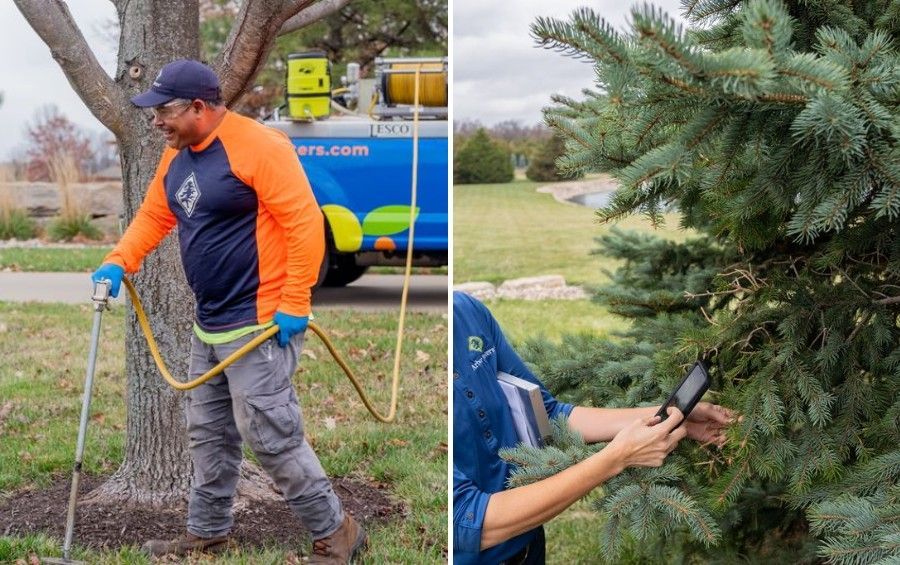
An arborist can evaluate the symptoms and overall tree health before recommending treatment or other care.
Get Expert Answers About Your Tree Before Dormancy
You don’t have to guess whether those webs, spots, holes, or unusual growths are harmless or signs your tree needs attention. Arbor Masters’ ISA Certified Arborists can identify what’s causing the symptoms, assess the overall health of the tree, and recommend treatment or care when it’s needed.
Request a quote for insect and disease control before your trees head into dormancy.
Want More Like This?
Get the latest local news, tree care tips, special offers, and company updates directly to your inbox! It's easy to subscribe and there's no spam - we promise.
"*" indicates required fields
