
What’s Wrong With My Tree? Common Late-Summer Tree Problems in Parkville
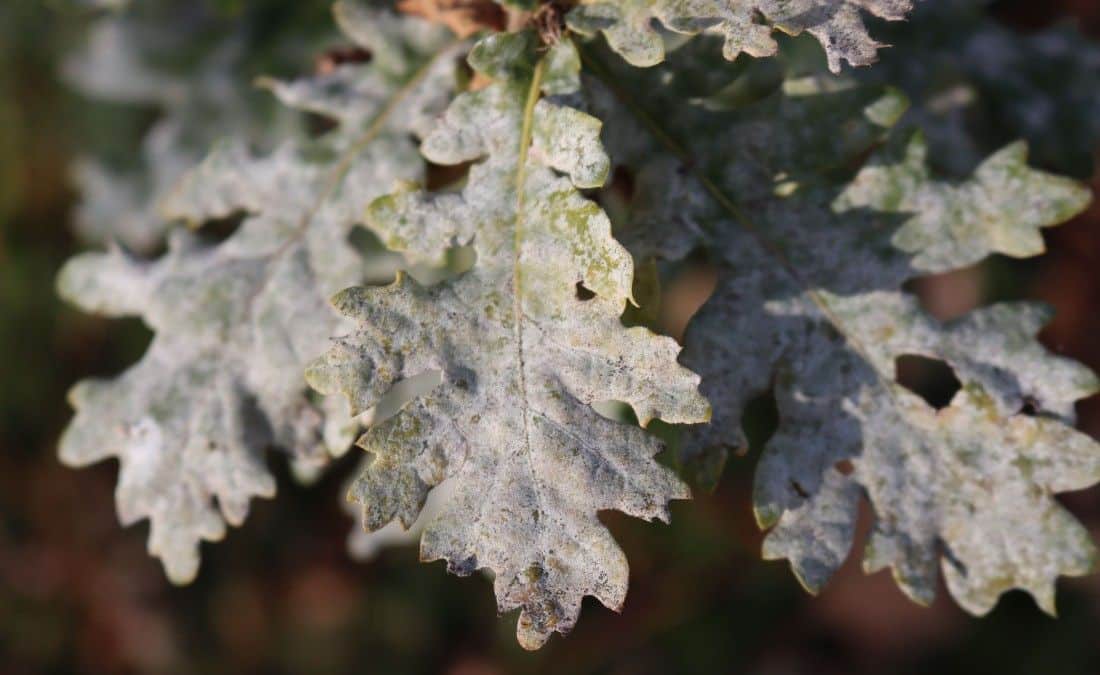
Webs, leaf spots, white powder, or sawdust on your Parkville tree? Learn what these late-summer symptoms mean and when your tree may need treatment.
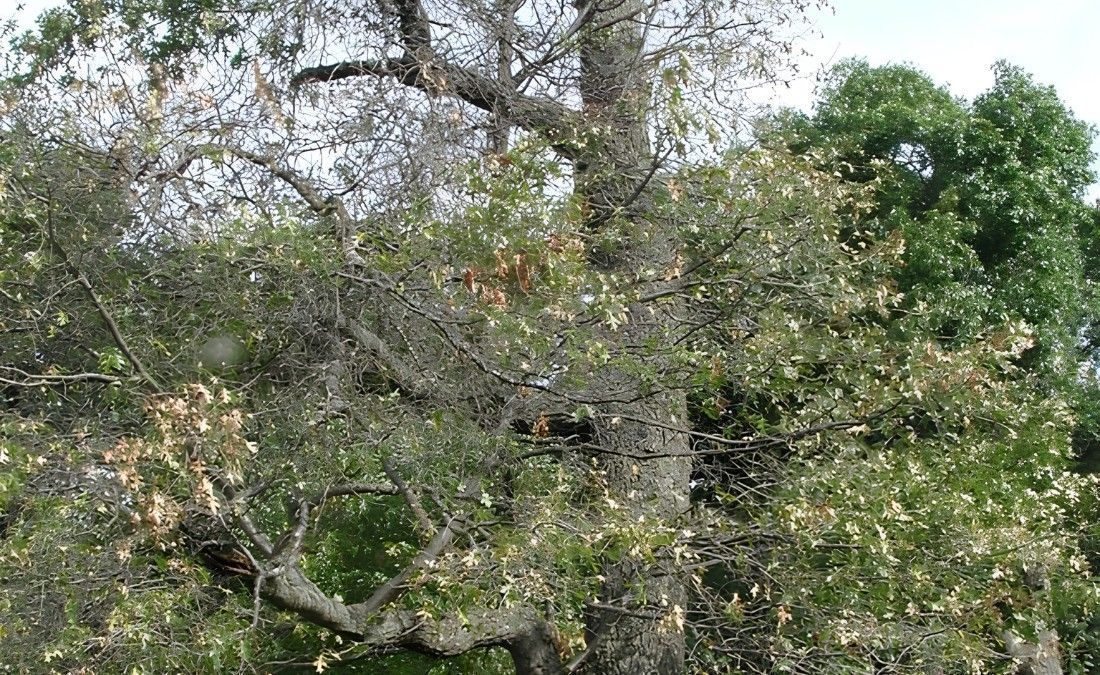
A tree can look healthy through early summer and start showing some strange symptoms by late summer: webs covering branch tips, brown spots across oak leaves, a white powdery coating on foliage, or sawdust-like material collecting in the bark. Around Parkville and the Kansas City Northland, these symptoms can point to very different tree pests and diseases.
Some look alarming but cause little lasting harm to an established tree. Others can be a sign that the tree is already stressed or declining and needs attention. Knowing what each symptom looks like, what causes it, and how serious it is can help you figure out what’s wrong with your tree and what to do next.
Key Takeaways
- A white powdery film is often powdery mildew, which is favored by humid, poorly ventilated conditions and can be more noticeable in dense canopies.
- Webbing at branch tips is characteristic of fall webworm; feeding is usually cosmetic on established trees, although heavy infestations can cause substantial defoliation.
- Dark, roughly ¼- to ½-inch spots on oak leaves appearing in mid- to late summer are characteristic of Tubakia leaf spot, although laboratory diagnosis may be needed to distinguish it from other oak diseases.
- Sawdust-like frass can indicate wood-boring insects, which often exploit stressed, injured, or declining trees.
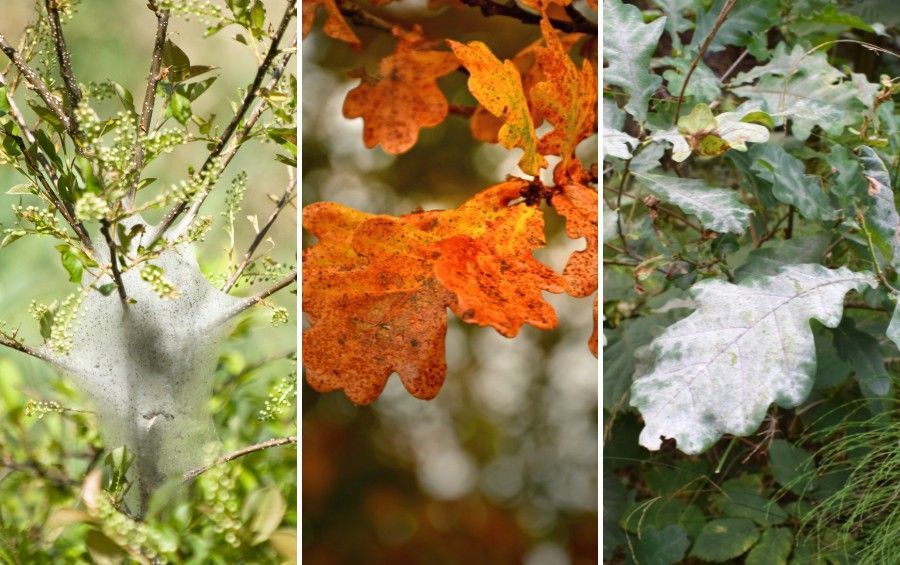
Webbing, leaf spots, and white powdery growth are three distinct late-summer symptoms that can help narrow down what’s affecting your tree.
How Can You Identify What’s Wrong with Your Tree?
You can tell August tree symptoms apart by where they’re at on the tree, since location narrows the field a lot faster than color or texture. Match what you see with one of the following:
- Loose Webbing Around Branch Tips: Often points to fall webworm, which typically causes cosmetic damage on healthy, established trees.
- Dark Red-Brown Spots on Oak Leaves: May indicate Tubakia leaf spot, a common late-summer foliar disease that rarely threatens an otherwise healthy oak.
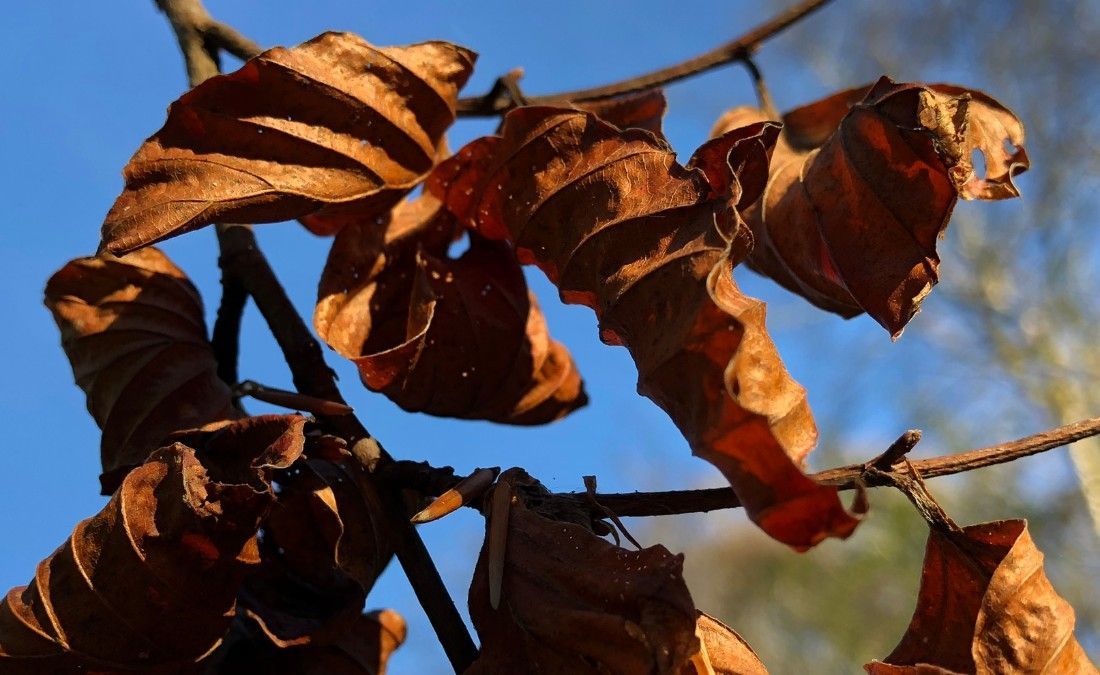
- Brown, Crispy Leaf Edges: Often associated with heat and drought scorch, particularly after hot, dry weather. Learn more about brown, crispy leaves.
- Brown Leaf Margins With a Yellow or Reddish Band: Can be a sign of bacterial leaf scorch, although symptoms can overlap with drought stress and other oak diseases.
- White Powdery Coating on Leaves: Characteristic of powdery mildew, which is usually more of a cosmetic problem than a threat to an established tree.
- Skeletonized or Chewed Leaves: May indicate feeding from Japanese beetle or other leaf-feeding insects. Learn more about common Kansas City tree pests.
- Sawdust-Like Material in Bark Crevices or Around the Trunk: Can indicate wood-boring insects and deserves closer inspection, especially when the canopy is also thinning or dying back.
- Rapid Wilting, Browning, or Leaf Drop on an Oak: Can indicate a more serious problem such as oak wilt, particularly in susceptible red oaks, and warrants prompt diagnosis.
What Are the White Webs on Your Branch Tips?
Loose webs wrapped around leaves at the ends of branches are a common sign of fall webworm, which becomes especially noticeable in late summer. The caterpillars feed inside the web and expand it to cover more foliage as they grow. Where the web appears and what it looks like can help distinguish fall webworm from other pests homeowners often confuse it with:
- Eastern Tent Caterpillar: Builds in the branch crotch near the trunk, and appears in spring rather than late summer.
- Bagworm: Makes individual spindle-shaped bags instead of mass webbing, mostly on Eastern red cedar, arborvitae, and other junipers.
Fall webworm feeds late enough that the tree has already banked its energy for the year. Bagworms can cause more significant damage than fall webworm, and control is generally most effective when the young larvae are small earlier in the season.
Why Do Oak Leaves Have Brown Spots in Late Summer?
Dark red or brown spots that appear on oak leaves in mid- to late summer may be a sign of Tubakia leaf spot. It can look similar to other oak diseases, including anthracnose, so look at the timing and pattern of the symptoms:
- Spots: Typically round, dark red to brown, and about ¼ to ½ inch across.
- Early Leaf Drop: Heavily infected leaves may turn brown and fall before autumn.
- Late-Summer Symptoms: Infection can occur earlier in the growing season, with spotting becoming more noticeable as summer progresses.
- Affected Oaks: Tubakia can infect many oak species, but trees in the red oak group are often more severely affected.
The timing and spot pattern make Tubakia more likely, although anthracnose and other foliar diseases can produce overlapping symptoms. Suspected cases warrant prompt professional or laboratory diagnosis.
Should You Treat Tubakia Leaf Spot with Fungicide
Usually not after symptoms appear.By the time Tubakia leaf spots become noticeable in late summer, the infection has already occurred, and fungicide won’t repair the affected leaves.
If you want it confirmed, Missouri’s Plant Diagnostic Clinic offers diagnostic services for oak diseases; photos can help with an initial assessment, but some diseases require physical samples and laboratory testing.
What Causes a White Powdery Coating on Tree Leaves?
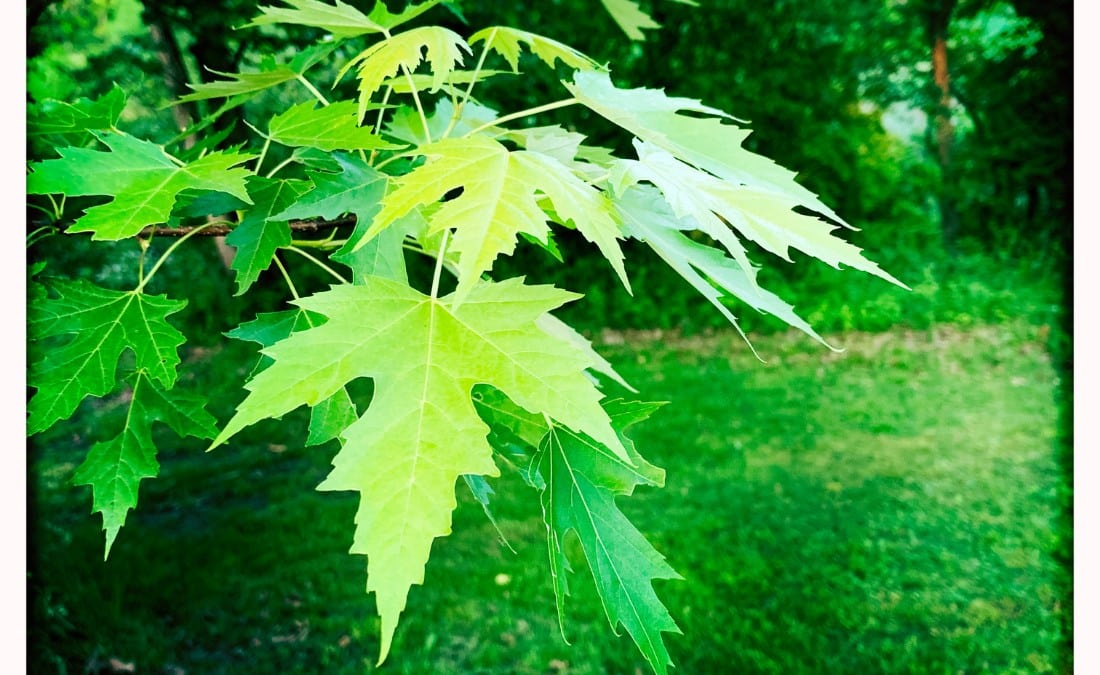
A white or gray powdery coating on leaves is a common sign of powdery mildew. This fungal disease often becomes noticeable in late summer and is usually more of a cosmetic problem than a serious threat to an otherwise healthy, established tree.
Unlike many fungal diseases, powdery mildew doesn’t need prolonged leaf wetness to develop. Humid conditions, moderate temperatures, and limited air circulation within a dense or sheltered canopy can all favor infection.
If powdery mildew returns year after year, the growing conditions around the tree may be contributing to the problem. A Certified Arborist can determine whether pruning for better airflow, preventive treatment, or another change in tree care could help reduce future infections.
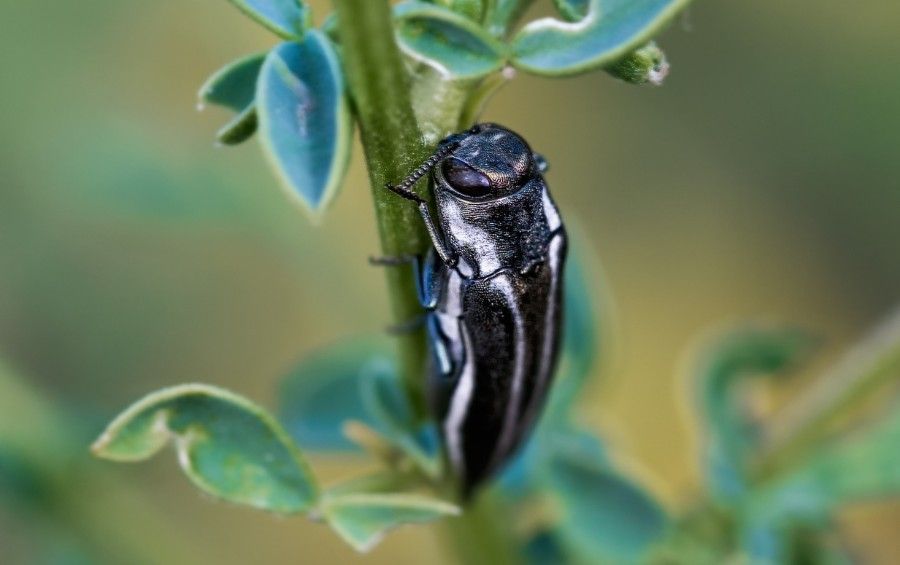
Wood-boring beetles attack trees already weakened by drought or root damage.
What Does Sawdust at the Base of Your Tree Mean?
Sawdust-like material on the trunk, in bark crevices, or around the base of a tree may be frass, a mixture of insect waste and chewed wood produced by some wood-boring insects. Finding frass doesn’t tell you which insect is responsible, but it does warrant a closer look.
Other signs of borer activity or tree decline may include:
- Holes in the Bark: Some borers leave small round, oval, or D-shaped exit holes when adults emerge.
- Oozing Sap or Dark Staining: Sap or staining near holes or damaged bark can accompany insect activity, although either can have other causes.
- Thinning or Dying Branches: A sparse canopy, dead branch tips, or progressive dieback makes borer activity more concerning than frass on an otherwise vigorous tree.
- Loose or Damaged Bark: Bark may crack, loosen, or reveal galleries beneath the surface as an infestation progresses.
In Kansas City, wood-boring insects that may affect landscape trees include two-lined chestnut borer on stressed oaks, emerald ash borer on ash trees, and several species of bark beetles and other borers that attack weakened trees. The tree species, shape of any exit holes, location of frass, and pattern of canopy decline can help a Certified Arborist determine which insect is responsible.
How Are Wood-Boring Insects Treated?
Treatment depends on which borer is attacking the tree, how advanced the infestation is, and the tree’s overall condition. Some borers can be managed with properly timed insecticide or systemic treatments, while others may require a different approach. Because borers often attack already-stressed trees, treatment may also include correcting drought stress, root damage, or other conditions that weakened the tree in the first place.
Frequently Asked Questions About Late-Summer Tree Problems
Can a tree recover from late-summer leaf damage?
Often, yes. Healthy, established trees can usually tolerate some late-season leaf spotting, insect feeding, or premature leaf loss because much of the year’s photosynthesis has already occurred. Repeated severe defoliation or leaf damage combined with canopy decline, however, can weaken a tree over time.
Should I treat tree pests or diseases in late summer?
It depends on the pest or disease. By late summer, the effective treatment window has already passed for some problems, while others may still warrant treatment or need to be addressed at a different point in their life cycle. Identify the problem first rather than applying a general insecticide or fungicide based on symptoms alone.
Should I remove a webworm nest from my tree?
Removal is optional and done for appearance, not tree health. A high nest generally isn’t worth risking a ladder or pole saw just for cosmetic control. Burning a nest out does far more damage than the caterpillars would.
What’s the difference between Tubakia leaf spot and bacterial leaf scorch?
Tubakia leaf spot typically causes distinct brown or reddish spots on oak leaves and is usually a seasonal leaf disease that doesn’t seriously harm an otherwise healthy tree. Bacterial leaf scorch causes browning that begins along the leaf margins and progresses inward, and symptoms typically return and worsen as the disease progresses over multiple years. Because the symptoms can overlap with drought stress and other oak problems, laboratory testing may be needed to confirm bacterial leaf scorch.
Should I fertilize a tree that looks stressed in late summer?
No, late summer generally isn’t the time to fertilize a stressed tree. Fertilizer won’t correct drought, root damage, pests, disease, or other problems causing the tree to decline, and pushing new growth late in the season may leave that growth less prepared for winter. Focus on identifying and correcting the source of stress first; if a nutrient deficiency is suspected, testing can determine whether fertilization should be part of the tree’s care plan at the appropriate time.
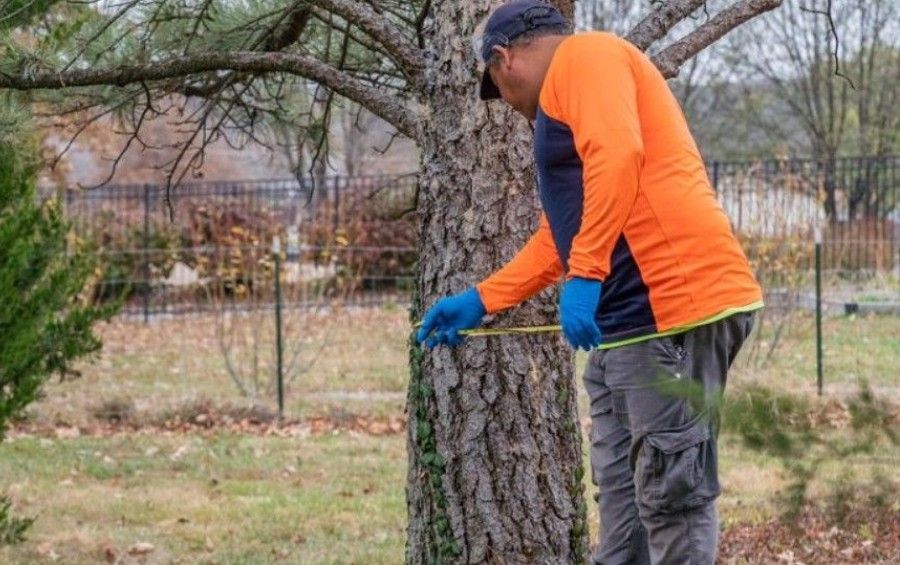
A thorough tree assessment looks beyond the visible symptoms to identify the underlying cause.
Let Arbor Masters Find Out What’s Wrong with Your Tree
Webs, leaf spots, and powdery coatings can look alarming without posing a serious threat to an otherwise healthy tree. But rapid canopy decline, branch dieback, frass or exit holes, and symptoms that continue to worsen deserve a closer look. Identifying the cause tells you whether the tree needs treatment now, care at another time of year,or continued observation to make sure the problem doesn’t progress.
If something doesn’t look right with a tree on your Liberty, Parkville, or Northland property, Arbor Masters can help. Request a quote from a Certified Arborist or call us at 816- 281-6542 and we’ll let you know exactly what you’re dealing with.
Want More Like This?
Get the latest local news, tree care tips, special offers, and company updates directly to your inbox! It's easy to subscribe and there's no spam - we promise.
"*" indicates required fields
