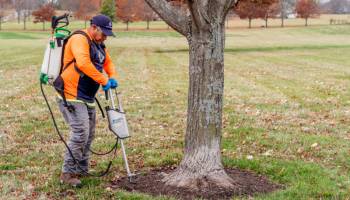
Is Oak Wilt Contagious to Other Trees Nearby?
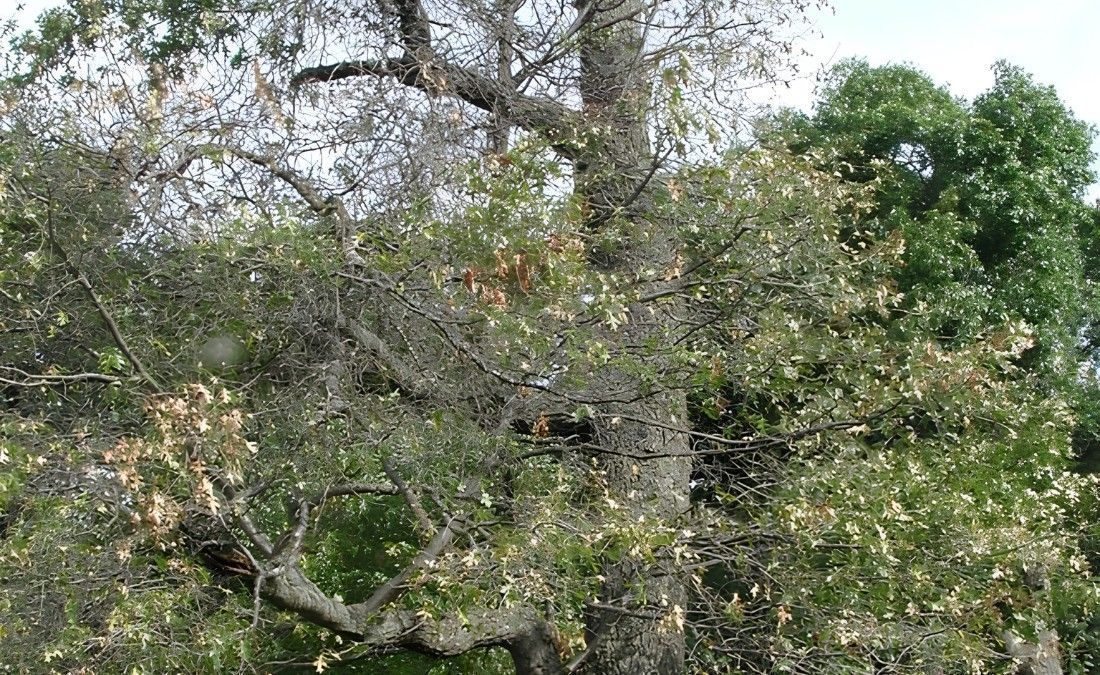
A dying oak could signal trouble for the trees around it. Learn how oak wilt spreads, which nearby oaks are vulnerable, and what increases their risk.
An oak in Bent Oaks, Clay Woods, Wilshire Estates, or Dougherty Historic can go from a full green canopy to widespread browning in a matter of weeks. That kind of rapid decline can happen with oak wilt, particularly in pin oaks and other members of the red oak group, but symptoms alone aren’t enough to confirm the disease.
What makes a rapidly declining oak especially concerning is what it could mean for the other oaks nearby. Oak wilt can move between neighboring trees through connected roots, and the level of risk depends partly on the species and proximity of those trees. Knowing how oak wilt moves from tree to tree, and which oaks are most vulnerable when it does, can help you understand what one infected tree could mean for the others growing nearby.
Key Takeaways
- Oak wilt spreads underground through root grafts between same-species oaks, and above ground when beetles carry spores to fresh wounds on healthy trees.
- Root grafting in Missouri mainly happens between same-species oaks growing close together, so one infected neighbor doesn’t automatically put every nearby oak at risk.
- Pin oaks are highly susceptible to oak wilt and can decline quickly, while bur oaks are more resistant and typically decline much more slowly.
- Early leaf drop is the clearest sign oak wilt has reached a tree, but a lab test or in-person assessment is the only way to confirm it.
How Does Oak Wilt Spread Between Trees?
Oak wilt can spread in two different ways, which makes containing the disease more complicated than simply removing an infected tree. It can move underground between connected root systems or above ground when beetles carry fungal spores to fresh wounds on healthy oaks.
- Root Grafts : When two nearby oaks of the same species grow root systems into direct contact, those roots can fuse together. Once that connection exists, the fungus moves straight from an infected tree into its grafted neighbor with no insect involved.
- Beetle Transmission : Infected red oaks can develop fungal mats beneath the bark as they die. Sap-feeding beetles attracted to those mats can pick up fungal spores and carry them to fresh wounds on healthy oaks.
Once inside the tree, Bretziella fagacearum (the responsible fungus) invades the tissue that conducts water and causes the tree to seal off its own vessels. That’s why an infected tree can decline so quickly.
Timing matters when pruning oaks. Fresh pruning wounds can create an entry point for the beetles that spread oak wilt. In Missouri, avoid pruning or wounding oaks during the main risk period from roughly mid-March through mid-July whenever possible. Our oak pruning and oak wilt guide explains when pruning is safest and why the timing matters.
How Close Does an Infected Oak Have to Be to Put Mine at Risk?
There isn’t one distance that automatically makes a nearby oak safe or at risk. What matters is whether the trees are close enough for their roots to overlap and whether they’re likely to form a graft. Same-species oaks are much more likely to graft with one another, which makes the species growing around an infected tree an important part of assessing the risk.
- Same-Species Oaks Growing Close Together: A row of pin oaks in Bent Oaks or a cluster of mature oaks of the same species creates more opportunity for roots to overlap and graft. If one develops oak wilt, the others may have a direct underground connection to it.
- Different Oak Species Nearby: Their roots may occupy the same area, but grafts between different oak species are much less common. That makes root-to-root transmission less likely than it is among closely spaced oaks of the same species.
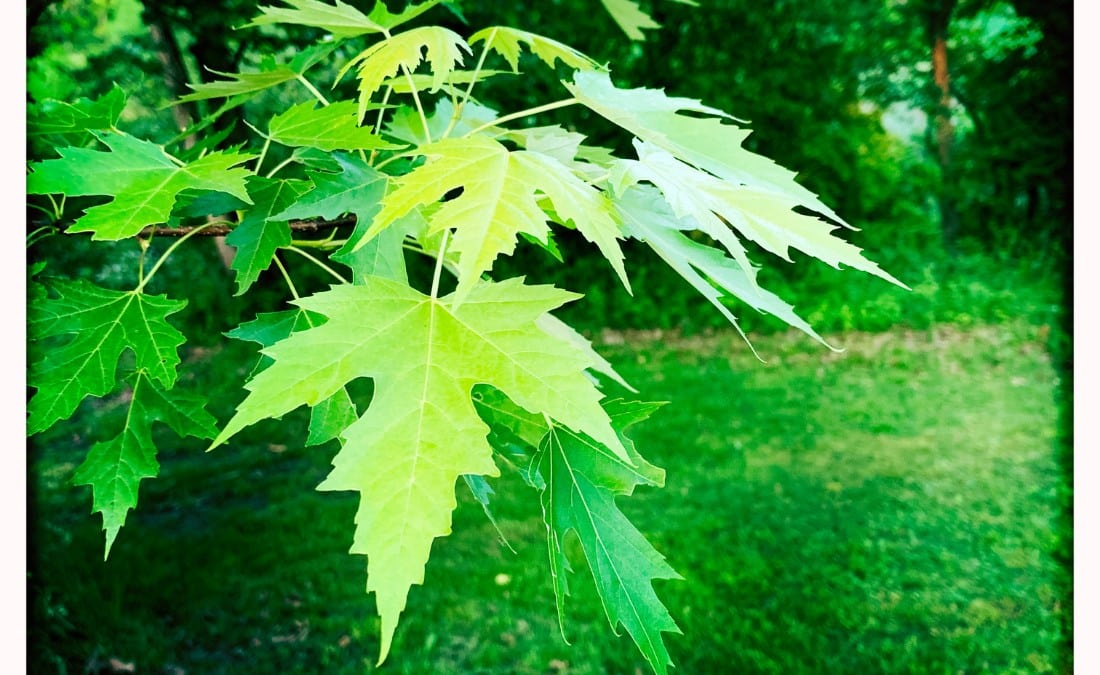
- Non-Oak Trees Nearby: Maples and other non-oaks aren’t hosts for oak wilt, so they aren’t at risk of becoming infected with the disease.
- Oaks Farther Away: Greater distance makes a root connection less likely, but it doesn’t eliminate the other route of transmission. Sap-feeding beetles can introduce oak wilt to a fresh wound on an oak that has no root connection to the original infected tree.
Are All Oak Trees Equally Likely to Get Oak Wilt?
No. One of the biggest differences is whether your tree belongs to the red oak group or white oak group. Oaks in both groups can become infected, but red oaks are generally much more susceptible and tend to decline faster after infection.
Red Oak Group: Higher Susceptibility
Pin oak, northern red oak, and other members of the red oak group are highly susceptible to oak wilt. Once infected, these trees can decline rapidly, sometimes progressing from initial symptoms to severe canopy loss or death within a single growing season.
Red oaks also play an important role in aboveground spread because infected trees can develop the fungal mats that attract the sap-feeding beetles responsible for carrying oak wilt to fresh wounds on other trees.
White Oak Group: More Resistant
Bur oak, white oak, swamp white oak, and other members of the white oak group can also develop oak wilt, but they generally have greater resistance to the disease. They are better able to compartmentalize the infection, so decline is often slower and may occur over several years rather than weeks or months.
That doesn’t mean a declining bur or white oak should be ignored. It means oak wilt can behave very differently depending on which type of oak is growing on your property.
Not sure whether your tree is a bur oak? Our guide to identifying a bur oak can help.
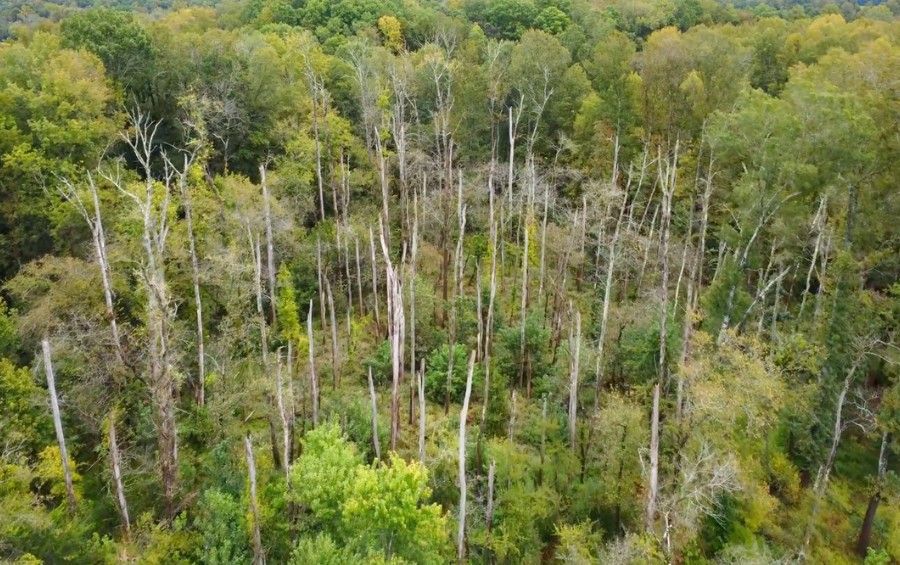
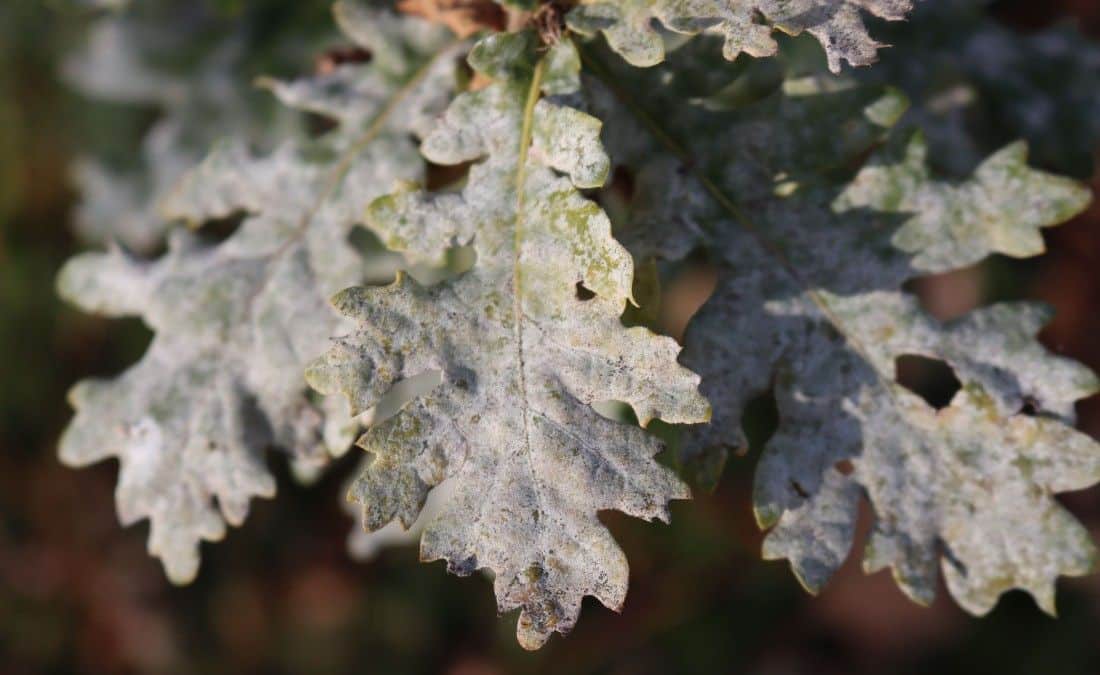
When several nearby oaks begin declining, connected root systems are one possible pathway for oak wilt to move from tree to tree.
How Can I Tell if Oak Wilt Has Spread to My Tree?
Rapid wilting, discoloration, and premature leaf drop are important warning signs, but they aren’t specific enough to confirm oak wilt by themselves.
Watch for:
- Wilting or browning that begins in the upper canopy and progresses into other parts of the tree.
- Leaves that turn dull green, bronze, or brown while the rest of the canopy should still be actively growing.
- Premature leaf drop during the growing season, particularly when affected leaves are falling well before normal autumn color change.
- Rapid canopy decline, with increasingly large portions of the tree wilting or browning over a relatively short period.
- Scattered branch dieback or localized wilting, which can occur in oaks that develop the disease more slowly.
Oak wilt can resemble bacterial leaf scorch, Tubakia leaf spot, drought stress, and other problems, so these symptoms should be treated as warning signs rather than confirmation of the disease.
What Should I Do if a Nearby Tree Has Oak Wilt?
If oak wilt is suspected or confirmed nearby, the priority is figuring out whether your trees could be exposed and what can still be done to protect them.
- Confirm that oak wilt is actually the problem. Several tree problems can resemble oak wilt, so don’t make treatment or removal decisions based on symptoms alone. Laboratory testing may be used to confirm a suspected infection.
- Have nearby oaks evaluated. An arborist can identify the species, look at how close the trees are to the infected oak, and determine whether root-graft transmission is a concern.
- Protect healthy oaks before they develop symptoms. Preventive fungicide treatment may be an option for certain high-value oaks, but it needs to be considered before infection and isn’t appropriate for every tree.
- Address possible underground spread. When root grafts could connect an infected oak to nearby healthy oaks, an arborist can determine whether measures to disrupt those root connections are warranted.
- Avoid creating fresh wounds on healthy oaks during the high-risk period. Pruning or other injuries can create an entry point for beetle-carried spores, so unnecessary wounding should be avoided when transmission risk is highest.
The right response depends on which oaks are nearby, how close they are to the infected tree, and whether the disease has been confirmed. Schedule an assessment with our Liberty/Parkville team to determine which trees are at risk and whether preventive insect and disease control or other protective measures are appropriate.
Frequently Asked Questions About Oak Wilt
Is oak wilt the same as sudden oak death?
No. Sudden oak death is a separate disease caused by a different pathogen, and it’s confined to the West Coast. It isn’t present in Missouri.
Does oak wilt affect trees besides oaks?
No. Oak wilt only infects oak species. A maple or elm growing right next to an infected oak can’t contract oak wilt itself, even though it shares the same soil and root zone.
Does removing a dead oak stop the disease from spreading?
Removing an infected tree can reduce future above-ground spread, but removal alone may not stop the fungus from moving through existing root grafts. Where root-graft transmission is a concern, an arborist may recommend trenching or another method of disrupting those connections.
Is it safe to burn firewood from a tree that died of oak wilt?
Yes. Oak wilt–infected wood can be burned, and the fungus is destroyed by the heat. The bigger concern is what happens to the wood before it’s burned. Fresh wood from an infected oak can potentially contribute to the spread of oak wilt if fungal mats develop and attract the beetles that carry the disease.
Avoid moving fresh, unseasoned wood from an oak that died of oak wilt. If you’re keeping it for firewood, follow Missouri Extension recommendations for properly drying, storing, or covering the wood so it doesn’t become another source of infection.
Can a tree recover once it already has oak wilt?
No treatment can reverse oak wilt once a tree is showing symptoms; fungicide only works as prevention on healthy trees, not as a cure. At that stage, the realistic goal shifts to protecting the still-healthy trees nearby rather than saving the infected one.
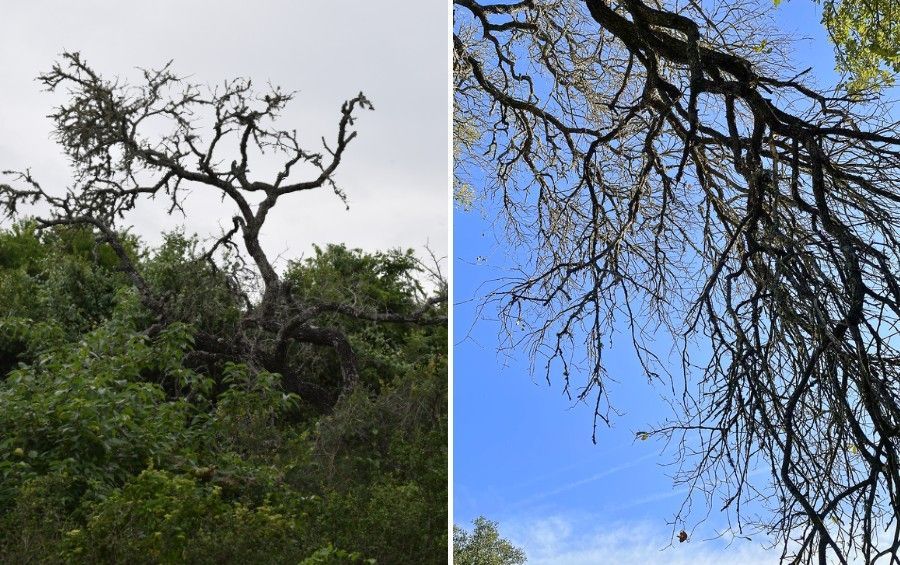
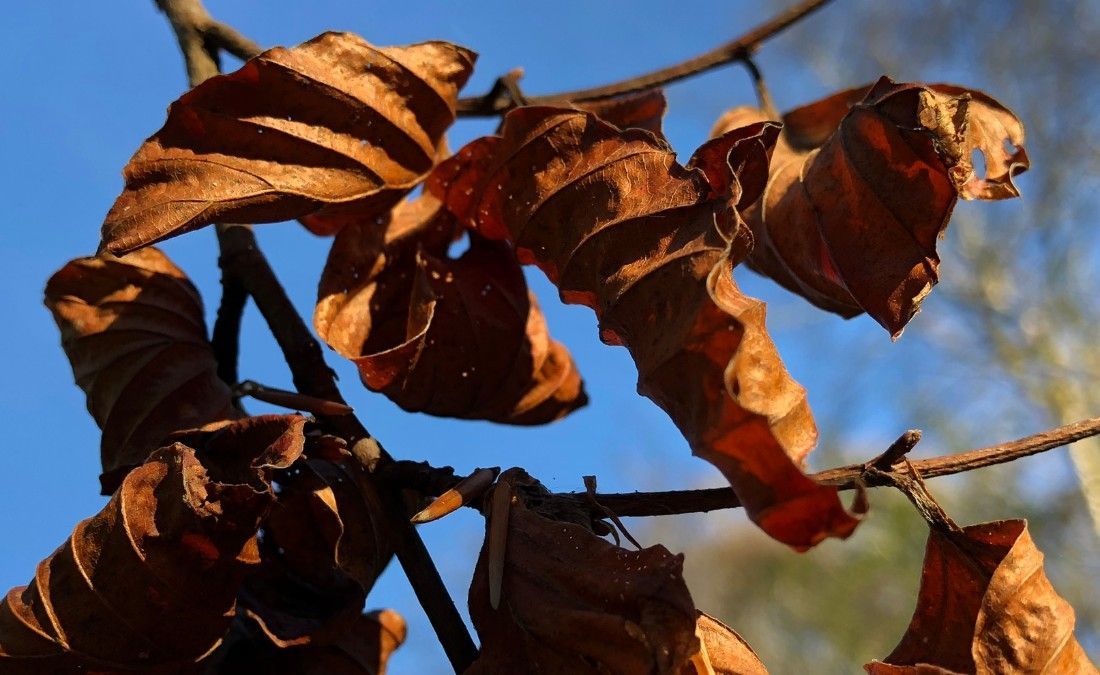
Browning and canopy thinning can indicate oak wilt, but similar symptoms can have other causes, making proper diagnosis important before treatment.
Find Out What Oak Wilt Nearby Means for Your Trees
One infected oak doesn’t mean every oak on your property will develop the disease, but it does mean the trees around it deserve a closer look. An ISA Certified Arborist can identify which oaks may be at risk, evaluate the potential for root-graft spread, and determine whether preventive treatment or other protective measures make sense.
Call Arbor Masters’ Liberty/Parkville team at 816-281-6536 or request a quote online to have your oaks evaluated.

Want More Like This?
Get the latest local news, tree care tips, special offers, and company updates directly to your inbox! It's easy to subscribe and there's no spam - we promise.
"*" indicates required fields