
Are Your Silver Maples Becoming a Liability in Gladstone?
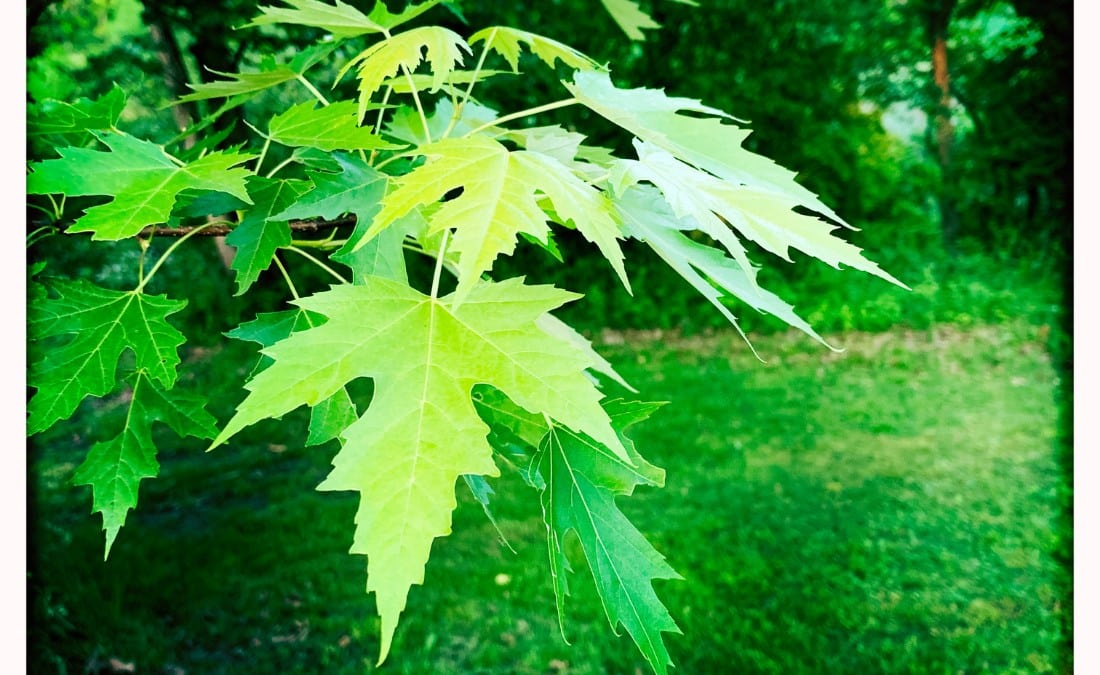
Gladstone's mature silver maples hide brittle wood, weak stem unions, and invasive roots. See the warning signs and what a tree risk assessment reveals.
Go into any older neighborhood in Gladstone and you’ll see a silver maple towering in virtually every yard. Thousands were planted from the 1960s through the 1980s because they grew quickly and provided abundant shade. Today, many of those same trees are reaching an age where their fast growth has become a structural weakness.
Summer storm season is when many of these aging trees begin to show their weaknesses. Heavy canopies, brittle wood, and years of growth make silver maples more susceptible to broken limbs and structural failure during high winds. If you’ve noticed large dead branches, a trunk that’s beginning to split, or limbs falling after storms, it’s time to have the tree inspected.
Key Takeaways
- Silver maples have soft, brittle wood and weak branch unions that make it one of the most failure-prone trees in many Gladstone yards.
- Many Gladstone silver maples are now 50 years old or more, aging out of their safe structural life at the same time.
- Split-looking forks, surface roots, recurring sewer backups, and regrowth from old topping cuts are reasons to get an assessment, not to attempt repairs yourself.
- A professional tree risk assessment measures hidden defects and opens up real options: structural pruning, cabling and bracing, or removal.
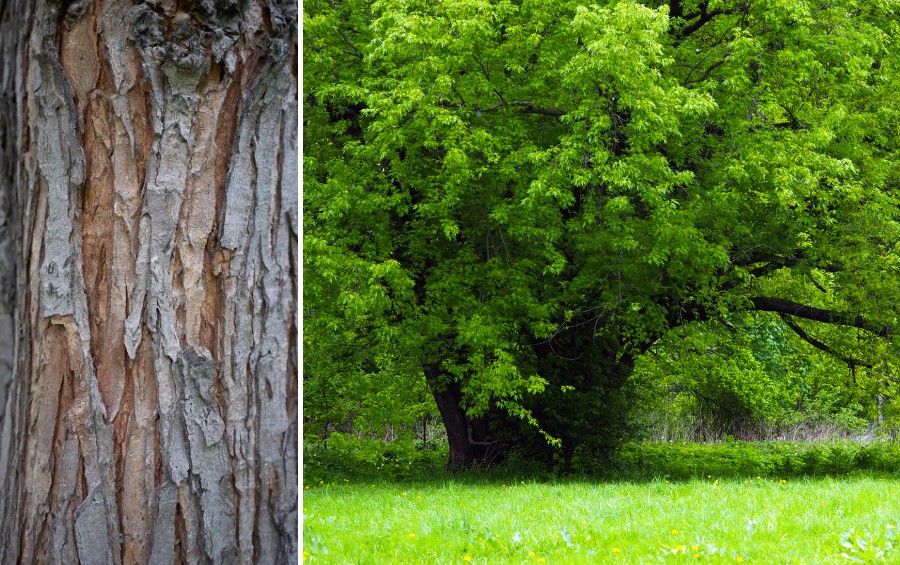
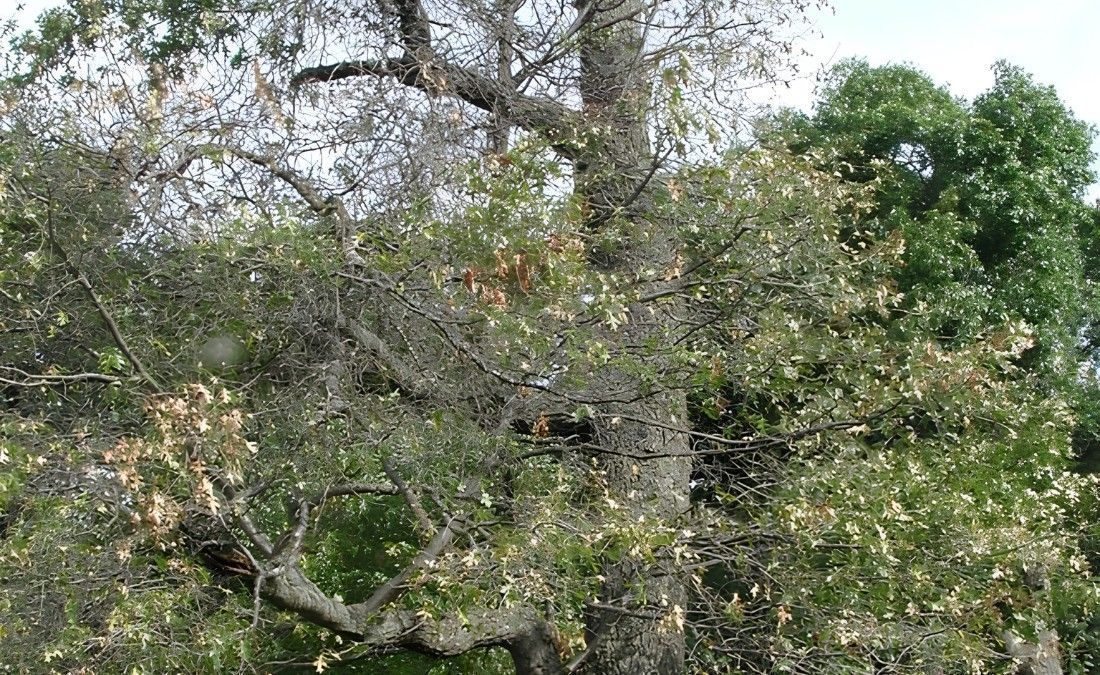
Mature silver maple bark turns shaggy and gray, and a full canopy like this can hide structural weakness inside the wood.
What Makes Silver Maples More Likely to Fail?
Silver maples concentrate more structural weaknesses in a single tree than almost any other common landscape species. The same traits that make them grow quickly make them break, split, and disrupt what’s underground. Although, three reasons stand out the most.
Brittle Wood
Silver maples produce relatively weak, brittle wood that is more likely to crack or break under the weight of a full summer canopy, heavy snow, or high winds.
Weak Branch Unions
Silver maples commonly develop codominant stems—two or more trunks of similar size growing from the same point. These unions often contain included bark, where bark becomes trapped between the stems instead of forming a strong connection.
Research shows included bark can reduce the strength of a branch union by roughly 14 to 20 percent. That’s why these weak attachment points are one of the most common locations for trunk or branch failure.
Aggressive Surface Roots
Silver maples have shallow, fast-growing root systems that can create problems above and below ground. Their roots commonly lift sidewalks and driveways and are known to invade older sewer lines through existing cracks or leaky joints.
What Are the Warning Signs of a Failing Silver Maple?
Many structural problems can be spotted from the ground before a tree fails. If you notice any of the following warning signs, it’s time to schedule a professional inspection.
- A fork where the bark looks squeezed into the seam rather than forming a rounded, open “U,” which is a sign of included bark
- Vigorous vertical shoots, or watersprouts, growing back from old topping cuts; this regrowth is attached far more weakly than natural branches
- Surface roots, lifting sidewalk slabs, or sewer and drain backups that keep returning
- Dead or hanging limbs, visible cracks where branches attach, or a seam running down the trunk
On their own, any of these is enough reason to schedule an assessment. A lot of them together on an older tree is a much stronger signal that the structure has begun to fail.
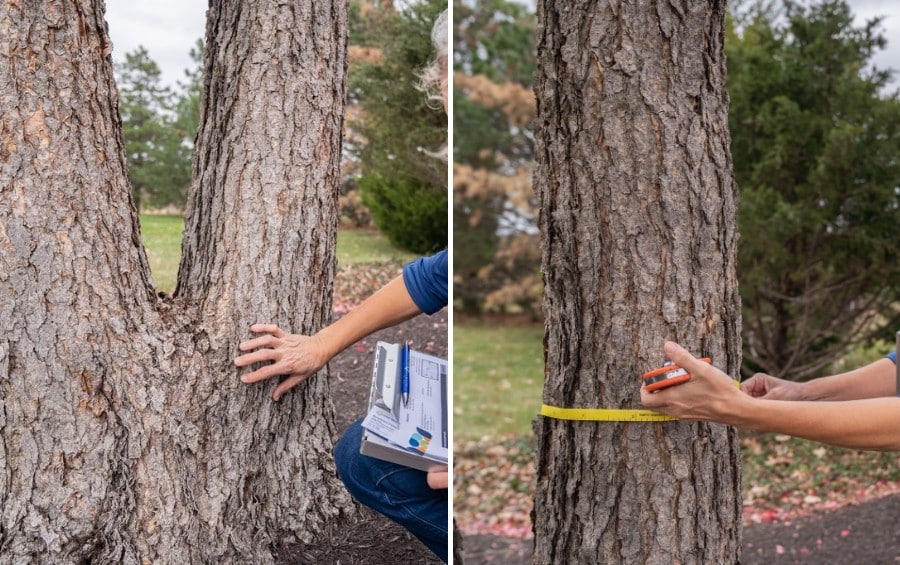
A certified arborist checks the trunk union and takes measurements—the hands-on evaluation a ground-level glance can’t replace.
What Does a Professional Tree Risk Assessment Reveal?
A professional tree risk assessment measures the things a ground-level look can’t. The job of the arborist is to quantify whatever it is you noticed. An ISA Certified Arborist looks at multiple things you can’t assess from the yard:
- Union Geometry: Whether each fork is sound or pinched with included bark
- Internal Decay: Hidden rot that a full, healthy-looking canopy can mask
- Root Condition: Anchoring strength and any damage below ground
- Lean and Load: Shifts in the trunk and how branch weight is distributed
- Targets: What sits within reach of a failure, like your house, the driveway, or a play area
Hidden decay and included bark don’t make themselves known from the ground, which is how a tree that looks healthy can still be a high risk. So, you get a professional evaluation of your tree’s health and structure and a recommended course of action.
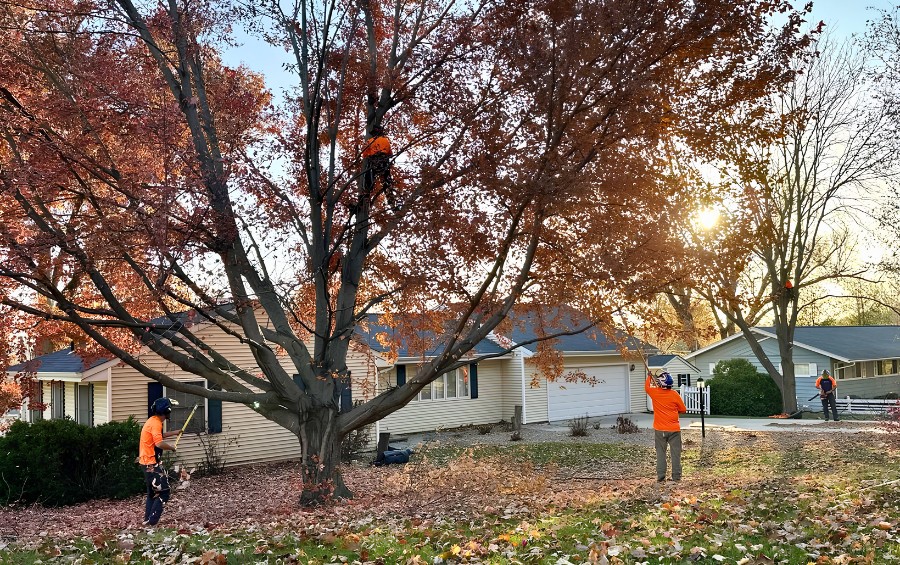
The Arbor Masters Liberty/Parkville crew at work—structural pruning can lower failure risk on a tree that’s still sound.
What Are Your Options After a Silver Maple Assessment?
Following an assessment, you typically have a few options that range from least to most invasive, and the findings identify which is most appropriate. The idea is to match the response to the risk instead of just defaulting to the most drastic step. Possible options can include:
- Structural Pruning: Lightens heavy limbs and trims end-weight to lower the chance of failure, and it works well on a tree that is otherwise sound
- Cabling and Bracing: Supports weak codominant unions and reduces the odds of a fork splitting in a storm; the hardware is installed to ANSI A300 standards
- Removal: The right call when decay, structure, or target risk has moved past what support can manage
None makes a tree permanently safe, but the right choice substantially reduces the risk you’re living with.
Frequently Asked Questions About Silver Maple Trees
When do silver maples become a safety risk?
Silver maples can live for many decades, but structural problems often develop long before the tree reaches the end of its lifespan. By the time a silver maple is 50 years old or more, it’s a good idea to have it inspected regularly for defects such as weak branch unions, decay, and large dead limbs—even if it still leafs out each spring.
How can I tell a silver maple apart from a sugar maple?
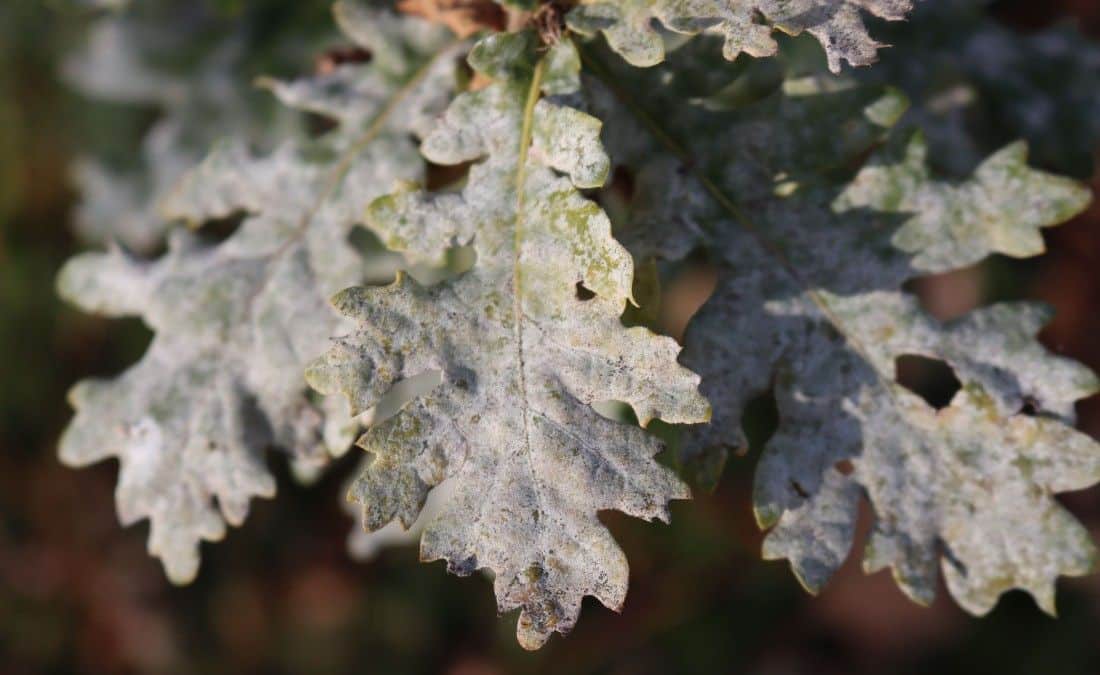
Silver maple leaves have deeply cut lobes with silvery-white undersides that flash in the wind, and the species produces the largest winged seeds of any native maple. The mature bark turns shaggy and gray, and a broken branch gives off a distinctly unpleasant odor.
Does homeowners insurance cover damage if my silver maple falls?
Coverage varies by policy and circumstance, and many policies treat the damage differently when a tree was visibly hazardous beforehand. That’s one reason a documented professional assessment can be valuable. For specifics, check with your insurer.
Does topping a silver maple make it safer?
No. Topping a silver maple usually makes it more dangerous. Cutting the canopy back to stubs forces dense regrowth of watersprouts that attach weakly and break easily, and the large wounds open the trunk to decay.
Should I wait until winter to have my silver maple checked?
No. If you have concerns about your silver maple, it’s best to have it inspected as soon as possible. Summer storms place the greatest stress on mature silver maples, making structural defects more likely to result in broken limbs or trunk failure.
Confidently Know Whether Your Silver Maple Is a Risk
Older silver maples don’t always show obvious signs of failure until a storm puts them to the test. A professional risk assessment is how anxiety becomes an educated decision instead of a middle-of-the-night emergency. If you have an older silver maple you’re not sure about, call 816-781-8914 or schedule an assessment with our Liberty/Parkville team before the next round of summer storms.
Want More Like This?
Get the latest local news, tree care tips, special offers, and company updates directly to your inbox! It's easy to subscribe and there's no spam - we promise.
"*" indicates required fields
