
Cabling and Bracing Mature Trees in Fort Worth: When Structural Support Saves a Tree (and When It Can’t)
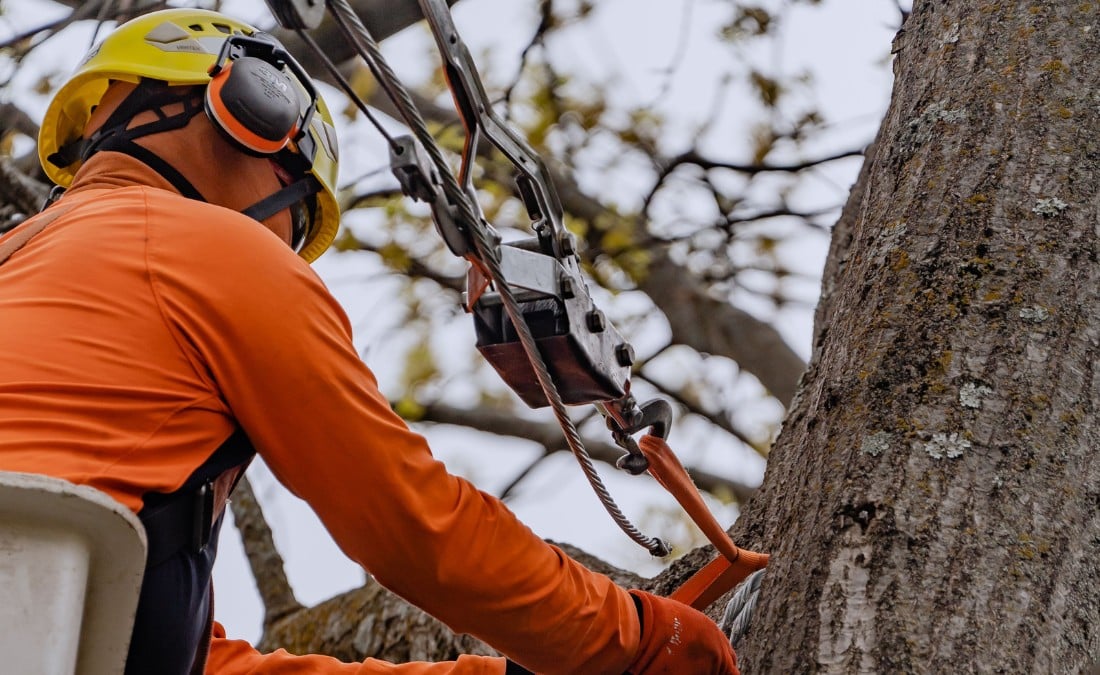
Not every damaged tree needs to come down. Learn how cabling and bracing work, which trees are good candidates, and when removal is unavoidable.
Losing a mature tree can change the look, shade, and value of your property overnight. Before you assume removal is your only option, it’s worth knowing that many structurally compromised trees can be preserved with cabling and bracing. The challenge is determining which trees can be safely supported—and which have reached the point where removal is the better choice.
Key Takeaways
- Cabling and bracing are two distinct systems that often work together to support structurally weak trees.
- Not every tree with visible damage is savable—professional assessment determines if preservation is realistic or removal is safer.
- Fort Worth’s tree ordinance encourages preservation of protected trees, but hazardous trees can still be removed through the proper permitting process when justified.
- Properly installed systems can extend a tree’s life by 10–30+ years.
- Annual inspections are essential to keep systems effective.
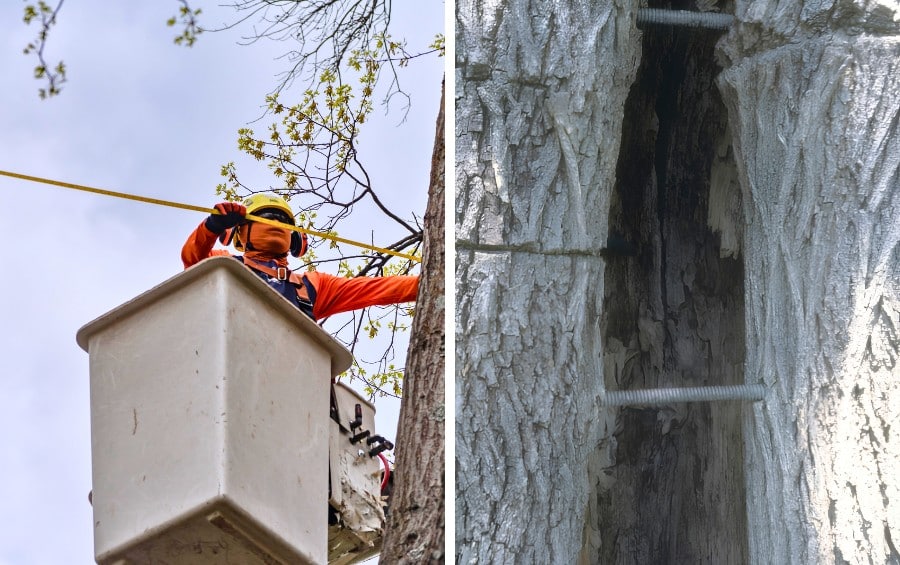
Cabling and bracing serve different purposes. Cables provide supplemental support to weak limbs and branch unions, while brace rods help stabilize trunks or stems that have already cracked or split.
What’s the Difference Between Cabling and Bracing?
Cabling and bracing are two distinct support systems, and the key factor in choosing between them is whether the damage is already visible.
Cabling Works for Preventative Support
Cabling uses high-strength steel cables installed in the upper canopy to limit limb movement and redistribute weight. This system helps trees with heavy, overextended limbs or weak crotch angles (less than 60 degrees) that are otherwise healthy.
There are two primary cabling systems:
- Static Cabling: Uses steel cables and hardware to provide strong support and limit movement between limbs. Static steel cabling typically requires hardware installed through the branch or stem.
- Dynamic Cabling Systems: Use flexible synthetic materials that allow greater natural movement while still reducing the risk of failure. Dynamic systems are usually wrapped around the supported limbs and do not require drilling.
The right system depends on the tree’s structure, defect severity, and the arborist’s recommendations.
Regardless of the system used, cabling does not heal structural weaknesses. Instead, it reduces the risk of failure in structurally weak but otherwise healthy trees while allowing the canopy to move naturally in the wind.
Ideal Candidates for Cabling
- Trees with codominant stems (two main trunks from the same base)
- Mature trees with sagging, overextended limbs
- Trees that survived storm damage without major cracks
- Trees in high-value neighborhoods where preservation is financially sensible
Bracing Works for Corrective Support
Bracing uses threaded steel rods or bolts installed through the weak point (usually the lower trunk or major limb union) to reinforce and immobilize the damaged area. This system addresses structural defects that cabling alone cannot fix.
Unlike cabling, bracing provides rigid, static support. It’s more invasive because it requires drilling, but it handles cracks and splits that need immediate stabilization.
Ideal Candidates for Bracing
- Trees with visible cracks or splits in the trunk
- Trees with included bark between codominant stems
- Trees showing splintering or partial separation
- Post-storm trees with internal structural failure
Combining Both Systems Is Often the Best Approach
Cabling and bracing are often used together. In many cases, arborists can install cabling without bracing, but bracing is rarely installed without supplemental cabling. Bracing immobilizes cracks and splits while cabling provides additional support to weak limbs, creating maximum stability for severely compromised trees.
Should You Cable Your Tree?
Spring and summer storm season in Fort Worth creates urgency—regular 60+ mph wind events and spring tornadoes mean trees can fail catastrophically unless properly supported.
If you live in Bedford, Hurst, or North Richland Hills, where homes from the 1970s–1990s often feature mature oaks and elms planted decades ago, this urgency is even more acute. These aging trees in established neighborhoods are prime candidates for cabling support before the next major storm.
When Cabling Is the Right Choice
Cabling is most effective when a tree is structurally weak but otherwise healthy. The goal is not to repair damage but to reduce the likelihood of future failure. Trees with codominant stems, long overextended limbs, or storm-related structural weaknesses are often good candidates if the trunk, roots, and overall canopy remain healthy.
A properly installed cabling system can extend a tree’s life by 10–30+ years. Installation typically happens in one day.
Maintenance After Cabling
Annual inspections are essential to keep cabling systems effective and identify problems before they become safety hazards. Arborists inspect the cables, hardware, and attachment points to ensure everything remains secure and functioning as intended.
Steel cabling systems are inspected to make sure the cable is properly tensioned, hasn’t snapped, and all parts are intact. Dynamic cabling systems are checked to ensure they remain properly positioned, have not been damaged by wildlife or weather, and are not girdling the tree.
Annual inspections can be performed from the ground using binoculars, but periodic aerial inspections allow arborists to closely evaluate the system and make adjustments as the tree grows.
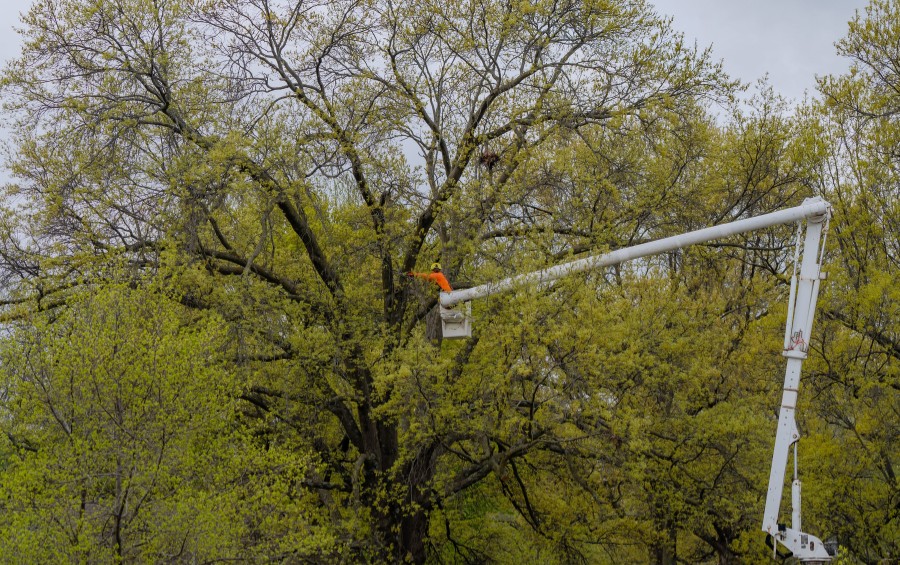
For mature North Texas trees, cabling can help reduce the risk of storm-related limb failures while preserving valuable shade trees.
Should You Brace Your Tree?
Bracing is a corrective strategy for trees that have already suffered visible structural damage. It’s the right choice for trees with cracks, splits, or splintering that need immediate intervention but are otherwise salvageable.
When Bracing Is the Right Choice
Bracing is appropriate when structural damage already exists but the tree is still worth preserving. Trees with visible cracks, splits, included bark, or post-storm trees with splintering or partial separation may benefit from bracing if the damage has not progressed beyond repair.
Bracing is more invasive because it requires drilling, but it’s more permanent and effective for structural defects. Installation provides immediate stability by locking the weak point in place.
Maintenance After Bracing
Annual inspections ensure rods, bolts, and other hardware remain secure and continue providing adequate structural support. Arborists also evaluate whether additional support measures are needed as the tree grows and responds to stress.
When Should You Remove Your Tree Instead of Cabling and Bracing?
Cabling and bracing cannot fix everything. Sometimes removal is the safer, smarter choice. An honest structural assessment will separate the trees worth saving from those that aren’t.
Removal is the right choice when:
- Extensive internal decay or root rot compromises the structure
- Large trunk sections are missing or lean is extreme beyond correction
- Systemic disease or pest infestation (oak wilt, emerald ash borer, terminal decline) cannot be reversed
- The tree shows overall decline across the whole canopy
When the tree’s overall health or structural condition cannot be restored, removal may provide the safest outcome for your property and family.
How Does Fort Worth’s Ordinance Affect Your Decision?
Fort Worth’s Urban Forestry Ordinance encourages preservation of mature trees whenever feasible. Depending on the tree’s size, species, condition, and the circumstances surrounding the removal, permitting requirements may apply.
While hazardous trees can still be removed through the proper permitting process, homeowners who remove protected trees without following applicable city requirements may face significant penalties. An ISA Certified Arborist can help determine whether a tree qualifies for preservation, whether removal is justified, and whether any city requirements must be addressed before work begins.
What Happens During a Professional Assessment?
A professional structural assessment is the decision point for your tree. An ISA Certified Arborist arrives at your property to inspect your tree in person.
The assessment includes:
- Visual examination of tree structure (crotch angles, cracks, splits, lean, weight distribution)
- Signs of disease or decay affecting preservation feasibility
- Questions about storm damage history and recent changes
- Evaluation of whether the tree is fundamentally healthy or declining
- Assessment of whether structural defects are salvageable or beyond remediation
- Identification of risks to property and people
- Realistic estimate of how long cabling or bracing could extend the tree’s life
Why You Need a Professional Arborist
DIY installation of cabling and bracing is not safe. Improper installation can compromise the effectiveness of the support system, increase structural risk, and potentially damage the tree. Proper placement, hardware selection, and tensioning require specialized training and equipment.
A free structural assessment includes expert evaluation of your tree’s salvageability, realistic timeline, and honest recommendation. Arbor Masters Fort Worth’s ISA Certified Arborists follow ANSI A300 standards—the national installation guidelines for cabling and bracing—ensuring your system is installed safely and will last for decades.
Ready to find out if your tree can be saved? Learn more about our cabling and bracing services.
Frequently Asked Questions About Cabling and Bracing
How long do cabling and bracing systems last?
Properly installed systems last 20–40 years or more. They require annual inspections to stay effective. Hardware may need adjustment or replacement every 5–10 years as the tree grows.
Does cabling hurt the tree?
No. Properly installed cabling systems are designed to support structurally weak trees while allowing some natural movement. They do not repair defects, but they can reduce the risk of failure in otherwise healthy trees.
Should I wait and see if the damage gets worse?
No. A structurally weak tree continues to deteriorate in storms. Small cracks worsen rapidly under wind stress. A split trunk can separate further and eventually fail catastrophically. Risk grows with each major storm.
Is cabling and bracing cheaper than removal?
Often, yes. Cabling and bracing are typically less expensive than removing and replacing a mature tree. However, the right choice depends on the tree’s condition, location, and long-term risk. A professional assessment can help determine which option provides the best value and safety.
What if my tree can’t be saved?
Sometimes removal is the most responsible choice. Trees with extensive internal decay, severe structural failure, or systemic disease cannot be safely stabilized. Arbor Masters Fort Worth can guide you through the process and explain ordinance requirements.
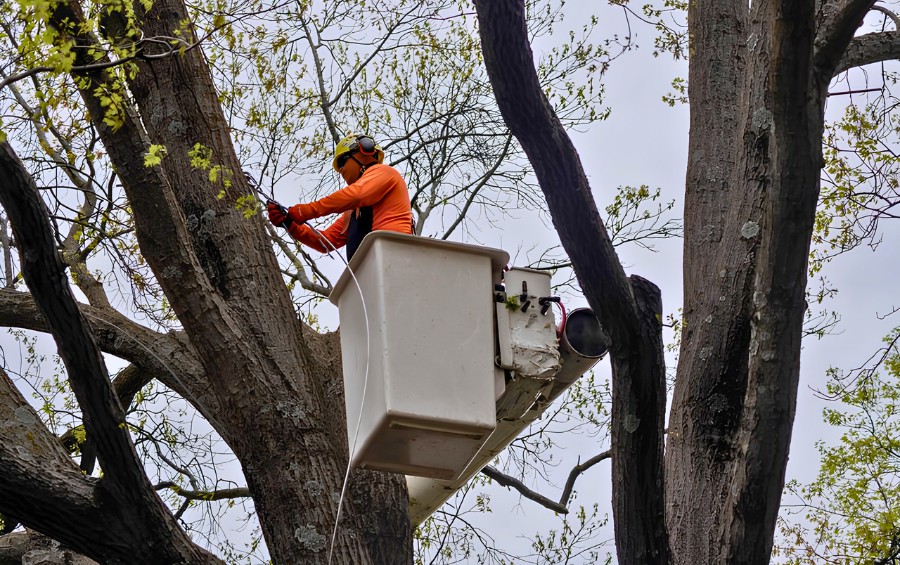
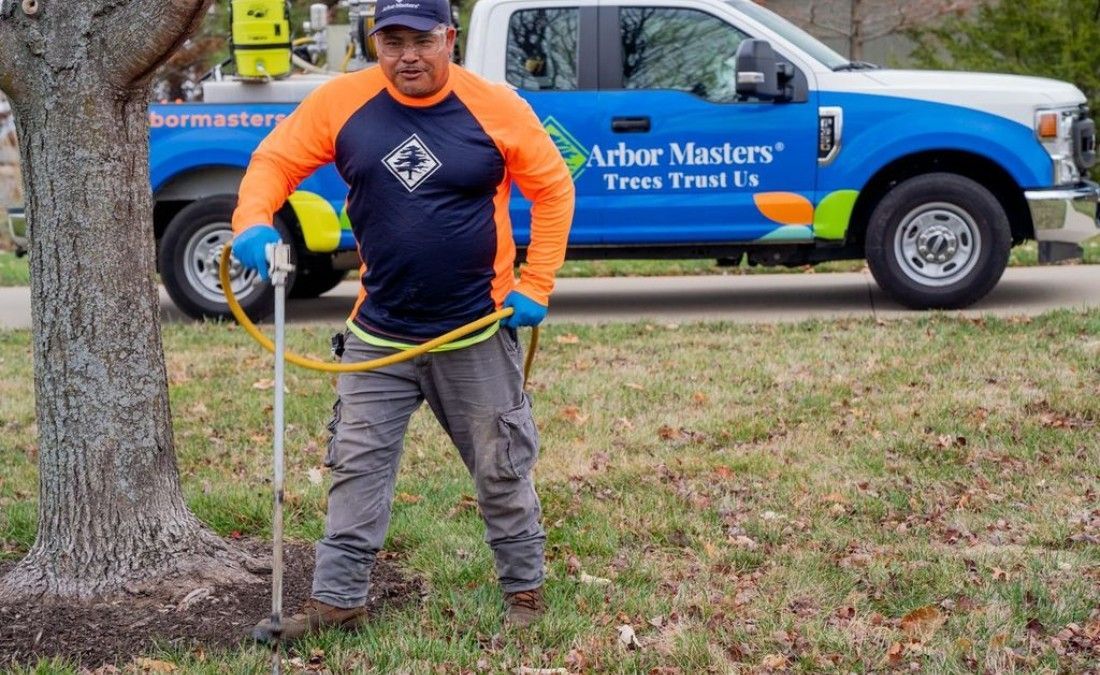
An arborist installs a tree cable to reinforce a weak branch union and reduce the risk of structural failure during future storms.
Can Your Tree Be Saved? Get a Professional Assessment Before the Next Storm.
Today’s small crack can become tomorrow’s fallen limb. Structural defects tend to worsen with every storm, especially during Fort Worth’s severe weather season. Getting a professional assessment now can help you address problems before they become emergencies.
Schedule your free structural assessment with Arbor Masters Fort Worth today. An ISA Certified Arborist will evaluate your tree, recommend the best path forward, and answer all your questions. Call 469-586-5829 or contact us to get started.
Learn More With These Related Articles

Want More Like This?
Get the latest local news, tree care tips, special offers, and company updates directly to your inbox! It's easy to subscribe and there's no spam - we promise.
"*" indicates required fields
