
Pecan Trees in Fort Worth: Problems, Care & What to Watch For
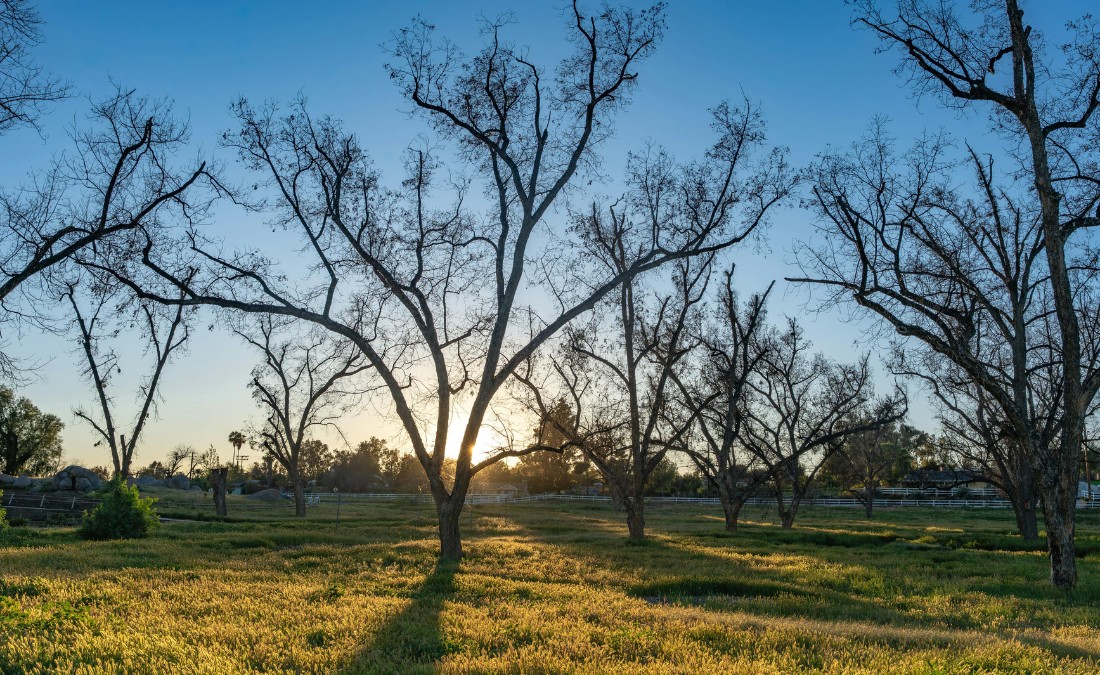
Protect your Fort Worth pecan tree. Learn how local conditions impact its health, what proper care looks like, and when expert help is needed.
The pecan is the Texas state tree — and in Fort Worth neighborhoods like Tanglewood and Ridglea, it’s not just a symbol, it’s part of the landscape. Many of the pecan trees in these areas were already standing when the homes were built, which means today’s homeowners aren’t planting them — they’re inheriting them.
That history comes with responsibility. When a pecan tree starts showing yellowing leaves, slow growth, or a thinning canopy in spring, it’s usually a sign something isn’t right. In Fort Worth, the cause is often tied to local soil conditions and environmental stress — issues that don’t fix themselves without the right approach.
Key Takeaways
- Pecan trees can live 100–300 years, and many specimens in neighborhoods around Fort Worth are legacy trees that predate the homes around them.
- Living with a mature pecan means significant leaf and nut drop, alternate bearing years, and a tree that needs more zinc than Fort Worth’s alkaline soils can provide.
- Seasonal timing matters; from late-winter pruning to spring zinc sprays to late-summer weevil monitoring, each season has critical care windows.
- Pecan scab, pecan weevil, and phylloxera are the top threats, and most require professional treatment on mature trees 60–100+ feet tall.
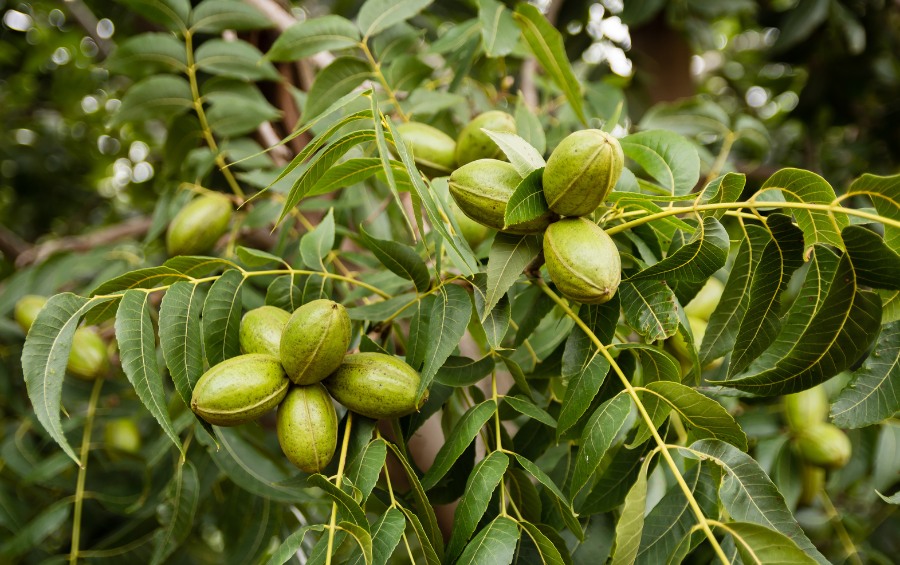
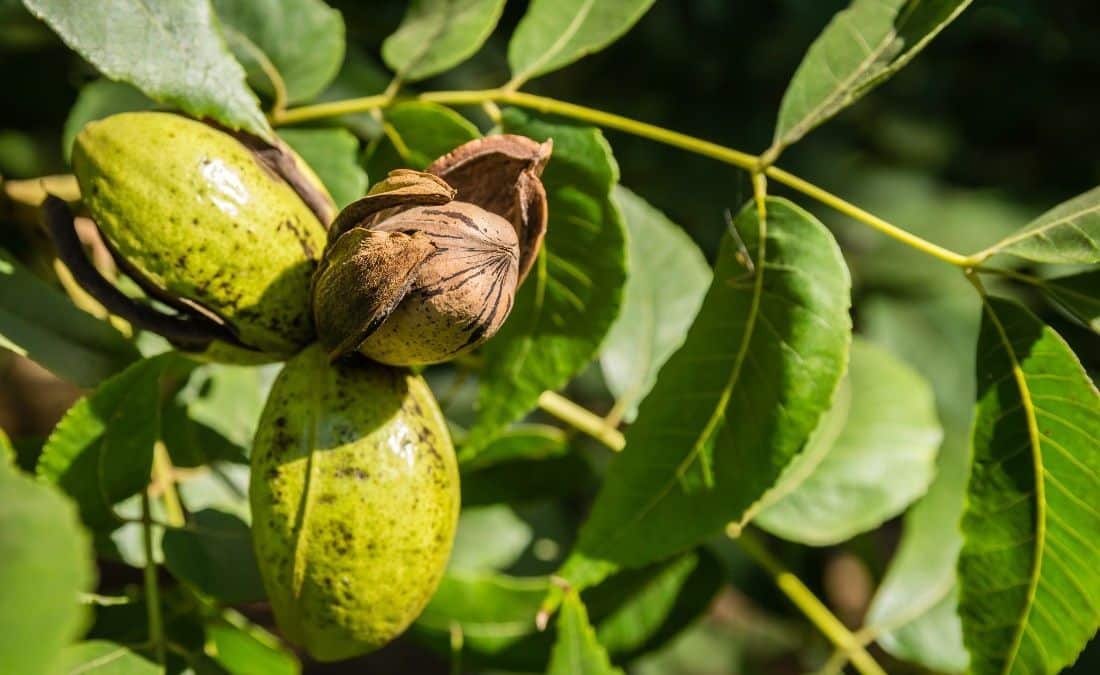
Developing pecans grow in tight clusters surrounded by the compound leaves and 9–17 leaflets that help identify the species.
How Do You Identify a Pecan Tree?
The pecan tree (Carya illinoinensis) is a type of hickory native to river valleys across the central and southern U.S. and northern Mexico. Unlike the evergreens common in Central Texas, pecans are deciduous — so what they look like changes throughout the year.
Here’s how to identify a pecan tree:
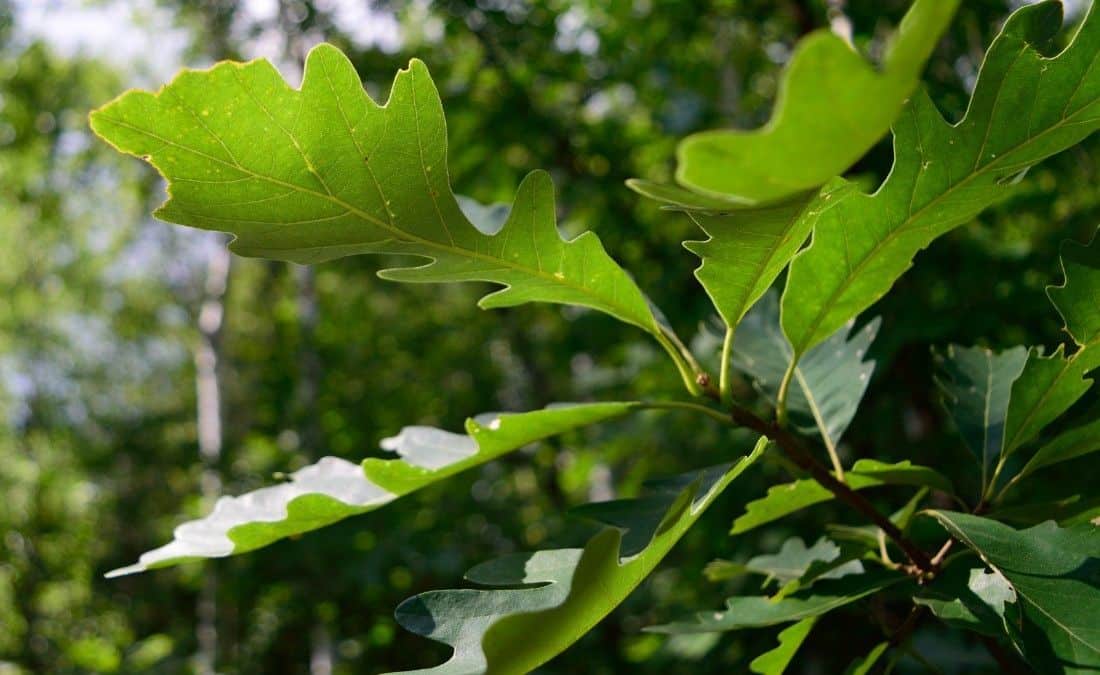
- Leaves: Long, compound leaves with 9–17 leaflets arranged in pairs, plus one at the tip
- Bark: Deeply furrowed on mature trees, forming a rough, ridged pattern
- Nuts: Oblong with thin, smooth shells — one of the easiest ways to identify them when present
- Seasonal Changes: Drops leaves in winter, leafs out in early spring, and produces nuts in the fall
- Size: Typically 60–100+ feet tall with a wide canopy and thick trunk
- Lifespan: Can live 100–300 years — many in Fort Worth predate the homes around them
Mature pecan trees are especially common in older Fort Worth neighborhoods like Tanglewood, Ridglea, Arlington Heights, and parts of Arlington.
How to Tell a Pecan Tree from Other Hickories
Several hickory species grow in North Texas and share similar traits — compound leaves, furrowed bark, and nut production. The key differences are:
- Pecans have more leaflets (9–17 vs. 5–9 for most hickories)
- The leaflets tend to be narrower with a slight sickle curve
- Pecans produce oblong, thin-shelled nuts, while other hickories have round, thick, hard-shelled nuts
Are Pecan Trees High Maintenance in Fort Worth?
Expect a large, high-maintenance tree that drops a significant amount of debris, produces inconsistent crops from year to year, and needs more hands-on care than most other species in your yard.
They’re Big Trees That Need Professional Maintenance
At 60–100+ feet tall with a canopy spread that can shade an entire backyard, mature pecans are not trees you maintain from the ground with hand pruners. Pruning, pest spraying, and structural inspection all require professional equipment and ISA Certified Arborist expertise.
Expect Significant Leaf and Nut Drop
Pecans are deciduous and shed a lot of material throughout the year: leaves in fall, husks and nuts through autumn, and catkins (pollen tassels) in spring. Homeowners with pecans will likely need to spend some extra time at the end of the year cleaning their yard to avoid a mess.
Alternate Bearing Is Normal
Pecans naturally produce a heavy nut crop one year and a lighter crop the next. This is called alternate bearing, and it’s a built-in stress management mechanism, not a sign that something is wrong. If your tree produced buckets of pecans last fall and very few this year, that cycle is completely normal. However, if you haven’t seen nuts in a few years, it may be a sign to call an arborist.
Common Pecan Tree Problems in Fort Worth
The most common problems for Fort Worth pecans are zinc deficiency caused by our alkaline clay soils, pecan scab during wet seasons, and pecan weevil infestations in late summer.
Yellowing Leaves and Stunted Growth: Zinc Deficiency
If your pecan’s leaves are yellowing between the veins, curling inward, or growing smaller than usual, zinc deficiency is the most likely cause. In more advanced cases, you’ll see bare branches with small tufts of leaves only at the tips — a condition arborists call “rosette.” Zinc deficiency can also cause nut production to drop.
The cause is our soil. Tarrant County sits within the Texas Blackland Prairies ecoregion — alkaline clay (pH 7.5–8.3), locally called “black gumbo,” with clay content often exceeding 60%. At that pH, zinc binds to soil particles in forms that pecan roots simply can’t absorb. Soil-applied zinc won’t work at these pH levels. Foliar sprays and deep root fertilization with chelated zinc are the only reliable ways to get zinc to your tree.
Black Spots on Leaves and Nuts: Pecan Scab
Black, fuzzy lesions on leaves, shoots, and developing nuts (sometimes with defoliation and shriveled or dropped nuts) indicate pecan scab. The fungus Venturia effusa causes pecan scab, and it spreads by wind and rain, especially in humid conditions.
Fort Worth sits on the western edge of the high-risk zone, making scab less severe here than in East Texas. However, the disease is still a risk during wet springs and summers. Proper pruning improves air circulation and helps reduce severity, but fungicide treatment on large nut-bearing trees requires commercial-grade application equipment.
Nuts Falling Early or Full of Larvae: Pecan Weevil
If pecans are dropping prematurely in late summer, or harvested nuts have small holes and larvae inside the kernel, pecan weevil is the likely culprit. Adults emerge from the soil in late summer through early fall, and their life cycle spans 2–3 years underground, making them persistent and recurring. Late summer rains trigger dramatic increases in emergence.
Weevils cause two types of damage: early-season feeding before the shell hardens causes nut drop, and late-season egg laying inside hardened nuts produces larvae that destroy kernels. Treating large trees requires specialized spray equipment, and soil-applied insecticides are not effective against this pest.
Less Severe but Still Common Issues
While pecan weevil, scab, and zinc deficiency are the most common problems, they are not the only threats to pecans. These problems are just as worrisome and may require professional pest and disease treatment to set up an integrated pest management program. Other common threats to pecans include:
- Bumpy Galls on Leaves or Shoots in Spring: This is pecan phylloxera, and it’s very common in Fort Worth. It’s rarely fatal on its own, but repeated infestations weaken the tree and make it more susceptible to secondary problems.
- Sticky Residue on Leaves, Cars, or Patios with a Black Sooty Coating: This points to an aphid complex. The black pecan aphid causes the most damage of the three species that affect Fort Worth pecans, and heavy infestations can trigger early defoliation.
- Silken Webs in the Canopy: These are fall webworms. The damage is mostly cosmetic, and trees typically recover on their own, but large infestations on stressed trees may warrant treatment.
- Rapid Tree Death in Late Summer: This is likely cotton root rot (Phymatotrichopsis omnivora), a serious risk in Fort Worth’s alkaline soils with poor drainage. There’s no treatment once symptoms appear, so prevention through soil health is critical.
How Do You Care for a Pecan Tree in Fort Worth?
Pecan tree care in Fort Worth centers on late-winter pruning, consistent zinc supplementation from spring through early summer, deep watering during the hottest months, and thorough fall cleanup to break pest cycles.
Late Winter and Spring: Pruning, Fertilization, and Zinc Sprays
Prune during late dormancy, before bud break, to remove dead, diseased, and crossing branches. On mature trees, seasonal pruning every 2–3 years is typically sufficient. Early spring is also the perfect time to talk with a professional arborist about any fertilization needs based on a soil test.
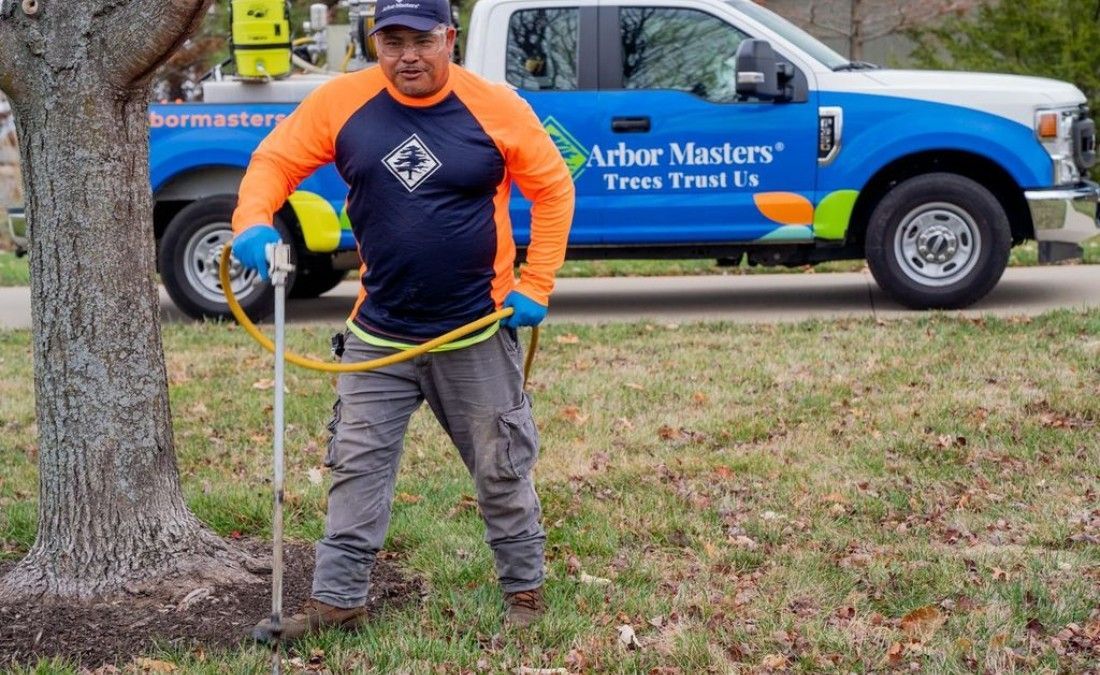
Once bud break begins, zinc supplementation becomes the priority. Because Fort Worth’s alkaline soils lock zinc away from roots, the only effective delivery methods are professional foliar sprays applied at regular intervals through early summer, or deep root fertilization for mature trees too tall to spray from the ground. As the tree blooms, consistent watering is essential for pollination.
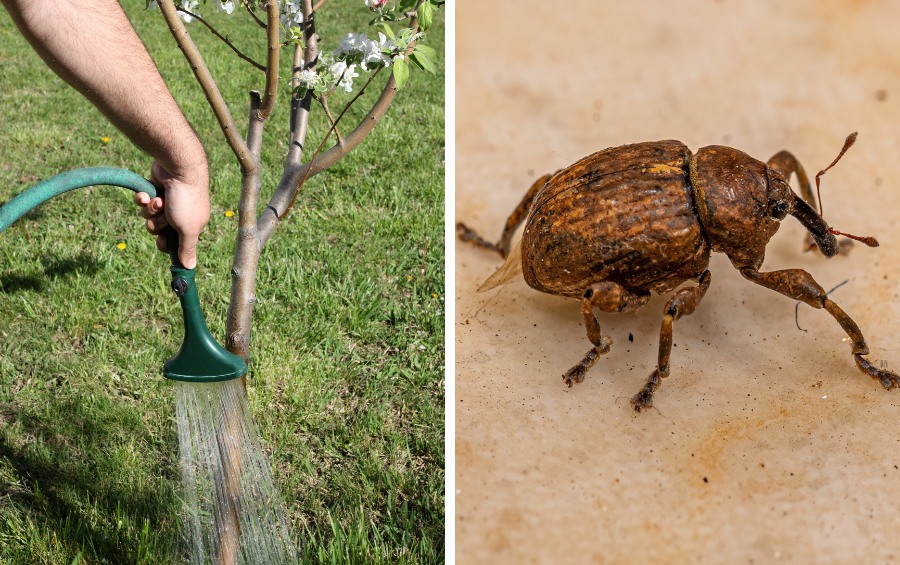
Consistent watering through the hottest months and late-summer weevil monitoring are two of the most important tasks for keeping a Fort Worth pecan healthy.
Summer: Watering and Weevil Monitoring
A mature, producing pecan can need up to 200 gallons of water per day during peak summer demand. Water at least to the drip line (the outer edge of the canopy), never at the trunk base, and don’t let the tree go more than 3 weeks without water. Young trees need far less but still require consistent weekly watering through the hottest months when rainfall is not adequate.
In late summer, watch for premature nut drop, which may signal pecan weevil. Since summer is also the best treatment window for this pest, you should schedule an arborist visit before emergence begins.
Fall and Winter: Cleanup and Inspection
Once nuts start dropping in the fall, harvest them promptly and clean up any leaves and shucks before winter arrives.
Winter dormancy is the best time to inspect structure, as the bare canopy reveals dead branches, cracks, and weak unions hidden by foliage. A dormant-season arborist inspection catches these problems before spring growth and Fort Worth’s wind season.
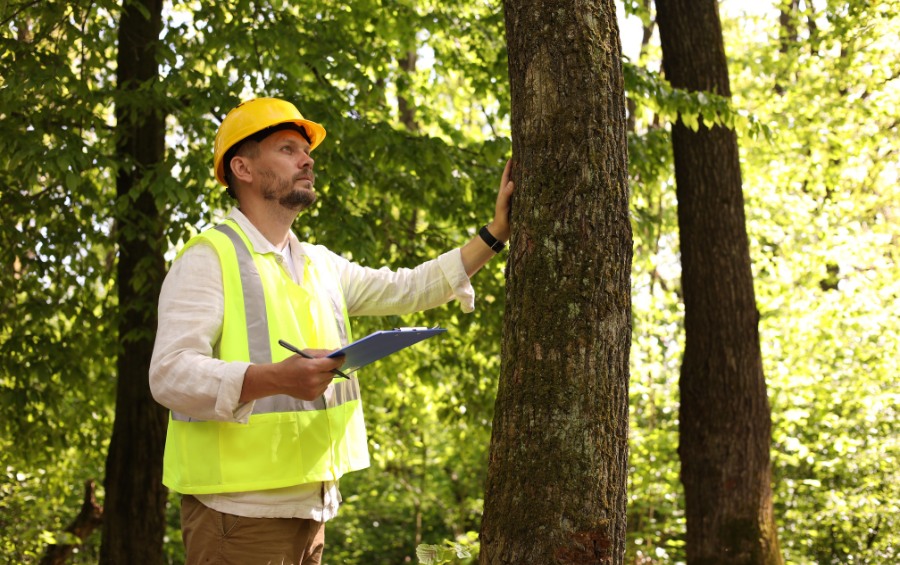
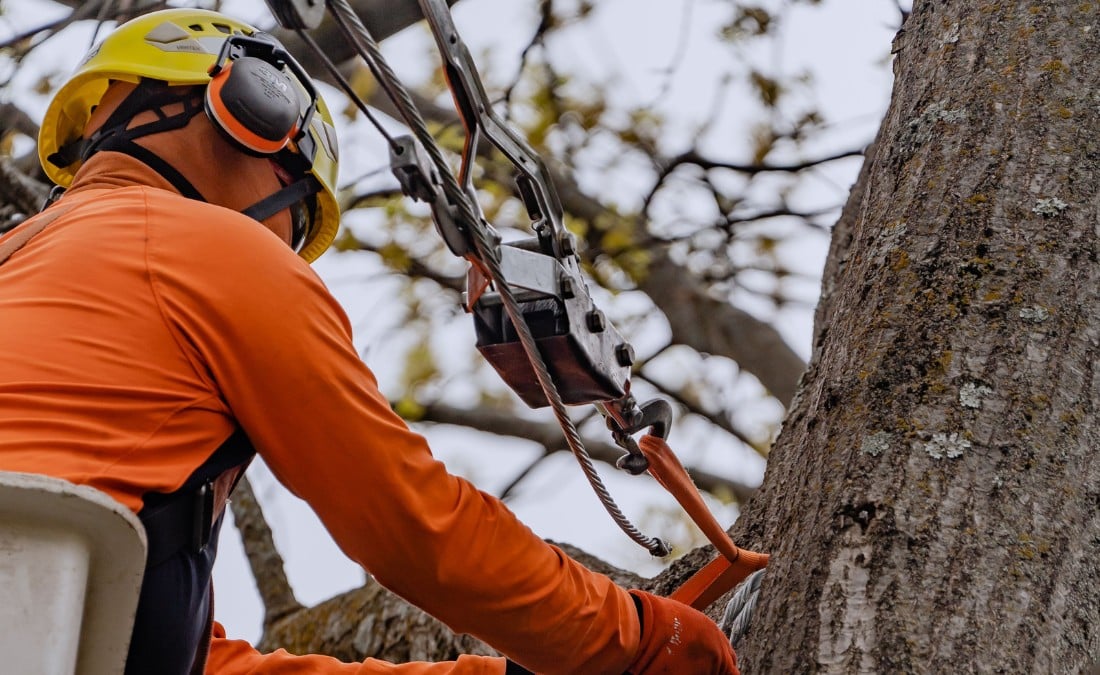
A dormant-season inspection by an ISA Certified Arborist can catch structural problems before spring growth and Fort Worth’s wind season arrives.
Frequently Asked Questions About Pecan Trees
Do pecan trees need a pollinator to produce nuts?
Yes, pecans are wind-pollinated, but most varieties need a different variety nearby for cross-pollination. In established Fort Worth neighborhoods, like Tanglewood and Ridglea, there are usually enough pecans within range. Isolated trees may produce poorly or not at all.
Can you overwater a pecan tree?
Yes, especially in Fort Worth’s heavy clay soils, where drainage is slow. Overwatering can lead to root rot. To avoid this, water deeply at the drip line, but allow the soil to dry somewhat between waterings.
Are pecan tree roots invasive?
Pecan roots can extend as far as the tree is tall and may affect foundations, driveways, and irrigation lines, especially in Fort Worth’s shrink-swell clay soils. This is worth considering before any major landscaping or construction near a mature pecan.
Do pecan trees lose their leaves in winter?
Yes, pecans are deciduous and drop their leaves each fall. They’re also one of the last trees to leaf out in spring. Don’t worry if your pecan still looks bare in early April while other trees are already green, as mid-to-late April leaf-out is normal in Fort Worth.
Get Expert Care for Your Fort Worth Pecan Trees
Many of Fort Worth’s pecan trees have been standing longer than the homes around them. That makes them worth protecting, but they need care tailored to our soil, climate, and pest pressures. Knowing what to expect from your pecan, like what it needs each season and which symptoms to watch for, is the best way to keep a tree healthy that took decades to grow.
If your pecan is showing signs of stress or you want to get ahead of problems with a seasonal care program, our ISA Certified Arborists can assess your trees and recommend a treatment plan. Call us today at 469-586-5829 or request a free quote online.
Learn More With These Related Articles
Want More Like This?
Get the latest local news, tree care tips, special offers, and company updates directly to your inbox! It's easy to subscribe and there's no spam - we promise.
"*" indicates required fields
