
Why Is My West Des Moines Crabapple Losing Leaves in Summer?
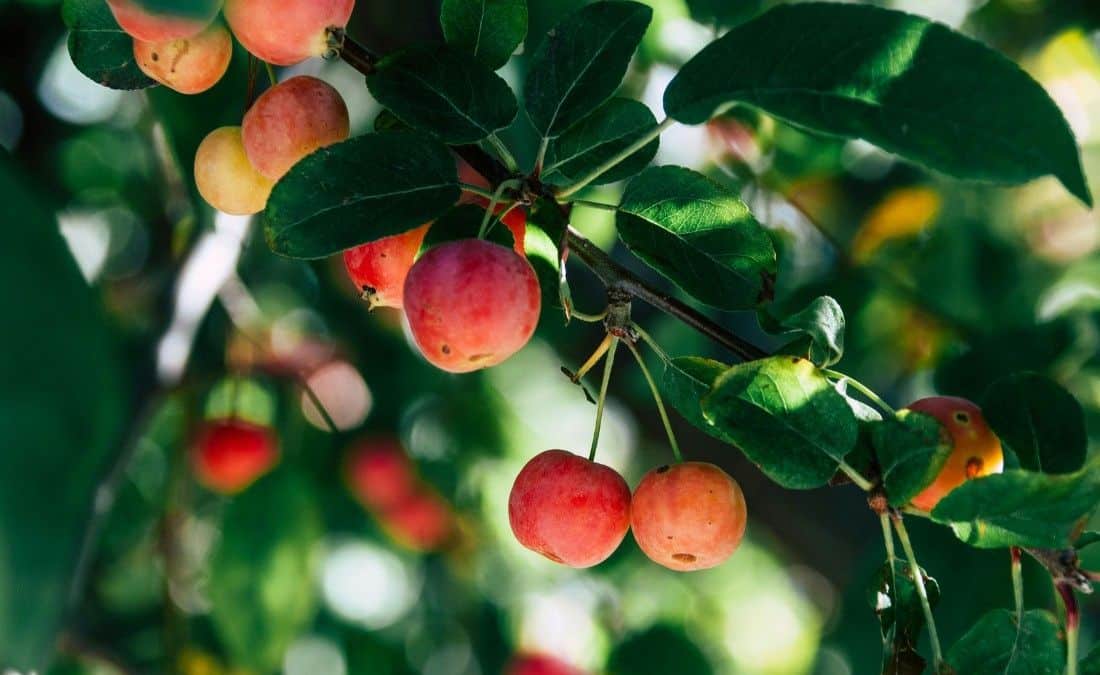
Is your West Des Moines crabapple dropping spotted leaves by late summer? Learn why apple scab returns each year and what actually keeps the tree healthy.
A crabapple that starts summer covered in leaves can look surprisingly bare by the end of it. Across West Des Moines, yellowing leaves covered in dark spots and dropping months before fall are common signs of apple scab, especially following a cool, wet spring.
The good news is that apple scab rarely kills an established crabapple. The frustrating part is that it can return year after year, leaving homeowners to figure out whether the tree is worth treating, can be managed without treatment, or would be better replaced with a more resistant variety.
Key Takeaways
- Spotted, yellowing leaves that drop early are a strong sign of apple scab, particularly after a wet spring, but other problems can look similar.
- It can return each year because the fungus overwinters in fallen leaves and reinfects the new spring growth.
- Fungicides must be applied before apple scab symptoms appear, typically beginning in spring; they won’t cure leaves that are already infected.
- Removing fallen leaves, improving airflow through pruning, and choosing scab-resistant crabapple varieties can reduce the risk of apple scab returning year after year.
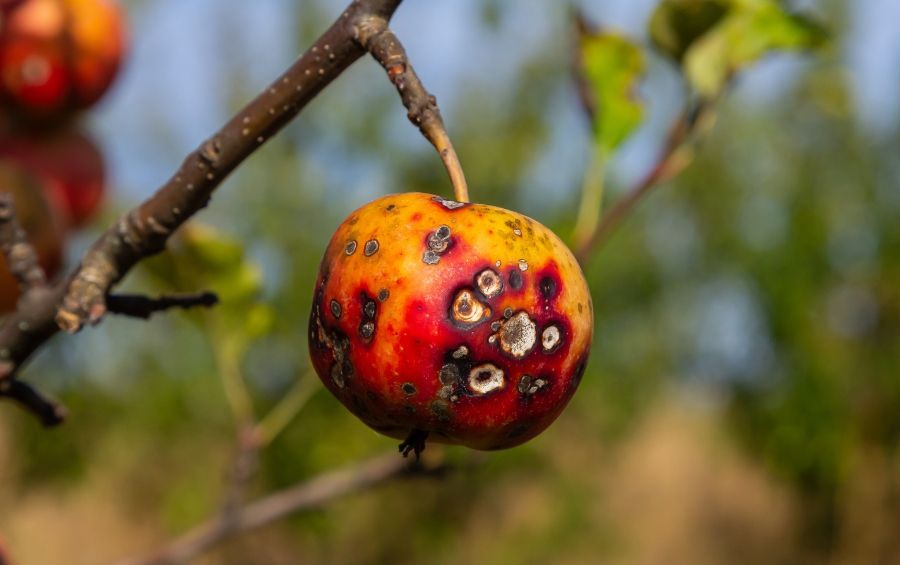
Apple scab can infect crabapple fruit as well as leaves, leaving dark, scabby spots that may become cracked or distorted as the fruit develops.
What Does Apple Scab Look Like on a Crabapple?
Apple scab starts as small, velvety spots on the leaves, olive-green to nearly black, with irregular, feathery edges that usually follow the veins. When unchecked, the damage follows a predictable pattern:
- Individual spots can enlarge to about a half-inch across as the season goes on.
- Infected leaves yellow and fall early, and a heavily infected crabapple can shed most of its foliage by mid-summer.
- Apple scab can also cause dark spots or deformities on the fruit, although this is usually more cosmetic on ornamental crabapples.
IMPORTANT: A crabapple losing leaves in summer doesn’t automatically mean apple scab. Drought, heat stress, other diseases, and environmental problems can cause similar symptoms. Identifying the cause determines whether the tree needs fungicide treatment, changes to watering or soil conditions, or another type of care.
What Is Apple Scab?
Apple scab is a fungal disease caused by Venturia inaequalis that infects crabapple and apple trees. It primarily affects leaves and fruit, causing the dark spots, yellowing, and early leaf drop that can leave heavily infected crabapples looking bare by summer.
The disease rarely kills an established crabapple on its own, but repeated infections can reduce growth, flowering, and overall vigor over time.
Why Does Apple Scab Come Back Every Year?
Apple scab comes back every summer because the fungus that causes it survives the winter in fallen, infected leaves under the tree. In the spring, those old leaves release spores carried by wind, rain splash, or irrigation onto newly developing foliage. Then, those first infections produce a second wave of spores that spreads the disease through the rest of the canopy.
The weather dictates how bad it gets, though. Cool, wet spring conditions let the fungus infect repeatedly, which is why some years and yards are hit a lot harder than others. In established neighborhoods throughout West Des Moines, mature ornamental plantings and untreated crabapples nearby keep spore pressure high, reinfecting the same tree each season and making apple scab one of the most common tree diseases in the Des Moines area.
How Do You Control Apple Scab?
Apple scab control focuses on reducing the amount of fungus that survives from one year to the next and protecting new leaves from infection in spring. Once spots appear, fungicides cannot reverse the damage already done to infected leaves.
Three strategies can help reduce future apple scan infections:
- Remove Infected Leaves: Rake up and dispose of fallen leaves in autumn to reduce the amount of fungus that can overwinter and produce spores the following spring.
- Prune for Better Airflow: Prune during the appropriate dormant-season window to help foliage dry faster and improve spray coverage.
- Apply Fungicide at the Right Time: Preventive fungicides should be applied as new growth emerges in spring and repeated as needed during the infection period..
What Doesn’t Treat Apple Scab Once It Appears?
Once apple scab symptoms appear, the infected leaves can’t be restored. Some care practices can help the tree handle the stress of early leaf loss, but they won’t eliminate the fungal infection or reverse existing damage:
- Fungicide Applied Too Late: Fungicides can prevent new infections, but they can’t repair leaves that are already infected.
- Watering Alone: Proper watering is still important, especially during dry weather, but it helps support the tree’s overall health rather than treating the apple scab infection.
- Fertilizing the Tree: Fertilizer doesn’t treat apple scab and shouldn’t be applied solely because an infected tree looks thin or stressed.
Are Certain Crabapple Trees More Resistant to Apple Scab?
Yes. Some crabapple cultivars have much better natural resistance to apple scab than others, which can mean fewer symptoms and less need for ongoing disease management. This includes:
- Golden Raindrops
- Sugar Tyme
- Red Jewel
- Purple Prince
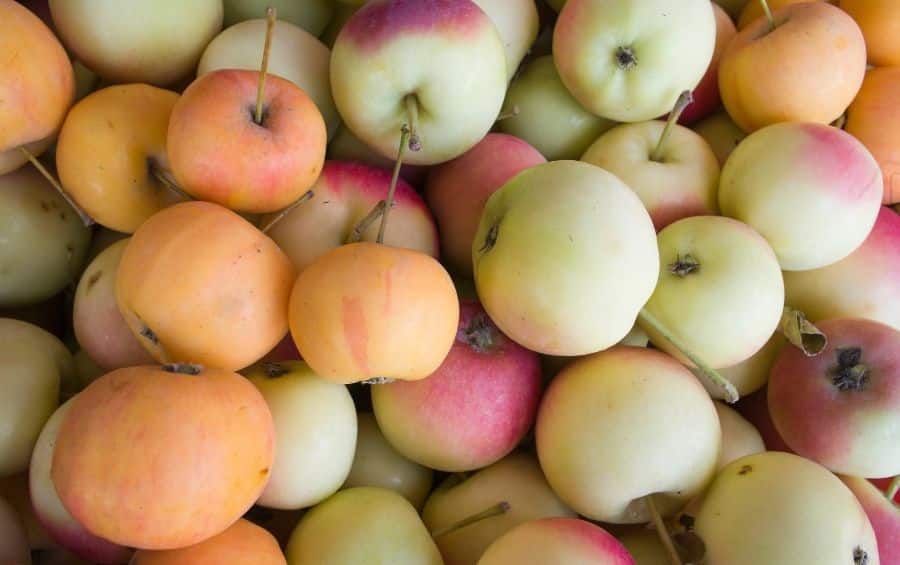
Crabapple cultivars vary in their susceptibility to apple scab, making disease resistance an important consideration when choosing a replacement tree.
Should You Treat or Replace a Crabapple with Apple Scab?
If your crabapple is otherwise healthy, apple scab alone usually isn’t a reason to remove it. Fall leaf cleanup, properly timed spring fungicide treatments, and other preventive care can reduce infections and help a susceptible tree remain healthy and attractive for years.
Replacement may make more sense when the tree has other significant health or structural problems, repeatedly suffers severe defoliation, or you no longer want to manage apple scab year after year. If you do replace it, choose a scab-resistant cultivar to reduce the likelihood and severity of future infections. Resistant varieties can still develop apple scab, particularly during cool, wet springs, but they’re generally much less susceptible.
Frequently Asked Questions About Apple Scab
Does apple scab ruin my crabapple’s spring flowers?
Usually not. Apple scab primarily affects leaves and fruit, so an infected crabapple can still produce a strong spring flower display. Severe or repeated infections may weaken the tree over time, however, which can eventually affect its overall growth and flowering.
Does apple scab spread to my apple, pear, or other trees?
Apple scab on a crabapple can also infect nearby apple trees because the same fungus affects both. Pears and some other related trees can develop their own types of scab, but the strain infecting your crabapple does not necessarily spread to those trees.
Is apple scab harmful to people or pets?
Apple scab itself isn’t a human or pet poisoning hazard. It is a plant disease, although severely infected fruit can be blemished, distorted, or unsuitable for eating.
How soon will I see improvement once I start treating apple scab?
Leaves already damaged by apple scab won’t recover. With preventive treatment timed correctly in spring, improvement should show in the next growing season as healthier new leaves, fewer spots, and less premature leaf drop.
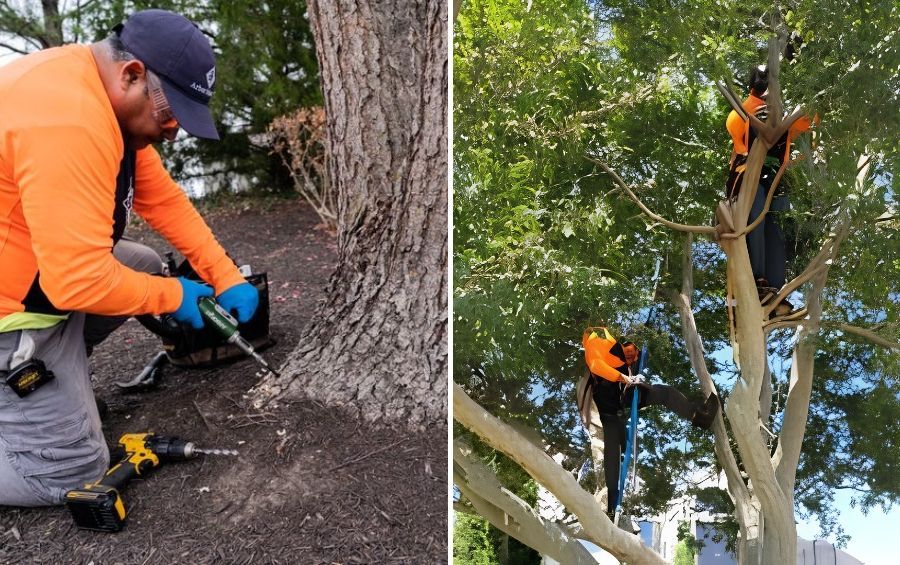
Well-timed plant health care and pruning for airflow are what keep apple scab in check season to season.
Get Ahead of Next Year’s Apple Scab with Help from Arbor Masters
Apple scab rarely kills an otherwise healthy crabapple, but repeated infections can leave the tree thin and stressed year after year. Because fungicides work preventively, the time to plan for next year’s apple scab is before new leaves emerge in spring, not after spots return in summer.
A Certified Arborist can time protective treatments, prune for better airflow, and create a plant health care plan specifically for your tree. When you’re ready to get ahead of next spring’s scab, call our team at 515-500-6531 or explore our insect and disease control service.

Want More Like This?
Get the latest local news, tree care tips, special offers, and company updates directly to your inbox! It's easy to subscribe and there's no spam - we promise.
"*" indicates required fields
