How to Identify a Maple Tree in Ames, IA
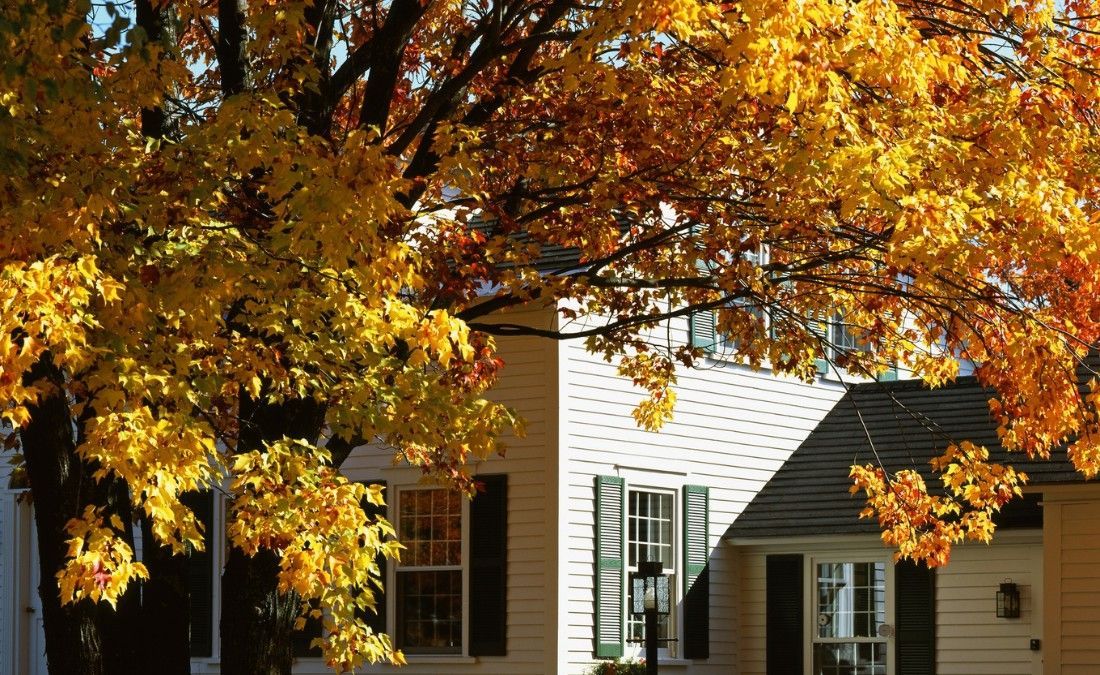
Not sure what kind of maple tree is in your yard? Learn the key differences between silver, sugar, and Norway maples commonly found around Ames, Iowa.
Maples aren’t hard to find in Ames. In fact, they make up about 26% of the trees inventoried along city streets and in public parks. They’re also part of the city’s history: black and sugar maples planted on the Iowa State campus nearly a century ago still form memorial groves honoring former university presidents William Beardshear and A.S. Welch.
The harder part is knowing exactly which maple you’re looking at – and what that means for the tree in your yard. Silver, sugar, and Norway maples have different identifying features, growth habits, and common problems. Knowing the species can help you understand what to expect from your tree, how to care for it, and which maples are better suited to Iowa’s growing conditions.
Key Takeaways
- Maple leaves, twigs, and buds grow in pairs directly across from each other, making opposite branching one of the easiest ways to recognize a maple.
- Silver, sugar, red, Freeman, Norway, and black maples can all be found in Iowa, and leaf shape, bark, seeds, and other characteristics can help distinguish them.
- Sugar, red, and Freeman maples can all be good choices for Ames landscapes, but the best maple depends on the soil, drainage, available root space, and mature size of the tree.
- Surface roots are common on some mature maples and aren’t necessarily a health problem, while girdling roots, cracks, weak branch unions, and codominant stems may require closer evaluation.
- Good maple care includes protecting the root zone, watering during prolonged dry periods, developing good structure while the tree is young, and paying attention to changes in the canopy as it matures.
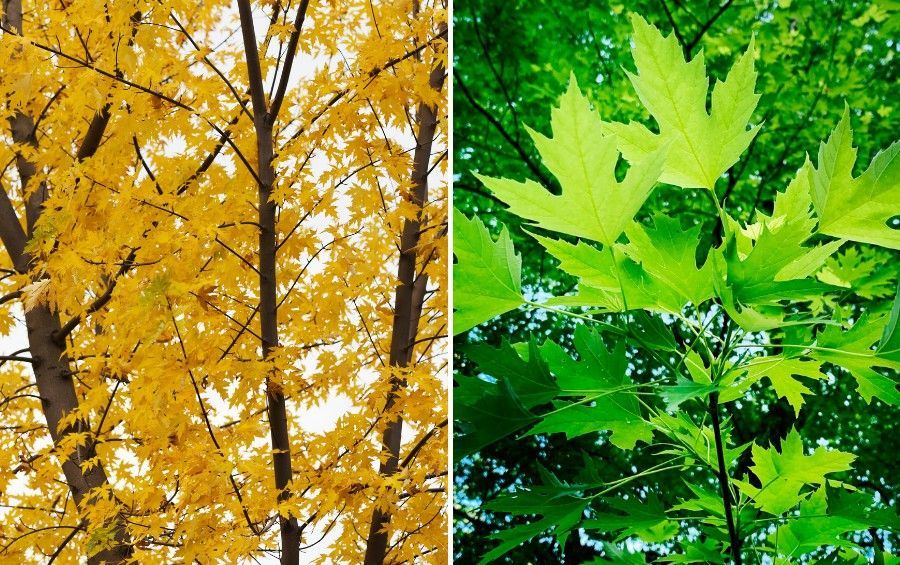
Leaf shape, lobe depth, underside color, and seasonal changes can all provide clues when identifying a maple tree.
How Do You Identify a Maple Tree?
Maples share enough characteristics that you can usually narrow down the tree family before trying to identify the exact species. One of the most useful clues is opposite branching, a trait maples share with only a handful of other common trees. Foresters use the mnemonic MAD Buck (maple, ash, dogwood, and buckeye) to remember the groups that have it.
Once you suspect you have a maple, use these features to narrow down the species:
- Branching: Check whether leaves and twigs grow directly across from each other or alternate in a staggered pattern.
- Leaf Margin: Look at the edges of the leaf to see whether they’re toothed or relatively smooth.
- Leaf Underside: Turn the leaf over and compare it with the top; color differences can be an important identifying clue.
- Lobes: Look at how deeply the leaf is divided and the shape of the spaces between each lobe.
- Seeds: Maple samaras, often called “helicopters,” vary in size, shape, and the angle at which the two wings meet.
- Bark: On mature trees, bark color, texture, and the pattern of ridges can provide another clue when leaves aren’t enough.
What Kind of Maple Tree Do I Have?
Once you’ve confirmed you’re looking at a maple, the leaves, bark, seeds, and growth habit can help narrow down the species. Ames and central Iowa landscapes include several maples that can look similar from a distance but have some fairly useful clues up close.
- Silver Maple: The five-lobed leaves have very deep cuts between the lobes and a distinctly silvery-white underside. Mature trees develop gray bark that becomes shaggy or separates into long strips. Silver maple is native to Iowa and is one of the state’s most common maples.
- Sugar Maple: Look for five-lobed leaves with relatively smooth edges and rounded U-shaped spaces between the major lobes. Mature trees develop gray to brown bark with vertical ridges, and fall foliage can range from yellow and orange to red.
- Red Maple: Leaves typically have three to five lobes with toothed edges, and the spaces between the lobes are shallower than those of silver maple. Red maples also tend to show red somewhere throughout much of the year, from buds and flowers to leaf stems and fall foliage. Iowa State notes that red maple is widely planted as an ornamental in Iowa.
- Freeman Maple: This hybrid of red and silver maple can be trickier to identify because its features fall somewhere between its two parent species. Leaves are generally more deeply lobed than red maple but not as deeply cut or as silvery underneath as silver maple. Cultivars such as Autumn Blaze are examples of Freeman maple.
- Norway Maple: Broad leaves usually have five prominent, pointed lobes. The easiest field test is to break the leaf stem: Norway maple produces a milky white sap, which helps distinguish it from similar-looking sugar maple.
- Black Maple: Black maple closely resembles sugar maple and the two can be difficult to distinguish. Black maple leaves are generally broader and more drooping, with three prominent lobes and less pronounced lower lobes. It is native to Iowa.
DID YOU KNOW? Boxelder trees are actually part of the maple family. Unlike most maples, it has compound leaves made up of several leaflets instead of the familiar lobed maple leaf, which is why it’s often mistaken for a different type of tree.
Which Maple Trees Grow Best Near Des Moines, Iowa?
For a new planting in central Iowa, sugar maple, red maple, and Freeman maple are generally better options to consider than silver or Norway maple, but the right choice depends on the planting site.
Sugar maple is well suited to homeowners who have enough space and the right soil conditions for a slower-growing, long-lived shade tree. Red maple provides another option for Iowa landscapes, while Freeman maple cultivars such as ‘Autumn Blaze’ offer faster growth for homeowners who don’t want to wait as long for a larger canopy.
Silver maple grows quickly and tolerates difficult conditions, but its weaker wood and aggressive surface roots can create more maintenance as it matures. Norway maple is adaptable as well, but its invasive behavior makes other maple species better choices for new Iowa plantings.
Before choosing any maple, consider its mature size, available root space, soil and drainage, and how close it will be to your home, driveway, sidewalk, or other structures. The maple that fits the site is more important than choosing a species based on growth rate or fall color alone.
What Common Problems Should You Watch for on Maple Trees?
Maples can develop problems in the canopy, trunk, and root system, and the species you have can make certain concerns more likely. Some are mostly maintenance issues, while others can affect the tree’s health or structure and deserve a closer look.
Weak Branch Unions and Codominant Stems
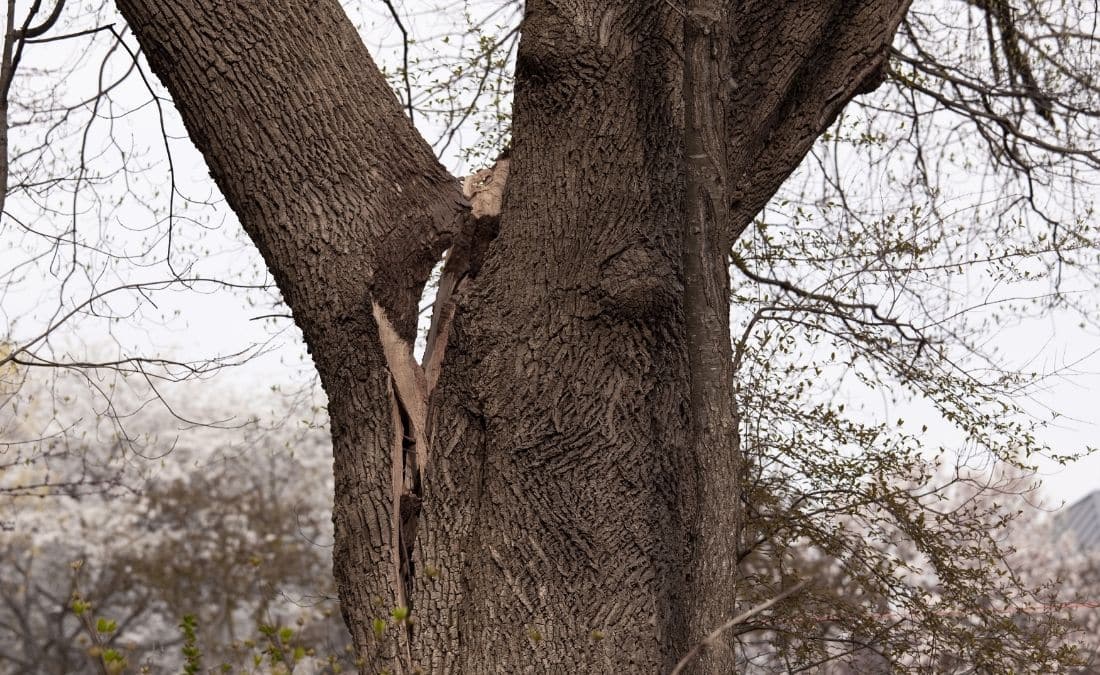
Maples can develop codominant stems, where two stems of similar size grow from the same point rather than one becoming the dominant trunk. Codominant stems aren’t automatically unsafe, but the union can become more concerning when bark is trapped between the stems, cracks develop, or the stems begin pulling apart.
These problems become harder to correct as the tree gets larger. Structural pruning when a maple is young can help establish stronger branch architecture before those stems become large parts of the canopy.
Surface Roots and Girdling Roots
Surface roots are especially noticeable on mature silver maples and can make mowing difficult, thin out turf, or lift nearby pavement. Seeing roots at the surface doesn’t necessarily mean something is wrong with the tree, and cutting large roots just to level the lawn can create a much bigger problem.
Girdling roots are different. Instead of extending away from the trunk, these roots grow against or around the trunk or other major roots and can interfere with normal growth. If roots appear to be wrapping tightly around the base of the tree, they’re worth having evaluated rather than treating them like ordinary surface roots.
Yellowing Leaves
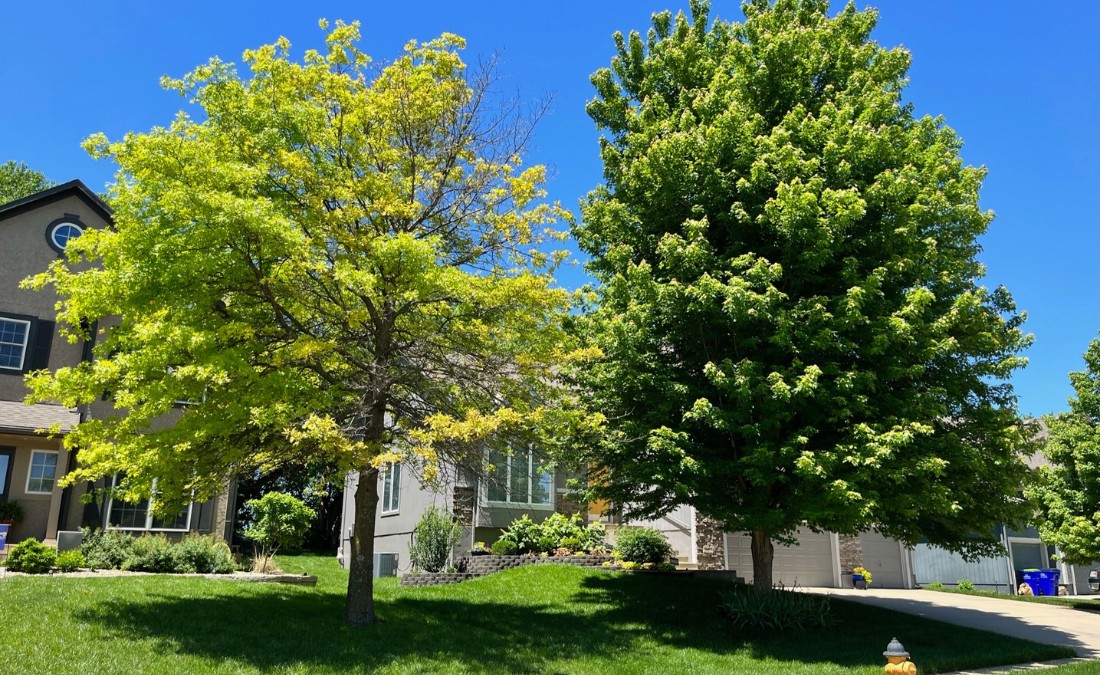
When maple leaves turn pale or yellow while the veins remain greener, the problem may be chlorosis rather than a lack of water. High soil pH can make nutrients such as iron or manganese difficult for susceptible maples to access even when those nutrients are present in the soil.
Because several problems can cause yellow leaves, treatment should start with identifying the cause rather than automatically adding fertilizer.
Leaf Spots, Scorch, and Early Leaf Drop
Brown spots, crispy leaf edges, or leaves dropping before fall can have several causes. Fungal leaf diseases can create spotting or blotching, while heat and drought stress can cause leaf scorch along the margins. The location and pattern of the damage (and whether it happens repeatedly) can help an arborist distinguish a temporary cosmetic problem from a tree that’s under continued stress.
How Do You Best Care for a Maple Tree?
Maples don’t need constant attention, but a few good practices can make a significant difference in how they develop and handle stress as they mature. Focus on protecting the tree’s structure, roots, and access to water rather than treating problems that aren’t there.
- Prune for good structure while the tree is young. Structural pruning can encourage a strong central leader, improve branch spacing, and address problematic codominant stems before they become large parts of the canopy. Mature maples should be pruned for a specific need rather than simply because a certain amount of time has passed.
- Protect the root zone. Avoid adding soil over roots, driving or parking beneath the canopy, or repeatedly compacting the soil around the tree. Root damage can affect a maple long after the original disturbance occurs.
- Mulch around exposed roots instead of cutting them. A layer of mulch can make surface roots easier to live with while protecting them from mower and string-trimmer damage. Large roots interfering with pavement or hardscaping should be evaluated before they’re removed.
- Water during extended dry periods. Newly planted maples need consistent moisture while establishing their root systems, and mature trees can benefit from deep watering during prolonged drought. Avoid frequent shallow watering that only wets the upper layer of soil.
- Pay attention to changes in the canopy. Yellowing leaves, scorched edges, early leaf drop, thinning foliage, or dead branches can indicate that something has changed. The pattern and timing of those symptoms can help determine whether you’re seeing temporary stress, a pest or disease problem, or something happening below ground.
- Have significant changes or defects evaluated. Cracks, cavities, large dead branches, weak-looking unions, or a new or increasing lean can indicate a structural concern that isn’t something routine maintenance will fix. A Certified Arborist can assess the tree and determine whether it needs intervention or simply continued monitoring.
Frequently Asked Questions About Maple Trees
What is the easiest way to tell what kind of maple tree I have?
Start with the leaves. The depth and shape of the lobes, the edges of the leaf, and the color of the underside can quickly narrow down the species. If two maples look similar, other clues such as bark, seeds, or milky sap from a broken leaf stem can help confirm the identification.
Are maple tree roots supposed to grow above the ground?
Large surface roots can be normal on mature maples, particularly silver maples. They become more concerning when roots are damaged, cut, restricted by pavement, or grow against the trunk as girdling roots. Avoid cutting a large surface root just because it interferes with mowing without first considering how its removal could affect the tree.
Why are the leaves on my maple tree turning yellow?
Yellow leaves can have several causes, including nutrient availability problems, root stress, excess or insufficient moisture, and normal seasonal color change. Pay attention to when the yellowing starts and whether the leaf veins remain green, since those details can help distinguish fall color from problems such as chlorosis.
Why does my maple tree have two trunks?
What looks like two trunks may be codominant stems, which develop when two stems of similar size grow from the same area of the tree. That doesn’t automatically make the maple unsafe, but a narrow union with included bark, cracking, or separation can become a structural concern as the stems grow larger and heavier.
How do I know if my maple tree is healthy?
Look beyond whether the tree has green leaves. A healthy maple should show normal seasonal growth without widespread canopy thinning, excessive dead branches, significant bark damage, or unexplained changes from previous years. New or worsening symptoms are often more informative than any single characteristic, especially on a mature tree.
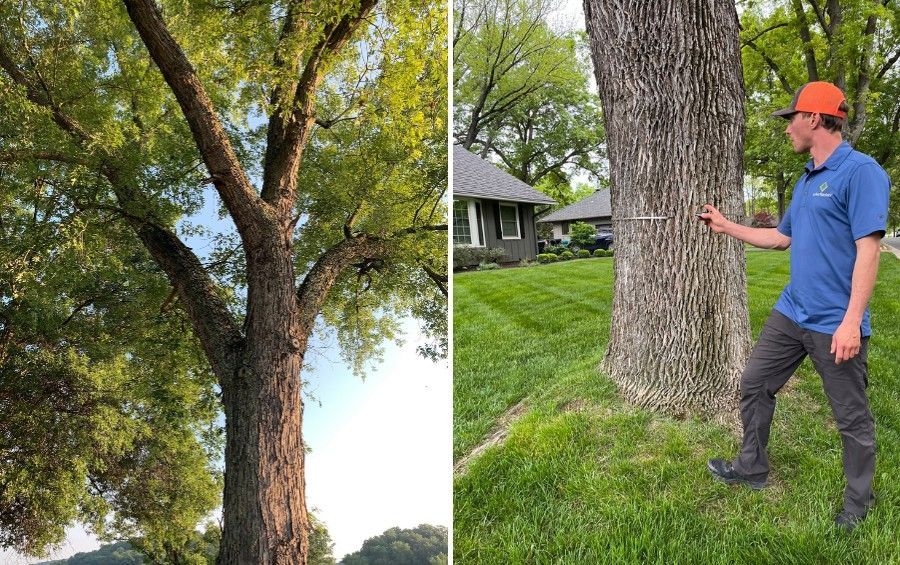
As maples mature, an arborist can evaluate branch unions, trunk condition, and other structural changes that may not be obvious from the ground.
Give Your Maple Tree the Expert Care It Deserves
Identifying your maple is more than putting a name to the tree. Species can tell you a lot about how the tree grows, the problems it’s more likely to develop, and the care it may need as it matures. If you’re noticing yellow leaves, exposed roots, questionable branch unions, or other changes you aren’t sure about, an ISA Certified Arborist can help determine what’s normal for your maple and what needs attention.
Arbor Masters provides professional tree care throughout Ames, Des Moines, and the greater central Iowa area, from young maples that need help developing good structure to mature trees that need closer evaluation. Call us today at 515-500-6589 to schedule an assessment and give your maple the care it needs for the years ahead.

Want More Like This?
Get the latest local news, tree care tips, special offers, and company updates directly to your inbox! It's easy to subscribe and there's no spam - we promise.
"*" indicates required fields