
Bur Oak Trees in Fort Worth: How to Identify, Care for & Keep Them Healthy
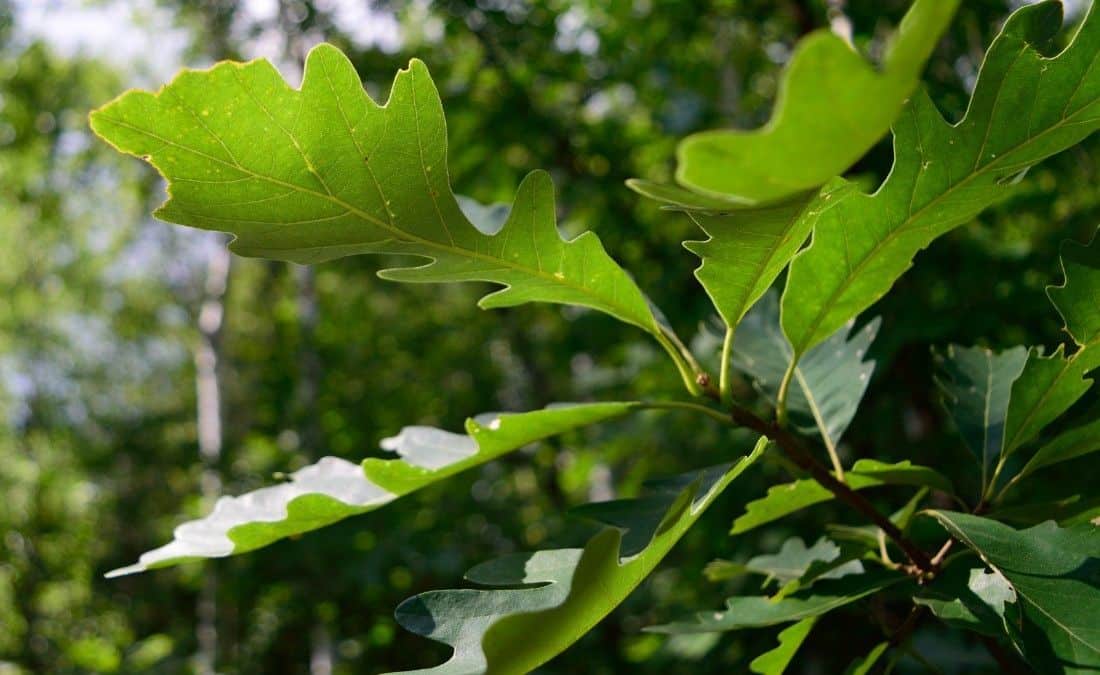
Bur oaks handle Fort Worth's alkaline clay better than many oaks. Learn how to identify one, what's normal, and when you should call a Certified Arborist.
As late-summer heat settles over Fort Worth, many homeowners in Keller, Haslet, and Saginaw start paying closer attention to the big oaks on their property, especially with fall prep season around the corner. If you’ve got a bur oak tree in Fort Worth, Texas, that closer look can raise real questions, especially if the leaves look different than you remember or the acorns are dropping heavier than usual.
Most of what homeowners notice is normal for the species, but not always. Knowing what’s typical for a bur oak can help you tell the difference between normal seasonal changes and signs that the tree may need a closer look.
Key Takeaways
- Bur oaks are relatively well adapted to North Texas heat, drought, and many of the alkaline soils found in the region, unlike other oak species that are more prone to iron chlorosis on high-pH sites.
- Rounded leaf lobes, deep center sinuses, and large fringed acorn caps are the easiest ways to tell a bur oak apart from a red oak.
- Some leaf yellowing and variations in acorn production are normal seasonal changes and don’t necessarily indicate a problem.
- Gall-forming wasps and spider mites are among the pest problems homeowners may encounter on oaks in North Texas, although many infestations are primarily cosmetic.
- Avoid pruning oaks from February through June to protect against oak wilt, and have heritage trees assessed by a Certified Arborist before any major work.
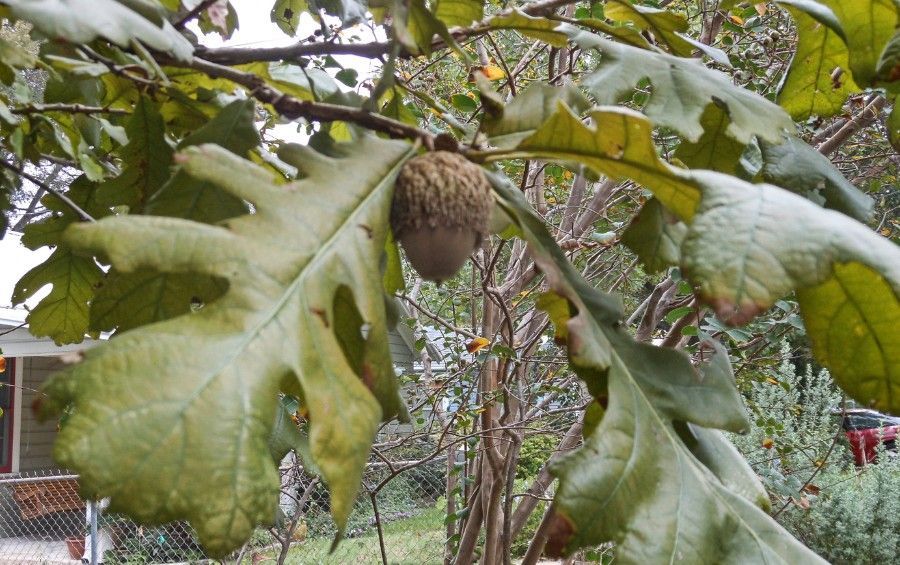
Bur oak acorns are among the largest of any oak species. Their distinctive fringed caps often cover more than half the nut, making them easy to identify.
How Do You Identify a Bur Oak Tree in North Texas?
A bur oak is easiest to identify by its leaves, bark, and acorns, all of which look distinct from the red oaks common around Fort Worth. Look for these features:
- Rounded leaf lobes with no bristle tips
- A deep sinus cutting in near the center of the leaf, giving it a look that’s almost split in two
- Thick, corky, fire-resistant bark on mature trees
- A broad, stately growth form that stands out on a large lot
- A shaggy, fringed acorn cap that covers more than half the nut, more coverage than most oaks produce
How Can You Tell a Bur Oak from a Red Oak?
Several red oak species are common in this area, including Shumard oak, Texas red oak, and Nuttall oak. Red oaks look different from bur oaks in a few clear ways.
- Red oak leaves have pointed, bristle-tipped lobes instead of rounded ones.
- Red oak acorn caps are smaller and smoother than a bur oak’s shaggy cap.
- Red oak group acorns take two years to mature, so you’ll often see small green acorns still on a red oak the same fall a bur oak has already dropped its crop.
- Bur oaks belong to the white oak group, so their acorns mature and drop in a single season.
If you’re trying to determine what’s growing on your lot, the leaf shape and acorn cap are usually enough to settle it on their own. For a broader look at the oak species common to North Texas, our species guide covers how to tell them apart at a glance. Once you know you’re looking at a bur oak, the next question is usually why it seems to handle our soil so much better than the oak next to it.
Do Bur Oak Trees Grow Well in Fort Worth’s Clay Soil?
Yes. Bur oaks are well suited to the alkaline, clay-heavy soils found throughout Fort Worth and much of North Texas. They tolerate conditions that can cause problems for less adaptable oak species, including high soil pH, summer heat, and periods of drought.
Bur oaks are a good fit for North Texas because:
- They tolerate alkaline soil. The Texas A&M Forest Service lists bur oak as tolerant of soil with a pH above 7.5, an important advantage in areas with naturally alkaline soil.
- They handle drought once established. An extensive root system helps mature bur oaks access moisture and withstand long stretches of hot, dry weather.
- They tolerate a range of soil conditions. Heavy clay itself isn’t necessarily a problem, although poor drainage, severe compaction, and construction damage can still stress the roots.
Why Do Some Trees Struggle in Fort Worth Soil?
Not every tree handles Fort Worth’s alkaline soil as well as a bur oak. A high soil pH can make certain nutrients less available to tree roots, even when those nutrients are present in the soil.
For example, red oaks growing in alkaline soil can develop iron chlorosis, which typically shows up as yellow leaves with greener veins. Pecans can also struggle with nutrient availability in alkaline soils, particularly zinc. Our pecan tree stress guide explains what those symptoms can look like on Fort Worth properties.
That contrast is one reason bur oak is so well suited to North Texas: it can tolerate a higher soil pH without developing the same nutrient problems as some other common trees.
What Seasonal Changes Should You Expect from a Bur Oak?
Bur oaks don’t always follow the same seasonal patterns as other oaks growing nearby. Differences in leaf growth, dormancy, and acorn production can all be part of the tree’s natural cycle, including:
- Leaf size can vary across the canopy and from year to year, which is normal and not necessarily a sign of stress.
- Leaf-out and dormancy timing can differ from the other oaks on the same property, so a bur oak won’t always be on the same schedule as a red oak growing a few feet away.
- Acorn drop timing and volume can vary, and because bur oaks belong to the white oak group, their acorns mature in a single growing season, while acorns in the red oak group generally take two growing seasons to mature. A heavier “mast year” with a large acorn crop is part of normal year-to-year variation.
- Mild, uniform color change late in the season can be part of the tree’s normal transition into dormancy, and doesn’t necessarily line up with what a red oak on the same lot is doing at the same time.
Knowing what’s normal makes it easier to spot when something isn’t, starting with the pest pressures and other issues that can show up on bur oaks in this area.
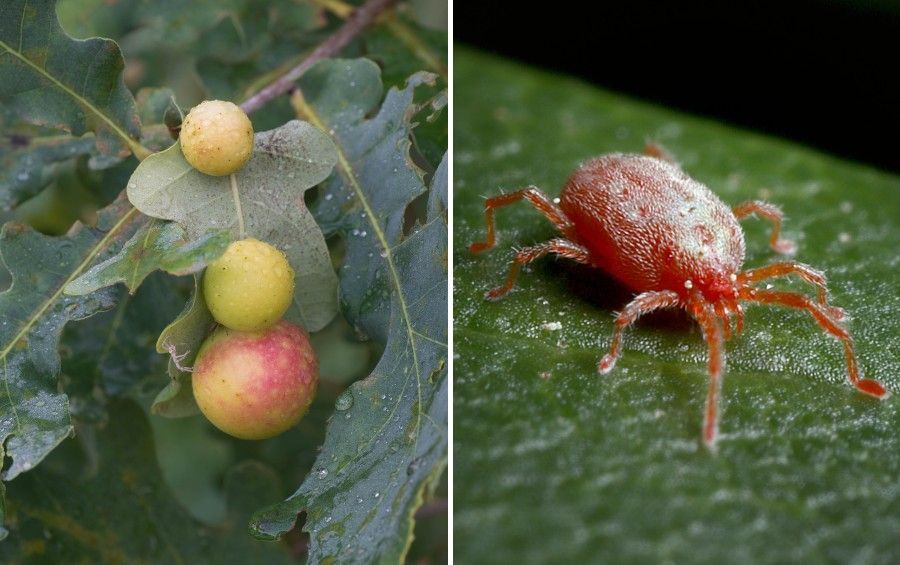
Oak leaf galls and spider mites are two of the most common pest issues found on bur oaks. In most cases, both are cosmetic or become noticeable only when a tree is already under stress.
What Problems Should You Watch for with Bur Oaks?
Bur oaks are well suited to North Texas, but they can still develop pest problems and show signs of stress. Changes in the leaves are often the first thing homeowners notice, but the pattern, timing, and extent of the symptoms matter more than leaf color alone.
What Pests Affect Bur Oaks in North Texas?
Two pests you may notice on bur oaks are:
- Gall Wasps : Many oak galls are primarily cosmetic and don’t seriously affect an otherwise healthy tree, although heavy infestations or galls on twigs and branches can sometimes be more consequential.
- Spider Mites : These show up as washed-out, stippled foliage during hot, dry summer conditions and are more common on trees already under drought stress.
- Both pests tend to be more noticeable on trees that are already stressed by drought, soil compaction, or nearby construction damage.
When Is Yellowing on a Bur Oak a Sign of a Problem?
Some late-season color change is expected as a bur oak approaches dormancy. Yellowing is more concerning when it starts earlier in the growing season, appears unevenly across the canopy, or continues to worsen.
Yellow leaves can result from several problems, including drought stress, poor nutrient availability, compacted soil, root damage, pests, or disease. Rather than treating based on leaf color alone, look for other changes such as thinning foliage, branch dieback, abnormal leaf spots, or declining growth.
If the yellowing is widespread, getting worse, or accompanied by other signs of decline, have the tree evaluated to identify the cause before deciding whether it needs treatment.
How to Care for a Bur Oak in Fort Worth
Established bur oaks are relatively low-maintenance, but proper watering, protecting the root zone, and pruning at the right time can help prevent unnecessary stress and reduce the risk of disease.
- Water During Extended Dry Periods: Bur oaks are drought tolerant once established, but supplemental deep watering can help during prolonged North Texas heat and drought.
- Protect the Root Zone: Avoid soil compaction, grade changes, trenching, and construction damage around mature trees.
- Use Mulch to Conserve Soil Moisture: Keep mulch over the root zone without piling it against the trunk.
- Prune at the Right Time: Avoid pruning from February through June, when sap-feeding beetles that can spread oak wilt are most active.
- Paint Fresh Oak Wounds: Texas A&M Forest Service recommends immediately covering fresh oak wounds with a thin coat of wound paint or latex paint to reduce their attractiveness to beetles that can transmit oak wilt.
- Check Before Pruning a Protected Tree: If your bur oak meets Fort Worth’s protected-tree requirements, confirm what city rules apply before significant pruning or other work.
If your bur oak needs structural pruning, has damaged limbs, or is showing signs of decline, professional tree pruning in Fort Worth can address the problem without creating unnecessary stress or oak wilt exposure.
When to Call a Professional Arborist About Your Bur Oak
A few specific situations are good triggers for bringing in an ISA Certified Arborist rather than handling things yourself.
- When your bur oak is a heritage or protected tree under Fort Worth’s Urban Forestry Ordinance, which protects trees at or above 24 inches DBH (diameter at breast height). Unauthorized damage or removal can result in citations, criminal penalties, and civil penalties, depending on the circumstances.
- When the yellowing you’re seeing doesn’t match the normal seasonal patterns described earlier, or it spreads unevenly across the canopy.
- When pest pressure shows up alongside visible drought stress, a combination worth catching early before problems compound.
- When persistent leaf scorch, premature leaf drop, or canopy thinning develops during prolonged heat and drought, especially if symptoms are concentrated on one side of the crown or continue to worsen.
Frequently Asked Questions About Bur Oaks
Should you fertilize a bur oak growing in Fort Wort?
Most healthy bur oaks don’t need routine fertilization since they’re naturally adapted to alkaline clay. If a tree has been affected by construction, compaction, or drought stress, a Plant Health Care evaluation can identify whether soil amendments would actually help rather than guessing at what the tree needs.
What’s the lifespan of a bur oak tree?
Bur oaks are among the longest-lived oak species, commonly reaching 200 to 300 years and sometimes exceeding 400. That longevity makes mature bur oaks especially valuable trees to preserve when they’re structurally sound and growing in a suitable location.
Are oak galls harmful to a bur oak’s long-term health?
Many oak galls are primarily cosmetic and don’t seriously affect an otherwise healthy tree, although heavy infestations or galls on twigs and branches can sometimes be more consequential. They also tend to look more noticeable on trees that are already under stress from drought or compacted soil.
Do bur oak acorns cause a mess in the yard?
Bur oak acorns are among the largest of any oak species, and a heavy drop can be a real nuisance underfoot or on driveways and patios. That’s worth factoring in if you’re planning hardscaping or landscaping near a mature bur oak.
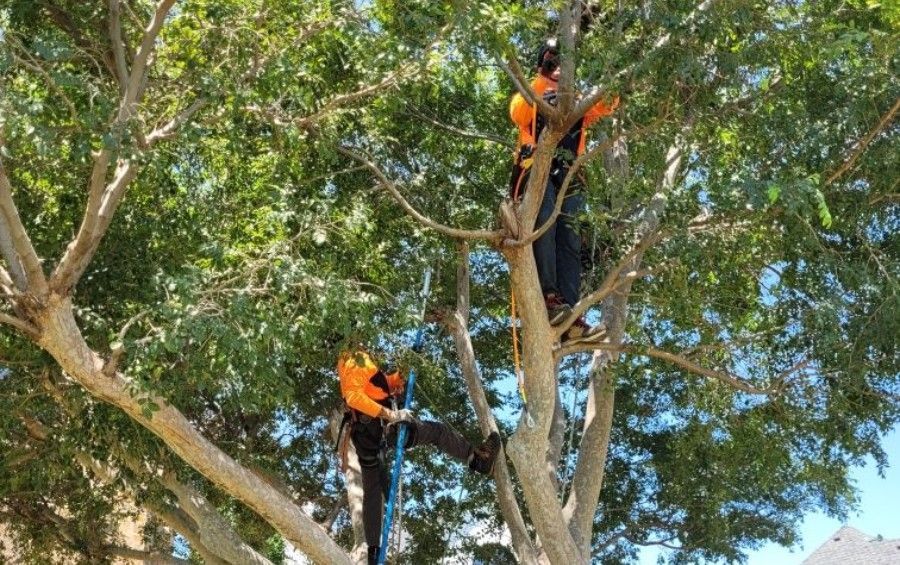
Proper pruning protects a bur oak’s long-term health and should be timed to reduce the risk of oak wilt, especially on mature or protected trees.
Let Arbor Masters Help Protect the Bur Oaks on Your Fort Worth Property
Bur oaks handle Fort Worth’s alkaline clay better than species that are more prone to iron chlorosis on high-pH sites. That natural advantage doesn’t mean a bur oak needs no attention at all, especially once it’s grown large enough to fall under Fort Worth’s tree protection ordinance.
If your mature bur oak in Keller, Haslet, or Saginaw needs pruning or is showing unusual leaf color, canopy thinning, pest activity, or other signs of stress, Arbor Masters can help determine what it needs. Call 469 373-4850 or request a quote online to schedule professional tree care for your bur oak.
Learn More With These Related Articles

Want More Like This?
Get the latest local news, tree care tips, special offers, and company updates directly to your inbox! It's easy to subscribe and there's no spam - we promise.
"*" indicates required fields
