If Your Fort Worth Trees Aren’t Thriving, a Buried Root Flare Issue Might Be Why
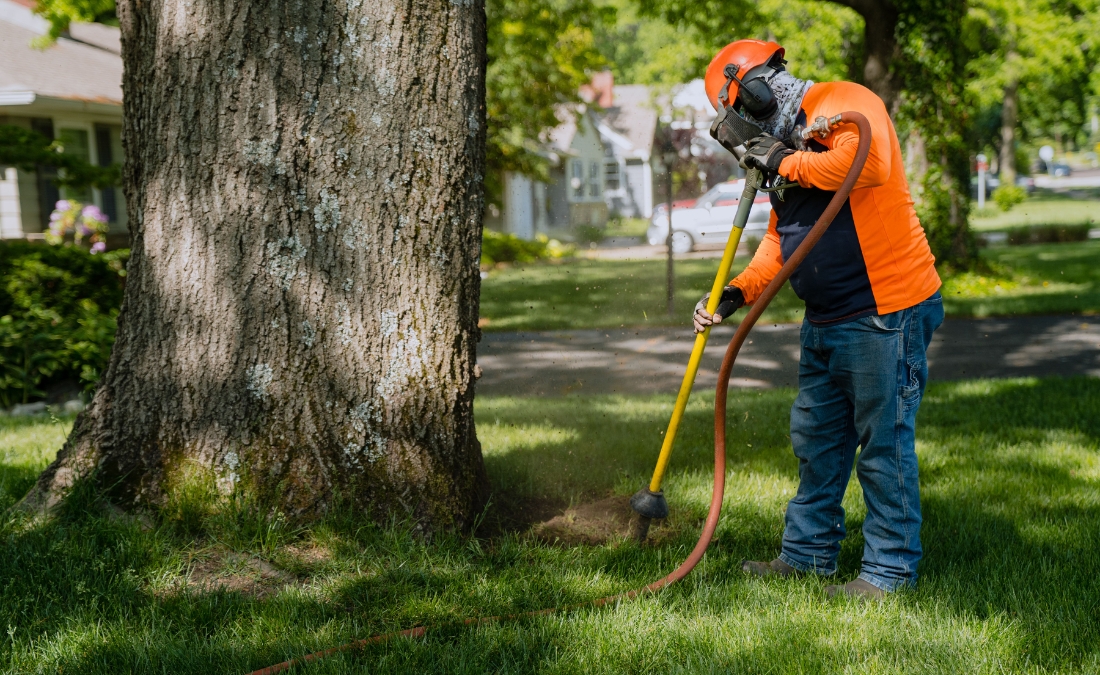
If your Fort Worth trees struggled this year, buried root flares may be the problem. Winter air spading uncovers the issue & helps trees recover before spring.
If your prized trees in Preston Hollow, Rivercrest, or Tanglewood struggled this past year with yellowing leaves, stunted growth, or thinning canopies despite proper care, the cause might not be so obvious.
In the Fort Worth area, one of the most common culprits is a buried root flare. When the flare sits too deep under soil or mulch, the tree slowly suffocates and weakens. Winter is the best time to uncover and correct these hidden problems so your trees can rebound this next spring.
Key Takeaways
- Root flares buried just 3-6 inches deep trigger oxygen deprivation, bark rot, and deadly girdling roots that slowly choke trees over 5-15 years.
- The “telephone pole” appearance, where trunks show no visible taper at ground level, indicates a buried root flare.
- Mulch volcanoes, landscape renovations, and improper planting are the primary culprits in established neighborhoods like Arlington Heights and Lakewood.
- Air spading allows ISA Certified Arborists to safely expose root systems using compressed air without damaging delicate roots.
- Winter’s dormant season provides optimal timing because trees experience less stress and oak wilt beetle vectors are inactive.
What Is a Root Flare?
The root flare is the area where the trunk widens and transitions into the root system. It should sit above the soil line, with those sturdy, buttress-like roots visible at the base of the tree. When the flare is exposed, the tree can breathe, anchor properly, and move nutrients the way it’s designed to.
The problem is that the root flare is covered in bark – not root tissue. Bark is meant to stay dry and above ground. When mulch or soil gets piled too high, that bark stays wet, weakens, and eventually breaks down. Rot, fungal infections, girdling roots, and long-term decline follow.
“Homeowners call us frustrated that their beautiful oak or elm isn’t responding to care. They’ve tried everything – fertilization, deep watering, pest treatments. When we excavate the root flare, we often find the tree has been slowly suffocating for years. The good news is that catching these problems now means we can usually save the tree.” – Patrick Fern, Branch Manager at Arbor Masters of Fort Worth

Mulch volcanoes may look trendy, but they can quickly suffocate your trees and cause rot.
What Causes Root Flares to Become Buried Over Time?
The most common culprit of root flares becoming buried is the mulch volcano. Homeowners and landscapers add fresh mulch every spring without removing old mulch first. Over five to ten years, this creates mountains of decomposing material that can bury root flares 4-8 inches deep. Properties in Preston Hollow and Westlake with extensive landscaping often show the most severe accumulation.
Landscape renovations also contribute. When homeowners in Tanglewood or Rivercrest add new flowerbeds, raise lawn grades, or install hardscaping, they frequently add soil around existing trees. Even 2-3 inches is enough to bury root flares and initiate decline.
How Can I Tell if My Tree’s Root Flare is Buried?
The symptoms of buried root flares appear gradually, making them easy to dismiss. Homeowners often spend years caring for trees that continue to decline, never realizing the real problem lies hidden beneath the soil.
The most obvious clue is the “telephone pole” appearance. Walk around your property and look at where your tree trunks meet the ground. A healthy tree should show a visible flare or taper at the base, where the trunk gradually widens before transitioning into major structural roots. If your trunk goes straight into the ground with no visible widening, your root flare is likely buried.
Other warning signs include:
- Yellowing leaves despite adequate watering
- Smaller-than-normal leaf size
- Asymmetric canopies where one side appears thinner
- Branches dying back at the tips
PRO TIP: These are often signs of dangerous tree conditions that require professional assessment. According to the Texas A&M Forest Service, trees displaying these symptoms above ground almost always have problems in the root system below.
How Does a Buried Root Flare Lead to Tree Decline?
Buried root flares trigger a cascade of problems. When bark tissue stays constantly moist, it breaks down. The protective barrier keeping out fungal pathogens and wood-decay organisms fails, creating ideal conditions for rot at the most critical part of the tree.
The buried environment also triggers dormant buds to sprout abnormal roots above the true root flare. These adventitious roots grow in irregular patterns and often circle the trunk. As they increase in diameter, they compress against the trunk like a tightening belt. This interrupts the tree’s vascular system, reducing water and nutrient transport to the canopy, resulting in yellowing leaves, smaller foliage, leaf scorch, and branch dieback.
And because oxygen levels drop when soil and mulch sit against the trunk, the tree essentially suffocates below the surface. In Fort Worth’s extreme heat, that added stress accelerates decline – often faster than homeowners realize.
WARNING: Oak trees (like the bur oak) with buried flares become stressed and more prone to diseases like oak wilt.

Air spading uses high-velocity compressed air to safely remove soil and expose root systems without damaging delicate roots, allowing ISA Certified Arborists to diagnose problems traditional digging methods would miss.
How Can Air Spading Restore Buried Root Flares?
Air spading uses supersonic compressed air delivered through a specialized nozzle to break apart and remove soil from around tree roots. The high-velocity air stream pulverizes soil particles but flows harmlessly around solid objects, like roots, causing zero damage.
This non-invasive approach is vastly superior to traditional hand-digging. Even careful hand-digging risks nicking bark on roots or cutting small feeder roots, creating entry points for decay organisms. Air spading eliminates that risk entirely.
For ISA Certified Arborists, air spading provides unprecedented ability to examine root systems, exposing the entire root flare area, identifying all girdling roots, and assessing bark condition without harming a single root. The International Society of Arboriculture recognizes air spading as the preferred method for root flare excavation and is a key component of comprehensive tree preservation services.
What Happens During a Root Flare Excavation?
The process begins with a thorough assessment by an ISA Certified Arborist. We examine the tree’s canopy, measure trunk diameter, document symptoms, and develop a customized treatment plan.
During excavation, our technicians use the air spade to carefully remove soil and mulch from around the trunk base in a circular pattern, typically creating a tree well 3-6 feet in diameter. The goal is to expose the root flare completely until we can see where the trunk transitions to primary structural roots.
As roots become visible, we identify girdling roots – those that circle the trunk rather than radiating outward. Small girdling roots are pruned away with proper cuts. Larger girdling roots require careful evaluation to determine whether removal is appropriate.
Frequently Asked Questions About Tree Root Flare Problems
How do I know if my tree’s root flare is buried?
Look for the “telephone pole” appearance where the trunk goes straight into the ground with no visible taper. You can also gently probe the soil around the trunk. If you can dig down 3-4 inches
and still don’t see major structural roots or trunk flare, your root flare is likely buried. ISA Certified Arborists can provide professional assessments.
Can air spading damage my tree’s roots?
No, air spading uses compressed air that displaces soil particles but flows harmlessly around solid objects like roots. Unlike mechanical digging or hand work with shovels, air spading cannot nick bark or cut small feeder roots.
How long does root flare excavation take for a mature tree?
Most root flare excavation projects on typical residential trees take 2-4 hours from start to finish, including setup, excavation, girdling root assessment and removal, and site cleanup. Larger trees or those with extensive girdling root problems may require additional time.
Will fixing the buried root flare save my declining tree?
It depends on how far the decline has progressed. Trees showing early symptoms, like mild yellowing or slightly reduced growth typically respond very well to root flare restoration. Those with severe canopy dieback or advanced girdling root compression may not fully recover, though treatment often stabilizes decline and extends tree life.

During root flare excavation, compressed air reveals hidden girdling roots that wrap around the trunk instead of radiating outward, allowing arborists to remove them before they cause irreversible vascular damage.
Uncover Your Root Flare with Expert Help from Arbor Masters
Buried root flares and girdling roots threaten thousands of Fort Worth trees in established neighborhoods right now. At Arbor Masters, our ISA Certified Arborists specialize in diagnosing and treating hidden root problems using advanced air spading technology. Since 1960, we’ve helped homeowners protect their tree investments through our professional plant health care services. As a TCIA Accredited company with oak wilt Certified Arborists on staff, we maintain the highest standards of safety, quality, and professionalism.
Winter is the ideal time to address buried root flares before spring growth begins. Contact Arbor Masters of Fort Worth today at 469-586-5829 or request a root system assessment online to schedule your winter root health consultation.


Want More Like This?
Get the latest local news, tree care tips, special offers, and company updates directly to your inbox! It's easy to subscribe and there's no spam - we promise.
"*" indicates required fields