5 Factors That Affect Large Tree Removal Cost in Johnson County
Learn what really affects large tree removal costs in Johnson County. These five factors help you understand pricing before you schedule the work.
When you look up at that towering tree in your backyard, it’s hard to imagine removing something that’s been part of your property for decades. But a tree that once offered shade and charm may now be threatening your foundation – or storm damage may have left it unsafe. Whatever the reason, you know it has to come down.
With large tree removal costs varying significantly based on complexity in Johnson County, understanding what drives pricing helps you budget accurately and choose the right professional for your specific situation. Here are the five factors that determine large tree removal costs and what they mean for your Johnson County property.
Key Takeaways
- Tree size, particularly height over 60 feet and trunk diameter over 30 inches, is the primary cost driver requiring specialized equipment and techniques.
- Trees near homes, power lines, or valuable landscaping significantly increase costs due to precision rigging and safety requirements.
- Tree species and health conditions affect cutting difficulty, with diseased trees, like EAB-affected ash, requiring special handling and disposal protocols.
- Equipment needs vary dramatically, with crane-assisted removal significantly increasing costs for complex Johnson County neighborhood situations.
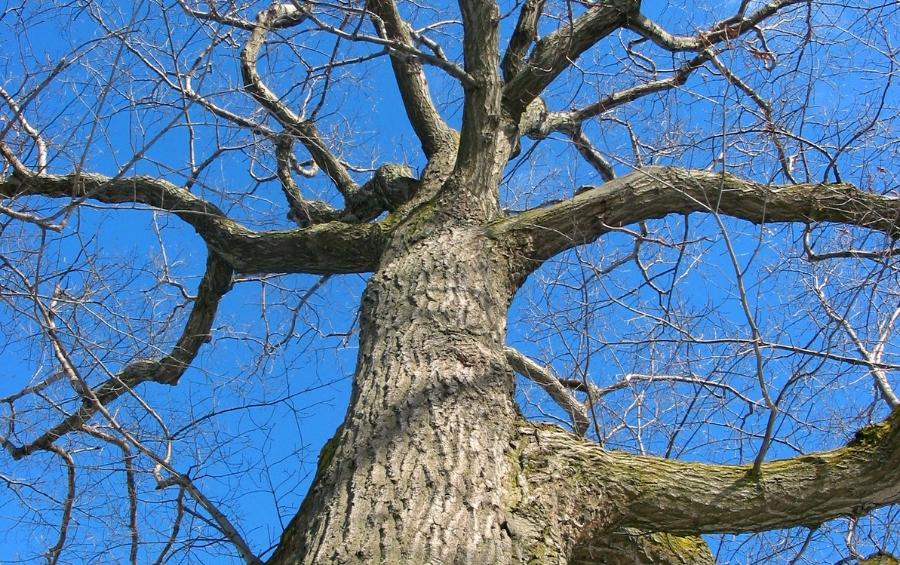
Mature oak trees like this one are common in Johnson County’s established neighborhoods and represent the type of large tree removal projects that require careful cost consideration.
1. Tree Height and Trunk Diameter
Tree size drives nearly every other cost factor in large tree removal projects. The taller and wider your tree, the more complex the removal becomes. Taller trees may require us to use more specialized techniques and equipment, increasing the time it takes to complete the job.
Trunk diameter adds another layer of complexity. Every additional inch of the trunk increases the time it takes to cut the tree, and the amount of preparation work we have to do to make it a safe removal.
Johnson County’s established neighborhoods in Prairie Village and Mission Hills frequently feature mature, towering trees. These giants require specialized approaches that simply weren’t needed when they were planted 60+ years ago in newly developed areas.
2. Tree Location and Property Access
Where your tree stands can matter more than its size when determining removal costs. Johnson County’s mature, densely developed neighborhoods present unique challenges that directly impact pricing. The most common accessibility issues include:
- Proximity to Structures: Trees within 10 feet of your home require precision rigging and controlled lowering techniques to prevent property damage.
- Power Line Complications: Many Johnson County neighborhoods feature overhead utilities, requiring coordination with utility companies and specialized safety protocols.
- Equipment Access Issues: Narrow driveways common in Prairie Village limit crane access, while Johnson County’s clay soil affects equipment access during wet spring conditions.
- Backyard Locations: Trees behind homes require specialized equipment and careful maneuvering through tight spaces.
- Property Protection Needs: Valuable landscaping, decorative concrete, and outdoor living spaces require additional setup time and protective materials.
Established areas, like Overland Park and Mission Hills, present density challenges that newer suburban developments don’t have. When your 70-foot oak sits 8 feet from your neighbor’s house with power lines overhead and no alley access, a straightforward removal quickly becomes a complex, more expensive project.
The good news? Professional arborists factor these challenges into their estimates upfront, so you won’t face surprise costs later.
PRO TIP: Trees on property lines can add additional complications for tree removal. Understanding property line tree responsibility becomes especially important in these close-quarters situations.
3. Tree Species and Condition
Not all large trees are created equal when it comes to removal complexity. The species and health condition of your tree significantly impact both safety requirements and final costs. Different tree types present unique challenges:
- Hardwood species, like oak, maple, and walnut, require more cutting time due to dense, heavy wood.
- Softwoods are less dense and present different problems, like unpredictable breaking patterns and massive limb structures.
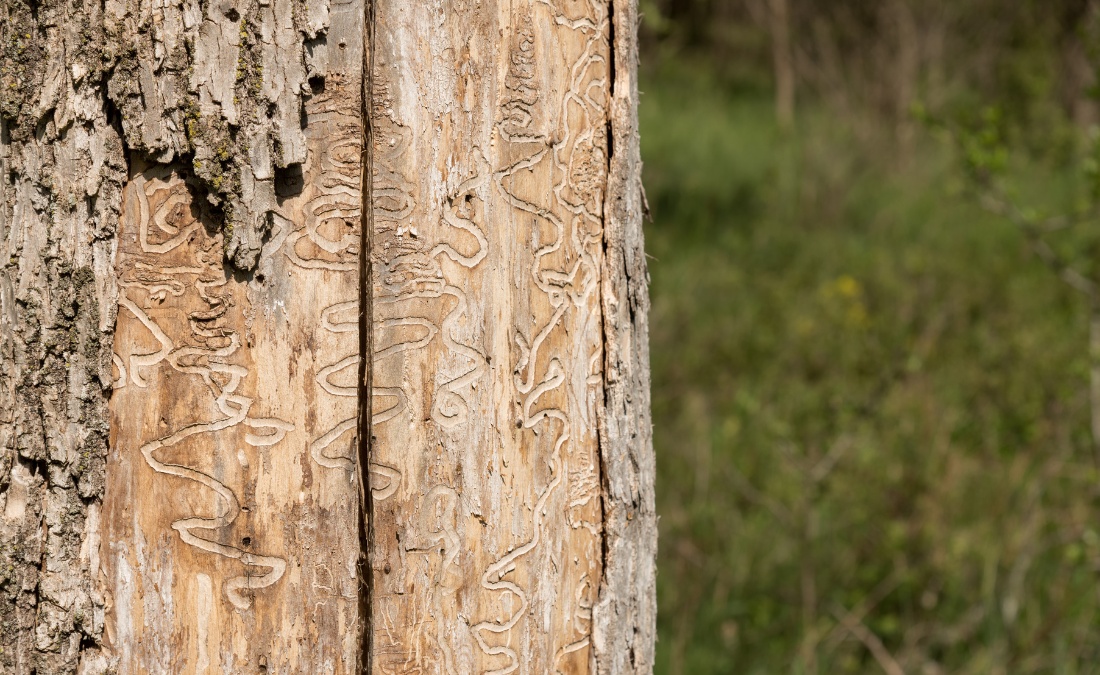
The internal condition of trees is important, too. Johnson County has seen significant emerald ash borer (EAB) damage. These trees require careful techniques, as their wood is brittle and prone to breaking. They can break unpredictably during cutting, requiring modified climbing techniques and additional safety equipment.
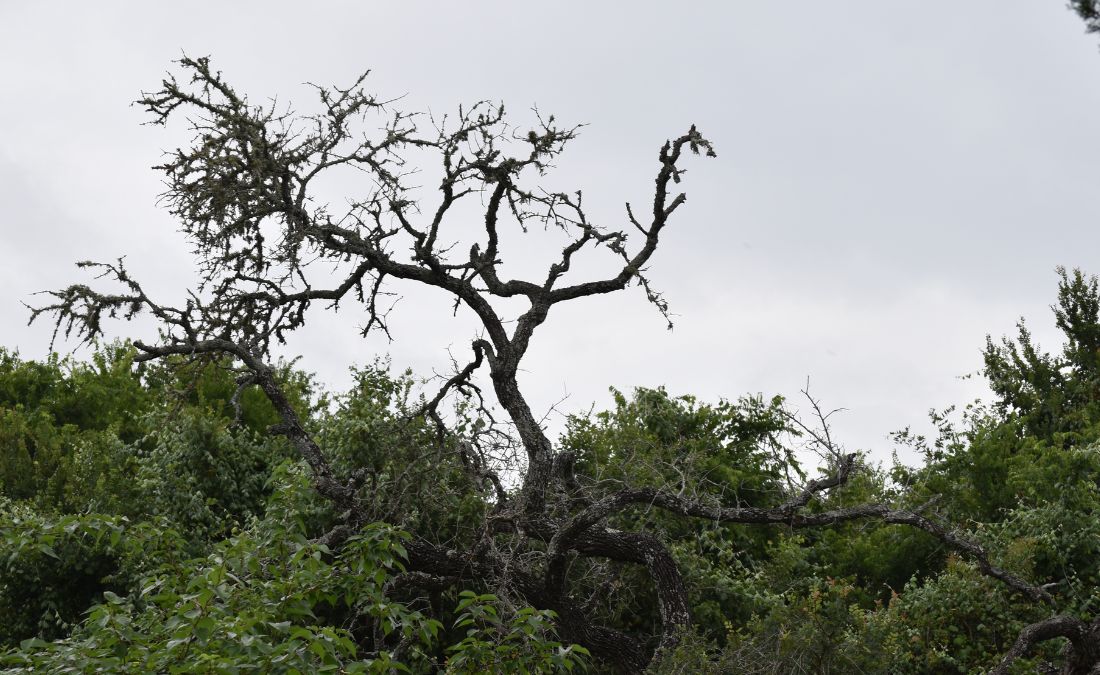
PRO TIP: Knowing how to recognize signs of dead or dying trees helps homeowners understand when professional assessment becomes necessary.
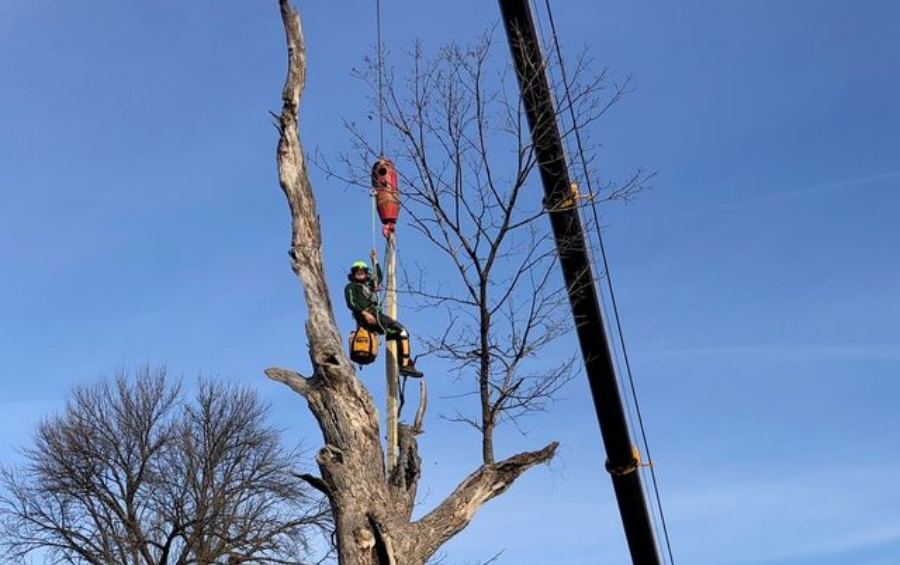
Crane-assisted removal and specialized rigging equipment significantly impact project costs for large trees.
4. Specialized Equipment Required
The right equipment makes the difference between a safe, efficient removal and a dangerous, expensive disaster. Johnson County’s established neighborhoods often require specialized equipment that significantly impacts pricing. The main equipment considerations include:
- Crane-Assisted Removal: Large trees in tight spaces often require crane assistance, which may affect the price of tree removal.
- Bucket Trucks Vs. Climbing: Professional bucket trucks make accessing the tree’s canopy easier, but they aren’t always feasible for the job.
- Specialized Rigging Systems: When we need to lower sections of a tree, we use complex pulley and rope systems for controlled lowering near structures or valuable property features.
- Professional Safety Equipment: Professional companies have industry-standard harnesses, ropes, helmets, and cutting tools that meet current safety requirements.
Properties in Mission Hills and Prairie Village often need crane access for large removals due to tight spacing between homes and mature landscaping. The investment in proper equipment gets reflected in pricing, but it ensures better outcomes and protects your property investment.
Professional companies also carry property protection materials, like ground mats, fencing, and protective coverings, for valuable landscaping and hardscaping that would be expensive to repair or replace.
5. Tree Removal Permits
Johnson County’s various municipalities have different requirements for tree removal, and navigating these regulations properly affects both timeline and costs. Some local requirements include:
- Prairie Village: The municipality requires permits for construction-related tree removals and has specific ordinance requirements for trees over 30″ diameter or heritage trees.
- Overland Park: There are municipal requirements for trees above certain sizes or those classified as heritage or landmark trees.
- Kansas City, MO: Homeowners will have to follow specific sidewalk and tree ordinances that affect removal near public areas.
Knowledgeable companies can inform you of any permit requirements you might need to handle. Fines for unauthorized tree removal can be substantial in Johnson County cities. While permit processing adds administrative time to projects, it’s essential for avoiding fines or legal issues down the road.
Frequently Asked Questions About Tree Removal Costs
What factors affect pricing the most?
Tree size, proximity to structures, equipment access challenges, tree species, and health condition are the primary cost drivers. Complex locations requiring crane access or specialized rigging can significantly impact final pricing.
Is stump grinding included in tree removal cost?
Stump grinding is typically quoted separately from tree removal. Costs vary depending on stump size, location, and accessibility in Johnson County properties.
Why do costs vary so much between different companies?
Pricing differences reflect equipment capabilities, certification levels, insurance coverage, cleanup thoroughness, and removal techniques used. Extremely low bids often indicate shortcuts on safety procedures or incomplete service.
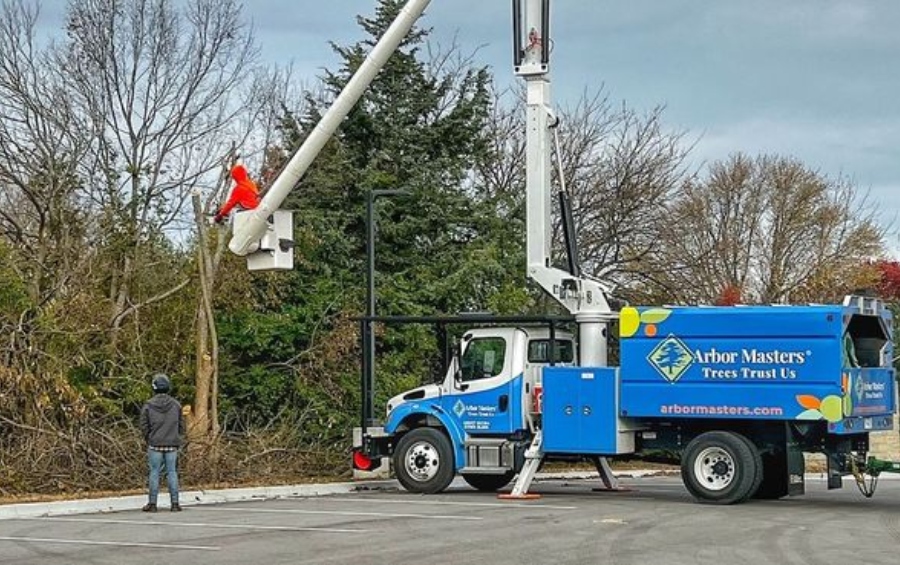
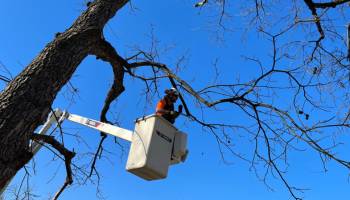
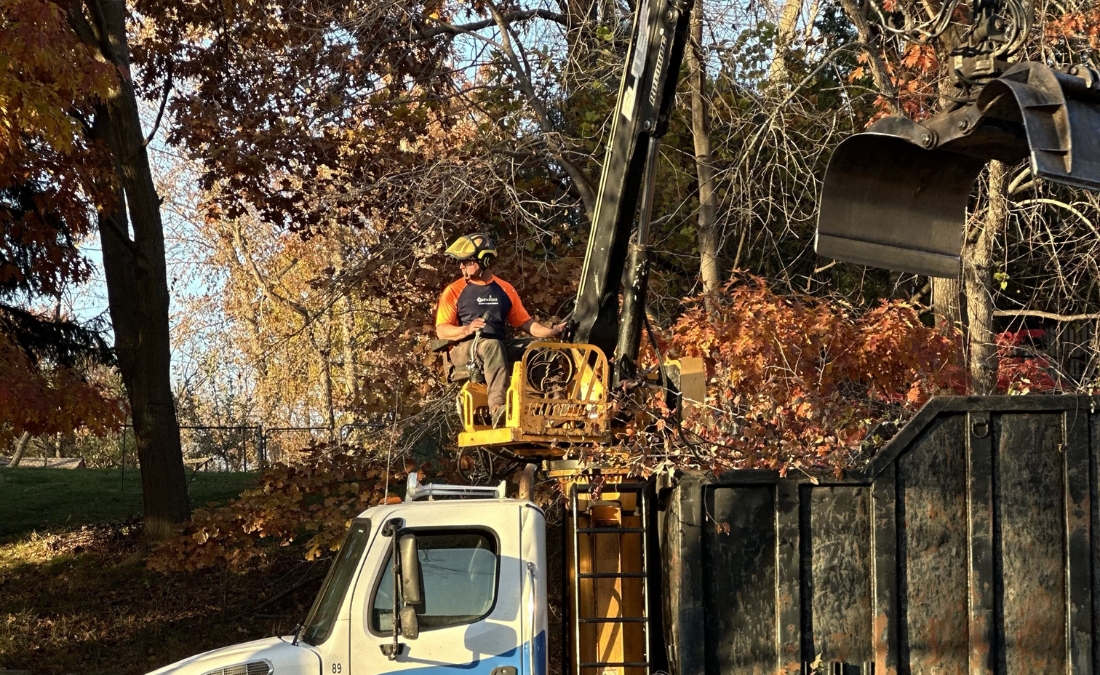
Professional bucket truck access allows safe removal of large trees in Johnson County’s established neighborhoods.
Get a Clear, Accurate Tree Removal Estimate for Your Property from Arbor Masters
Understanding these five cost factors helps you evaluate estimates accurately and choose qualified professionals who protect your property investment. When you’re ready to move forward, request detailed estimates that specify equipment needs, cleanup extent, and permit handling for accurate provider comparisons.
Ready to get started? Contact our Certified Arborists for a detailed assessment of your large tree removal project. We’ll evaluate all five factors specific to your property and provide a transparent estimate with no hidden costs. Call us at 913-441-8888 or request a quote online for tree removal today.
Get the latest local news, tree care tips, special offers, and company updates directly to your inbox! It's easy to subscribe and there's no spam - we promise.
"*" indicates required fields