Storm Damage Risk Assessment: How to Evaluate Your Johnson County Trees Before the Severe Weather Season
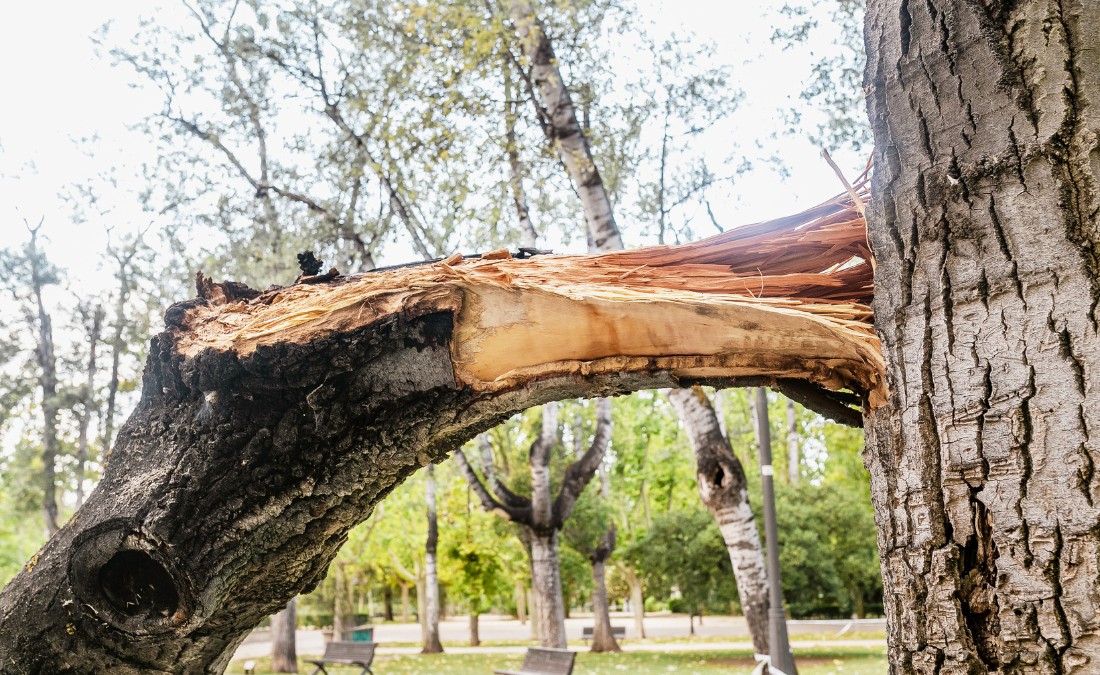
Johnson County averages 40–60 thunderstorm days per year. A pre-season tree risk assessment identifies structural failures before spring storms hit.
Johnson County homeowners have watched the same scene play out three spring seasons in a row — trees splitting in high winds, crashing onto roofs, blocking driveways, and knocking out power for tens of thousands of Evergy customers.
From tornadoes in Shawnee and Prairie Village to 76 mph gusts that tore through Olathe, the pattern is consistent. The trees that failed had structural problems a tree risk assessment would have caught. The good news is you can identify which trees are vulnerable before the next storm does it for you.
Key Takeaways
- Trees that fail during storms almost always have pre-existing structural defects like weak branch unions, co-dominant stems, or compromised root systems — problems that are identifiable and often fixable before severe weather hits.
- February and March are the best months for tree risk assessments in Johnson County because bare canopies make structural problems visible before spring leaf-out hides them.
- Homeowners can spot some warning signs on their own — trunk cracks, sudden lean, dead branches, V-shaped branch unions — but a professional assessment catches hidden issues, like internal decay and root damage, below grade.
- A Certified Arborist’s risk assessment evaluates each tree’s likelihood of failure, what it could hit, and how severe the damage would be, then provides a written report with prioritized recommendations.
- Structural cabling, strategic pruning, and targeted removal are proven solutions that can dramatically reduce storm damage risk when applied to the right trees before storm season.
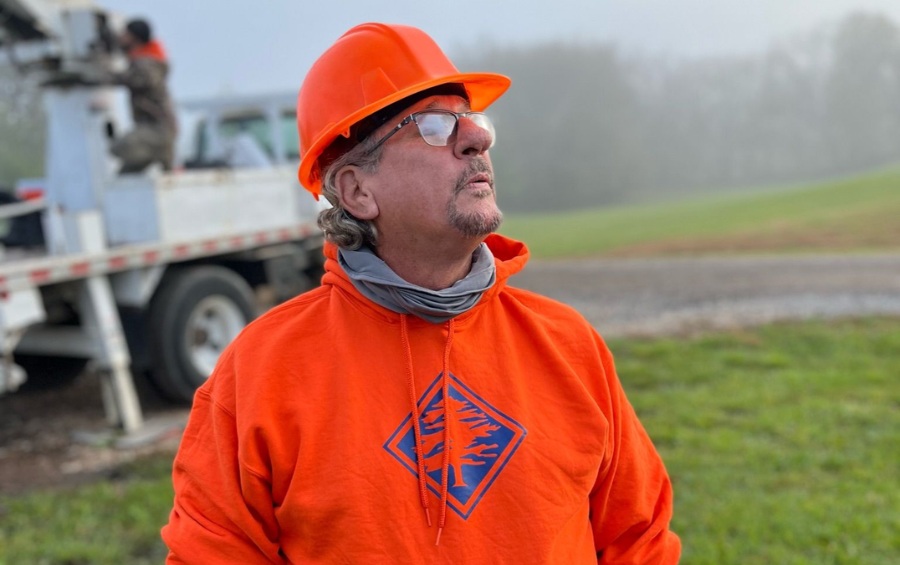
TRAQ arborists use standardized assessment tools and methodology to evaluate structural integrity and measure potential failure indicators during field inspections.
What Causes Trees to Fall During Johnson County Storms?
The trees that fail in storms usually have one thing in common: a structural weakness that couldn’t handle the stress.
High winds don’t create these problems — they expose them. Each of these defects creates a point of vulnerability that severe weather will find first:
- Included Bark Formations: Bark trapped between branch unions creates weak joints instead of strong connections. When wind pushes against the canopy, these joints split apart, the single most common storm failure pattern in mature shade trees.
- Co-Dominant Stems: Two or more trunks of roughly equal size competing for the same space without adequate supporting tissue. Storms apply leverage at these junctions and pry them apart, sometimes splitting the entire tree in half.
- Root System Compromise: Construction damage, soil compaction, or grade changes around the root zone all undermine a tree’s anchoring. Johnson County’s clay soils make this worse during wet spring storms, when saturated ground loses its grip on roots.
- Previous Topping Cuts: Improper pruning from years past creates clusters of weakly attached regrowth that never develop strong attachment wood, making these sprouts prime candidates for storm breakage.
- Large Deadwood: Dead branches in the canopy are the first things to fall during any wind event. They don’t bend; they instead snap and drop.
These defects are most visible in late winter and early spring, before leaf-out fills the canopy and hides what’s happening in the tree’s structure. That’s why February and March are the prime months for storm damage risk assessment and getting ahead of what’s coming.
Tree Species That Are Especially Vulnerable to Structural Failure
These structural problems can show up in any tree, but some of Johnson County’s most common species are particularly prone to storm failure.
- Silver Maples: These trees have brittle wood that makes them one of the most frequent storm-damage species in Overland Park, Prairie Village, and Shawnee.
- Bradford Pears: Due to their narrow crotch angles, Bradford pears almost always split apart eventually; most arborists consider it a matter of “when,” not “if.”
- Green Ash: Weakened by emerald ash borer (confirmed in Johnson County since 2013), ash trees may look fine on the outside while being structurally hollow inside.
The Kansas City metropolitan area averages 40 to 60 thunderstorm days per year, with the most severe weather concentrated in spring and early summer. So, the question isn’t whether another damaging storm will hit Johnson County — it’s whether your trees are ready when it comes.
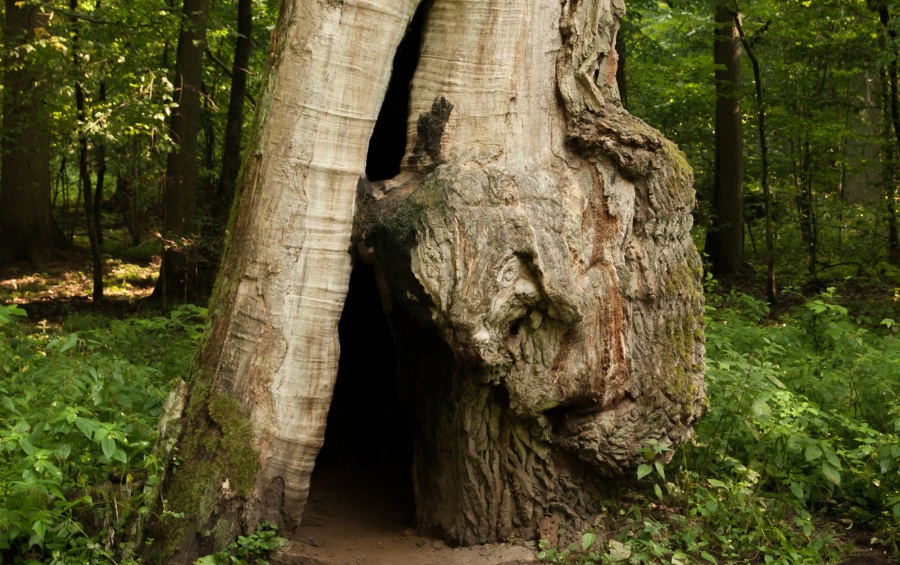
Internal decay cavities like this one drastically reduce structural integrity and require professional evaluation to determine if the tree can be preserved or needs removal.
How Can I Tell If My Tree Is at Risk of Storm Damage?
Warning signs that a tree may fail during a storm are often visible from the ground — you just need to know where to look. Walk your property and check for these:
- Carpenter ant activity or sawdust accumulation at the base of the tree, indicating pests or decay
- New cracks or widening splits in the trunk
- Sudden lean, especially after heavy rain when Johnson County’s clay soils are saturated
- Dead branches visible in the upper canopy
- V-shaped branch unions (included bark) where major limbs meet the trunk
These signs don’t automatically mean a tree needs to come down, but they do mean the tree needs a closer look from someone who can distinguish a cosmetic issue from a structural one.
PRO TIP: Don’t stop at what you can see from the ground. The most dangerous defects — cracked unions, dead limbs, included bark — are often hidden high in the canopy. Grab binoculars or use your phone’s camera zoom to inspect where major branches meet the trunk.
What Does a Tree Risk Assessment Include?
A professional tree risk assessment includes a systematic visual evaluation of each tree’s trunk, branches, root flare, and surrounding soil conditions, resulting in a written report with risk ratings and prioritized treatment recommendations. It catches what a homeowner’s walkthrough can’t, thanks to the experience and training of an arborist.
A professional tree risk assessment is systematic. A Certified Arborist evaluates each tree and looks at a few key factors:
- Likelihood of Failure: How likely is the tree, or a portion of it, to break or fall based on the structural defects present?
- Target Exposure: What could the tree hit if it fails? A tree leaning over an open yard is a very different situation than one hanging over your bedroom.
- Consequence Severity: How bad would the damage be? A six-inch dead branch over empty space and a 40-foot co-dominant stem over a roofline require very different responses.
The arborist will then combine these factors into a risk rating, based on measurable criteria. They’ll provide you with a report of your trees’ condition and recommendations for what to do for them and when to do it.
How Can I Prevent Storm Damage to My Trees?
While you can’t make a tree 100% safe, the most effective prevention strategies focus on reinforcing what’s weak, removing what’s dangerous, and reducing wind resistance. The right approach depends on the specific defects identified during a risk assessment, the tree species, and how close the tree is to structures.
Structural Support Systems (Cabling and Bracing)
Structural support systems reinforce weak unions and co-dominant stems by distributing wind loads more evenly. In many cases, cables and braces make the difference between a tree that survives a 70 mph gust and one that splits apart.
Strategic Storm-Prep Pruning
Strategic pruning targets the specific vulnerabilities storms exploit; crown reduction decreases wind resistance, deadwood removal eliminates falling hazards, and end-weight reduction shortens overextended limbs that snap under stress.
Tree Removal (When It’s the Safest Option)
Some trees are beyond preservation — like ones with extensive internal decay, the wrong species in the wrong location, or structural compromise that no support system can address. Professional tree removal eliminates the threat entirely, and replanting with a more storm-resistant species is often the smartest long-term investment.
Frequently Asked Questions About Tree Assessments
Why should Johnson County homeowners assess trees before April?
Arborist schedules fill up quickly once storm season starts and emergency calls take priority. Booking an assessment in early spring means you get ahead of the rush and leave enough time to complete any recommended treatments, like pruning or cabling, before severe weather arrives.
What is the difference between a tree risk assessment and a general tree health evaluation?
A tree risk assessment focuses specifically on structural integrity and storm failure potential using a standardized methodology. A health evaluation examines overall tree vitality, disease, and growth patterns. Basically, risk assessments prioritize safety and structural stability over general health indicators.
Can high-risk trees be saved, or do they always need removal?
Many high-risk trees can be preserved through cabling, bracing, strategic pruning, or root zone improvements. As a preservation-first company, we’ll only ever recommend removal when preservation isn’t technically or economically viable.
How often should trees be professionally assessed for storm risk?
Most trees benefit from a professional assessment every 3-5 years. Trees near structures, those with known issues, or species prone to storm damage, like silver maples, Bradford pears, and ash trees, should be checked more frequently, ideally every year.
What qualifications should my arborist have to assess tree risk?
Look for ISA Certified Arborists, ideally with TRAQ (Tree Risk Assessment Qualification) certification. This ensures they follow standardized evaluation methodology and provide documentation that meets industry standards.
What documentation do I receive after a tree risk assessment?
Professional assessments include written reports with risk ratings, photographic documentation, prioritized recommendations, and target mapping showing what’s at risk if a tree fails. These reports are valuable for insurance purposes and for planning treatments before storm season.
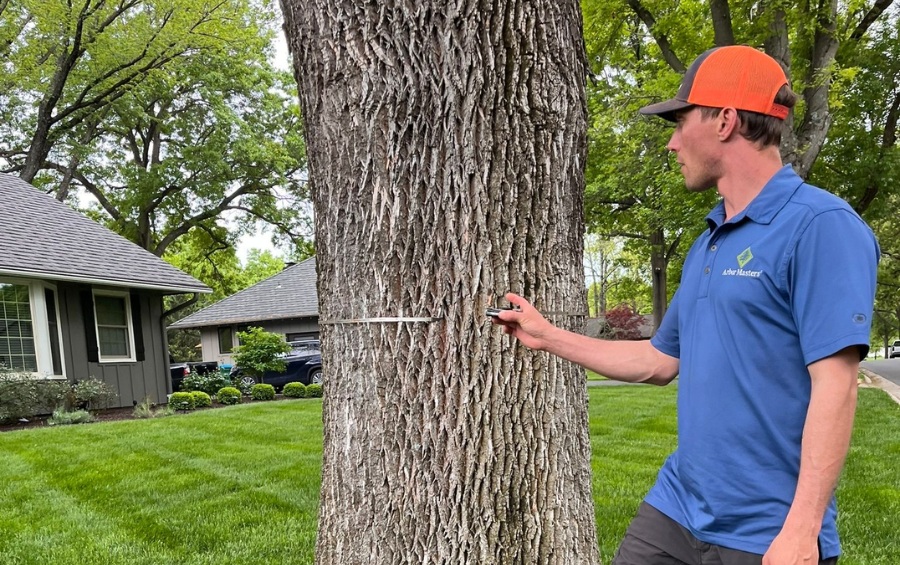
Professional tree risk assessors examine canopy structure, branch attachments, and overall tree architecture to identify storm vulnerabilities and recommend targeted solutions.
Protect Your Johnson County Property Before the Next Storm
Three consecutive storm seasons have made one thing clear: tree failures in Johnson County follow patterns, and those patterns are identifiable before the next storm hits. The structural defects that storms exploit, weak branch unions, co-dominant stems, and compromised root systems, are visible and treatable when caught early enough.
Late winter and early spring are your window. Once leaves emerge and storm season begins, proactive assessment becomes more difficult. The team at Arbor Masters can inspect your trees and recommend the work they need to hold up through the next major storm. Call us at 913-441-8888 or request a quote online to schedule a pre-season tree risk assessment.
Learn More With These Related Articles

Want More Like This?
Get the latest local news, tree care tips, special offers, and company updates directly to your inbox! It's easy to subscribe and there's no spam - we promise.
"*" indicates required fields