Does Your Tree Need a Structural Assessment Before Winter?
Wondering what a structural tree assessment checks? Here's what a Sand Springs arborist looks for, and when to schedule one before winter storms arrive.
By late September, most Sand Springs homeowners are moving through a familiar pre-winter routine. Gutters get cleaned, the furnace gets serviced, and the last mow of the season gets scheduled. But the mature tree hanging over the driveway, stretching toward the roof, or shading the backyard may head into winter without the same attention.
A structural tree assessment looks for cracks, weak branch unions, root instability, and other conditions that could become more concerning under winter wind or ice. Knowing what an arborist is looking for (and what happens if they find something) can help you address a potential problem before winter puts the tree to the test.
Key Takeaways
- A structural tree assessment is primarily an in-person visual evaluation of a tree’s physical stability, with additional diagnostic evaluation recommended when needed.
- The findings may lead to monitoring, pruning, supplemental support, further evaluation, site corrections, or removal, depending on the tree and its surroundings.
- Scheduling the assessment in the fall gives you lead time to complete any recommended work before winter weather arrives.
- A new or changing crack, significant movement, sudden lean, or hanging limb warrants prompt professional evaluation, especially when the defect is large or located over a home, driveway, walkway, or other target.
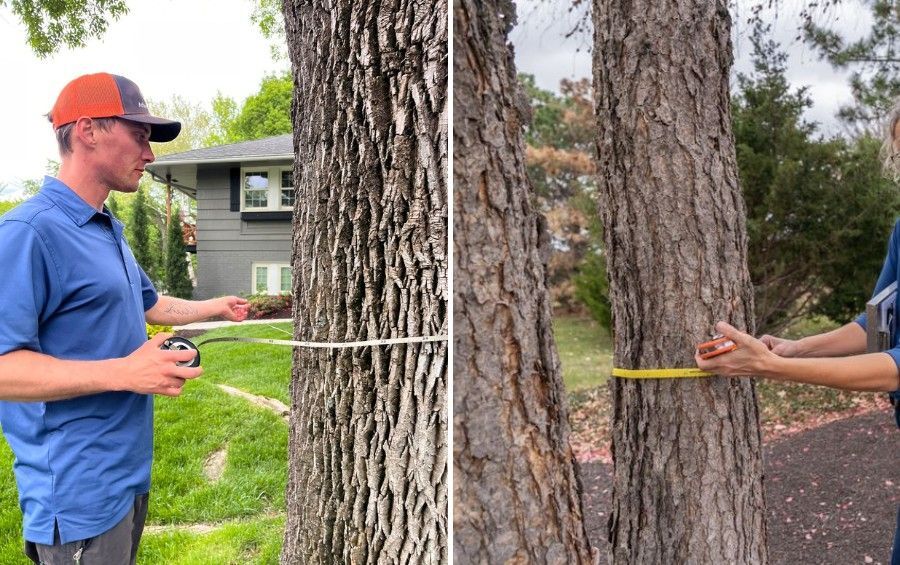
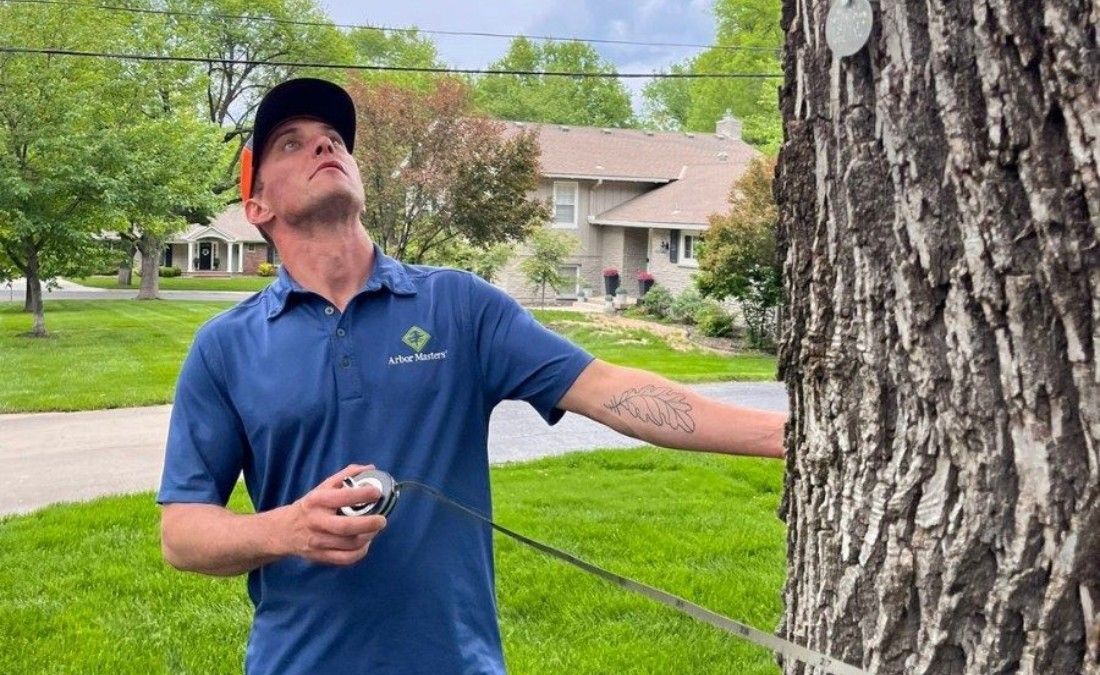
Trunk measurements document a tree’s size and provide context for evaluating its overall structure and condition.
How Does a Structural Tree Assessment Work?
A structural tree assessment works by combining an on-site visual inspection with the tree’s history and its surroundings. An ISA Certified Arborist first considers the tree as a whole, then examines visible structural concerns more closely to determine whether they warrant monitoring, pruning, supplemental support, or further evaluation.
A structural assessment is primarily visual. If the inspection raises questions that can’t be answered from the outside, such as the extent of suspected internal decay, the arborist may recommend additional diagnostic evaluation.
During the visit, the arborist looks at the tree’s overall form, lean and canopy balance before evaluating its trunk, branch attachments and root support. They also consider nearby roofs, driveways, patios and other areas that could be affected by a failure. Information about recent storms, previous pruning, and changes you may have noticed provides useful context for the evaluation.
Unlike a broader tree health assessment, which may focus on pests, disease, foliage and overall vigor, a structural assessment is primarily concerned with the tree’s physical stability.
It also differs from a formal tree risk assessment. A structural assessment looks for defects and stability concerns. A tree risk assessment takes that evaluation further by considering how likely a tree or branch is to fail, whether it could strike a target, and what the consequences of that failure could be.
What Structural Conditions Does an Arborist Look For?
During the visit, the arborist looks at several physical conditions that can affect how a tree responds to wind or ice load. None of these conditions tells the whole story on its own, which is why the arborist considers them together.
- Included Bark and Attachment Structure: Included bark occurs when bark becomes enclosed between adjoining stems and can be associated with a weaker union, particularly as the stems increase in size and loading.
- Cracks or Separation at a Union: Visible cracking, separation, abnormal movement or previous failure can indicate that an attachment deserves closer evaluation.
- Co-Dominant Stems and Diameter Ratio: Stems of similar diameter arising from the same union can form a less mechanically secure attachment than a smaller branch attached to a larger supporting stem. Co-dominant stems don’t automatically make a tree unsafe; the arborist considers the union’s structure, included bark, cracks, loading, decay, and surrounding targets together.
- Canopy Loading: The arborist evaluates where canopy weight and leverage are concentrated rather than assuming a structurally sound tree needs a perfectly symmetrical crown.
- Previous Damage or Pruning: Old splits, branch failures, cavities, storm injuries or major pruning cuts can reveal previous problems or changes in how load is distributed through the canopy.
- Root Plate Stability: Signs of soil heaving or shifting at the base can indicate reduced root support.
- Trunk Condition: Visible cracks, cavities, decay, seams, or abnormal movement can affect the trunk’s ability to support the canopy.
- Surrounding Targets: The arborist considers nearby roofs, driveways, patios, play areas, and other places where people or property could be affected if part of the tree failed.
When the assessment points toward pruning or structural support, that recommended work is generally guided by the ANSI A300 standards for tree care, the industry standard the tree care field uses for pruning and structural support practices.
What Happens After a Structural Tree Assessment?
A structural tree assessment doesn’t automatically lead to tree work. Depending on the defect, tree condition, site, and surrounding targets, the findings may lead to continued monitoring, pruning, supplemental support, further evaluation, correction of contributing site conditions, removal, or a combination of measures.
- Continued Monitoring: An observed condition that does not currently warrant intervention may be reassessed during a future visit.
- Selective Reduction Pruning: Reducing the length or load of an overextended branch may lessen leverage on a structural concern without requiring supplemental support.
- Structural Support: A more significant weak union, or a tree worth preserving long-term, may call for a cabling or bracing system. Arbor Masters’ structural support systems page explains what that involves, and our guide to when a tree needs cabling or bracing covers the signs in more depth.
- Removal: Removal may occasionally be recommended when defects, decay, root instability, the tree’s location and the available mitigation options make the concern impractical to manage.
Whatever the recommendation, the arborist’s job is to explain what was found, why it matters, and what options are appropriate for that particular tree.
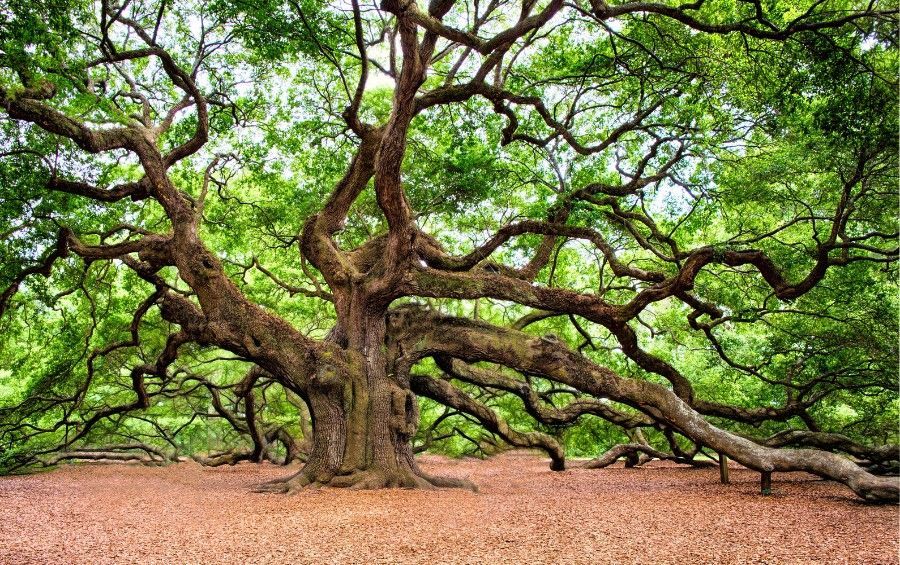
A mature oak’s broad canopy and spreading limbs make branch architecture and load distribution important parts of a structural assessment.
Why Schedule the Assessment Before Winter?
Winter doesn’t create every structural problem, but wind and ice can add load to weaknesses that are already there. Scheduling an assessment before winter gives you time to identify those concerns and decide what, if anything, should be done before harsher weather arrives.
Wind and ice can add stress to mature trees throughout the greater Tulsa area, particularly when a tree already has a crack, weak union, previous storm damage, or another structural concern. Large mature trees are common in Sand Springs, Tulsa’s Midtown neighborhoods, and established areas of Owasso, but size alone doesn’t make a tree unsafe.
What matters is how the tree is built, where existing defects are located, and what could be affected if a branch or part of the tree fails. A structural assessment evaluates those factors together rather than assuming a large tree is automatically a dangerous one.
What Tree Changes Require Prompt Evaluation?
Trees can live with the same structural characteristics for years without an immediate problem. A noticeable change is different. When something about the tree’s structure suddenly looks or behaves differently, it’s worth having an arborist determine what changed and whether it affects the tree’s stability.
Watch for:
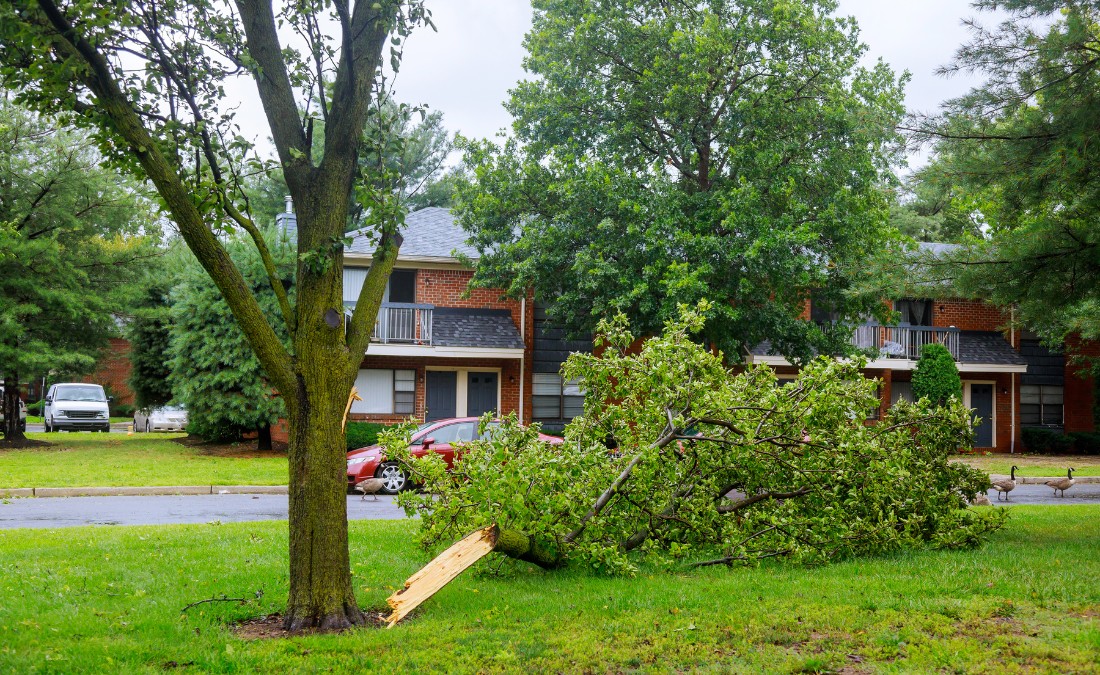
- A storm has caused a visible crack, split, or hanging limb.
- A tree’s lean has noticeably changed or worsened.
- A large limb over a roof, driveway, or patio shows a new crack, visible movement, or has recently dropped a branch.
- Soil around the base looks disturbed or heaved after a recent storm.
Until an ISA Certified Arborist can assess the tree, stay clear of hanging limbs, trees that appear to be actively shifting or leaning further, and anything near a power line. If damaged branches are touching or threatening utility lines, stay clear and contact the utility provider rather than attempting to inspect the damage yourself.
If you’ve noticed one of these changes, contact Arbor Masters to have the tree evaluated and determine how quickly it needs attention.
Frequently Asked Questions About Structural Tree Assessments
Does a structural assessment cost anything if no work turns out to be needed?
Scheduling the visit does not commit you to any follow-up work. The arborist evaluates the tree and shares what they find, and the decision about whether to move forward with pruning, support, or continued monitoring is entirely yours.
Do I need to be home for the assessment?
Being home is helpful so you can walk the property with the arborist and share any history, such as recent storms or past pruning. If you can’t be there, let the ISA Certified Arborist know what recent changes or concerns to look for so the evaluation is as accurate as possible.
What if the arborist finds something urgent during the assessment?
They will tell you right away and explain why it cannot wait. Safety concerns are flagged immediately rather than saved for a written report.
Can a structural assessment tell if a tree is safe?
A structural assessment can identify visible defects and conditions that may affect a tree’s stability, but it can’t guarantee that a tree or branch will never fail. If an arborist finds something that can’t be fully evaluated visually, they may recommend additional diagnostic evaluation or a formal tree risk assessment.
Can an arborist tell if a tree is decayed inside?
Not always from a visual assessment alone. Cavities, cracks, fungal growth, or other external signs may indicate internal decay, but they don’t necessarily show its full extent. If internal decay is suspected and more information is needed, the arborist may recommend additional diagnostic testing.
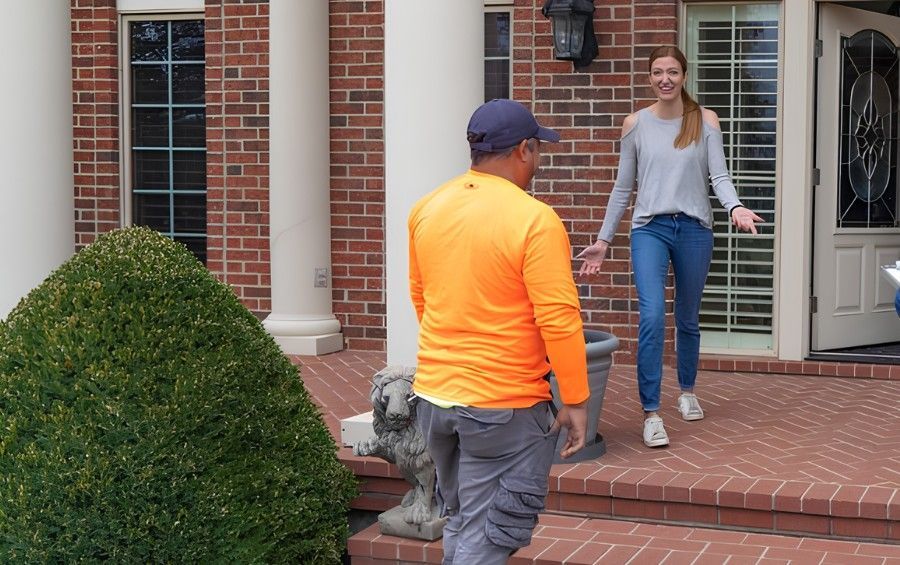
Meeting the tree care professional on-site gives homeowners an opportunity to point out recent changes and share the tree’s storm or pruning history.
Have Your Trees Assessed Before Winter Weather Arrives
A structural tree assessment gives you a clear, specific picture of how a tree is built and what conditions might affect it under wind or ice load, rather than a guess based on how it looks from the driveway. An ISA Certified Arborist evaluates branch unions, trunk architecture, and root support, then walks you through what that means for the tree going into winter.
If your trees haven’t been evaluated recently or you’ve noticed a structural change, call 913-308-3791 or schedule your assessment online. An Arbor Masters ISA Certified Arborist can evaluate the concern and recommend the appropriate next step before winter.
Learn More With These Related Articles
Want More Like This?
Get the latest local news, tree care tips, special offers, and company updates directly to your inbox! It's easy to subscribe and there's no spam - we promise.
"*" indicates required fields