Why Do My Trees Look Stressed Even Though I Water Them?
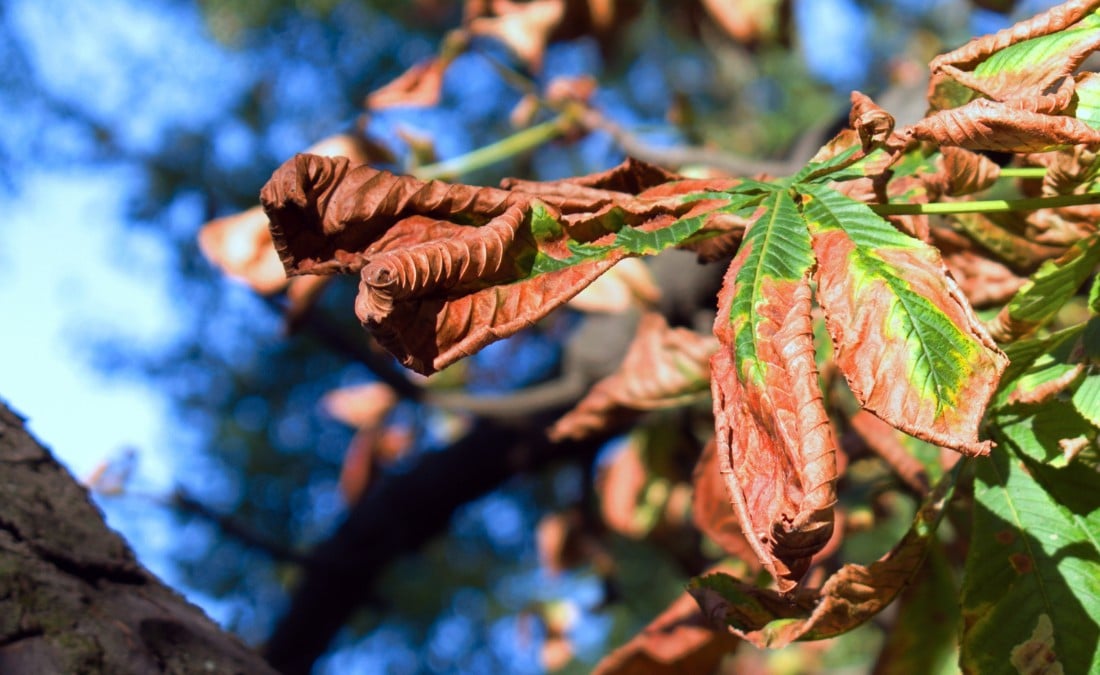
Watering more isn't always the answer. Discover why trees struggle in Tulsa's clay soils and how to keep roots healthy through the summer heat.
As temperatures climb into the 90s, many Tulsa-area homeowners start noticing the first signs of stress in their trees. Leaves may begin to curl, yellow, or develop brown edges—even if you’ve been watering regularly. It’s a frustrating problem because both underwatering and overwatering can produce many of the same symptoms.
In many cases, the issue isn’t simply a lack of water. The real issue is whether the right amount of water is reaching the root zone where trees can actually use it. Tulsa’s heavy clay soils can make it difficult for water to soak deeply enough, leaving trees stressed despite your best efforts.
Key Takeaways
- Clay soil’s tight structure prevents rainfall and watering from penetrating to the root zone where trees actually absorb water.
- Both underwatering and overwatering can produce similar stress symptoms in clay, so the real goal is getting the right amount of water to the active root zone.
- A buried root collar (from mulch or settling soil) compounds the problem by cutting off oxygen and restricting water uptake.
- If proper watering technique isn’t solving your summer stress, the problem likely lives below ground and needs professional diagnosis.
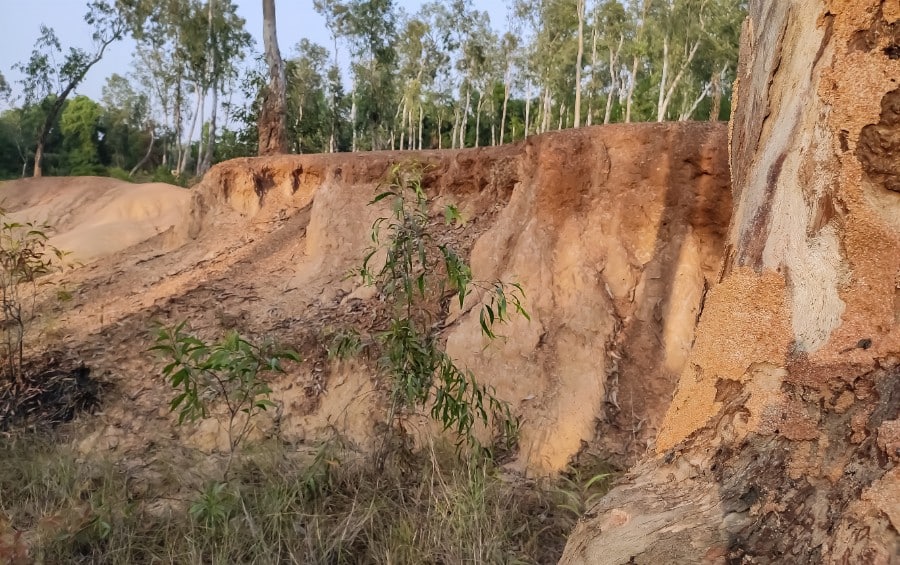
Clay soils expand when wet and shrink during dry periods, creating movement that can stress tree roots and affect long-term tree health.
Why Do Trees Look Stressed Even When You Water Them?
Trees can look drought-stressed for two very different reasons in Tulsa’s heavy clay soils. Many homeowners assume the problem is underwatering, so they water more—but sometimes the real issue is that water isn’t reaching the roots at all. Even worse, overwatering clay soil can actually create the same stressed appearance by removing oxygen from the root zone.
How Clay Soil Affects Water
Much of Tulsa, Catoosa, and East Tulsa sits on heavy clay soils formed from Arkansas River floodplain deposits. While these soils can hold a lot of water, they also make it difficult for moisture to move efficiently into the root zone where trees need it most.
- Slow Infiltration: Clay soil’s tightly packed particles slow water movement into the ground. Rain falls. You water. The surface looks wet, but moisture penetrates much more slowly than it would in sandy or loamy soil. Water absorption in clay is glacially slow—typically 0.04 to 0.2 inches per hour, compared to 1–2 inches per hour in sandy soil.
- Surface Runoff: When water is applied faster than clay soil can absorb it, it begins flowing across the surface instead of soaking downward. You may see puddling around the tree, water running toward the street, or pooling in low spots. While it looks like the tree received plenty of water, much of that water is lost before it ever reaches the root zone.
- Dry Roots: Most active tree roots are located 6 to 12 inches below the surface. Because clay absorbs water so slowly, moisture may never reach those roots. Trees can become stressed and develop drought-like symptoms even when the soil surface appears wet and watering is frequent.
Why Too Much Water Can Also Be a Problem
The challenge that catches many homeowners off guard is that clay soil can both hold too much water and make that water unavailable to trees at the same time. When clay soil becomes saturated, it eliminates the air pockets roots need to breathe.
Constantly wet conditions can lead to root rot and fungal problems, while the lack of oxygen stresses the root system. As a result, overwatered trees often develop the same symptoms as drought-stressed trees, including wilting leaves, yellowing foliage, and branch dieback.
Trees stressed by poor drainage and oxygen deprivation look exactly like trees suffering from underwatering. That’s why simply adding more water can actually make the problem worse. The real issue isn’t volume; it’s balance.
What’s the Right Way to Water Trees in Clay Soil?
DIY watering fixes exist, but they require understanding clay’s limitations. The goal isn’t to add more water—it’s to ensure that water infiltrates deep and slow, reaching the root zone where it matters.
Water Deeply, Not Frequently
Target 6–9 inches deep for regular roots; ideally 18–20 inches for the full root zone. Mature trees in clay need deep watering approximately every 10–14 days during summer—less frequent than sandy soils, but deeper. Avoid frequent light watering—it trains roots to stay shallow where they’re vulnerable.
To see if water has reached the roots, push a long screwdriver or soil probe into the ground after watering. Soil should feel moist at 6 inches deep. If it’s dry at that depth, your water isn’t reaching far enough.
Use the Right Watering Methods
How you apply water matters just as much as how much you apply. Clay soils absorb water slowly, so watering methods that deliver moisture gradually are far more effective than those that apply large volumes of water all at once. Here are some best practices for watering your trees:
- Use soaker hoses and irrigation systems that are more effective than overhead sprinklers.
- Apply water to the soil at and beyond the drip line (outer edge of canopy) where active roots are located.
- Water slowly over 1–2 hours to allow infiltration, not runoff.
- Mulch (3–6 inches) to help retain moisture, but keep it 6+ inches away from the trunk—mulch piled against the trunk buries the root collar and causes serious problems.
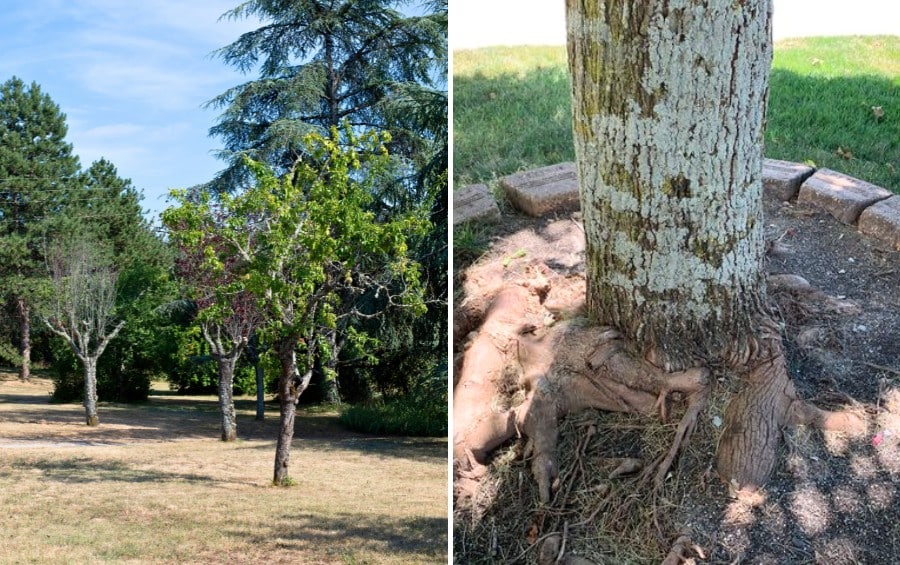
Tree stress can have many causes. Drought, soil problems, and girdling roots can all reduce a tree’s ability to absorb water and nutrients, leading to decline over time.
Why Are My Trees Still Stressed?
If you’ve adjusted your watering and your tree still isn’t improving, the problem may be below ground.
Buried Root Collars and Girdling Roots
The root flare (where the trunk widens to meet the roots) needs direct oxygen exposure to function. When buried, the collar becomes anaerobic (oxygen-starved), triggering decline and girdling root formation. Girdling roots circle the trunk like a constricting band, cutting off water and nutrient flow even when moisture is available.
Look for a “telephone pole” appearance or a tree trunk that goes straight into soil with no visible widening. These buried collars often exist for 2–5 years before summer stress becomes visible.
Soil Compaction and the Water Barrier
Compacted soil has no air spaces. Water runs off, and roots cannot expand or breathe. Compaction develops from foot traffic, lawn equipment, construction, and heavy clay settlement over time. Trees in compacted soil often have 90–95 percent of their roots confined to the top 12 inches of soil, where moisture is lost the fastest during hot, dry weather.
This is why watering more doesn’t help—the problem isn’t volume, it’s access. Clay already resists infiltration. Compaction makes it a concrete-like barrier.
When Should You Call an Arborist?
If your tree continues to show stress despite changes to your watering routine, it’s time for a professional evaluation. An arborist can determine whether the problem is related to watering, soil conditions, root health, pests, disease, or another underlying issue.
Consider scheduling an assessment if you notice any of the following:
- Tree shows stress despite correct deep watering for 4+ weeks
- You spot a “telephone pole” trunk (no visible root flare)
- Girdling roots are visible circling the trunk
- Hard, compacted soil surrounds the tree with no air pockets
Arborists use air spading to safely excavate the root collar, identify the exact problem, and prune girdling roots or aerate compacted soil as needed. At Arbor Masters, our Tree Preservation services deliver this diagnosis and intervention.
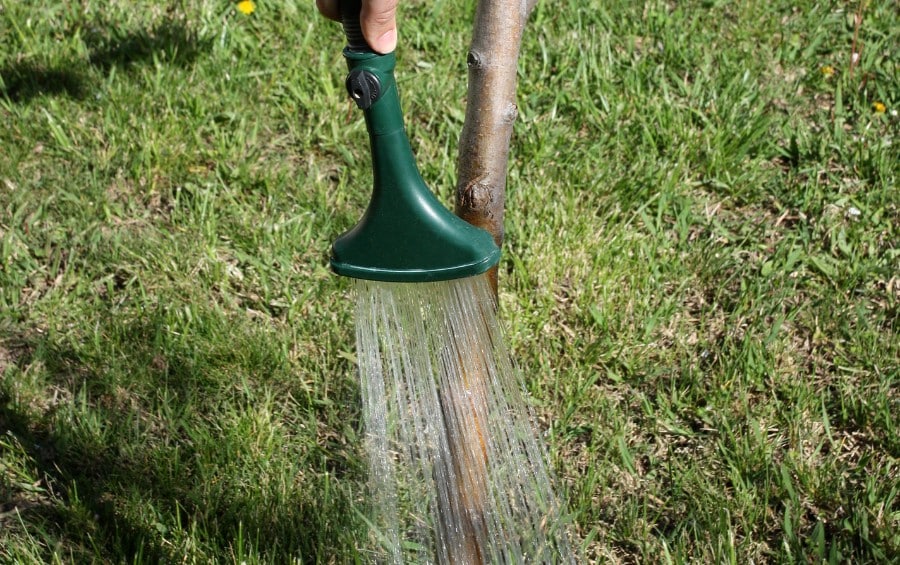
Proper watering is essential for tree health, but too much water (or watering incorrectly) can be just as harmful as too little. Overwatering can reduce oxygen in the soil and stress tree roots.
Frequently Asked Questions About Watering Your Trees
How deep should I water my trees in clay soil?
Target 6–9 inches minimum; ideally 18–20 inches to fully saturate the root zone. Use a soil probe or long screwdriver to test: after watering, push it into the ground and check that soil feels moist at 6 inches depth. Water slowly enough (over 1–2 hours) to allow infiltration, not just runoff.
Can you overwater trees in clay soil?
Yes. Constant saturation without air pockets causes root rot and fungal problems. However, most Tulsa homeowners underwater, not overwater. The goal is deep saturation followed by a drying period (10–14 days), not constant moisture. Proper mulching and soil aeration help clay soil breathe.
How long does it take for watering changes to show results?
If the problem is purely watering technique, you should see improvement in 3–4 weeks of consistent, proper deep watering (stress eases, new leaf growth). If stress continues after 4 weeks despite correct watering, the issue is structural or environmental and requires professional intervention.
Is it better to water trees in the morning or evening?
Early morning is the best time to water trees. Cooler temperatures and lower wind speeds reduce evaporation, giving more water time to soak into the soil and reach the root zone. Evening watering is generally acceptable if needed, but consistently wet conditions overnight can increase the risk of certain fungal diseases. Avoid watering during the hottest part of the day, when evaporation rates are highest.
Is Your Tree Just Thirsty or Struggling? Let Arbor Masters Diagnose the Problem
Summer tree stress in Catoosa and East Tulsa is almost always rooted in the interaction between clay soil and what’s happening below ground. Your watering technique matters, and deep, infrequent watering is the right starting point. But if that fix alone doesn’t resolve the problem, a buried root collar, girdling roots, or compacted soil is likely restricting your tree’s access to water and oxygen.
If your tree’s summer stress persists despite proper watering, don’t assume it will recover on its own. Our ISA Certified Arborists use air spading to safely expose the root collar, diagnose hidden problems, and develop a targeted treatment plan through our Tree Preservation program.
Call Arbor Masters at 918-258-3444 or request a free quote online to get started.
Learn More With These Related Articles

Want More Like This?
Get the latest local news, tree care tips, special offers, and company updates directly to your inbox! It's easy to subscribe and there's no spam - we promise.
"*" indicates required fields