
Getting Fort Worth Trees Ready for Spring Wind Season
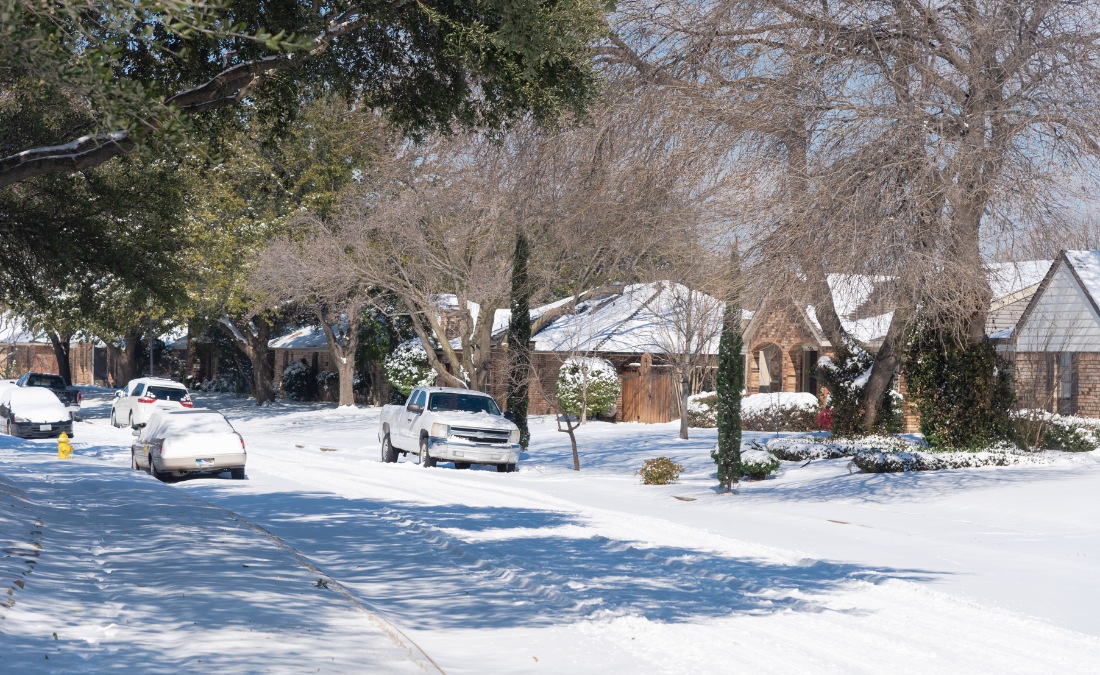
Spring winds are coming to Fort Worth. Learn how to prep your trees now, which tasks are safe to DIY, and when professional tree care is the smarter choice.
As late winter gives way to early spring in Fort Worth, familiar signs of the season start to show up – wind advisories, hazy horizons, and pollen settling on everything. It’s also the window when trees are transitioning out of dormancy and preparing for a season of rapid growth.
This in-between period is an ideal time to get ahead of spring tree care. Addressing structure, pruning needs, and overall tree condition now helps trees respond better to seasonal winds and growth demands ahead. Knowing what you can handle yourself (and when it’s time to call a professional) helps keep spring tree care safe and effective.
Key Takeaways
- Late winter is the critical month to prepare Fort Worth trees before the March-May tornado season peaks.
- Winter tree work homeowners can safely handle includes basic inspection, watering, mulching, and small debris removal.
- Structural pruning, large branch removal, and Heritage Tree work are more complicated and require ISA Certified Arborists.
- ISA Certified Arborists will follow all proper precautions and requirements for working with trees in the Fort Worth area.

Fort Worth’s March through May storm season brings dangerous winds, hail, and lightning that can turn unprepared trees into property hazards.
Why Late Winter Is the Right Time for Tree Prep in Fort Worth
February and early March represent the calm before the storm in North Texas weather patterns. March through May historically bring the most severe weather to Tarrant County, with April averaging 33 tornadoes and May bringing 21 tornadoes to our region.
Recent overnight storms reminded us that damaging winds, large hail, and flooding occur regularly in the DFW Metroplex, making preparation essential rather than optional.
Some of the benefits of winter pruning for storm preparation now include:
- Trees can use their energy to heal the cuts before storm season arrives
- More affordable rates for preventive maintenance compared to emergency response
- Firm ground reduces landscaping impact from heavy equipment
- Better view of the tree’s structure to plan which branches to remove
4 Tree Care Tasks Fort Worth Homeowners Can Safely Do Themselves
Several basic tree care tasks fall within safe homeowner capabilities during February preparation. These foundational steps strengthen your trees without requiring professional equipment or specialized training.
1. Inspect Trees for Visible Damage
Walk your property after recent wind events to spot obvious damage like hanging branches, visible trunk cracks, or trees developing a lean. Look for decay signs, including mushrooms growing at the tree base or hollow sounds when you tap the trunk with your knuckles.
Document your findings with photos for potential professional consultation, paying special attention to trees near structures or high-use areas that need priority attention.
2. Water and Mulch to Support Tree Health
Deep watering strengthens root systems before spring stress season arrives. Fort Worth’s clay soil requires slow, deep watering at the tree’s drip line rather than frequent shallow watering near the trunk. Only water when trees are not getting enough hydration from natural sources. Focus your watering efforts on young trees or those showing stress signs from previous growing seasons.
Additionally, keeping a layer of mulch around your tree will boost the nutrients in the soil and lower the required supplemental water a tree needs. Apply a 2-4 inch layer of organic mulch, keeping it at least 6 inches away from the trunk to prevent pest and disease issues.
3. Remove Storm Debris Safely
Clear small fallen branches and storm debris from around your trees, removing potential projectiles, like lawn furniture, toys, and loose equipment, within falling distance. Clean gutters near trees to prevent water damage during heavy spring rains.
Secure or store items that could become dangerous missiles during high winds, and clear emergency access routes for post-storm safety.

Emergency preparedness checklist highlighting the importance of planning ahead for severe weather events common in Fort Worth.
4. Prepare for Tree Emergencies
Keep the contact information of an emergency tree service on standby in case of a tree emergency from wind damage. Review your insurance coverage and claim procedures, create photo documentation of current tree conditions, and know the location of electrical shutoffs near trees.
Tree Work That Requires Professional Expertise Before Storm Season
Preparing trees for storm season involves more than basic trimming. While homeowners can handle simple maintenance, work that affects a tree’s structure and stability should be handled by a professional.
Perform Structural Pruning
Structural pruning focuses on improving a tree’s strength and wind resistance by addressing weak branch attachments, co-dominant stems, and poor structure. This work follows ANSI A300 standards for proper cut location and technique to support healthy wound closure.
Major structural pruning typically includes crown cleaning to remove dead, dying, or weakly attached branches, as well as crown thinning to reduce wind resistance while preserving the tree’s natural form. When done correctly, these techniques improve stability without compromising long-term health.
Because structural pruning directly affects how a tree responds to stress, it requires professional expertise. ISA Certified Arborists understand tree biology, proper cut placement, and how pruning wounds heal. Improper cuts can weaken trees and create entry points for serious diseases, including oak wilt.
This level of work is very different from cosmetic trimming, which focuses on appearance rather than structural integrity and storm performance.
PRO TIP: Late winter is often the best time to schedule professional pruning in Fort Worth to prepare for storms and limit stress on trees.
Conduct Professional Tree Risk Assessments
ISA Certified Arborists evaluate overall tree stability using systematic assessment protocols. They can tell you which trees are at risk by examining:
- Root stability
- Trunk integrity
- Branch structure
- Disease presence
Written documentation from professional assessments proves useful for insurance purposes and permit applications. Arborists provide comprehensive evaluations that consider target areas, including structures, vehicles, and high-use zones, while prioritizing safety and preserving valuable trees when possible.
Install Cabling and Bracing Systems
Professional cabling systems provide supplemental support for structurally weak but valuable trees. ANSI A300 standards for cabling can help stabilize a tree and leave it more sturdy during a storm. Proper installation and regular maintenance ensure system effectiveness over time.
Professional assessment determines whether a tree qualifies as a good candidate for support systems, offering an alternative to removal for trees with sentimental or significant value.
PRO TIP: Cabling and bracing is just one tree preservation service that keeps trees standing for years to come and reduces the risk of storm damage.
Remove Large Branch or Hazardous Limbs Safely
Branches over 4 inches in diameter require professional equipment and techniques to remove safely, as improper cutting can lead to:
- Bark stripping
- Stub formation
- Permanent tree damage that weakens the entire specimen
Safety risks from falling limbs, ladder work, and chainsaw operation near structures require professional crews with proper insurance and training, while specialized rigging techniques prevent property damage during complex removals.
Knowledge of species-specific responses prevents tree decline, and the three-cut method prevents bark tearing while promoting proper healing to ensure trees remain healthy after necessary branch removal.
Comply with Fort Worth Heritage Tree Regulations
Fort Worth’s Heritage Tree regulations require permits and professional consultation for storm preparation work on significant trees measuring 27 inches diameter at breast height (DBH) or larger, with post oaks and blackjack oaks protected at 18 inches DBH. The $1,200 per inch penalty structure makes violations extremely costly for homeowners, with major pruning, removal, or root cutting requiring city permits and ISA Certified Arborist consultation.
Storm preparation work constitutes a valid reason for permits when properly documented by professionals familiar with the approval process. ISA certification ensures proper Heritage Tree assessment and permit application knowledge, while local arborists familiar with Fort Worth’s specific requirements can expedite applications and improve approval likelihood.
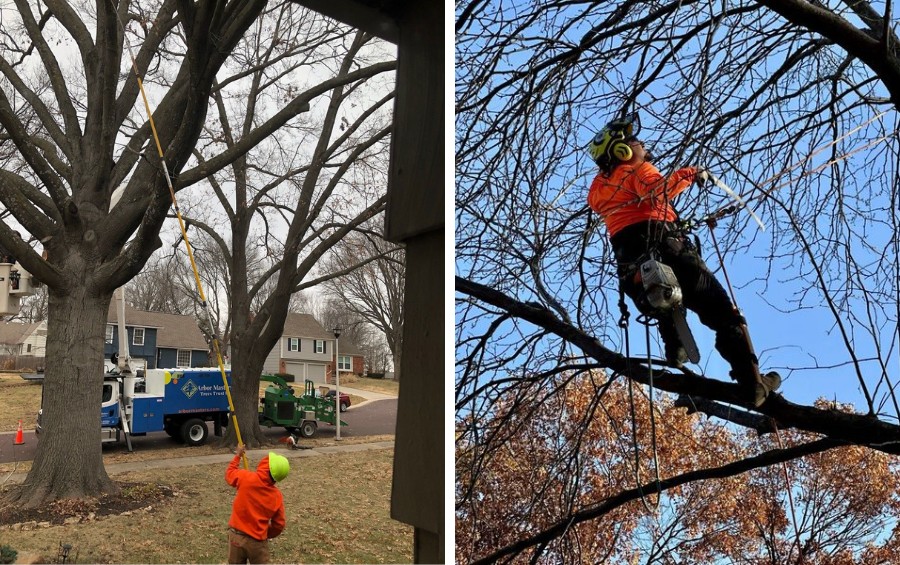
Arbor Masters Fort Worth crew demonstrates proper professional pruning techniques that require specialized equipment and training beyond homeowner capabilities.
Frequently Asked Questions About Storm Season Prep
When should I start preparing my Fort Worth trees for tornado season?
February into early March is the ideal month to begin storm preparation, as it provides a full month before the March-May peak tornado season begins in North Texas. This timing allows trees to heal from any pruning before spring stress. However, if your tree has poor structure and weak branches, have an arborist prune it as soon as possible to avoid any emergencies after a storm.
Can I remove large dead branches myself before storm season?
No, branches over 4 inches in diameter should only be removed by professional arborists with proper equipment, insurance, and training to avoid injury and tree damage. Improper cuts can weaken the entire tree.
How do I know if my tree needs professional cabling before wind season?
Trees with co-dominant stems, narrow branch crotches, or long horizontal limbs may benefit from cabling. An arborist can assess whether supplemental support systems are appropriate and effective.
What’s the difference between tree trimming and structural pruning for storm prep?
Structural pruning removes weak attachments and improves wind resistance following industry standards, while cosmetic trimming focuses on appearance. Storm preparation requires structural expertise from Certified Arborists.
Don’t Wait for Storm Season – Schedule Your Fort Worth Tree Assessment Now
Storm preparation protects your Fort Worth property investment and family safety. While homeowners can handle basic care tasks, structural work requires ISA Certified Arborists who understand tree biology and Heritage Tree regulations. Don’t wait until storms hit – schedule your professional assessment this month to ensure your trees are ready for North Texas weather.
The team at Arbor Masters of Fort Worth is ready to help you prune, cable weak trees, or remove ones that are no longer safe to keep standing. Call us today at 469-586-5829 or request a quote online for storm preparation.



Get the latest local news, tree care tips, special offers, and company updates directly to your inbox! It's easy to subscribe and there's no spam - we promise.
"*" indicates required fields
